Live art bidding
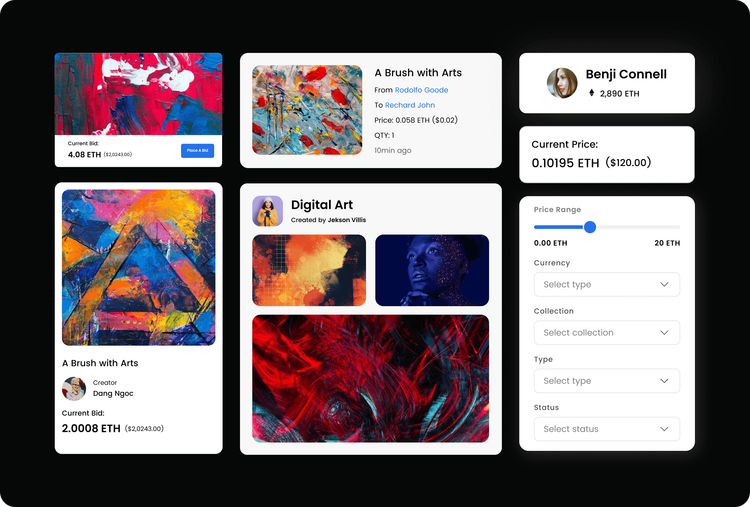
Auction cards show the artwork, its creator, the current bid in ETH, and a countdown to the close. A Place a Bid button sits on every card, from the homepage carousel to the phone screens.

Websitefor PixelVault
A website project in crypto & NFT, delivered by DeveloperLook.
About the project
DeveloperLook designed and built PixelVault, an NFT marketplace where digital artists list their work and collectors bid on it live. The project covered the website, a dashboard for creators and traders, and mobile app screens.
PixelVault is an NFT platform for digital artists around the world. It gives creators the tools and the marketplace to sell their art, with blockchain-backed ownership that confirms authenticity and rarity. Collectors meet creators through live bidding, top collections, and trending picks.
The website opens with a call to discover NFTs from worldwide creators. Buttons invite visitors to become a creator or explore the art. Below them, a row of top creators leads into a live art bidding carousel. An Explore NFT Art grid follows, with tabs such as music, sports, photography, and metaverse. A 4-step guide walks new sellers through setting up a wallet, creating a collection, adding an NFT, and listing it for sale. The marketplace page adds filters, and an NFT Activity page lists recent transactions.
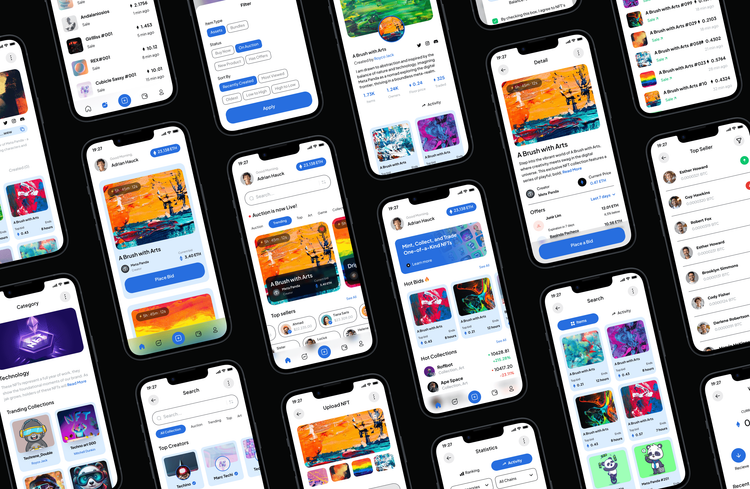
Signed-in users move to a dashboard with the market, active bids, collections, a wallet, saved items, and history in one sidebar. They create NFTs from a form, follow open bids, and review their transactions. Mobile app screens bring the same flow to phones, from live auctions and hot bids to search, uploads, and sales statistics.
Tell us what you are building. We reply within 24 hours with questions or a call time.
What do you need?
Challenge and solution
The challenge
Collectors had to trust that each NFT was authentic, that ownership was clear, and that every transaction was secure.
The blockchain side had to work in the background without overwhelming users with technical detail.

Our solution
Secure blockchain integration backed authenticity and ownership in every transaction, which gave creators and collectors confidence in the platform.
Live auctions with countdowns, bid buttons, and offer lists ran through the website, the dashboard, and the mobile app screens.
What we built
Seven features, shown next to the screens they live on.
Auction cards show the artwork, its creator, the current bid in ETH, and a countdown to the close. A Place a Bid button sits on every card, from the homepage carousel to the phone screens.
The marketplace narrows artworks by price range, currency, collection, type, and status. On phones, filters cover assets or bundles, buy now or auction status, and sorting by date, views, or price.
A Create Your NFTs form takes the item name, artist, collection type, description, opening bid, and listing price. Creators drag in a PNG, JPG, or GIF file and publish the NFT.
The dashboard brings together a featured marketplace, top collections, Best Creators and Trending Creators panels, and recent activity. Its sidebar links the market, active bids, collections, saved items, settings, and a help center.
The wallet page shows income, spending, and savings cards beside a linked bank card. A transaction list records top-ups, exchanges to ETH, and successful bids, and a table tracks each open bid.
Each detail page shows the artwork, its owner and creator, and more works by the same artist. An auction countdown sits beside the current bid. On phones, an offers list shows each bid and its expiry.
The phone app opens on live auctions with tabs for trending, top, art, and game NFTs. It adds hot bids, hot collections, search, an Upload NFT screen, and ranking and activity statistics.
FAQ
 Saimul IslamFounder & CEO, DeveloperLook
Still have questions?
Send a message or book a call with the team.
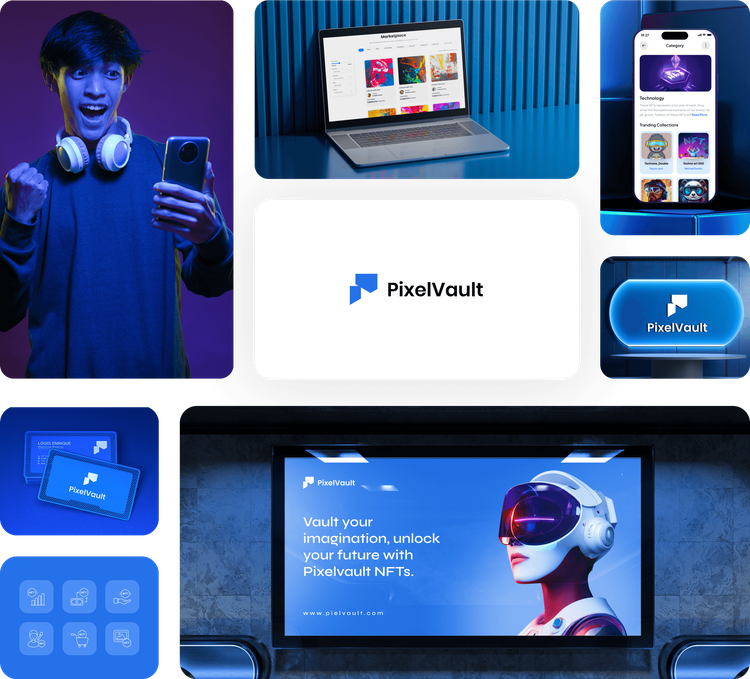
An NFT marketplace website, a dashboard, and mobile app screens for PixelVault. Creators list and sell digital art, and collectors bid in live auctions. Both track their NFTs, bids, and wallet in the dashboard. The gallery also shows the PixelVault brand on business cards, a billboard, and social media posts.
Every auction card shows the current bid in ETH, a countdown to the close, and a Place a Bid button. The detail page adds the owner, the creator, and other works by the artist. On phones, an offers list shows each bid and when it expires. The History page lists running and finished bids with their status.
Digital artists who want to sell their work and collectors who want to buy it. Beginners follow a 4-step guide: set up a wallet, create a collection, add an NFT, and list it for sale. Experienced traders get detailed filters, ranking and activity statistics, active bids, and a wallet with transaction history.
Desktop, tablet, and phone. The website and the dashboard are laid out for desktop and tablet screens. The mobile app screens cover live auctions, hot bids, search, filters, NFT details, uploads, and statistics. The same blue and white design and the same bid button carry across all 3.
Recent NFT sales across the marketplace. The Activity tab lists each sale with the item, its price in ETH, and how long ago it sold. A Ranking tab sits beside it, and filters narrow the list by category and by chain. A separate Top Seller screen lists the top sellers on PixelVault.
Yes. DeveloperLook designs and builds NFT marketplaces with live auctions, creator uploads, collection pages, filters, and a wallet view. PixelVault is one example. We start from who sells and who buys on your platform. Then we plan the listing, bidding, and ownership flows around them before design begins.
Saimul IslamFounder & CEO, DeveloperLookStill have questions?
Send a message or book a call with the team.
Related services
This project
PixelVault NFT Marketplace Web Design & Development
Built with the 4 services around it
Free 30-min callGoogle Meet
Book a call
In 30 minutes on Google Meet we walk you through how we would build it, how long it takes and what it costs. Then you get a written estimate.
Calendar not showing? Book on cal.com or send a brief.