
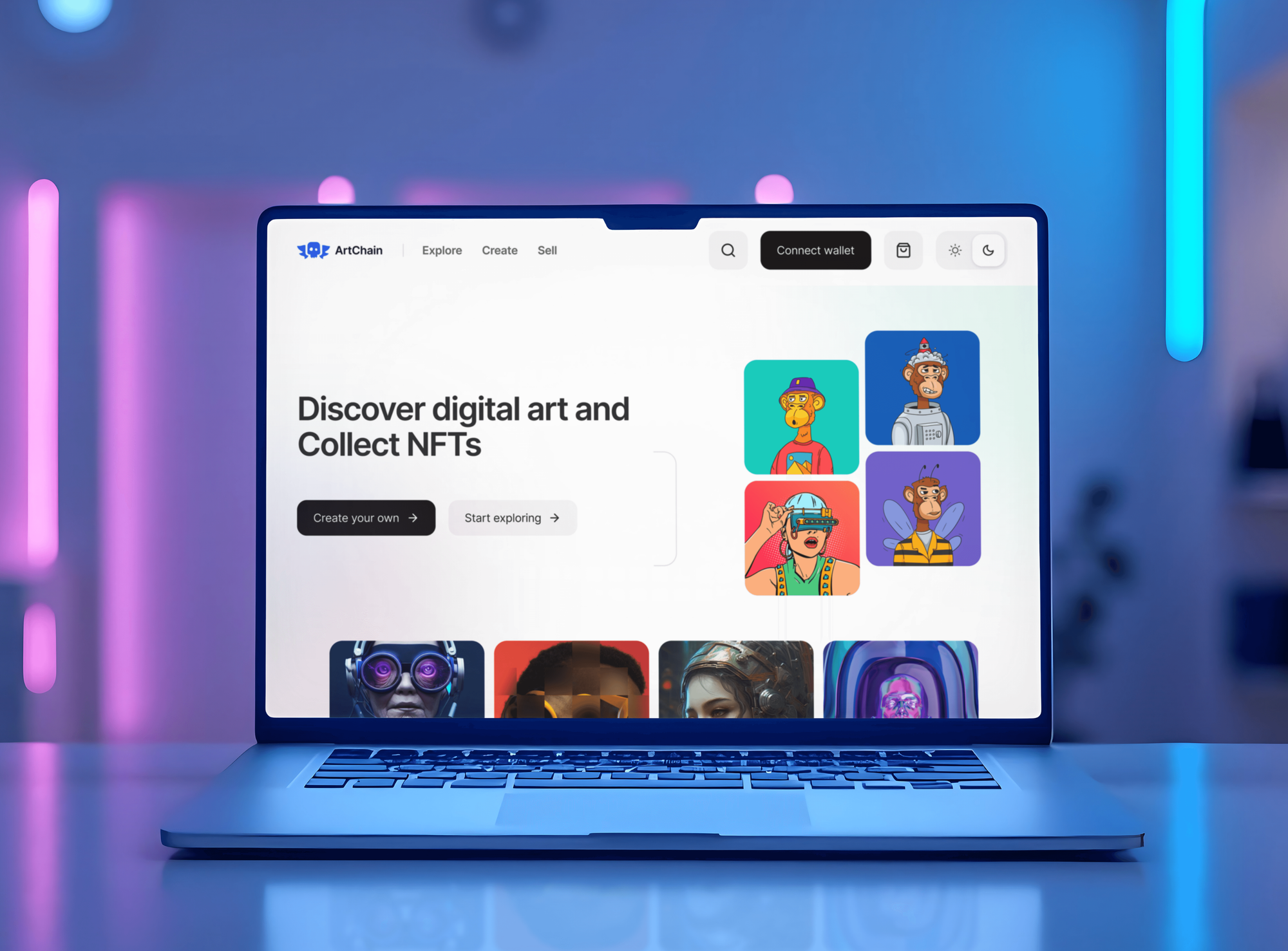
ArtChain NFT Digital Arts Website & Dashboard
- Art
- Crypto & NFT
- Dashboard

Web3 App Development
DeveloperLook handles web3 app development for crypto and blockchain products: smart contracts and tokens, wallet-connected web apps, NFT marketplaces, iOS and Android apps, and APIs for on-chain data.
3 to 5
Weeks to a live mint site
3
Transaction states users can see
Teams we have built for:




The Problem
Web3 products often split across a contract developer, a web freelancer, and an app team. Each part works alone, and the gaps between them show up when real users arrive.
01 · Mobile wallets
On phones, the wallet prompt opens and the session drops.
We test wallet connection on real iOS and Android phones first.
02 · Slow pages
Profile and listing pages read the chain on every visit.
An indexer stores on-chain events, so web and mobile pages load from a fast API.
03 · Split vendors
Three vendors split the contract, web, and app work.
One team writes the contracts or integrates yours, then builds the web front end, the API, and the app.
04 · Unclear results
Users can't tell if a transaction worked, so they sign it twice.
Each transaction shows a pending, confirmed, or failed state read from the chain.
Your launch is announced for Friday, and the app works on the founder's laptop. On a phone, the wallet prompt opens and the page loses the session. Profile pages read the chain on every visit, so they crawl. Users can't tell whether a transaction worked, so some sign it twice. The contract developer, the web freelancer, and the app agency each blame the other's code, and nobody can say which flows have run on a testnet.
We start with a free Web3 review that walks each flow your users take: connect, sign, wait, and see the result. Then one team writes the smart contracts or integrates yours, and builds the web front end, the API that serves indexed chain data, and the iOS and Android app. Wallet connection gets tested on real phones first, and every flow runs on a public testnet before mainnet. Users approve each transaction in their own wallet, and we don't ask anyone for seed phrases.
Wallets that connect on phones
MetaMask, Coinbase Wallet, and WalletConnect flows are tested on iOS and Android before the rest is built.
Fast pages from indexed data
An on-chain event indexer feeds an API, so profiles, listings, and the app load without waiting on the chain.
Testnet before mainnet
Mints, listings, and contract calls run on a public testnet such as Sepolia before real funds move.
Our Services
Start with the layer your launch depends on: the contracts and tokens that hold the rules, the site or dApp where wallets connect, or the wallet, app, and API your users open every day. Each part works with the others.
Project sites that read without a wallet, wallet-connected dApps, NFT mint sites, and marketplaces with offers, tested on phone wallets before launch.
Who We Build For
An NFT creator needs a mint page that holds up on launch night, while a crypto app team needs an API and two store releases. Choose the launch that looks most like yours to see which services we pair and how long it usually takes.
The stack we usually build
4 services, one project plan
Mint site
NFT Marketplace Development ServicesAllowlist phases and live supply counters on a page tested with phone wallets.
Mint contract
Smart Contract Development ServicesAn ERC-721 or ERC-1155 contract with per-wallet limits, fuzz-tested and verified.
Security test
Web Application Penetration Testing ServicesA manual test of the mint site's logic and settings before launch.
Your collection is ready and the date is public. When the whole community arrives at once, the page, the wallets, and the contract all have to work.
NFT creators planning a public mint: Your mint date is announced, the allowlist is full, and the last drop you joined elsewhere failed on mobile wallets.
Our Process
You approve the flow map and price first, try every flow on a testnet with your own wallet, and launch on mainnet only after you sign off.
We walk through each flow your users take, from connecting a wallet to seeing the result, and read your contract's functions. You get a written list of what to build, what to test, and what can wait.
Projects We've Built
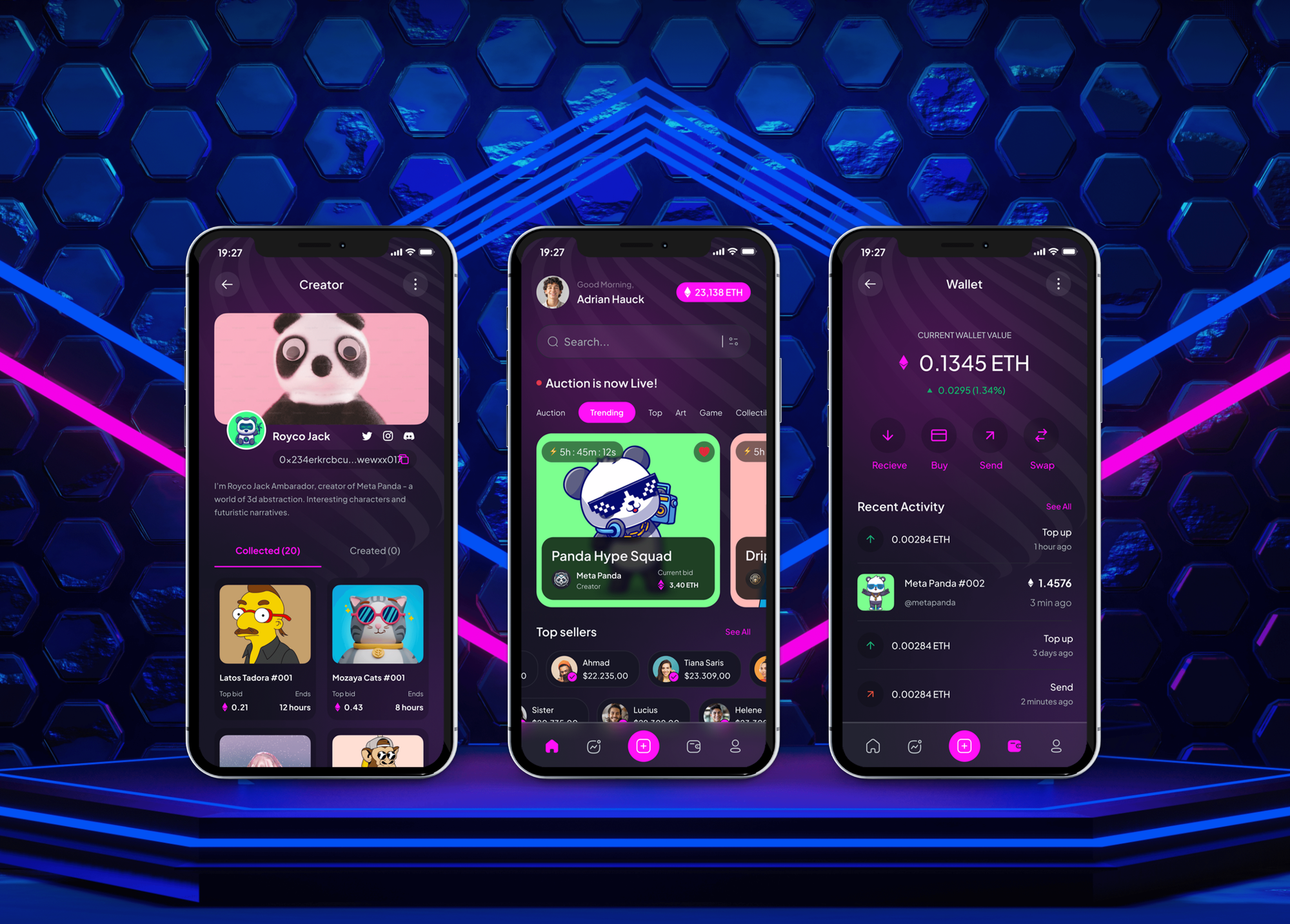
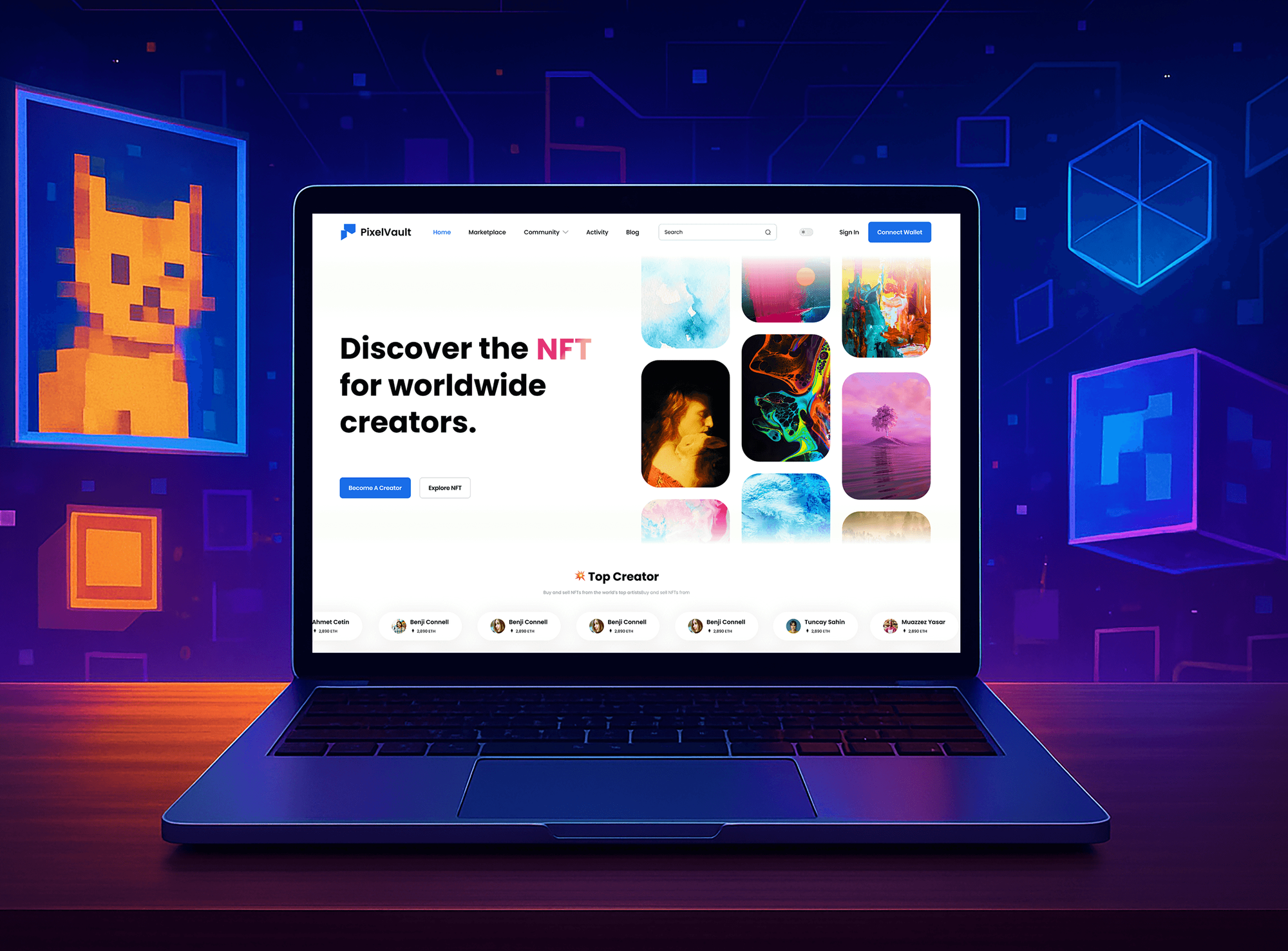
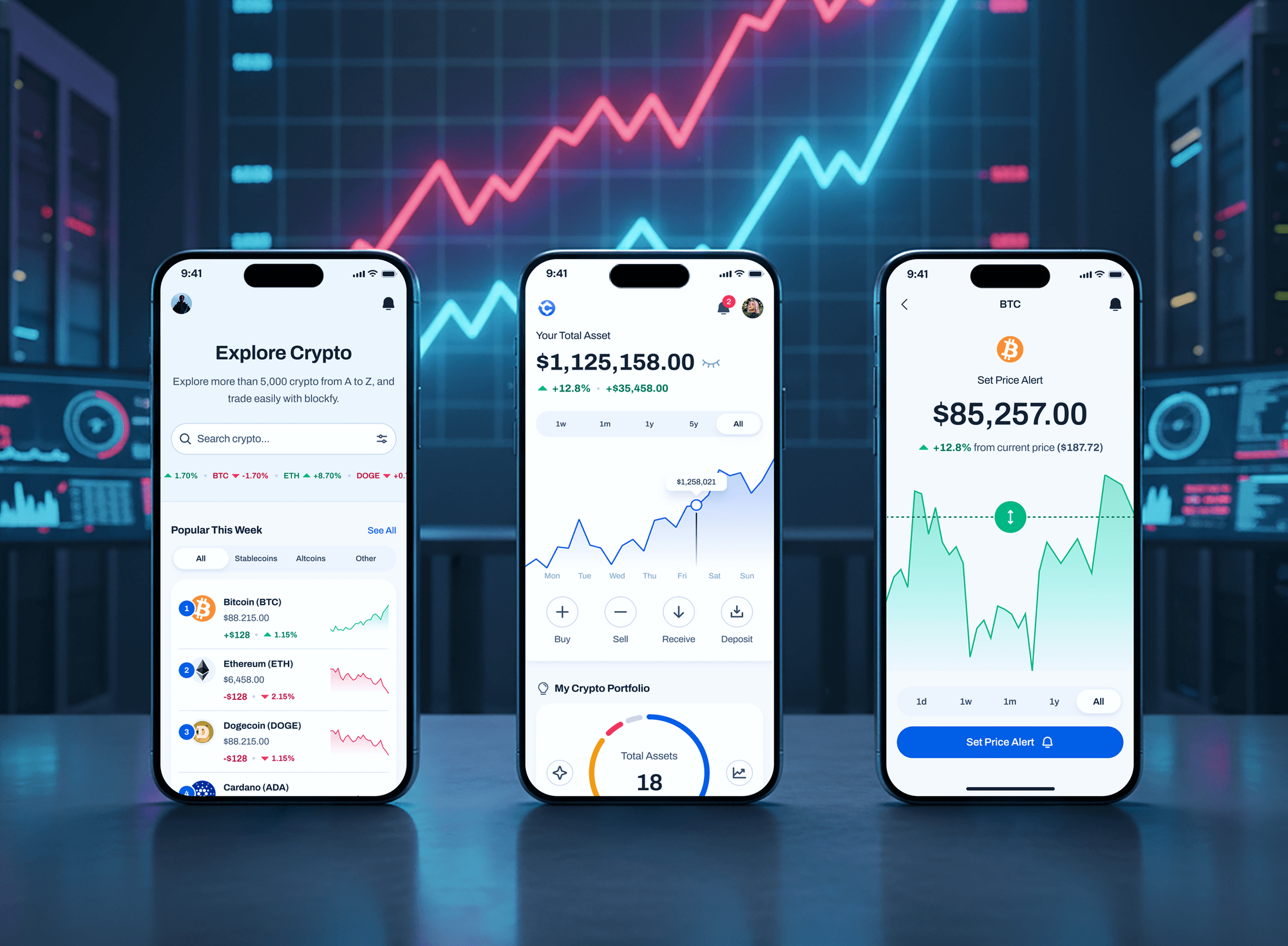
NFT marketplace websites and dashboards, NFT marketplace apps, and a crypto app, designed and built by our team for Web3 founders.
What Our Clients Say
A founder and other clients on how their builds went, from delivery to the support after launch.
We had a very specific vision for our website & app, and DeveloperLook not only delivered but added features we hadn’t even thought of. Their guidance and creativity made the project a huge success.
We had a pretty specific idea of what we wanted our website to become, but I wasn’t sure how easily we could explain all of it to a development team. There were quite a few moving parts, and we were working toward a deadline, so I expected a few things to get lost along the way. That never really happened. They understood what we were trying to achieve, kept us updated throughout the process, and got everything ready within the agreed timeline. The final site feels much easier to navigate, works beautifully on mobile, and is noticeably smoother for our customers. It was a huge relief seeing the original idea actually turn into the website we had in mind.
The mobile experience is probably my favourite part of the new site. We had spent a lot of time making sure the desktop version looked right, and the team kept pushing us to think about how everything would actually feel on a phone too. They were right. The navigation is clean, the interactions feel natural, and everything we’ve tested so far works exactly as it should. They also went through the links, forms, integrations, and other details more than once before launch, which I really appreciated. And even after going live, we could still reach out when something came up. The whole process felt friendly, organised, and surprisingly straightforward.
1,250+
Projects shipped
10+
Years of experience
Top 3%
Upwork Top Rated Plus
5 stars
Average review score

Want results like these?
Tell us what you are building. You get a reply within 24 hours on business days, then a written estimate.
Overview
DeveloperLook handles web3 app development for crypto founders, NFT creators, and brands. We write tested smart contracts, tokens, and DeFi modules, then build the wallet-connected web apps, NFT marketplaces, mobile apps, and APIs around them, with every flow run on a testnet first. Projects start at $650, and mint sites go live in 3 to 5 weeks.
DEVELOPERLOOK
Project facts · Web3 App Development for Crypto and Blockchain Products
Reviewed 22 Oct 2026 by Saimul Islam
Not a fit
Exchange or custody
You want crypto exchange development services or a custodial product that holds customer funds. Both are regulated, so a qualified lawyer should shape the plan before any build.
A new blockchain
You want a new Layer 1 chain or a custom consensus protocol. We build apps on existing networks such as Ethereum, Polygon, and Base, not new chains.
Contract audit only
You only need an independent audit of a finished contract. That's work for a dedicated audit firm, and we can integrate the audited contract afterward.
Budget under $650
Your budget is under $650 and you only want to test interest with a small drop. A no-code minting tool will run that first test for less.
Not sure we're the right fit?
Book a free call or message us. We'll tell you honestly whether we're the right team.
Pricing
These are starting points in USD. Your final price depends on the chain, how ready your contract is, and whether you add a mobile app. The quote is fixed after a free Web3 review.
For Web3 teams starting small, from a blockchain fit review at $650 or a standard token at $750 to a single contract or app prototype at $1,300.
$650one-time, USD
For teams launching a marketplace with listings, offers, and profiles on one chain, in about 8 to 12 weeks.
$4,400one-time, USD
For marketplaces that also need an iOS and Android app on the same indexed data, in about 12 to 16 weeks.
$9,100one-time, USD
More Industries
Marketplaces, apps, and APIs we build for other industries, from ecommerce to SaaS startups.
FAQ
Straight answers on cost, timelines, Web3 basics, smart contracts, wallets, and ownership.
Saimul IslamFounder & CEO, DeveloperLookStill have questions?
Send a message or book a call with the team.
Blockchain app development with us starts at $650 for a written fit review and $750 for a tested token on one chain. A project website starts at $1,100, a single contract or app prototype at $1,300, a mint site or focused API at $1,450, and an NFT marketplace MVP at $4,400. Independent audits and gas fees are paid by you directly, outside our price.
A fit review or a tested app prototype takes about 2 weeks, a standard token 2 to 3 weeks, a focused API 2 to 3 weeks, and an NFT mint site 3 to 5 weeks. An NFT marketplace MVP takes 8 to 12 weeks, and adding an iOS and Android app brings it to 12 to 16 weeks. Contract readiness and any audit usually set the launch date.
dApp development is building a decentralized app: a front end where users connect a wallet, plus smart contracts that run its logic on a blockchain. Most dApps also need an indexer and an API, because reading the chain directly is slow. We write the contracts or integrate yours, then build the front end, the API, and the app.
Blockchain application development is building software whose key records, such as ownership or payments, live on a blockchain instead of a private database. The app reads and writes those records through smart contracts and the user's wallet. Everything around them, like search, alerts, and dashboards, is still normal web and mobile engineering.
A blockchain app is any app that reads from or writes to a blockchain, usually through a crypto wallet the user controls. NFT marketplaces, crypto portfolio trackers, and token-gated communities are common examples. To the user it should feel like a normal app, with the wallet step explained in plain words.
Web3 apps keep key records, such as who owns a token, on a public blockchain instead of one company's servers. Users sign in and approve actions with a crypto wallet that holds their keys. Smart contracts apply the rules, and the website or app is the interface on top. Gas fees pay the network to process each transaction.
Yes. Contracts are their own service here: we agree a written spec, build in Solidity on OpenZeppelin libraries, and fuzz-test every rule with Foundry before a testnet deploy. A single contract starts at $1,300, and tokens and DeFi vaults have their own pages because supply rules and pooled funds fail in different ways. Before any contract holds user funds on mainnet, we recommend an independent audit, even when we wrote it.
Most builds run on Ethereum or an EVM network such as Polygon or Base. Users connect with MetaMask, Coinbase Wallet, or any wallet that supports WalletConnect. Every flow runs on the chain's public testnet first. For Solana or another non-EVM chain, we check the fit before we quote.
Pick one that shows working testnet builds, not just designs, and explains how users sign each transaction. Ask whether they ever hold private keys (they shouldn't), who owns the contract roles after launch, and how they test wallets on phones. A custom blockchain app development company should also say when a no-code tool would do.
You do. At launch, the contract owner roles pass to your team's wallet, and the code, domain, and hosting sit in your accounts. We document each admin function and keep no keys to your contracts. Support runs 30, 60, or 90 days by plan, and upgrades after that can go on a care plan.
Saimul IslamFounder & CEO, DeveloperLookStill have questions?
Send a message or book a call with the team.
Free 30-min callGoogle Meet
Book a call
In 30 minutes on Google Meet we walk you through how we would build it, how long it takes and what it costs. Then you get a written estimate.
Calendar not showing? Book on cal.com or send a brief.