Testing by the OWASP guide
We follow the OWASP Web Security Testing Guide and cover each OWASP Top 10 risk, so coverage is documented.

Stores, SaaS products, and custom apps get hands-on tests of logins, roles, checkout logic, and APIs, with proof, a fix list, and a retest, from $1,450.
10/10
OWASP Top 10 risks tested
100%
Fixed findings retested
How your project runs
Teams we have built for:














The Problem
It shows up in code your team wrote: logins, roles, discounts, and APIs. Tools check known patterns, but logic flaws only surface when a person tries to abuse them.
01 · Clean scans
Your scanner came back clean, so the app shipped.
Testers work by hand, following the OWASP Web Security Testing Guide.
02 · Order leaks
Changing an order number in a URL shows another customer's address.
Access control between accounts gets tested with real logins and roles.
03 · Stacked discounts
Two discount codes stack that your rules said couldn't.
Checkout and discount abuse tests try to break the rules your app enforces.
04 · Open endpoints
An API endpoint returns every user's email.
Each finding comes with proof, a severity score, and a fix, then a retest.
Your scanner report came back clean, so the app shipped. Then a customer changes the order number in a URL and sees someone else's address. Another stacks two discount codes your rules said couldn't combine. A third finds an API endpoint that returns every user's email. None of this shows up in automated scans, because each request looks normal. You find out from a customer, a chargeback, or a stranger's email about your data.
We start by mapping what an attacker would target first: logins, roles, payments, and APIs. Then we test by hand, following the OWASP Web Security Testing Guide, and try to break the rules your app should enforce. Every finding comes with proof, a severity score, and the fix. When your developers finish, we retest, so you know the holes are closed instead of hoping.
Tested by hand, not just scanned
Tools find candidates, and testers prove which ones an attacker could really use.
Proof for every finding
Requests, responses, and screenshots show each issue is real before it reaches your developers.
Retest after your fixes
We check each fixed finding again and update the report you share.
Our Pen Test Process
You sign off on what we test, which accounts we use, and when. Critical issues reach you right away, and the retest confirms each fix.
We agree the apps, domains, user roles, and APIs in scope, plus the testing window. You sign a written authorization and give us test accounts, and you get a fixed price before any testing starts.
What's Included
Hands-on testing of the parts your team built, proof for each finding, and a retest after your fixes. Bigger plans add APIs, checkout abuse tests, and cloud settings.
Compare Options
A scanner is cheap and fast, and large firms sell penetration testing consulting services with formal accreditations. Each one fits a different need.
| Feature | DeveloperLookBest fit | Automated scanner | Security firm |
|---|---|---|---|
| Starting cost | From $1,450 | Free or monthly | Quoted per engagement |
| Manual testing | Every finding checked | None | |
| Business logic | Checkout and roles tested | Rarely caught | Tested |
| Proof of impact | Evidence per finding | Possible issues | Evidence per finding |
| Formal accreditation | Not accredited | None | Often available |
| Fix help | Fixes explained by developers | Generic advice | Report only |
| Retest | Rescan anytime | Varies by contract | |
| Best for | Stores and SaaS apps | A quick first check | Regulated enterprises |
Projects We've Built
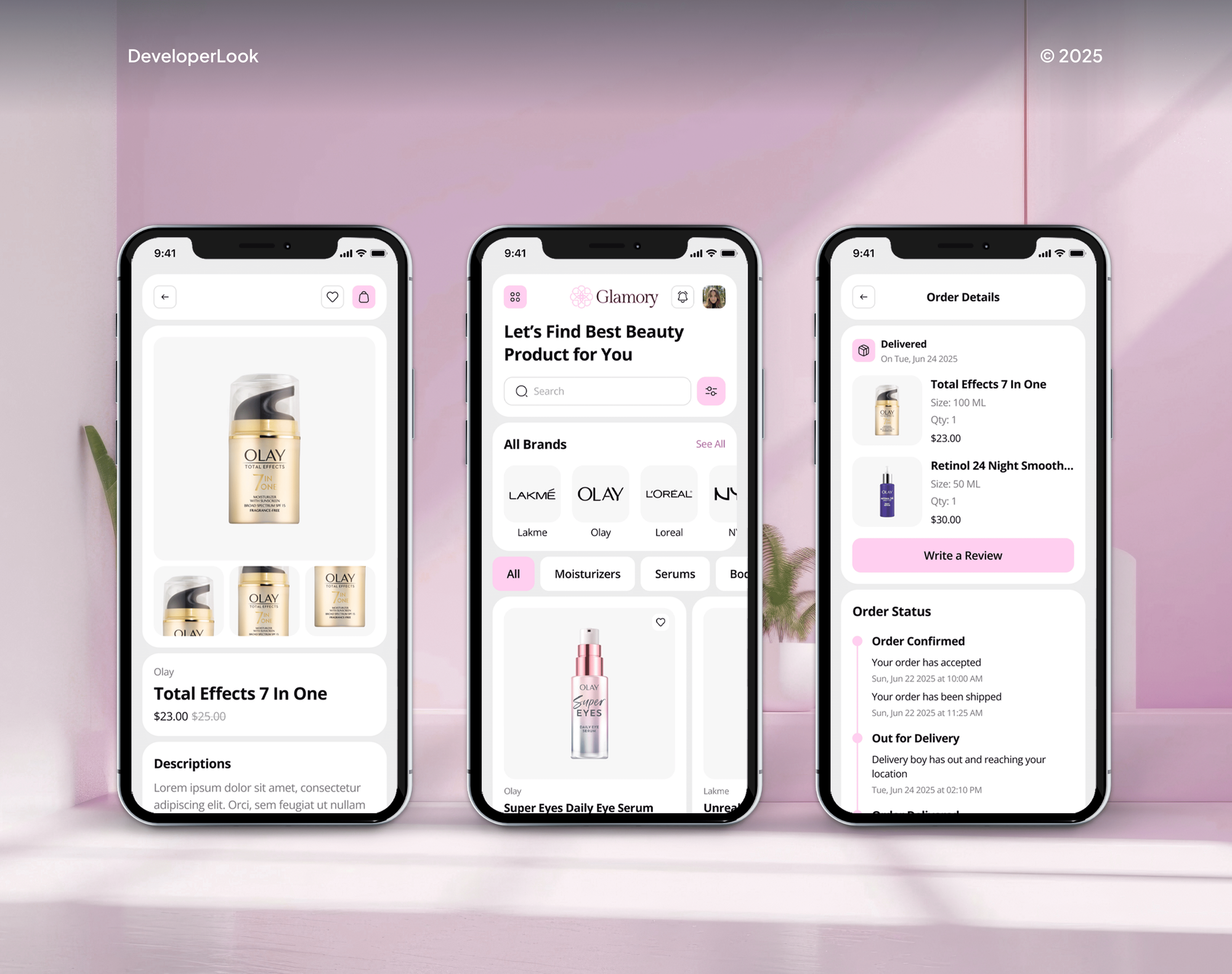
Stores and apps we have designed and built. Custom checkouts, customer accounts, and APIs like these are what a pen test examines.



What Our Clients Say
Feedback from teams we have built stores, apps, and APIs for.
We had a different kind of problem. People were visiting the store, adding products to their carts, and then disappearing before they finished the order. We had tried a few apps and made changes here and there, but nothing really seemed to solve the bigger issue. The team went through the shopping experience with us and pointed out things we hadn't really noticed ourselves. They cleaned up the cart and checkout flow, made the mobile experience much smoother, and helped us make the store feel easier to shop. I’m not going to pretend we fixed everything overnight, but it finally feels like the store is helping the sale instead of getting in the way of it.
The mobile experience is probably my favourite part of the new site. We had spent a lot of time making sure the desktop version looked right, and the team kept pushing us to think about how everything would actually feel on a phone too. They were right. The navigation is clean, the interactions feel natural, and everything we’ve tested so far works exactly as it should. They also went through the links, forms, integrations, and other details more than once before launch, which I really appreciated. And even after going live, we could still reach out when something came up. The whole process felt friendly, organised, and surprisingly straightforward.
We had a pretty specific idea of what we wanted our website to become, but I wasn’t sure how easily we could explain all of it to a development team. There were quite a few moving parts, and we were working toward a deadline, so I expected a few things to get lost along the way. That never really happened. They understood what we were trying to achieve, kept us updated throughout the process, and got everything ready within the agreed timeline. The final site feels much easier to navigate, works beautifully on mobile, and is noticeably smoother for our customers. It was a huge relief seeing the original idea actually turn into the website we had in mind.
1,000+
Projects shipped
10+
Years of experience
Top 3%
Upwork Top Rated Plus
5 stars
Average review score
Work Culture
Testing a live app takes rules and restraint. These habits keep your data safe, your store selling, and every finding worth your developers' time.
We test only the domains, accounts, and windows you sign off on. Nothing outside that scope gets touched, and you can pause testing at any time.
We use test accounts and test orders wherever we can. Real customer data stays in your systems, and we delete our test credentials when the work closes.
Coupon rules, refunds, roles, and order edits are where scanners go quiet. We spend our testing time there, because that's where money and data leak.
We don't flood servers or run denial-of-service attacks, which AWS's own pen testing policy prohibits. Your customers keep checking out while we test.
Every issue comes with the exact request, the response, and steps to repeat it. Your developers fix the cause instead of guessing at it.
The report, evidence, and retest results belong to you, so share them with clients or auditors as you see fit. We don't publish or reuse your findings.
Overview
DeveloperLook provides web application penetration testing services for stores, SaaS products, and custom apps. We test logins, roles, checkout logic, APIs, and cloud settings by hand, then deliver proof for each finding, a fix list, and a retest. Tests start at $1,450, take 1 to 3 weeks, and you own the report.
DEVELOPERLOOK
Project facts · Web Application Penetration Testing Services
Reviewed 30 Sep 2026 by Saimul Islam
Good fit
SaaS products with customer logins
Your SaaS app has customer accounts and admin roles, and a buyer's security questionnaire just asked for your latest report, so you need a penetration testing service that delivers one.
Stores with custom checkout logic
Your WooCommerce or headless store runs custom discount rules, subscriptions, or a payment integration your own team wrote.
Shopify brands with custom apps
Your team built private Shopify apps and a custom storefront, and nobody has checked whether one customer can see another's orders.
Teams hosting on AWS or Firebase
You run on AWS, Firebase, or Azure and want cloud penetration testing services that cover storage buckets and access roles too.
Agencies facing client security questions
Your agency ships custom builds, and clients now ask for an independent security test before launch, so you want pen testing services under your brand.
Not a fit
Plugin and admin review
You mainly need to know which plugins, apps, and admin accounts are risky. Our Website Security Audit Services page covers that for less.
CREST-accredited test needed
You need a test from a CREST-accredited firm for a formal certification or tender. Accredited penetration testing companies are the right choice for that.
Data loss worries
Your worry is data loss from outages or mistakes, not attackers. Our Website Backup and Disaster Recovery page is the better fit.
Standard theme, no custom code
Your budget is under $1,450, or you run a standard theme with no custom code. A security audit finds more for the money.
Not sure we're the right fit?
Send a two-line brief. We'll tell you honestly whether we're the right team.
Pricing
These are starting points in USD. Your final price depends on how many apps, roles, and APIs are in scope, and you get a fixed proposal after a free scoping call.
For one web app or store with up to 2 user roles, tested and reported in about 2 weeks.
$1,450one-time, USD
For stores and SaaS apps with APIs, several user roles, and custom checkout or payment code.
$3,300one-time, USD
For SaaS teams that need two apps or an app plus its cloud setup tested in one engagement.
$6,500one-time, USD
For Agencies
You own the client relationship. We test your client's app under your brand, write findings in your report template, and retest after your team's fixes. You answer security questionnaires without hiring a tester.
White label: your client only ever sees your brand
Send the app, its user roles, and the security questions your client asked.
You get a scope, an authorization form, and a fixed price per app.
We test, report in your template, and retest after your team's fixes.
You present the report. We stay behind your brand on every call.
Fixed scope, testing window, and price agreed before any testing.
Testers who also build Shopify apps, SaaS backends, and APIs.
Test one client launch or every release without a new hire.
The Right Technology for Your Project
We test with standard security tools and our own scripts, on the frameworks, databases, and clouds your app already runs on.
 Burp Suite
 OWASP
OWASP Chrome DevTools
 Python
 Shopify
 WooCommerce
 Next.js
 Node.js
 Laravel
 GraphQL
 OpenAPI
 PostgreSQL
 MySQL
MySQL MongoDB
 AWS
AWS Cloudflare
 Docker
 Firebase
 Supabase
FAQ
Straight answers on cost, timing, test types, scans versus tests, SOC 2, checkout and Shopify apps, and retests.
 Saimul IslamFounder & CEO, DeveloperLook
Still have questions?
Send a message or book a call with the team.
Our tests start at $1,450 for one web app or store with up to 2 user roles. Adding APIs, checkout abuse tests, and a custom app code review costs $3,300. A full test with a cloud review and two retests starts at $6,500. Each price is fixed after a free scoping call.
Most web app tests take 1 to 2 weeks from kickoff to report, including about a week of hands-on testing. Tests with APIs and a cloud review take up to 3 weeks. The retest happens once your fixes are in, usually within a few days of your request.
It's an authorized attempt to break into your app or systems, so you learn which weaknesses an attacker could really use. Testers work by hand with tools like Burp Suite, chain small issues together, and prove each finding with evidence. You get a report with severity scores, fixes, and a retest, which a vulnerability scan alone can't give you.
The main types are network, web application, API, mobile app, cloud, wireless, and social engineering tests. Each one targets a different attack surface. We focus on your web apps, their APIs, and the cloud settings behind them. For network, wireless, or physical tests, a specialist penetration testing company is the better fit.
A vulnerability scan lists possible weaknesses from known patterns, while a pen test proves which ones an attacker can actually use. Testers chain small issues, abuse business rules, and try to reach other users' data. If a scan and an audit cover your risk, we'll tell you before we quote.
Yes, wherever your own code controls them. We try price tampering, coupon stacking, negative quantities, and skipped payment steps on custom checkouts and payment integrations. On Shopify, the hosted checkout belongs to Shopify, so we test your apps, discounts, and extensions around it, and the order data they touch.
Yes, custom Shopify apps, theme code, and headless storefronts are a core part of our testing. We check OAuth and session handling, webhook verification, access scopes, and whether one shop or customer can reach another's data. Shopify's own platform stays out of scope, and we test on a development store when one is available.
SOC 2 doesn't strictly require one, but most auditors expect a recent pen test report. The AICPA criteria list it as one way to evaluate your controls (CC4.1), and independent penetration test services give your auditor that evidence. If you also handle cards, PCI DSS asks for testing at least every 12 months and after significant changes.
Yes, every plan includes a fix list and a retest. Each finding has a severity score, proof, and the change that closes it. After your developers finish, we retest every fixed finding and send an updated report you can show clients as proof the issues are closed.
Run a pen test at least yearly, plus after any big change to logins, payments, or APIs. Teams that ship weekly often test before big releases instead. Between tests, an audit or an automated scan catches the easy problems early, so the next test can focus on logic.
Saimul IslamFounder & CEO, DeveloperLookStill have questions?
Send a message or book a call with the team.
30-min strategy callGoogle Meet
Book a call
Pick a 30-minute slot that works for you. We meet on Google Meet to align on goals, scope, and the right next step.
