
Project pages and case studies
Pages for each project with sector, scale, your role, credits, and the story behind key decisions.

Architecture firm website design for studios and practices: case studies, fast full-size photos, zoomable drawings, and RFP intake. From $1,400.
2X
More RFP and project inquiries
90+
Mobile PageSpeed with full photos
Teams we have built for:














The Problem
Most website design for architecture firms treats photography as decoration. Developers and homeowners judge you on those images, often on a phone between meetings.
01 · Stalling heroes
A full-size hero export stalls the page on a phone.
Every image gets served in AVIF or WebP at the size each screen needs.
02 · Bare thumbnails
Project thumbnails show no sector, size, or role.
Each project page covers sector, scale, your role, and key design decisions.
03 · Thin inquiries
Your RFP form asks for a message and nothing else.
Inquiry forms ask project type, budget range, and timeline, with brief uploads.
04 · Sector search
A developer can't filter your work by sector.
Portfolio filters let prospects jump to the sectors they care about.
A developer shortlisting firms for a mixed-use project opens your site on their phone in a site trailer. Your hero image is a full-size export from the photographer, so the page stalls. The projects page is a grid of thumbnails with no sector, size, or role. Your RFP form asks for a message and nothing else. They move on before your best building loads.
We start with your projects, not a template grid. Each project gets a page with sector, scale, your role, and the story behind key decisions. An image pipeline serves the right size and format for every screen, so full-bleed photos stay sharp and fast. Your RFP form asks what you'd ask on a first call. Prospects see your work, not a loading spinner.
Photos that stay fast
Every image served in AVIF or WebP at the size each screen needs.
Projects told as stories
Case studies that explain the brief, constraints, and design decisions, not just the photos.
RFP intake that qualifies
Inquiry forms that ask project type, budget range, and timeline, with uploads for briefs.
Our Architecture Website Process
You approve each stage: the sitemap, the case study format, a clickable design, a staging site with your full photo set, and the launch.
We review your project archive, your target clients, and how RFPs and inquiries reach you today. You then get a sitemap, a shortlist of lead projects, and a fixed price.
What's Included
Every build covers project pages, an image pipeline, RFP intake, and studio pages, with 3D viewers and office pages on larger plans.
Compare Options
Many website designers for architects sell a beautiful template, and for a small studio that can be enough. Templates are quick and cheap. Here's where each option holds up.
| Feature | DeveloperLookBest fit | Portfolio template | Branding studio |
|---|---|---|---|
| Portfolio structure | Narratives by sector | Image grid | Custom, design-led |
| Image performance | AVIF and WebP pipeline | Varies by platform | Often heavy exports |
| Drawings and plans | Zoomable viewer | Static images | Static images |
| RFP intake | Qualifying form with uploads | Basic contact form | Contact form |
| 3D models | Viewer on larger plans | Embeds only | Rarely offered |
| Visual design | Custom to your studio | Template limits | Strong visual identity |
| Time to launch | 4 to 12 weeks | Within a week | Often several months |
| Pricing model | Fixed quote, site is yours | Low monthly fee | Project fee, often higher |
Projects We've Built
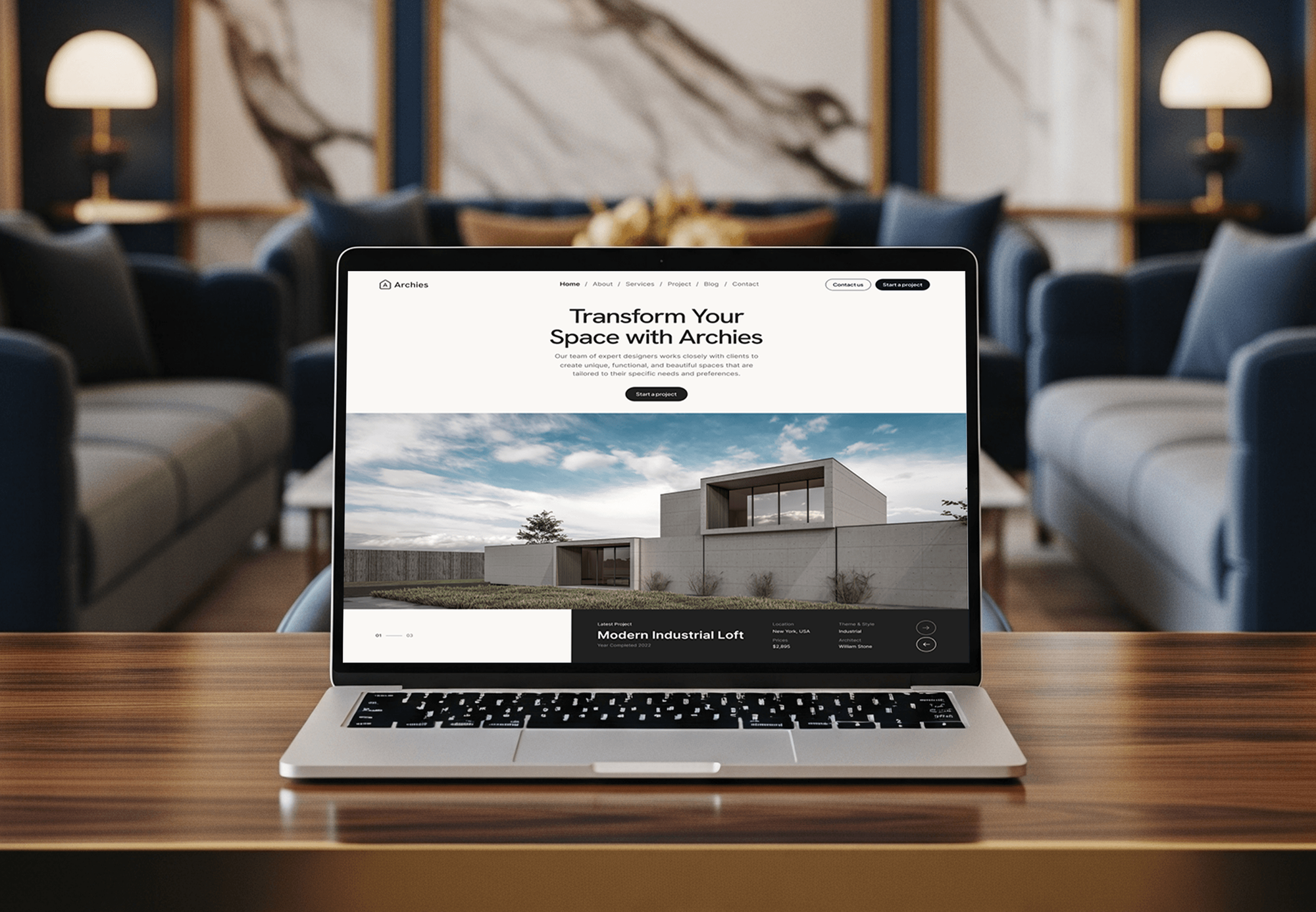
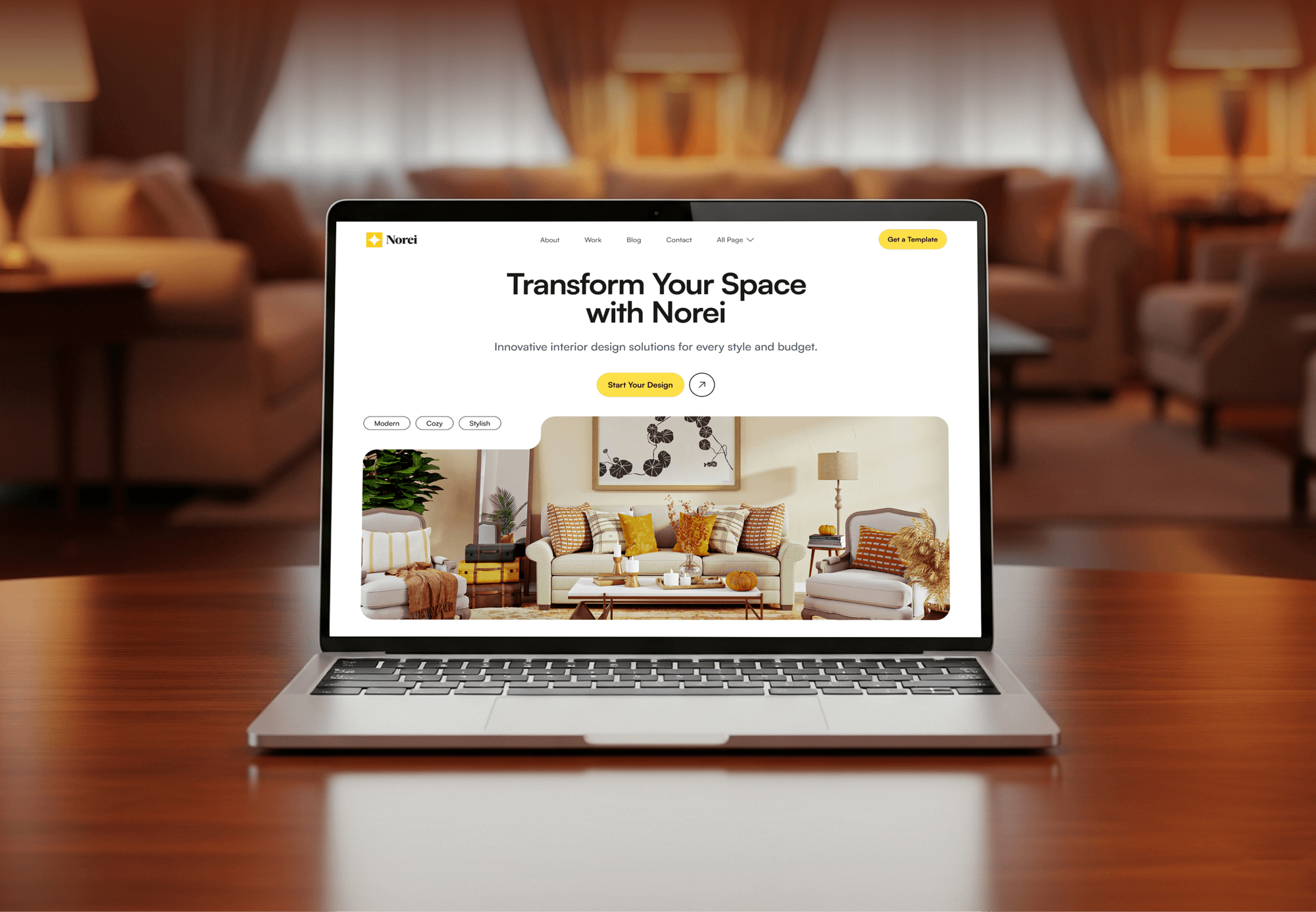
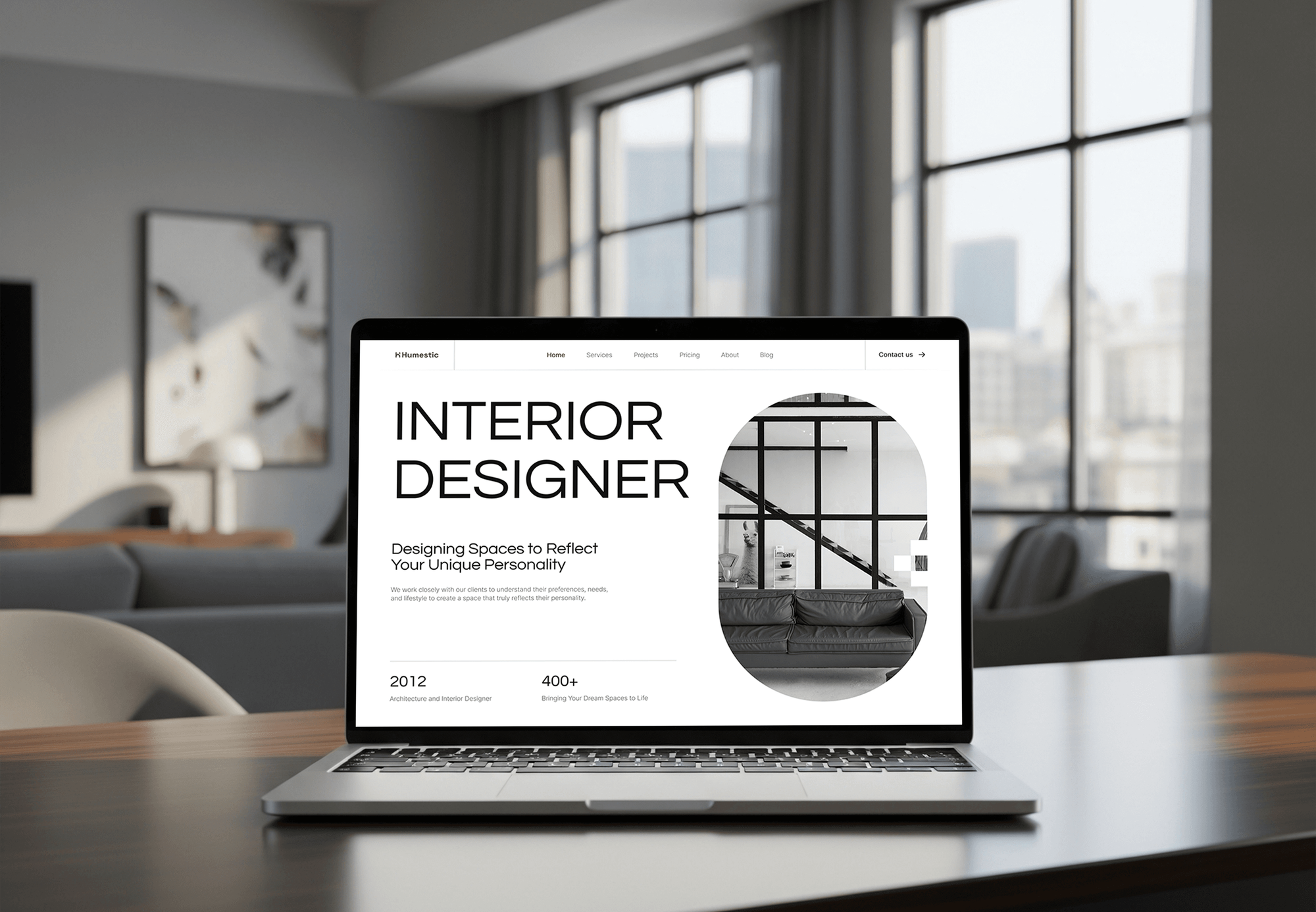
Architecture and interior design websites from our portfolio, with large-format photography, project layouts, and inquiry paths for design-led practices.

What Our Clients Say
Feedback from teams we have built websites for.
We had a pretty specific idea of what we wanted our website to become, but I wasn’t sure how easily we could explain all of it to a development team. There were quite a few moving parts, and we were working toward a deadline, so I expected a few things to get lost along the way. That never really happened. They understood what we were trying to achieve, kept us updated throughout the process, and got everything ready within the agreed timeline. The final site feels much easier to navigate, works beautifully on mobile, and is noticeably smoother for our customers. It was a huge relief seeing the original idea actually turn into the website we had in mind.
The mobile experience is probably my favourite part of the new site. We had spent a lot of time making sure the desktop version looked right, and the team kept pushing us to think about how everything would actually feel on a phone too. They were right. The navigation is clean, the interactions feel natural, and everything we’ve tested so far works exactly as it should. They also went through the links, forms, integrations, and other details more than once before launch, which I really appreciated. And even after going live, we could still reach out when something came up. The whole process felt friendly, organised, and surprisingly straightforward.
What I appreciate most is that the website is actually easy for us to manage now. We can update content ourselves instead of sending a developer a message every time we need to change something small. They also paid attention to the technical SEO side, which mattered to us because we didn’t want a new website to create problems for the traffic we already had. I’ve probably asked more questions than I should have since launch, but every question has been handled patiently and without any fuss. The team is easy to work with, they explain things clearly, and when we need something changed, they focus on getting it done rather than making the process complicated.
1,250+
Projects shipped
10+
Years of experience
Top 3%
Upwork Top Rated Plus
5 stars
Average review score

Want results like these?
Tell us what you are building. You get a reply within 24 hours on business days, then a written estimate.
Work Culture
Our designers and developers work from your drawings and photography, not stock layouts. These habits keep projects accurate, credited, and fast.
We build every page around your images and test them at full size on real phones. A slow gallery undersells a building that took years.
We list photographers, collaborators, and your firm's role on each project as you approve them. Accurate credits protect relationships with partners and clients.
Plans and sections open in a zoom viewer instead of one blurry image. Developers read the drawings, so we make them legible.
New projects run through the same image pipeline as launch. Your site stays fast long after we hand it over.
If a portfolio template shows your work well enough, we'll say so before quoting. A small studio may not need custom code yet.
Domain, hosting, and site files are in your firm's name from day one. Your project archive doesn't depend on our accounts.
Overview
DeveloperLook provides architecture firm website design for studios and practices that win work through their portfolio. Each site includes project case studies, an image pipeline for fast full-size photography, zoomable drawings, and RFP intake with file uploads. Projects start at $1,400 and launch in 4 to 12 weeks, with a fixed price and every account in your name.
DEVELOPERLOOK
Project facts · Architecture Firm Website Design
Reviewed 28 Sep 2026 by Saimul Islam
Good fit
Studios pitching commercial developers
You compete for mixed-use and commercial work, and developers judge your site on a phone before the first call.
Residential architects seeking larger commissions
Your custom homes are your best marketing, but your WordPress site shows them as small, slow thumbnails.
Practices with large project archives
You have years of photos and drawings and need a portfolio structure that filters by sector and scale.
Firms adding 3D visualization
Your team already models in SketchUp, Rhino, or Revit and wants selected models viewable on your site.
Agencies with design-firm clients
Your agency signed an architecture practice and needs a Webflow or WordPress partner who can handle heavy imagery.
Not a fit
Clean gallery is enough
You're a solo designer who mainly needs a clean gallery. An architect portfolio website on a good template may be enough, and we'll say so.
Product configurators
You want interactive configurators for furniture or fixtures you sell. Our 3D Product Configurator Development page covers that work.
Speed fixes only
You mostly need faster load times on a site you already like. Website Speed Optimization is the smaller, cheaper job.
Budget under $1,400
Your budget is under $1,400 for a full practice website. Start with a template and add project stories later.
Not sure we're the right fit?
Book a free call or message us. We'll tell you honestly whether we're the right team.
Pricing
These are starting points in USD. Your final price depends on project count, case study depth, and 3D work, and you get a fixed proposal after a free discovery call.
For small studios that need a fast, image-led site with their best 12 buildings.
$1,400one-time, USD
For practices pitching developers and larger clients with project stories and structured RFP intake.
$3,400one-time, USD
For multi-office firms that want 3D models, careers, and press materials on one site.
$6,900one-time, USD
For Agencies
Your agency keeps the relationship. We design and build sites for your architecture clients under your brand, including image pipelines, case study templates, and the RFP forms their principals need.
White label: your client only ever sees your brand
Send the firm's brand, project list, photography, and RFP requirements.
We confirm a fixed quote, the launch schedule, and a lead developer.
We build, load the projects, and hand over the site under your brand.
Your brand fronts every call, so the studio relationship stays yours.
We process large photo sets and drawings without slowing the site.
Senior developers build the image pipeline, viewers, and templates.
Take on more design-firm clients without hiring a developer.
The Right Technology for Your Project
WordPress or Webflow carries the site, with an image CDN for photography and three.js or Sketchfab for 3D models.
 WordPress
 Webflow
 Next.js
 Tailwind CSS
 Cloudflare
 three.js
 Blender
 HubSpot
 Zapier
 Google Sheets
 PageSpeed Insights
 Google Analytics (GA4)
 Google Tag Manager
 Google Search Console
FAQ
Straight answers on cost, photography and speed, case studies, RFP intake, and 3D on architecture sites.
Saimul IslamFounder & CEO, DeveloperLookStill have questions?
Send a message or book a call with the team.
Our architecture sites start at $1,400 for 10 pages and 12 portfolio entries, with an image pipeline and inquiry form. Practice sites with 30 entries, case studies, and RFP routing start at $3,400. Multi-office builds with 3D viewers start at $6,900. Quotes are fixed after a free discovery call.
A studio site takes 4 to 5 weeks, and a practice site takes 6 to 8 weeks. Multi-office builds with 3D viewers take 9 to 12 weeks. Gathering photography and credits is usually the slowest part, so we start that list in the first week.
Serve each photo at the size the screen needs, in AVIF or WebP, and load images below the fold as visitors scroll. Keep originals for downloads, not page views. Show blueprints and plans in a zoomable tile viewer such as OpenSeadragon, so visitors read detail without loading one giant file.
Relevance and proof attract both: projects filtered by sector and scale, with your role stated plainly. Developers look for delivery facts like program, size, and schedule. Residential clients want to see how you listen, so show the brief and your decisions. Good modern architecture website design lets the buildings carry the page.
Structure each case study as a short narrative: your brief, the site and its constraints, your key design moves, and the finished building. Lead with the strongest photo, then alternate text and images every screen or two. End with credits and links to similar projects in the same sector.
Two paths work best: a short inquiry form for homeowners and a fuller RFP form for developers and institutions. The RFP path asks project type, site, size, budget range, and timeline, and accepts uploaded briefs. Each submission reaches the right principal with a CRM tag, not a shared inbox.
Yes, an architecture website can show 3D models through a three.js viewer or a Sketchfab embed. We convert your model to glTF, a web-ready 3D format, and load it only on request. VR walkthroughs work through WebXR on supported headsets, so we pair them with 360-degree renders any phone can show.
An architect portfolio website shows projects, while a practice site also wins and qualifies work. The practice site adds project narratives, sector filters, RFP intake, and studio pages that explain how you work. Solo designers often need only the portfolio. Firms pitching developers or institutions usually need the rest.
Yes, we move your projects, photos, and credits from Squarespace, WordPress, or a portfolio platform. Each image goes through the new pipeline, and old project URLs redirect to their new pages, so links from publications keep working. You get a checklist of missing credits or drawings before launch.
Your firm owns the site: domain, hosting, files, and every project page. Photo licenses stay between you and your photographers, and we credit them as your agreements require. Each plan includes 30, 60, or 90 days of fixes, and your team can add projects without us.
Saimul IslamFounder & CEO, DeveloperLookStill have questions?
Send a message or book a call with the team.
Free 30-min callGoogle Meet
Book a call
In 30 minutes on Google Meet we walk you through how we would build it, how long it takes and what it costs. Then you get a written estimate.
Calendar not showing? Book on cal.com or send a brief.