Number plate bike picker
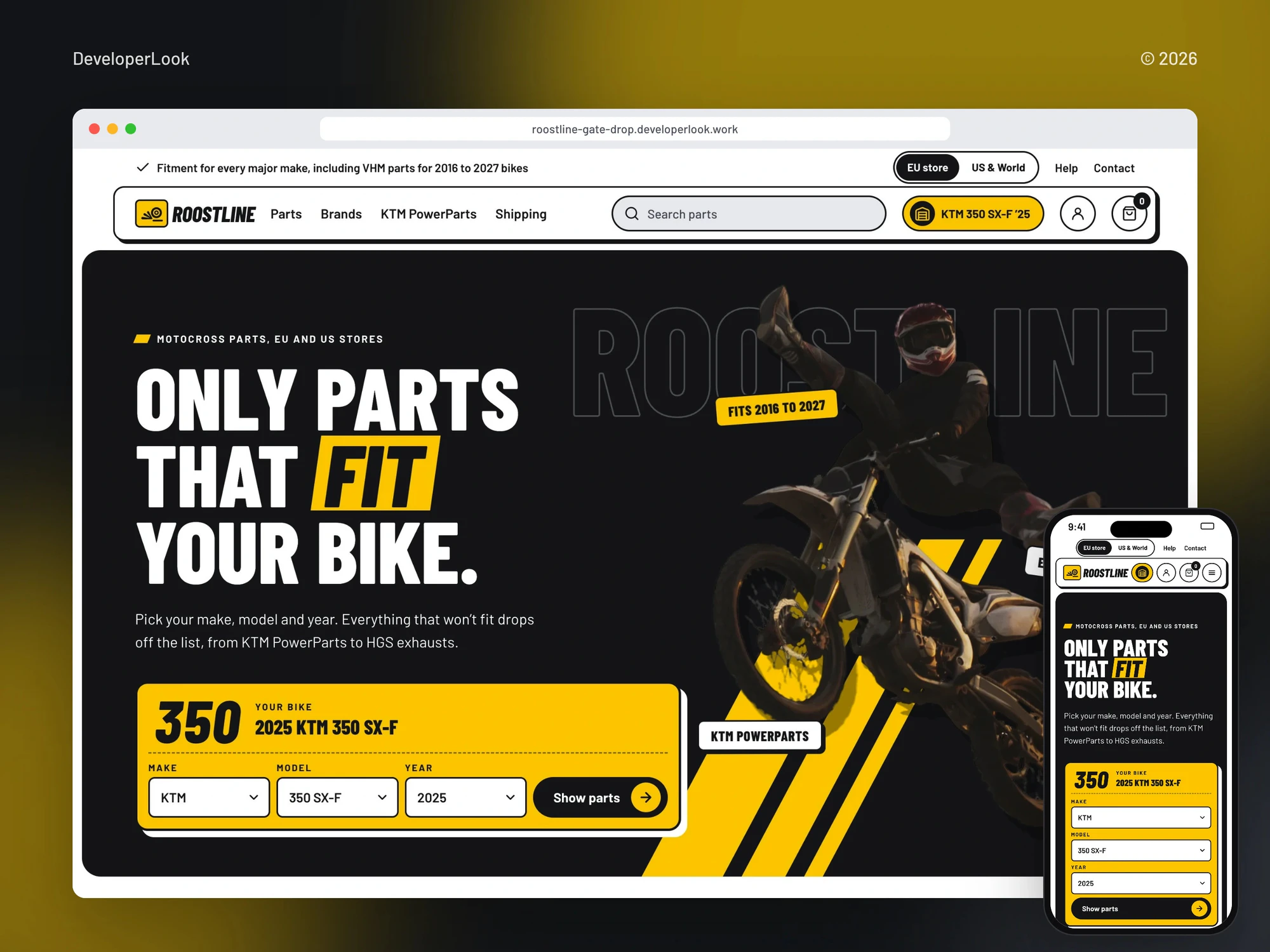
The fitment selector is built as a yellow front number plate: the race number, your bike's name, and make, model and year dropdowns with a Show parts button.

Landing Page
A landing page project in automotive, delivered by DeveloperLook.
About the project
DeveloperLook designed and built Gate Drop, a race-day concept homepage for a made-up motocross parts store with an EU store and a US & World store: a number plate bike picker, a filterable parts grid, house brand plates, an OEM parts box and a start-board stepper.
Roostline is a made-up motocross parts store, and Gate Drop is one of three homepage concepts we designed and built for it. The prices, part counts, reviews, the founder and the contact details are sample content, while the design and the build are our work.
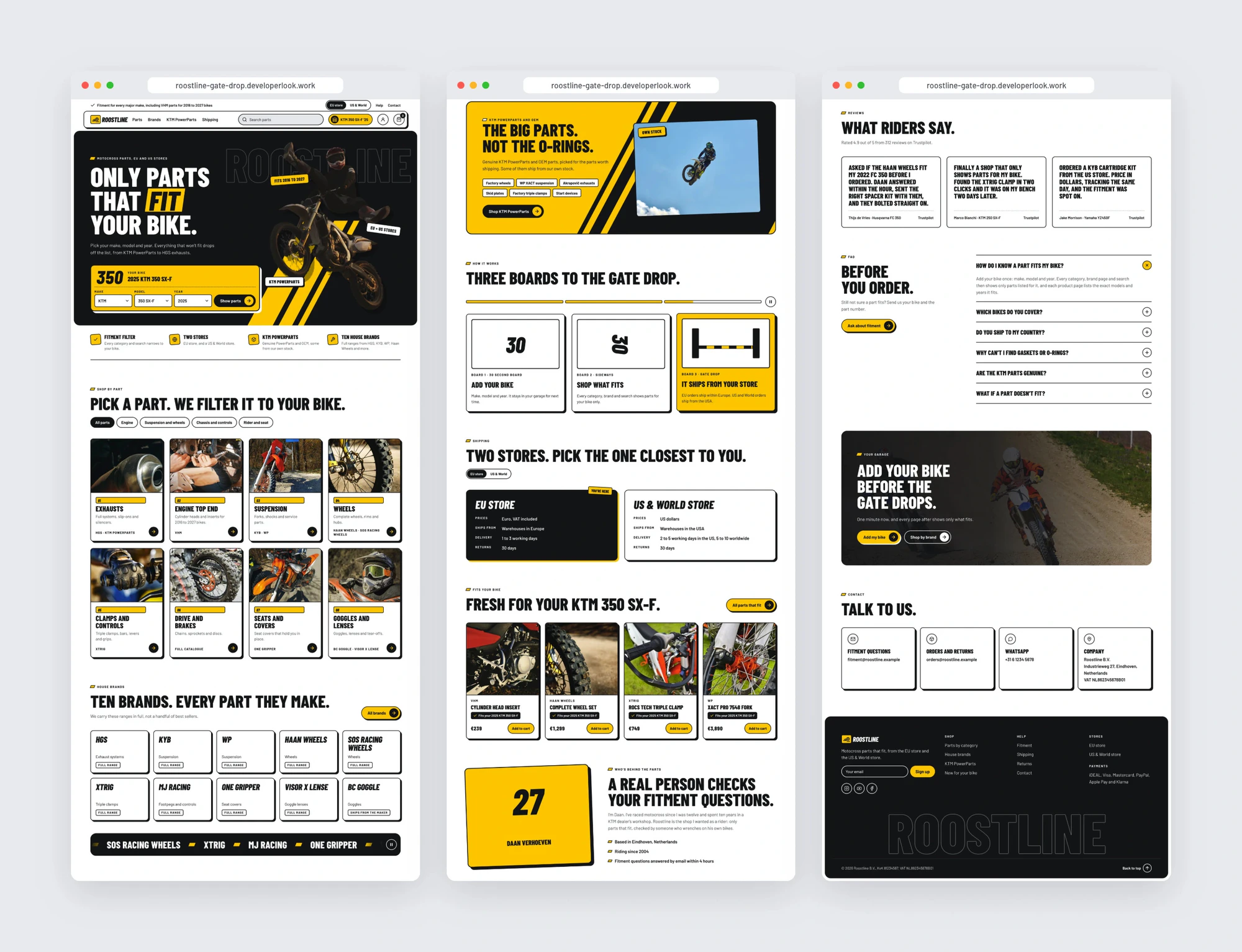
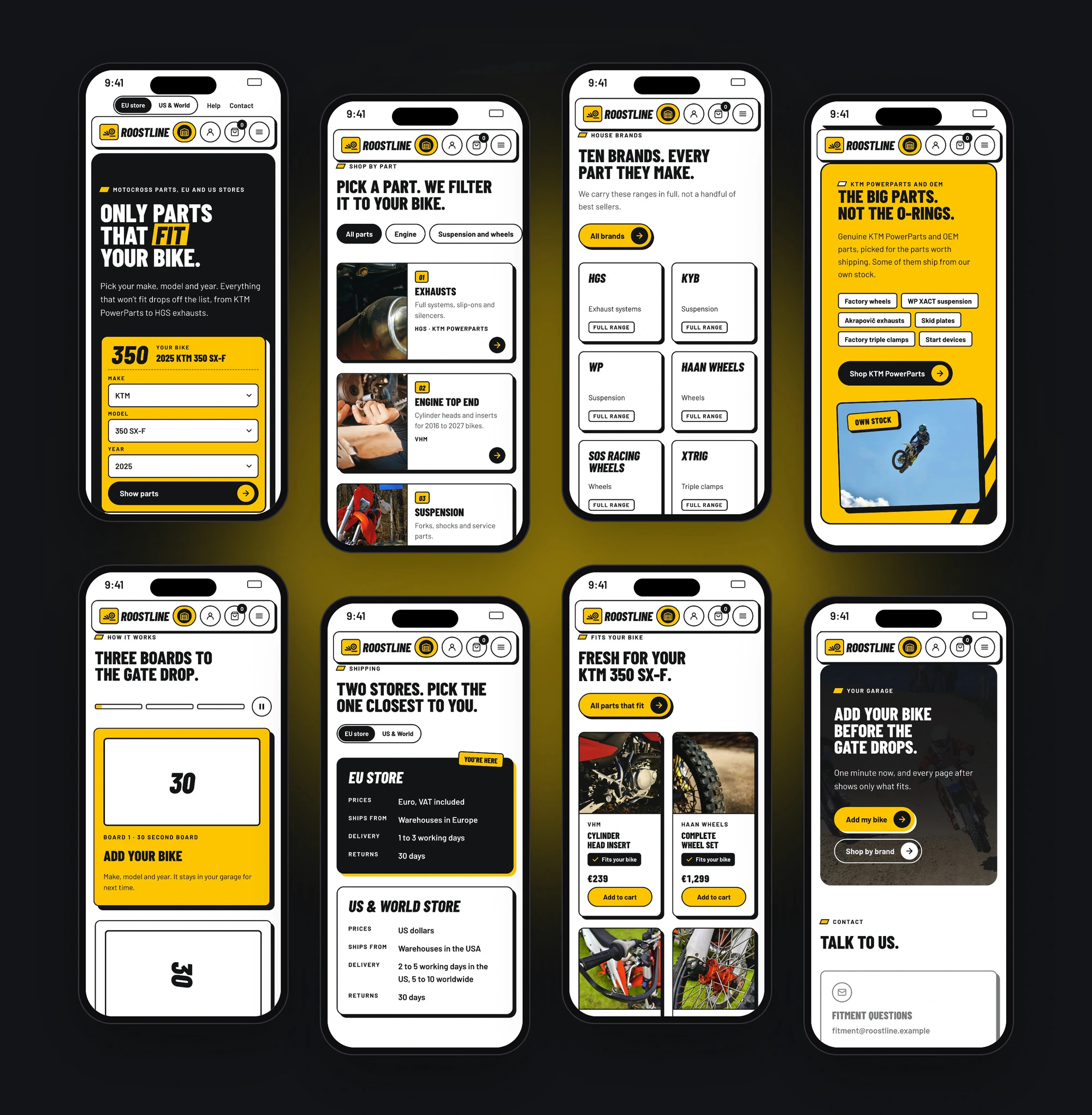
Gate Drop is the race-day poster of the three: plate yellow and ink, condensed capitals with hard offset shadows, number plates, start boards and livery stripes. A utility bar holds the EU store and US & World switch, and a boxed header keeps search, the rider's garage, an account button and the cart in reach. The dark hero box sets a rider cut-out over a huge outline wordmark and yellow livery slashes, with stickers for 2016 to 2027 fitment, both stores and KTM PowerParts. The headline reads Only parts that fit your bike, and the bike picker is a yellow front number plate with the race number, the chosen bike and make, model and year dropdowns.
Below the hero, a facts strip names the fitment filter, the two stores, KTM PowerParts and the ten house brands. A parts grid of eight photo cards sits under chip filters, the ten house brands sit on number plate tiles above a brand marquee, and a yellow livery box covers genuine KTM PowerParts and OEM parts. Three boards to the gate drop is a start-board stepper that moves from the 30 second board to the sideways board to the gate drop, with a progress bar and a pause button. The two stores sit side by side with prices, shipping, delivery and returns, and parts cards carry a fits your bike chip tied to the chosen bike.
A yellow founder plate introduces the person who checks fitment questions, reviews sit in bordered cards, and an FAQ, a call to add your bike before the gate drops, contact cards and a dark boxed footer with an outline wordmark close the page. The site is built with Next.js and TypeScript and exported as static HTML, with its own layouts for desktop and phone, and on 2K, ultrawide and 4K screens the 1440 layout grows as one piece.
Tell us what you are building. We reply within 24 hours with questions or a call time.
What do you need?
Challenge and solution
The challenge
The page had to cover eight part areas, ten house brands, KTM PowerParts and OEM, and two stores with their own prices and shipping, and still put the bike first so every list shrinks to parts that fit.
Our solution
What we built
Eight features, shown next to the screens they live on.
The fitment selector is built as a yellow front number plate: the race number, your bike's name, and make, model and year dropdowns with a Show parts button.
Pick a part. We filter it to your bike. Eight category cards sit under chip filters for engine, suspension and wheels, chassis and controls, and rider and seat.
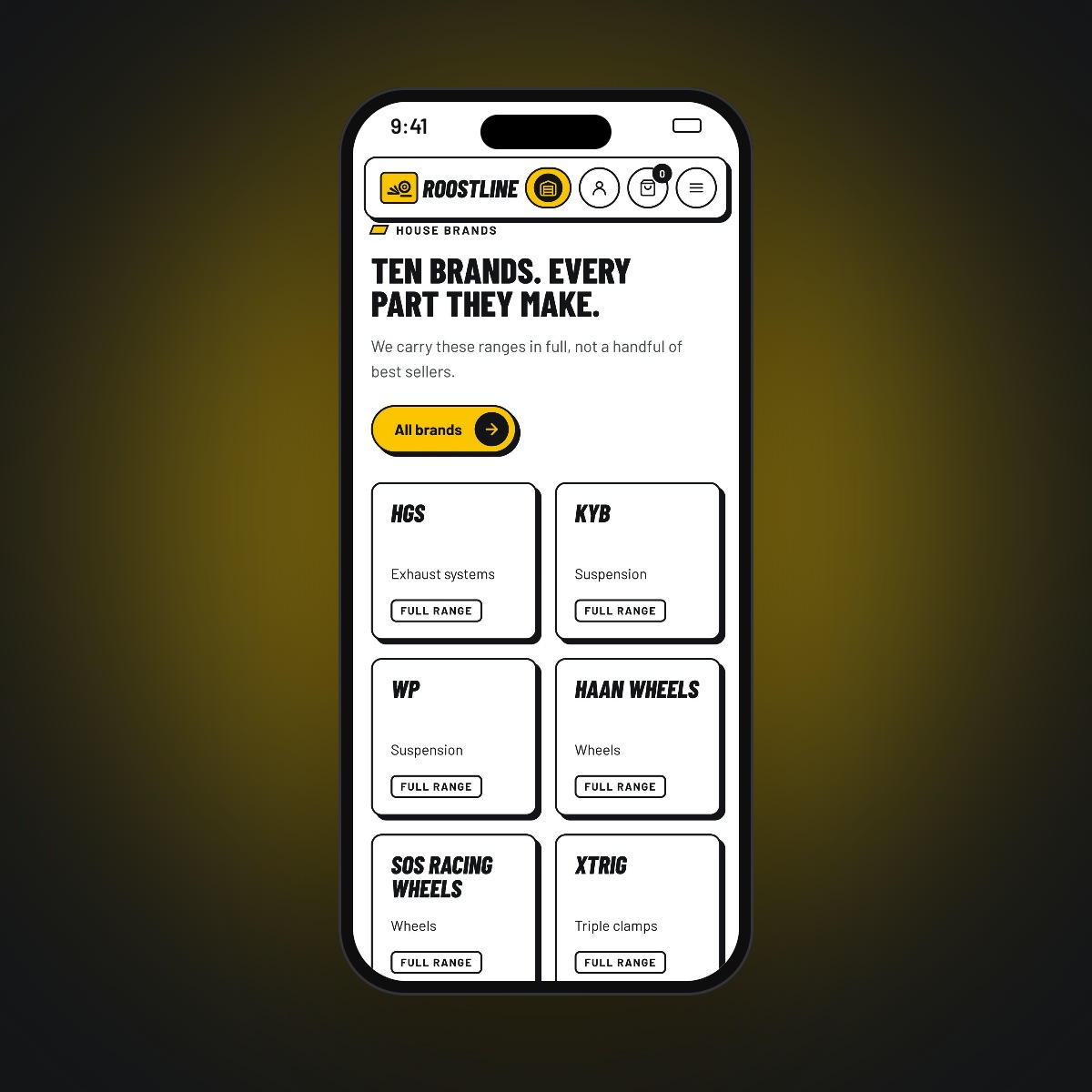
Ten house brands sit on number plate tiles that say what each one makes and that the full range is stocked, above a brand marquee with a pause button.
A yellow box with black livery stripes covers genuine KTM PowerParts and OEM parts, with chips for the big parts and an own stock sticker on the photo.
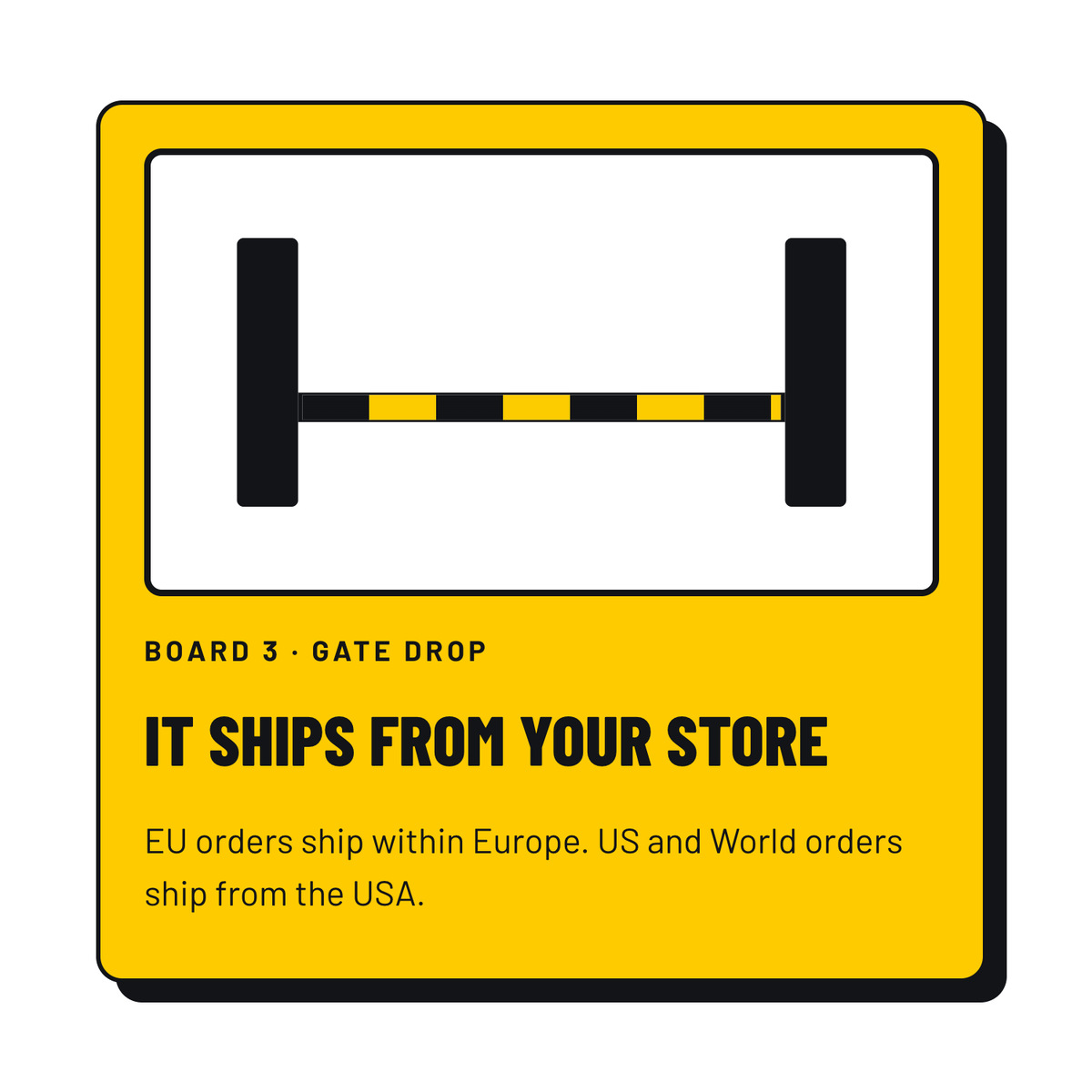
Three boards to the gate drop: a 30 second board, a sideways board and the gate drop explain how it works, with a progress bar that advances on its own and a pause button.
An EU store and a US & World store sit side by side with prices, ships from, delivery and returns, and a switch in the header and the section picks one.
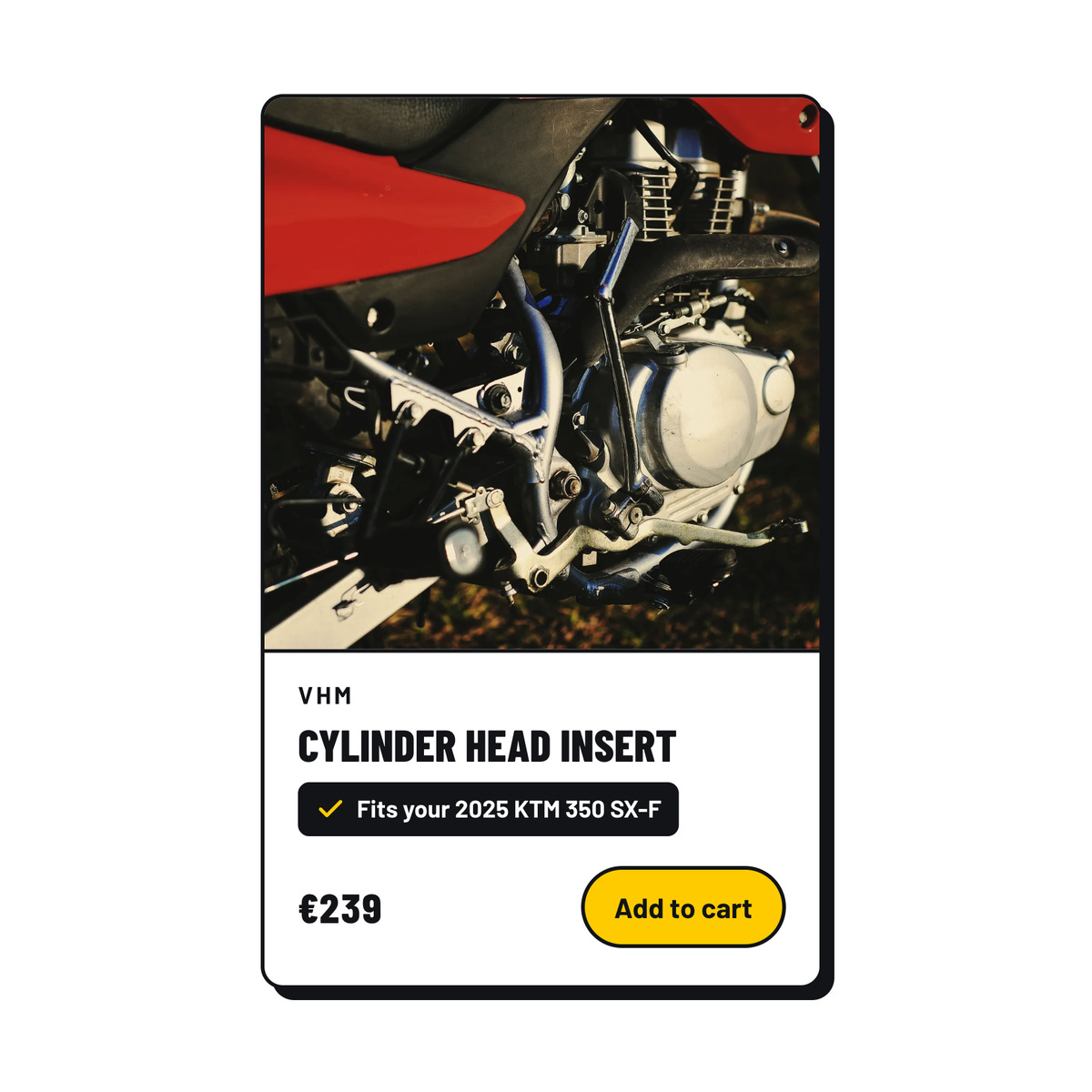
Featured parts carry the brand, a fits your 2025 KTM 350 SX-F chip tied to the chosen bike, a price in the store's currency and an Add to cart button.
Every section has its own phone layout: the header folds into logo, garage, account, cart and menu, the number plate stacks its dropdowns and the brand plates sit two across.
FAQ
 Saimul IslamFounder & CEO, DeveloperLook
Still have questions?
Send a message or book a call with the team.
DeveloperLook designed and built a concept homepage for a made-up motocross parts store: a utility bar with a store switch, a boxed header with search and a garage button, a hero with a rider cut-out and a number plate bike picker, a facts strip, a filterable parts grid, house brand plates and a marquee, a KTM PowerParts box, a start-board stepper, a two-store section, parts cards, a founder plate, reviews, an FAQ, a garage call, contact cards and a dark footer.
No. Roostline is a made-up brand for a homepage concept we designed and built. The prices, part counts, reviews, the founder and the contact details are sample content; the design, the number plate bike picker, the parts filters, the start-board stepper, the store switch and the page build are our work. The demo at roostline-gate-drop.developerlook.work can be clicked through on desktop and phone.
The rider picks make, model and year on the yellow number plate in the hero and taps Show parts. The garage button in the header, the parts section heading and every parts card then name that bike, and each card carries a fits your bike chip. The FAQ explains how fitment is checked, and an Ask about fitment button leads to the contact cards.
Yes. Every section has its own phone layout, not a shrunken desktop page. The header folds into a bar with the logo, garage, account, cart and menu, the number plate stacks its dropdowns, the parts cards turn into rows and the start boards stack. The gallery shows eight of these phone screens.
The page is built with Next.js, React and TypeScript and exported as static HTML, so it can run on Cloudflare Pages without a server. Barlow Condensed and Barlow are self-hosted, everything is sized in rem so the layout grows as one piece on large screens, and visitors who turn off motion get a calmer page.
Yes. We would start from how your riders or drivers search for parts, your catalogue and where you ship, then design the fitment search, category and product sections around them and build the store on a fast, modern stack. Contact us with your current setup and we will suggest where to begin.
Saimul IslamFounder & CEO, DeveloperLookStill have questions?
Send a message or book a call with the team.
Free 30-min callGoogle Meet
Book a call
In 30 minutes on Google Meet we walk you through how we would build it, how long it takes and what it costs. Then you get a written estimate.
Calendar not showing? Book on cal.com or send a brief.