Indexing by page type
Which products, categories, and filter pages Google indexes or excludes, with the reason behind each pattern.

Ecommerce SEO audit for Shopify, WooCommerce, BigCommerce, and Magento stores.
2X
More products indexed
100%
Findings checked by hand
How your project runs
Teams we have built for:














The Problem
Most stores know something is wrong before they know what. Traffic flattens, new products stall, and every tool shows a different list of warnings.
01 · Tool noise
A free SEO tool flags hundreds of warnings as critical.
You get a short list of real problems, not a pile of automated warnings.
02 · Mixed lists
Your agency sends a list that disagrees with your tool.
Every template is crawled, compared with Google's indexing data, and checked by hand.
03 · Unindexed
Hundreds of products sit crawled but not indexed, and nobody knows why.
Each problem is traced to the template or setting that causes it.
04 · No priorities
Your developer asks which fix matters most, and you can't say.
Fixes are ranked by revenue impact and effort, each naming the file and the test.
You run a free SEO tool and get hundreds of warnings, most of them marked critical. Your agency sends a different list. Search Console says hundreds of products are crawled but not indexed, yet nobody can tell you why. Your developer asks which fix matters most, and you don't have an answer. So the list sits there, and each month you pay for ads to reach shoppers your category pages should already be reaching.
We start with a full ecommerce SEO site audit: every template crawled, compared with Google's own indexing data, and checked by hand. Each problem is traced to the template or setting that causes it, then ranked by revenue impact and effort. You get a short list of real problems with fixes your developer can ship, not a pile of automated warnings.
Root causes, not warnings
Thousands of flagged URLs traced back to the few templates and settings that create them.
Ranked by revenue impact
Fixes on pages that already sell come first, so your developer's time goes further.
Ready for your developer
Each fix names the file, the change, and how to test it after release.
Our Store Audit Process
You start with a free scan. If a full audit is worth it, you see the scope and a fixed price before paying anything.
We run a crawl, check your Search Console data, and look at your main templates. You get a short summary of the biggest problems on a call. If the scan shows your store is in good shape, we'll tell you a full audit isn't needed.
What's Included
The core audit covers every item below. The larger plans add hands-on fixes and re-crawl checks, so your report turns into shipped changes.
Compare Options
Audit tools are fast and cheap, and many agencies audit for free to win a retainer. Here's what each one tells a store owner, and what it leaves out.
| Feature | DeveloperLookBest fit | Automated audit tool | Free agency audit |
|---|---|---|---|
| Audit price | $299, fixed | Low monthly subscription | Often free |
| Checks every template | Yes, by crawl and by hand | Crawl only, no context | Usually a sample |
| Indexing root causes | Traced to template or setting | Lists symptoms | Varies by agency |
| Platform knowledge | Shopify, WooCommerce, BigCommerce, Magento | Generic rules | Depends on the team |
| False alarms filtered | Yes, every item checked | Many, left to you | Some, not all |
| Fixes ranked by impact | Revenue impact and effort | Severity score only | Often ranked toward their services |
| Ready for developers | Written as fix tickets | Technical warnings | High-level advice |
| Obligation afterward | None, the report is yours | Subscription continues | Retainer pitch follows |
Projects We've Built
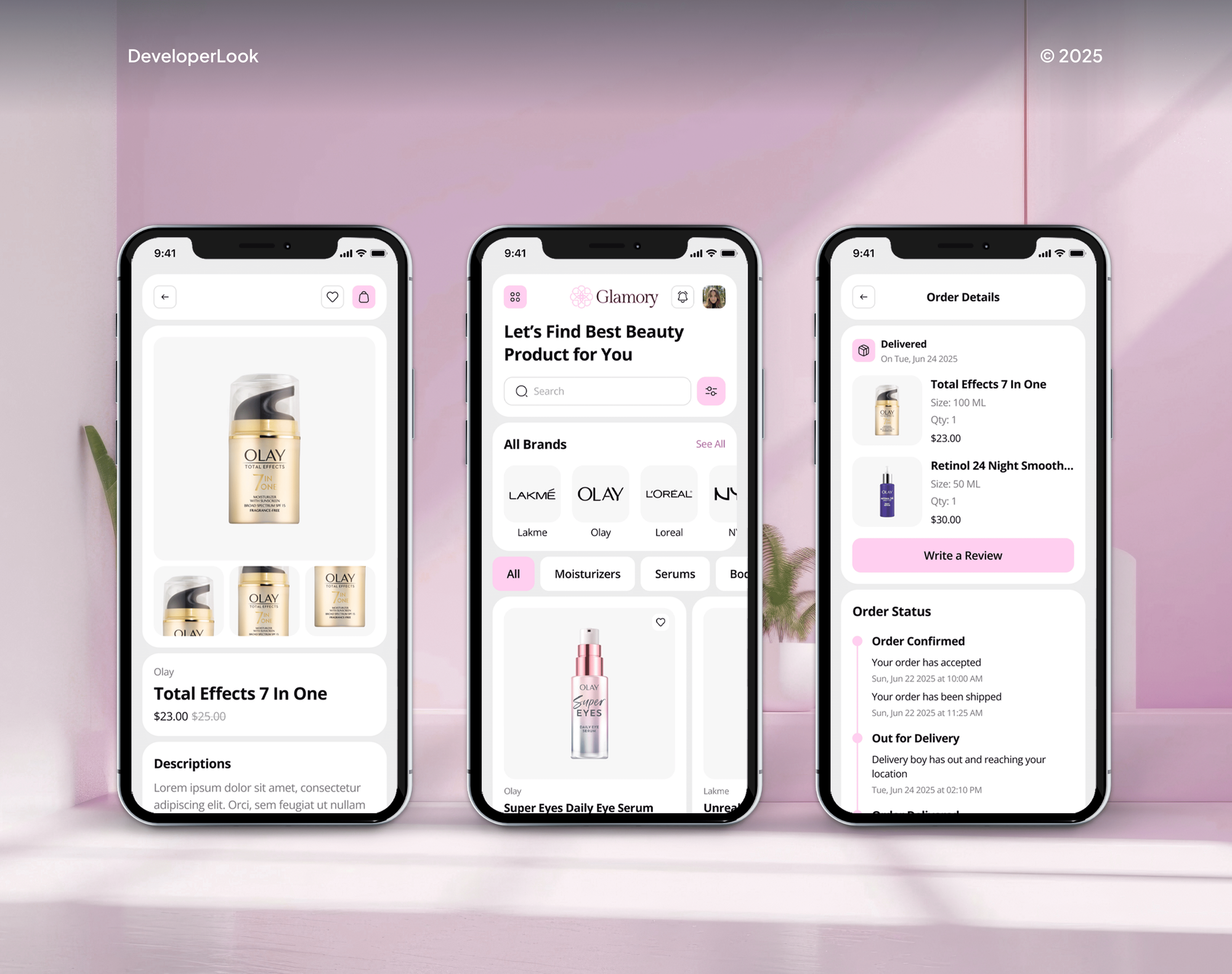
Online stores our team has designed and built. Knowing how store templates are built is what makes an audit specific instead of generic.



What Our Clients Say
Feedback from ecommerce teams we have built stores and search-friendly catalogs for.
What I appreciate most is that the website is actually easy for us to manage now. We can update content ourselves instead of sending a developer a message every time we need to change something small. They also paid attention to the technical SEO side, which mattered to us because we didn’t want a new website to create problems for the traffic we already had. I’ve probably asked more questions than I should have since launch, but every question has been handled patiently and without any fuss. The team is easy to work with, they explain things clearly, and when we need something changed, they focus on getting it done rather than making the process complicated.
Our old store was making it way too difficult for people to find products. We had a large catalogue, but the search, filters, and mobile navigation were frustrating customers. The team completely changed how the store handled product discovery and made the experience much easier to use on mobile. I was especially impressed by how much thought went into the customer journey rather than just the visual design. They understood what we were trying to achieve and turned it into a store that actually feels built for our customers. We’re genuinely proud of the result.
The mobile experience is probably my favourite part of the new site. We had spent a lot of time making sure the desktop version looked right, and the team kept pushing us to think about how everything would actually feel on a phone too. They were right. The navigation is clean, the interactions feel natural, and everything we’ve tested so far works exactly as it should. They also went through the links, forms, integrations, and other details more than once before launch, which I really appreciated. And even after going live, we could still reach out when something came up. The whole process felt friendly, organised, and surprisingly straightforward.
1,000+
Projects shipped
10+
Years of experience
Top 3%
Upwork Top Rated Plus
5 stars
Average review score
Work Culture
An audit is only useful if it's accurate and specific to your store. These are the habits we bring to every store we audit.
Crawlers flag plenty of false alarms. We confirm each issue on your live store before it goes into your report.
A list of thousands of duplicate URLs doesn't help anyone. We trace them to the one template or setting that creates them.
Fixes on pages that already sell come first. Low-traffic templates wait, even when a tool rates their errors as severe.
Each fix names the file, the change, and how to test it. Your developer can start right away, without a translation call or a second meeting.
Slow category and product templates hurt rankings and sales. We check Core Web Vitals on each page type, not only your homepage.
The report is yours to use with any developer or agency. We offer implementation, but the audit stands on its own.
Overview
DeveloperLook runs an ecommerce SEO audit that checks every template in your store: indexing, canonicals, filters, schema, sitemaps, internal links, and category pages. You get a ranked, developer-ready fix list and a walkthrough call. The full audit costs $299 and takes 1 to 2 weeks, and you can add implementation later.
DEVELOPERLOOK
Project facts · Ecommerce SEO Audit
Reviewed 28 Sep 2026 by Saimul Islam
Good fit
Stores with products missing from Google
Your newest products take weeks to appear in search, and Search Console lists many as crawled but not indexed.
Owners comparing SEO agencies
You want an independent diagnosis before signing a retainer, so every proposal you get is measured against real findings.
Shopify stores preparing to grow
You want a Shopify SEO audit that checks collection-path URLs and app-added schema before you scale your ad spend.
Teams with in-house developers
Your developers can ship fixes quickly, but they need a ranked, specific list instead of a generic tool export.
Stores after a traffic drop
Your organic traffic fell after a theme change or migration, and you need the cause found before guessing at fixes.
Not a fit
You know what's broken
You already know what's broken and just need it fixed in code. Our Technical SEO Services page covers audits with implementation built in.
Full SEO program
You want a full SEO program with category copy and content. Our Ecommerce SEO Services page covers that.
Shopify expert review
Your store runs on Shopify and you want an expert to review it with your team. Our Shopify SEO Expert page covers that.
Budget under $299
Your budget is under $299. Our free SEO scan and Google Search Console's own reports will surface the biggest issues for now.
Not sure we're the right fit?
Send a two-line brief. We'll tell you honestly whether we're the right team.
Pricing
These are starting points in USD. Your final price depends on catalog size, platform, and how many markets you sell in, and you get a fixed proposal after the free scan.
For stores that want a complete diagnosis and a fix list their developers can act on.
$299one-time, USD
For stores that want the audit plus the most urgent fixes shipped by us.
$599one-time, USD
For stores that want every template-level issue in the report fixed and verified.
$999one-time, USD
For Agencies
You own the client relationship and the recommendations. We run the audit behind the scenes: crawl, indexing, schema, and template review, delivered as a report in your format and under your brand.
White label: your client only ever sees your brand
Share the client's store URL, Search Console access, and the questions they care about.
We run the crawl, review templates, and draft findings in your format.
You deliver the audit, and we stay on call for your follow-up questions.
Findings delivered in your template, ready to present to your client.
We stay invisible, so the relationship and the credit stay with you.
Shopify, WooCommerce, BigCommerce, and Magento audits from one team.
Hand implementation back to us, or keep it with your developers.
The Right Technology for Your Project
Search Console shows what Google indexed, and a crawler shows what your store publishes. We compare both, then confirm each finding by hand.
 Shopify
 WooCommerce
 BigCommerce
 Magento
 Google Search Console
 Google Analytics (GA4)
 Semrush
 Google Sheets
 PageSpeed Insights
 Lighthouse
 Chrome DevTools
 Loom
Loom JavaScript
 PHP
PHP GraphQL
 Python
FAQ
Straight answers on audit pricing, timing, the free scan, and what your report includes.
 Saimul IslamFounder & CEO, DeveloperLook
Still have questions?
Send a message or book a call with the team.
Our checklist covers 8 areas: indexing, duplicate URLs, canonicals, sitemaps and robots rules, structured data, category structure, internal links, and page speed. Each area is checked per template, not per page, because one template error repeats across your catalog. Plenty of free tools audit SEO. Ecommerce stores need someone to read those results in context.
Usually because Google sees many product URLs as duplicates or low value. Variant and filter URLs, near-identical descriptions, and products with no internal links all push pages into the crawled but not indexed pile. Sometimes the cause is technical: a noindex tag, a canonical pointing elsewhere, or a sitemap listing redirected URLs. The audit shows which applies to each group.
The full audit costs $299, and the scan before it is free. If you want us to ship the most urgent fixes too, Audit + Priority Fixes costs $599. Audit + Full Implementation costs $999 and fixes every template-level issue in the report, with a before and after crawl. Every plan has a fixed price, agreed before we start.
Most store audits take 1 to 2 weeks from the day we get access. Large catalogs with several markets or languages sit at the longer end, because each template and market gets checked. The free scan before it takes 2 to 3 days, and implementation plans add 1 to 2 weeks on top.
You get a report that ranks every issue by revenue impact and effort, with the evidence and the exact fix for each. It includes a one-page summary for decision-makers, a ticket list for developers, and screenshots from Search Console and the crawl. You also get a recorded walkthrough call and 30 days of follow-up questions, so nothing in the report stays unclear.
Our free scan covers the biggest risks: indexing gaps, duplicate URL patterns, broken redirects, and missing or broken schema on your main templates. We run a crawl, look at Search Console with read-only access, and share the top issues on a short call. It shows whether the paid audit is worth it, and sometimes it isn't.
We test each template's structured data in Google's Rich Results Test, then compare your sitemaps and canonical tags with what the crawl finds. A common problem is a sitemap listing URLs that redirect or canonicalize elsewhere, which sends Google mixed signals. We also check that your robots rules don't block pages you want indexed, and that hreflang tags on multi-language stores point at indexable pages.
Yes, the audit checks Core Web Vitals for each main template: home, category, product, cart, and blog. We use field data from Google's Chrome UX Report where your store has enough traffic, and lab tests where it doesn't. Slow templates are ranked alongside the other issues, so you can see whether speed or indexing matters more.
Yes, if you want us to, through the Audit + Priority Fixes or Audit + Full Implementation plans. Many stores hand the report to their own developers instead, and that works well, because every fix is written as a ticket. You can also start with the audit alone and decide on implementation after reading it.
You own it outright. Share it with your developers, a freelancer, or another agency, and use it to compare proposals. The report is written so anyone who knows your platform can act on it, and our 30 days of follow-up questions cover whoever implements the fixes.
Saimul IslamFounder & CEO, DeveloperLookStill have questions?
Send a message or book a call with the team.
30-min strategy callGoogle Meet
Book a call
Pick a 30-minute slot that works for you. We meet on Google Meet to align on goals, scope, and the right next step.
