
Product and variant sync
Store products mapped to Printful catalog IDs, variants, placements, and print techniques.

Printful integration for Shopify, WooCommerce, and custom stores: orders with print files, mockups, and tracking synced back. From $550.
100%
Orders reach your print partner
24/7
Tracking synced to your store
How your project runs
Teams we have built for:














The Problem
It shows up once custom designs or a second provider enter the picture: files get downloaded and uploaded again, and tracking numbers get copied by hand.
01 · Manual uploads
Someone uploads each design to Printful and picks the placement.
Each order reaches Printful with its print files, placements, and product IDs.
02 · Tracking copy
Tracking numbers get pasted into your store by hand.
Shipment webhooks update the order and send the tracking number automatically.
03 · Weekend delays
Orders sit unconfirmed over a weekend.
Orders go out right away, or wait as drafts if you want review.
04 · Wrong placements
At volume, files land on the wrong placement.
Rejected files trigger an alert with the reason and the order number.
An order comes in for a custom hoodie. Someone downloads the design from your customizer, uploads it to Printful, picks the placement, and confirms the order. Two days later the customer asks where it is, so someone checks Printful and pastes the tracking number into your store. It works at ten orders a week. At a hundred, files land on the wrong placement, orders sit unconfirmed over a weekend, and support tickets pile up.
We connect your store or customizer to Printful through its API. Each order goes out with the right print files, placements, and product IDs, and waits as a draft only if you want a review step. Printful's webhooks send shipping and tracking back, so the store updates itself. Your team handles the exceptions, instead of every single order.
Orders sent with their files
Each order reaches Printful with print files, placements, and the right product and variant IDs.
Tracking back in your store
Shipment webhooks update the order and send customers their tracking number automatically.
Failures caught, not buried
Rejected files or out-of-stock items trigger an alert with the reason and the order number.
Our Printful Integration Process
Product map, order rules, and price get your sign-off first. Then real test orders travel all the way to delivery while you watch.
Your store, products, design files, and current order routine get a full review first. You get a flow diagram, a note on what Printful's free app already handles, and a fixed price.
What's Included
Product mapping, order handoff, mockups, tracking, and alerts for Shopify, WooCommerce, and custom-built stores, with code you own.
Compare Options
Printful's free app suits stores that design inside Printful, and manual entry works for a handful of orders. Here's where each stops working as volume and custom designs grow.
| Feature | DeveloperLookBest fit | Printful's own app | Manual order entry |
|---|---|---|---|
| Setup cost | Fixed, from $550 | Free to install | Free, costs staff hours |
| Custom designs | Files from your customizer | Designs made in its editor | Uploaded by hand |
| Order handoff | Automatic, with review option | Automatic for synced items | Copied per order |
| Store platforms | Any store or custom site | Supported platforms only | Any, by hand |
| Product mockups | Generated and cached | Made in the app's tool | Made one at a time |
| Multiple providers | Printful, Printify, Gelato | Printful only | Each dashboard separately |
| Tracking sync | Webhooks to your store | Built in for synced stores | Pasted by hand |
| Ownership and cost | Code and tokens stay yours | Free app, their rules | No software, all labor |
Projects We've Built
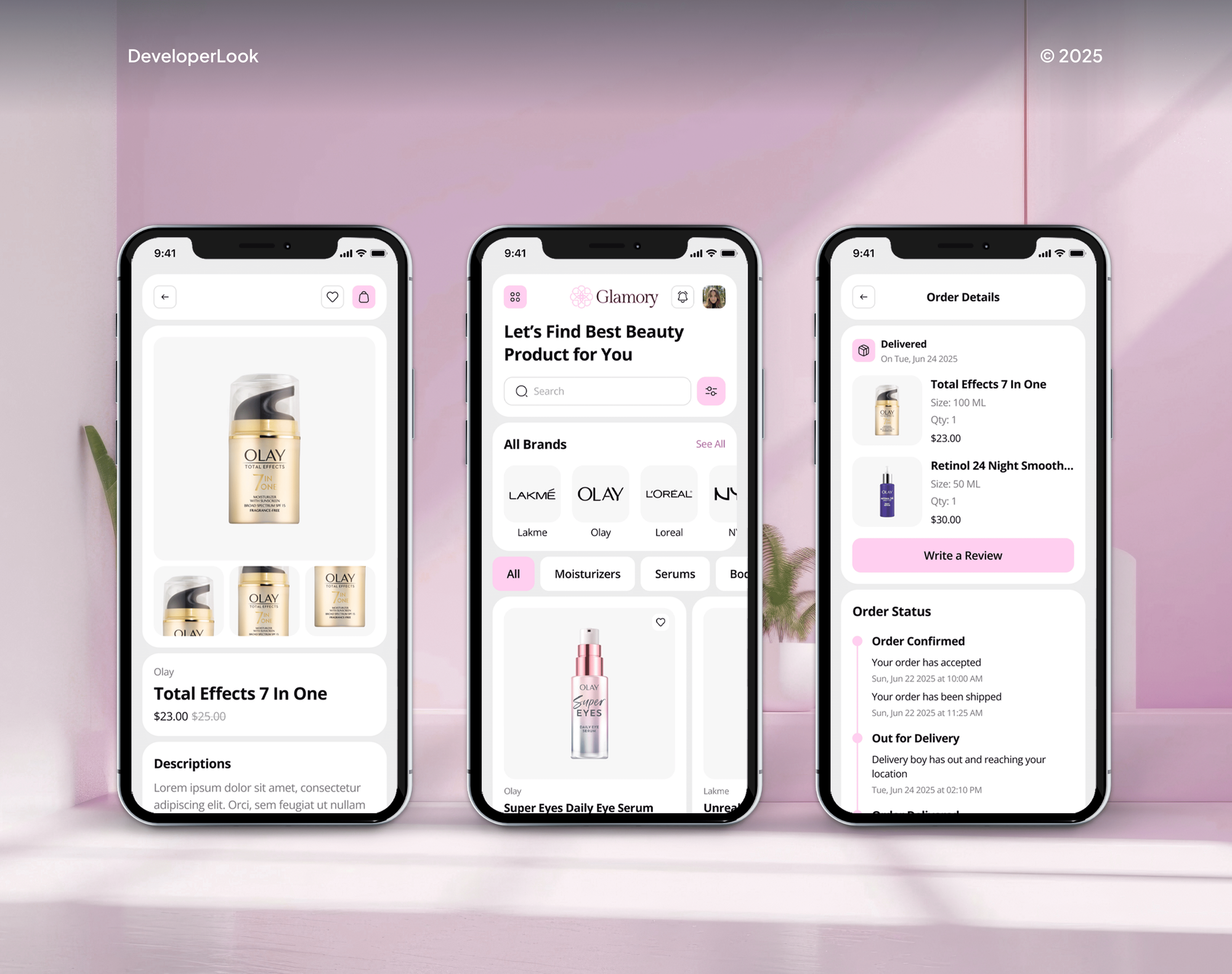
Online stores from our portfolio. A print on demand integration runs behind stores like these, between checkout and the print provider.



What Our Clients Say
Feedback from teams we have built ecommerce stores and integrations for.
We had a different kind of problem. People were visiting the store, adding products to their carts, and then disappearing before they finished the order. We had tried a few apps and made changes here and there, but nothing really seemed to solve the bigger issue. The team went through the shopping experience with us and pointed out things we hadn't really noticed ourselves. They cleaned up the cart and checkout flow, made the mobile experience much smoother, and helped us make the store feel easier to shop. I’m not going to pretend we fixed everything overnight, but it finally feels like the store is helping the sale instead of getting in the way of it.
The mobile experience is probably my favourite part of the new site. We had spent a lot of time making sure the desktop version looked right, and the team kept pushing us to think about how everything would actually feel on a phone too. They were right. The navigation is clean, the interactions feel natural, and everything we’ve tested so far works exactly as it should. They also went through the links, forms, integrations, and other details more than once before launch, which I really appreciated. And even after going live, we could still reach out when something came up. The whole process felt friendly, organised, and surprisingly straightforward.
We had a pretty specific idea of what we wanted our website to become, but I wasn’t sure how easily we could explain all of it to a development team. There were quite a few moving parts, and we were working toward a deadline, so I expected a few things to get lost along the way. That never really happened. They understood what we were trying to achieve, kept us updated throughout the process, and got everything ready within the agreed timeline. The final site feels much easier to navigate, works beautifully on mobile, and is noticeably smoother for our customers. It was a huge relief seeing the original idea actually turn into the website we had in mind.
1,000+
Projects shipped
10+
Years of experience
Top 3%
Upwork Top Rated Plus
5 stars
Average review score

Want results like these?
Tell us what you are building. You get a reply within 24 hours on business days, then a written estimate.
Work Culture
An integration that fails quietly costs more than no integration at all. These habits keep your Printful orders moving and your team informed.
Orders can wait as drafts until your rules or your team approve them. Drafts aren't charged, so a bad file doesn't cost you a print.
We map every product and variant to Printful's catalog IDs before launch. One wrong ID can print the right design on the wrong shirt.
Printful's mockup generator has a lower rate limit than its other endpoints. We generate each mockup once and store it, so pages stay fast.
When the provider rejects a file or an item goes out of stock, your team gets an alert with the order and the reason. Silent failures are how orders go missing.
Printful's free app is enough for many stores, and we'll tell you if yours is one. Custom code starts where your designs or providers outgrow it.
The integration runs in your accounts with your own API token. If you change teams or providers, your order flow keeps running.
Overview
DeveloperLook handles Printful integration for Shopify, WooCommerce, headless stores, and product customizers. We sync products, send orders with print files to Printful, generate mockups, and return tracking to your store, adding Printify or Gelato when needed. Projects start at $550, app setups take about a week, and the code stays in your accounts.
DEVELOPERLOOK
Project facts · Printful POD Integration Services
Reviewed 28 Sep 2026 by Saimul Islam
Good fit
Shopify stores using Printful's app
You already sell Printful with Shopify, but custom designs, bundles, or a second provider need more than the app does.
Brands with their own customizer
Your customizer creates designs, and your team still downloads each file and rebuilds the order by hand.
Headless and custom-built stores
You run a headless or custom store that Printful's app doesn't cover, so every order has to go through the API.
Stores mixing POD and in-house
You print some products in-house and send others to a print partner, and your orders need splitting by line item.
Agencies with POD clients
Your agency's client sells print on demand, and you need the API work done under your name with clean docs.
Not a fit
Printful's own tool
You only sell products designed in Printful's own tool on a supported store. Printful's free app handles that at no cost, so a $550 setup wouldn't pay off.
Design studio needed
You need customers to design products on your site. The design studio itself is covered on our Product Customizer Development page, and it can feed this integration.
Print shop storefront
You run a print shop that needs a B2B storefront and your own production workflow. Our Web to Print Software Development page covers that.
Dropship wholesalers
Your suppliers are dropship wholesalers, not print on demand. Our Dropshipping Supplier API Integration page covers stock and order feeds.
Not sure we're the right fit?
Book a free call or message us. We'll tell you honestly whether we're the right team.
Pricing
These are starting points in USD. Your final price depends on your store platform, the number of providers, and custom design files, and you get a fixed proposal after a free order flow review.
For stores on Printful's app that want products, mockups, and settings done right, in about a week.
$550one-time, USD
For customizers, headless stores, or custom designs sent to production by API.
$1,850one-time, USD
For Printful plus Printify or Gelato, with in-house production splits, scoped after a review.
$3,900one-time, USD
For Agencies
You own the client relationship. We supply the API engineering: product mapping, order handoff, mockups, and tracking webhooks, all under your agency's name and with a runbook your team can follow.
White label: your client only ever sees your brand
Send store and Printful access plus the products your client sells.
We map the order flow and quote a fixed price within a week.
We test real orders to delivery, then hand over code and a runbook.
Updates, staging stores, and handover docs carry your agency's name.
Printful, Printify, or Gelato, chosen for your client's products.
Developers who handle webhooks, retries, and rate limits properly.
Book one integration or support your whole POD client list.
The Right Technology for Your Project
We use each provider's own API and webhooks, with a small service in the middle that holds your rules, retries, and API tokens.
 Printful
 Printify
 Shopify
 WooCommerce
 BigCommerce
 Node.js
 PHP
PHP Python
 GraphQL
 AWS
AWS Cloudflare
 Docker
 Vercel
 Slack
Slack Google Sheets
 n8n
n8n Zapier
FAQ
Straight answers on setup, cost, timelines, custom configurators, Printify and Gelato, print files, mockups, tracking, and mixed production.
Saimul IslamFounder & CEO, DeveloperLookStill have questions?
Send a message or book a call with the team.
A custom POD integration starts at $550 for an app setup that syncs up to 50 products with test orders. A custom API integration costs $1,850. Routing across several providers, such as Printify or Gelato, with in-house splits starts at $3,900. You get a fixed quote after a free order flow review.
An app setup with product sync takes about a week. A custom API integration takes 2 to 4 weeks, and multi-provider routing takes 4 to 7. Test orders run through to delivery before launch, so plan a few extra days for shipping. Before any of that, the free order flow review needs 2 to 3 days.
You install Printful's free Shopify app, connect your store, and sync products you design in its editor. A Printful Shopify integration done that way sends orders for synced items over automatically. For designs made on your own site, or more than one provider, you need an API integration instead, which is where we come in.
Yes. The configurator sends each order to Printful with the print file URL, the placement, and the catalog variant ID. The provider fetches the file, and the order waits as a draft until your rules confirm it. Our configurator and customizer pages cover building the design side.
Yes. Printify and Gelato both offer order APIs, so one integration can route each product to the provider that makes it best or ships it closest. Each provider gets its own map of products and placements. Limits differ too: Printify's docs allow 600 API requests a minute, while Printful's allow 120.
Your store or customizer saves the print file to storage, and the order request sends its URL with the placement. The provider downloads the file when it accepts the order. We check size and format before sending, so a file the provider would reject gets flagged in your store first.
Mockups work as tasks: you request one, then collect the images when it's done. The Printful mockup generator API has a lower rate limit, so we cache the results. Orders arrive as drafts unless confirmed, and you're charged only for confirmed orders. Webhooks then report shipments and failures back to your store.
You sync them with webhooks. Printful sends a package shipped event with the carrier and tracking number, and the integration writes it to the store order, which triggers your shipping email. Failed or returned packages raise an alert instead. No one copies tracking numbers between dashboards by hand.
Yes. The integration splits each order by line item: POD products go to your print partner, and in-house products stay with your team. Tracking comes back per shipment, so a customer with two packages sees both. We test mixed orders before launch, since that's where routing rules usually break.
A print on demand API connection needs three things: order data, product mapping, and file hosting. Your store sends orders through a webhook or export, each variant maps to the provider's catalog, and print files sit where the provider can fetch them. We add a small service that retries failed calls and keeps your token off the storefront.
Saimul IslamFounder & CEO, DeveloperLookStill have questions?
Send a message or book a call with the team.
Free 30-min callGoogle Meet
Book a call
In 30 minutes on Google Meet we walk you through how we would build it, how long it takes and what it costs. Then you get a written estimate.
Calendar not showing? Book on cal.com or send a brief.