
Branded print storefront
Your products, paper options, and turnaround times in a storefront clients use on any device.

Web-to-print software for printers: a branded storefront, templates, upload preflight, print-ready PDFs, and MIS links. From $1,350.
24/7
Orders from your storefront
100%
Files preflighted before press
Teams we have built for:














The Problem
It starts once you sell to more than a few repeat clients: quotes by phone, artwork by email, and every file checked by hand before it reaches the press.
01 · Email orders
Clients email logos and name lists for every card order.
Clients order print themselves from a branded storefront.
02 · Manual setup
Your team sets up dozens of cards by hand.
Templates keep the brand locked while clients edit names and titles.
03 · Bad files
Low-resolution photos and missing bleed land in prepress.
Uploads get checked for bleed and resolution before they land.
04 · Proof loops
Prepress fixes files, sends proofs, and waits again.
Each order arrives as a print-ready PDF with a job ticket.
A marketing manager emails a logo, a spreadsheet of 40 names, and a request for business cards by Friday. Your team quotes the job, waits for approval, and sets up 40 cards by hand. Half the photos are low resolution, and the logo has no bleed. Prepress fixes the files, sends proofs, and waits again. Meanwhile, a competitor's storefront let that manager order the same cards in ten minutes, with proofs on screen.
We build a storefront where your clients order print themselves. Templates keep their brand fixed while they edit names and titles, uploads get checked for bleed and resolution, and prices calculate as they choose size, paper, and quantity. Each order arrives as a print-ready PDF with a job ticket. Prepress reviews the exceptions, instead of rebuilding every file.
Templates that protect the brand
Clients edit names and details while logos, fonts, and layouts stay locked.
Files checked before they land
Automatic preflight flags missing bleed, low resolution, and missing fonts at upload.
Orders ready for production
Every order arrives as a print-ready PDF with a job ticket for your team.
Our Print Storefront Process
Products, prices, and templates get your approval before development, and your team tests real orders on your own presses before clients see anything.
Your products, price sheets, prepress checks, and current order routine get reviewed first. You get a written scope, a platform recommendation, and a fixed price before you commit to anything.
What's Included
A storefront, templates, preflight, PDF output, and pricing, connected to your production flow and built around the products you already sell.
Compare Options
An off-the-shelf platform launches faster, and email orders cost nothing to start. Both suit some printers. Here's how they compare once repeat clients and file checks grow.
| Feature | DeveloperLookBest fit | Off-the-shelf platform | Email and phone orders |
|---|---|---|---|
| Upfront cost | Fixed, from $1,350 | Setup fee plus subscription | No software cost |
| Ongoing cost | Hosting only, no license | Monthly or yearly license | Staff time on every job |
| Your workflow | Built around your process | You adapt to the platform | Fully manual |
| File preflight | Your rules, automatic | Standard checks included | Checked by hand |
| MIS or ERP link | Connected to your system | Supported systems only | Retyped by staff |
| Time to launch | 3 to 12 weeks | Faster for standard setups | Already running |
| B2B portals | Per client, your rules | Included, fixed features | Separate email threads |
| Ownership and data | Code and client data stay yours | Hosted by the vendor | Scattered in inboxes |
Projects We've Built
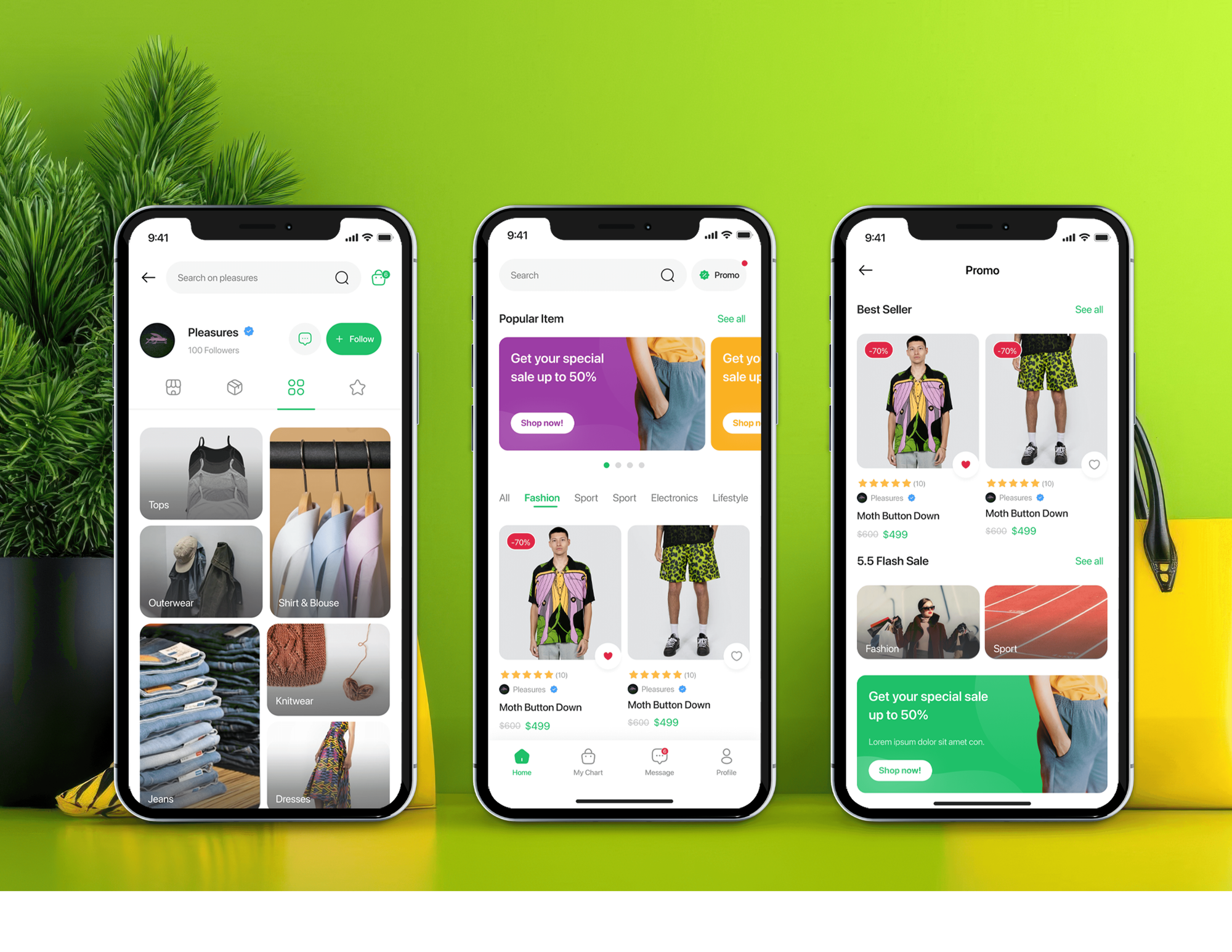
Online stores from our portfolio. An ordering portal for print uses the same account and checkout foundations, tuned for print products and prepress.



What Our Clients Say
Feedback from business owners and teams we have built websites and online stores for.
We had a different kind of problem. People were visiting the store, adding products to their carts, and then disappearing before they finished the order. We had tried a few apps and made changes here and there, but nothing really seemed to solve the bigger issue. The team went through the shopping experience with us and pointed out things we hadn't really noticed ourselves. They cleaned up the cart and checkout flow, made the mobile experience much smoother, and helped us make the store feel easier to shop. I’m not going to pretend we fixed everything overnight, but it finally feels like the store is helping the sale instead of getting in the way of it.
The mobile experience is probably my favourite part of the new site. We had spent a lot of time making sure the desktop version looked right, and the team kept pushing us to think about how everything would actually feel on a phone too. They were right. The navigation is clean, the interactions feel natural, and everything we’ve tested so far works exactly as it should. They also went through the links, forms, integrations, and other details more than once before launch, which I really appreciated. And even after going live, we could still reach out when something came up. The whole process felt friendly, organised, and surprisingly straightforward.
We had a pretty specific idea of what we wanted our website to become, but I wasn’t sure how easily we could explain all of it to a development team. There were quite a few moving parts, and we were working toward a deadline, so I expected a few things to get lost along the way. That never really happened. They understood what we were trying to achieve, kept us updated throughout the process, and got everything ready within the agreed timeline. The final site feels much easier to navigate, works beautifully on mobile, and is noticeably smoother for our customers. It was a huge relief seeing the original idea actually turn into the website we had in mind.
1,000+
Projects shipped
10+
Years of experience
Top 3%
Upwork Top Rated Plus
5 stars
Average review score

Want results like these?
Tell us what you are building. You get a reply within 24 hours on business days, then a written estimate.
Work Culture
A storefront that accepts bad files just moves the problem to prepress. These habits keep your clients' orders clean, branded, and ready for your presses.
We turn your prepress checklist into automatic checks for bleed, safe zone, resolution, and fonts. Files that would fail on press get flagged at upload.
Sample PDFs go through your RIP and presses before launch. What looks right in a browser has to print right on your machines.
Logos, colors, and layouts stay locked in each template, so a branch office can't stretch the logo. Your corporate clients approve less and trust more.
We match your file naming, page sizes, and output settings, including separate files for imposition. Your prepress team keeps its routine.
If a ready-made platform fits your products and budget, you'll hear that from us first. We build custom only where your workflow needs it.
The code, templates, and client accounts live in your hosting and repository. No per-order fees or license renewals come with it.
Overview
DeveloperLook builds custom web-to-print software for printers and print resellers. We build the storefront, templates and upload checks, print-ready PDFs, pricing by size and quantity, B2B portals, and the link to your MIS. Projects start at $1,350, a starter storefront launches in 3 to 4 weeks, and your team owns the code.
DEVELOPERLOOK
Project facts · Web to Print Software Development
Reviewed 28 Sep 2026 by Saimul Islam
Good fit
Commercial printers selling online
You run a commercial print shop, and most orders still arrive by email with files your prepress team fixes by hand.
Printers serving corporate clients
You print business cards and marketing kits for companies that want their own branded ordering portal with approvals.
Sign and display shops
You sell banners, signs, and displays in custom sizes, and every quote needs someone to calculate area and finishing.
Print resellers and brokers
You resell print from several suppliers and need one storefront that routes each job to the right shop.
Printers outgrowing a platform
Your current platform charges per order or can't handle your pricing rules, and you want a storefront you own.
Not a fit
Consumer products, not print
You sell a few personalized consumer products, not print jobs for businesses. Our Product Customizer Development page is built for design studios on online stores.
Printed by a provider
Your products are printed by a provider like Printful, not on your own presses. Our Printful POD Integration Services page is the right fit for that.
A few orders a week
Your budget is under $1,350, or you take only a few online orders a week. A ready-made platform with a monthly fee is the cheaper start.
Print price calculator only
You only need instant prices for custom print jobs on your current site. Our Quote Calculator Development page covers pricing tools.
Not sure we're the right fit?
Book a free call or message us. We'll tell you honestly whether we're the right team.
Pricing
These are starting points in USD. Your final price depends on your catalog size, B2B rules, and production system link, and you get a fixed proposal after a free workflow review.
For printers selling standard products online, launched in 3 to 4 weeks.
$1,350one-time, USD
For printers running branded portals for business clients, with approvals and quotes.
$4,300one-time, USD
For print operations linking orders to an MIS, scoped after a review.
$8,800one-time, USD
For Agencies
You own the client relationship. We supply the engineering behind your client's storefront: templates, preflight, PDF output, and production links, all branded as your agency's work and documented for your developers.
White label: your client only ever sees your brand
Send your client's products, price sheets, and current order process.
We return a scope and a fixed price after reviewing the workflow.
Development and testing happen under your brand, then we train your client's staff.
Every proof, portal, and guide shows your agency's brand.
Developers who understand bleed, imposition, and job tickets.
WooCommerce, Shopify, or a custom React storefront build.
Add portals one client at a time as the business grows.
The Right Technology for Your Project
We build on proven storefront frameworks and generate PDFs on your servers, so files, prices, and client data stay in your control.
 React
React Next.js
 WooCommerce
 Shopify
 JavaScript
 Node.js
 Python
 Figma
Figma SAP
SAP Odoo
Odoo Microsoft Dynamics 365
 QuickBooks
 AWS
AWS Docker
 Stripe
 PayPal
FAQ
Straight answers on how print storefronts work, cost, timelines, PDFs, production links, B2B portals, MIS and ERP, and proofs.
Saimul IslamFounder & CEO, DeveloperLookStill have questions?
Send a message or book a call with the team.
Your clients log in, pick a product, and either edit a template or upload their own file. The storefront checks the file, shows a proof, and prices the job by size, paper, and quantity. Once they approve and pay, a print-ready PDF and a job ticket go to your production queue.
No. A storefront sends orders to your own presses, while print on demand hands production to a provider like Printful. Printers use a storefront to sell their own capacity to business clients. Brands without equipment use print on demand, which our Printful POD Integration Services page covers.
Custom development starts at $1,350 for a storefront with up to 20 products, templates, upload checks, and print-ready PDFs. B2B portals with approvals and quote requests cost $4,300. MIS links and multi-brand portals start at $8,800. You get a fixed quote after a free workflow review.
A starter storefront takes 3 to 4 weeks. B2B portals with approvals take 6 to 9 weeks, and MIS work pushes it to 9 to 12, depending on your system's API. The free workflow review takes 3 to 5 days, and your team tests real orders before any client sees the storefront.
Yes, every order gets one. PDFs are built at trim size with your bleed, typically an eighth of an inch in the US or 3 mm elsewhere, plus crop marks if your workflow uses them. Images are checked against a minimum resolution at final size, and fonts get embedded or converted to outlines, so prepress receives clean files.
Each approved order creates a job ticket with the product, paper, quantity, due date, and the print-ready PDF. The storefront can drop files into a hot folder your prepress watches, email the ticket, or send it to your MIS through its API. Status changes come back, so clients see progress.
Yes. Each business client gets a portal with its own catalog, prices, and brand templates, plus user roles for ordering and approving. Budgets and purchase order numbers can gate checkout. Jobs that don't fit a template go through a quote request, and you price them from the admin.
Yes, when your MIS or ERP offers an API, a file import, or JDF job tickets, the print industry's standard job format from CIP4. We send jobs, customers, and prices in, and bring status and invoices back. If your system has no way in, we'll tell you during the free review.
Yes. The storefront shows a soft proof of each item before checkout, and B2B portals can route orders to a manager for approval. Approved proofs are saved with the job, so a dispute about what was ordered has a clear answer. Changes after approval create a new version instead of overwriting the old one.
Pick a ready-made platform if its products, pricing, and integrations already match how you work, because it launches faster. Choose custom when your pricing, B2B rules, or MIS link don't fit, or when per-order fees add up. If a ready-made platform fits, we'll tell you before we quote.
Saimul IslamFounder & CEO, DeveloperLookStill have questions?
Send a message or book a call with the team.
Free 30-min callGoogle Meet
Book a call
In 30 minutes on Google Meet we walk you through how we would build it, how long it takes and what it costs. Then you get a written estimate.
Calendar not showing? Book on cal.com or send a brief.