
Company accounts and buyer roles
Each customer company gets its own account, with buyers, approvers, and spending limits you set.

For distributors and manufacturers whose trade buyers still order by email and PDF price sheet: a store that shows each account its own prices, from $1,400.
2X
Repeat orders placed online
100%
Account prices at login
Teams we have built for:














The Problem
The trouble starts when sales grow faster than the order desk. More accounts, price lists, and SKUs all land in the same inbox.
01 · Retyping
Every emailed order gets retyped into the ERP by hand.
Online orders post to your ERP automatically, with the PO number attached.
02 · Old prices
Buyers work from a PDF price sheet three versions old.
Each account sees its own live price list as soon as it logs in.
03 · Reorders
Repeat orders arrive as screenshots of last month's invoice.
Buyers reorder from their order history or paste SKUs into a quick order form.
04 · Retail store
Your current store shows list prices to every visitor.
Trade and retail buyers share one catalog with different prices, terms, and rules.
Monday morning, your inside sales team opens an inbox full of orders. One buyer pasted a spreadsheet, another sent a photo of a handwritten list, and a third wants last month's order again with two changes. Someone retypes each one into the ERP. Prices come from a PDF that's three versions old, so an invoice goes out wrong. Your retail store can't help, because it shows list prices to everyone. Each hour spent retyping is an hour nobody spends selling.
We start with how your buyers really order: who approves, which price list they see, and what your ERP already knows. Then we build the store around that. Each company logs in to its own catalog and prices, reorders from history in a few clicks, and checks out on terms or with a PO number. Orders flow into the ERP without retyping. Your team handles exceptions, not data entry.
Prices per account
Your contract prices, tiers, and customer catalogs show the moment a buyer logs in.
Reorders in a few clicks
Order history, saved lists, and a SKU quick order form replace the emailed spreadsheet.
ERP stays the source
Prices, stock, credit limits, and invoices come from your ERP, so nothing gets keyed twice.
Our B2B Ecommerce Website Development Process
You see how your buyers order today before we pick a platform, approve a fixed scope, and test the store with real accounts before launch.
On a free call, we walk through how your orders arrive, who approves them, and which price lists exist. You get a short summary of what a B2B store would replace and what your platform already covers.
What's Included
A trade store your buyers can use without calling you: accounts, pricing, ordering, quotes, payment terms, and the ERP link that keeps them accurate.
Compare Options
A wholesale app is the fastest start for one price list, and an in-house developer suits a long roadmap. A B2B ecommerce development agency fits when pricing, terms, and your ERP must work together.
| Feature | DeveloperLookBest fit | Wholesale app | In-house developer |
|---|---|---|---|
| Planning | Your order desk reviewed, then fixed scope | You install and configure it | Depends on one person's experience |
| Account pricing | Your contract prices, tiers, and catalogs | Simple tiers or one discount | Whatever they can build |
| Quotes and terms | Quotes, POs, and net terms | Often a paid add-on | Built from scratch |
| ERP sync | Your ERP, tested in its sandbox | Rarely included | Possible, slow to build |
| Speed of start | 2 to 10 weeks to build | Live in days | Months to hire and ramp up |
| Testing | Test orders per account rule | Vendor tests the app only | Varies with their workload |
| Ownership | Your code, accounts, and data | Monthly app subscription | Yours while they stay |
| Cost | Fixed price from $1,400 | Lowest monthly fee | Full salary and benefits |
Projects We've Built
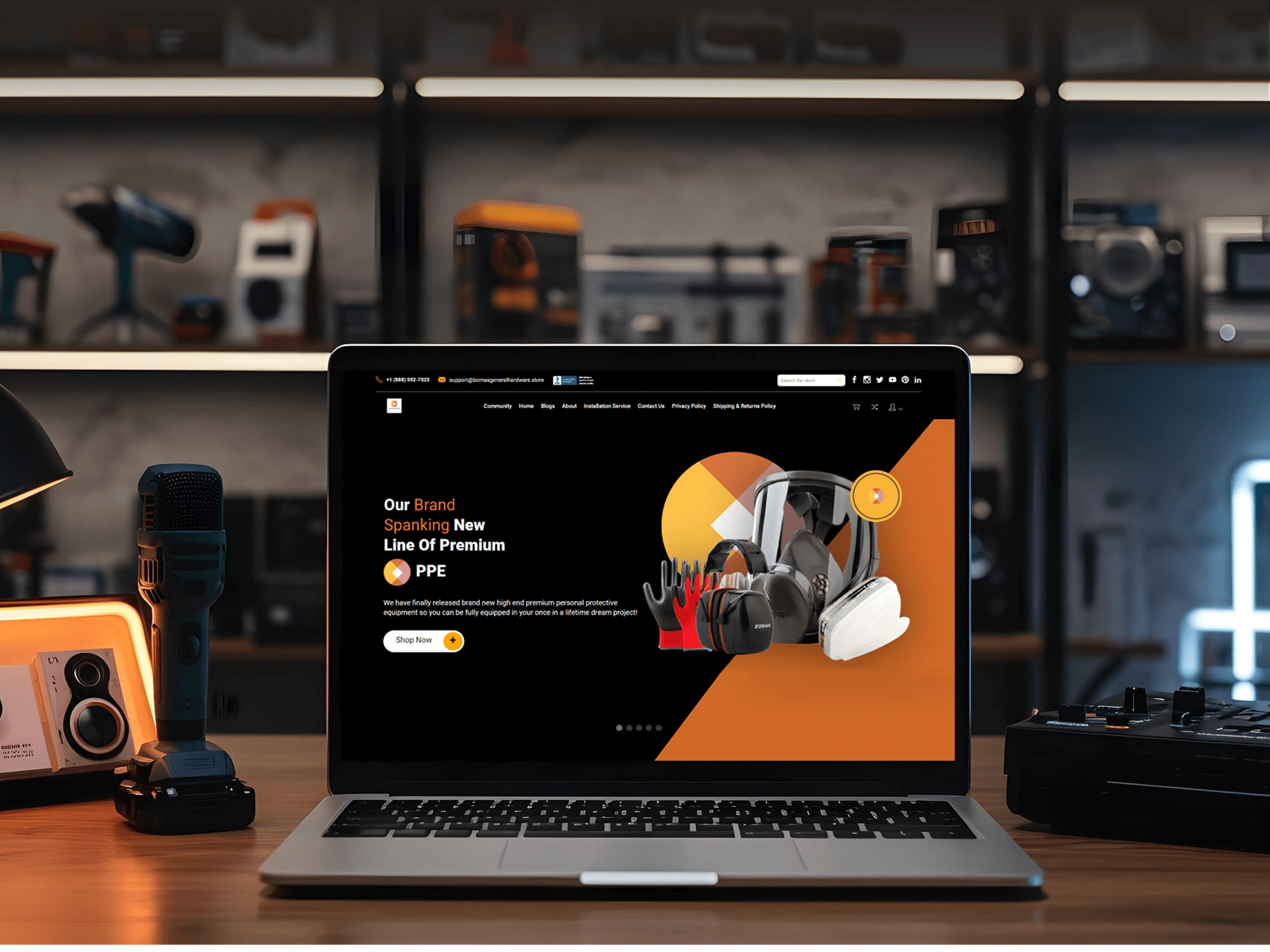
Online stores our team designed and built for hardware, furniture, and fashion sellers. These were retail builds, and the catalog, account, and order history work carries over to trade stores.



What Our Clients Say
Feedback from teams we have built online stores and websites for.
We had a pretty specific idea of what we wanted our website to become, but I wasn’t sure how easily we could explain all of it to a development team. There were quite a few moving parts, and we were working toward a deadline, so I expected a few things to get lost along the way. That never really happened. They understood what we were trying to achieve, kept us updated throughout the process, and got everything ready within the agreed timeline. The final site feels much easier to navigate, works beautifully on mobile, and is noticeably smoother for our customers. It was a huge relief seeing the original idea actually turn into the website we had in mind.
The mobile experience is probably my favourite part of the new site. We had spent a lot of time making sure the desktop version looked right, and the team kept pushing us to think about how everything would actually feel on a phone too. They were right. The navigation is clean, the interactions feel natural, and everything we’ve tested so far works exactly as it should. They also went through the links, forms, integrations, and other details more than once before launch, which I really appreciated. And even after going live, we could still reach out when something came up. The whole process felt friendly, organised, and surprisingly straightforward.
What I appreciate most is that the website is actually easy for us to manage now. We can update content ourselves instead of sending a developer a message every time we need to change something small. They also paid attention to the technical SEO side, which mattered to us because we didn’t want a new website to create problems for the traffic we already had. I’ve probably asked more questions than I should have since launch, but every question has been handled patiently and without any fuss. The team is easy to work with, they explain things clearly, and when we need something changed, they focus on getting it done rather than making the process complicated.
1,250+
Projects shipped
10+
Years of experience
Top 3%
Upwork Top Rated Plus
5 stars
Average review score

Want results like these?
Tell us what you are building. You get a reply within 24 hours on business days, then a written estimate.
Work Culture
We build B2B ecommerce solutions around how your trade buyers actually place orders. These habits come from watching distributors, manufacturers, and wholesalers do it every day.
We study how your orders arrive today before naming a platform. The right choice depends on your price rules and ERP, not on what we built last.
If your platform's built-in B2B settings already cover your price lists, we'll tell you before we quote. Custom code goes only where the native tools stop.
Each price or terms rule lives in one documented place, usually the ERP. Your team changes a contract price once and every channel follows.
We copy a few of your real customer setups into staging and order as them. Split shipments and credit holds show up before launch, not after.
Every account rule, integration, and import is listed in the proposal with its price. You know the total before any work starts.
The repository, platform accounts, and customer data stay in your company's name. Another team can pick up the store without asking us first.
Overview
DeveloperLook handles B2B ecommerce website development for distributors, manufacturers, and wholesalers. We build company accounts, account price lists, quick order and reorder, quotes, net terms checkout, and ERP sync on the platform that fits your rules. Projects start at $1,400, most take 3 to 20 weeks, and every account rule is tested before launch.
DEVELOPERLOOK
Project facts · B2B Ecommerce Website Development
Reviewed 7 Oct 2026 by Saimul Islam
Good fit
Distributors with large trade catalogs
You carry thousands of SKUs and dozens of contract price lists, and your inside sales team spends mornings retyping emailed orders into the ERP.
Manufacturers selling to dealers
Your dealers need their own catalog, minimum order quantities, and net 30 terms, and you want B2B ecommerce for distributors without opening a retail store.
Brands selling both B2B and B2C
Your retail store runs on Shopify or BigCommerce, and you want wholesale buyers on the same catalog with their own prices and checkout.
Adobe Commerce and WooCommerce sellers
Your store already runs on Adobe Commerce or WooCommerce, and you need company accounts, quotes, and approvals added without a full rebuild.
Agencies needing a B2B ecommerce agency
Your agency won a wholesale client and needs a B2B ecommerce agency to build pricing, terms, and the ERP link under your brand.
Not a fit
Retail-only store
You sell only to consumers at list prices, with no accounts or terms. Our Ecommerce Website Development service builds that store for less.
New look only
Your trade store works and you only want a fresh design. Our Ecommerce Website Design team redesigns it without touching your pricing logic.
Only ERP sync missing
Your B2B store already works and the one gap is syncing orders and stock with your ERP. Our Ecommerce Integration and Automation team handles that link.
Budget under $1,400
Your budget for B2B features is under $1,400. Your platform's built-in wholesale settings may cover one simple price list for now.
Not sure we're the right fit?
Book a free call or message us. We'll tell you honestly whether we're the right team.
Pricing
These are starting points in USD. Your final price depends on your price rules, your ERP, and whether you sell B2C, and you get a fixed proposal after a free order desk review.
For stores that need wholesale accounts and account prices added in about 3 to 4 weeks.
$1,400one-time, USD
For distributors launching a trade store with company accounts, quotes, terms, and one ERP.
$4,650one-time, USD
For brands running trade and retail buyers, several warehouses, and credit rules on one platform.
$9,600one-time, USD
For Agencies
You own the client relationship. We supply the B2B engineering: account pricing, quotes, terms checkout, and the ERP sync, delivered under your brand. Every quote is fixed before work starts, and your client tests each pricing rule on staging.
White label: your client only ever sees your brand
Send the client's platform, ERP, and how their trade buyers order today.
You get account rules, an integration plan, a fixed price, and dates to promise.
Staging reviews, test orders per account rule, and documentation in the client's repository.
Your brand on every report, and we only join calls you invite us to.
Engineers who know your client's price lists, credit holds, and ERP fields.
Fixed quotes per phase you can mark up, with no surprise invoices.
Extra developers for a big wholesale launch without adding to your payroll.
The Right Technology for Your Project
We pick the platform by your price rules and ERP, then use tools that keep your prices, stock, and orders matched between them.
 Adobe Commerce
 BigCommerce
 Shopify
 WooCommerce
 SAP
 Microsoft Dynamics 365
 Odoo
 QuickBooks
 Stripe
 PayPal
 Braintree
 Avalara
 GraphQL
 Node.js
 PostgreSQL
 Algolia
FAQ
Straight answers on B2B store costs, timelines, platform choice, and the integrations trade buyers expect.
Saimul IslamFounder & CEO, DeveloperLookStill have questions?
Send a message or book a call with the team.
B2B store builds with DeveloperLook start at $1,400 for wholesale accounts, 3 price lists, and quick order on your current store. A full trade store with company accounts, quotes, terms, and one ERP starts at $4,650. Running B2B and B2C on one platform starts at $9,600. Your platform license and apps are billed to you directly.
Adding B2B features to your live store takes 3 to 4 weeks. A new trade store with one ERP takes 8 to 12 weeks, and a combined B2B and B2C platform takes 14 to 20 weeks. Your ERP decides most of the schedule, because its sandbox, field mapping, and test orders take the longest.
B2B ecommerce is selling to other businesses online instead of through sales reps, phone calls, and emailed orders. Your buyers log in to a company account, see their negotiated prices, and order in bulk. They often pay on invoice terms rather than by card. For you, it moves routine reorders off the inside sales team's desk.
Your buyer logs in, sees the catalog and prices agreed for their company, and builds an order from a list or past orders. Checkout takes a PO number and approved terms. The order then lands in your ERP, which reserves stock and later sends the invoice. Your team steps in only for quotes, credit holds, and exceptions.
The biggest difference is the buyer: a retail shopper buys once at a public price, while your trade buyer reorders on a negotiated contract. Trade orders are larger, include more SKUs, and often need approval inside the buyer's company. Payment usually runs on net terms or a PO instead of a card at checkout.
A B2C site sells to anyone who visits, while your B2B site sells to approved accounts. So the build adds company accounts with several buyers, account price lists, restricted catalogs, quick order by SKU, quote requests, and terms checkout. Your product pages often show pack sizes, minimum quantities, and stock by warehouse instead of lifestyle content.
Choose by your price rules and your ERP, not by the demo. List how many price lists, catalogs, and payment terms you run, then check which platforms handle them natively. Next, confirm your ERP has a tested connector or a usable API for that platform. Last, compare your total yearly cost: license, apps, hosting, and upkeep.
There's no single best one, because the right platform depends on your catalog size, price rules, and ERP. Adobe Commerce has deep B2B features such as shared catalogs and negotiable quotes. BigCommerce offers its B2B Edition, Shopify has B2B features for wholesale buyers, and WooCommerce relies on extensions. We recommend one only after mapping your rules.
A good fit keeps one catalog and one inventory while showing each of your buyer groups its own prices and checkout. Adobe Commerce, BigCommerce, and Shopify can all serve your trade and retail buyers from one admin. The deciding factor is usually your B2B pricing, since retail checkout works well on all three.
The must-have integration is your ERP, because it holds the prices, stock, credit limits, and invoices your buyers rely on. Next come tax software such as Avalara, a payment provider that handles invoices or cards on file, and search that finds parts by SKU. A CRM link helps your sales reps see what each account orders online.
Saimul IslamFounder & CEO, DeveloperLookStill have questions?
Send a message or book a call with the team.
Free 30-min callGoogle Meet
Book a call
In 30 minutes on Google Meet we walk you through how we would build it, how long it takes and what it costs. Then you get a written estimate.
Calendar not showing? Book on cal.com or send a brief.