Systems and workflow map
Every system, data flow, and manual step documented and ranked by hours lost and error risk.

Ecommerce integration services that connect Shopify to your ERP, 3PL, marketplaces, and accounting, with monitoring built in. From $1,450. Free review.
10+ hrs
Manual work saved weekly
100%
Failed syncs flagged fast
How your project runs
Teams we have built for:














The Problem
It shows up once a store adds an ERP, a 3PL, or a second sales channel, and every handoff between them runs through someone's spreadsheet.
01 · Morning exports
Your ops lead exports orders for the ERP every morning.
Order and fulfillment syncs replace the daily export.
02 · Scattered channels
Amazon orders arrive one way, and tracking comes back by email.
Every system and manual step gets mapped and ranked by hours lost.
03 · Silent failures
A failed Zapier step shipped a wholesale order twice.
Every sync gets retries, a daily reconciliation, and an alert on failure.
04 · Human glue
Two people spend half their week moving data between tools.
Flow, an iPaaS tool, or custom code gets picked by volume and cost.
It's 8 a.m., and your operations lead is exporting yesterday's Shopify orders for the ERP. Amazon orders arrive through a different app, and the 3PL sends tracking back by email. A Zapier step failed on Tuesday, and nobody noticed until a wholesale order shipped twice. Each tool works fine on its own. Together, they take two people half their week, and the mistakes still reach your customers.
First, we map your systems and every manual step, ranked by hours lost and risk. Then we automate the costliest workflow first, with Shopify Flow, an iPaaS tool, or custom code, whichever fits your volume. Every sync gets retries, a reconciliation check, and an alert when it fails. Your team handles exceptions instead of copying data all day.
Costliest workflow first
We rank manual work by hours and risk, then automate the top item before anything else.
Right tool for the volume
Shopify Flow, iPaaS, or custom code, chosen by volume, logic, and running cost.
Failures flagged, not hidden
Every sync has retries, a daily reconciliation, and an alert when data stops moving.
Our Ecommerce Integration & Automation Process
Every data flow, tool choice, and alert rule gets your sign-off before we build, and each workflow switches on separately.
Over one or two calls, we walk through your store, ERP, 3PL, marketplaces, and accounting, plus every manual step between them. You get a ranked list of workflows by hours lost and error risk, before any quote.
What's Included
A ranked systems map, order and fulfillment sync, inventory across channels, routing rules, monitoring, and runbooks, built in stages so savings start early.
Compare Options
No-code tools and integration platforms both handle ecommerce process automation well at the right volume. Here's where each one starts costing more than it saves.
| Feature | DeveloperLookBest fit | No-code tools | Integration platform |
|---|---|---|---|
| Time to go live | 2 to 10 weeks | Hours to days | Weeks with a partner |
| Upfront cost | From $1,450 | Low monthly fee | Annual license |
| Complex rules | Any rule you need | Limited branching | Templates plus scripts |
| High volume | Queues and batching | Task limits and fees | Built for volume |
| Failure handling | Retries, alerts, reconciliation | Email on some errors | Error dashboards |
| Ecommerce depth | Shopify, ERP, and 3PL | Generic connectors | Prebuilt store flows |
| Running cost | Hosting plus tools you pick | Rises with tasks | License every year |
| Ownership | You own all code and accounts | Vendor's platform | Licensed from the vendor |
Projects We've Built
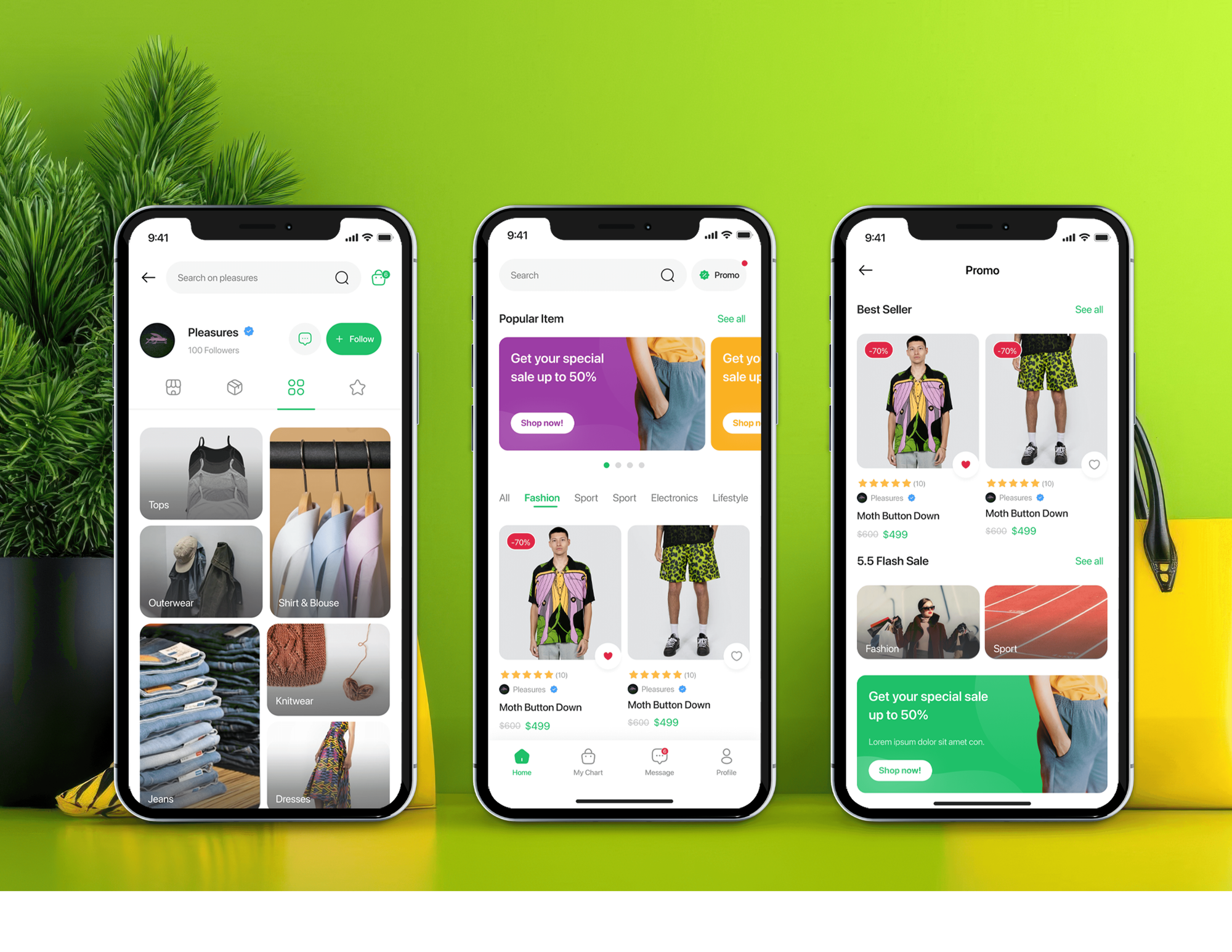
Shopify and ecommerce builds we've shipped for clients, with the order, stock, and fulfillment data flowing behind the storefront.



What Our Clients Say
Feedback from ecommerce teams we have built integration and automation systems for.
We had a different kind of problem. People were visiting the store, adding products to their carts, and then disappearing before they finished the order. We had tried a few apps and made changes here and there, but nothing really seemed to solve the bigger issue. The team went through the shopping experience with us and pointed out things we hadn't really noticed ourselves. They cleaned up the cart and checkout flow, made the mobile experience much smoother, and helped us make the store feel easier to shop. I’m not going to pretend we fixed everything overnight, but it finally feels like the store is helping the sale instead of getting in the way of it.
The mobile experience is probably my favourite part of the new site. We had spent a lot of time making sure the desktop version looked right, and the team kept pushing us to think about how everything would actually feel on a phone too. They were right. The navigation is clean, the interactions feel natural, and everything we’ve tested so far works exactly as it should. They also went through the links, forms, integrations, and other details more than once before launch, which I really appreciated. And even after going live, we could still reach out when something came up. The whole process felt friendly, organised, and surprisingly straightforward.
We had a pretty specific idea of what we wanted our website to become, but I wasn’t sure how easily we could explain all of it to a development team. There were quite a few moving parts, and we were working toward a deadline, so I expected a few things to get lost along the way. That never really happened. They understood what we were trying to achieve, kept us updated throughout the process, and got everything ready within the agreed timeline. The final site feels much easier to navigate, works beautifully on mobile, and is noticeably smoother for our customers. It was a huge relief seeing the original idea actually turn into the website we had in mind.
1,000+
Projects shipped
10+
Years of experience
Top 3%
Upwork Top Rated Plus
5 stars
Average review score
Work Culture
Integrations fail quietly unless someone plans for it. The habits below keep orders flowing, data consistent, and your team out of spreadsheets.
We name the system that owns each record, from stock to prices to orders. That way, no two systems argue over the same number.
Shopify drops a webhook subscription after repeated failed deliveries, so we check subscriptions and sync counts daily. A stalled sync raises an alert within hours.
Retries can resend the same order, so every write checks whether it already happened. A network hiccup doesn't ship an order twice.
Each workflow goes live on its own, with the old process ready as a fallback. Your team sees savings early and risk stays small.
Shopify Flow or a no-code tool handles plenty of workflows well. When one covers yours, you'll hear that from us before any quote.
Code, runbooks, and every tool account are registered to you. Any developer you hire can read the runbooks and carry on where we stopped.
Overview
DeveloperLook provides ecommerce integration services that connect Shopify to your ERP, 3PL, marketplaces, and accounting. We map your data flows, automate the costliest manual work first, and add monitoring that flags failed syncs. Projects start at $1,450, and most go live in 2 to 7 weeks. If Shopify Flow or an app already does the job, we say so.
DEVELOPERLOOK
Project facts · Ecommerce Integration & Automation
Reviewed 28 Sep 2026 by Saimul Islam
Good fit
Operations teams re-keying orders
Your team copies Shopify orders into the ERP each morning, and every typo becomes a wrong shipment or an invoice to fix.
Brands selling on several channels
You sell on Shopify, Amazon, and a wholesale portal, and each channel's orders reach the warehouse by a different route.
Stores outgrowing no-code automations
Your Zapier and Make flows have multiplied to dozens, and nobody knows which one failed when orders stop moving.
Brands switching 3PLs or ERPs
You move to a new 3PL next quarter, and orders, stock, and tracking must be connected before the old contract ends.
Agencies with operations-heavy clients
Your client's order operations need integration work your team doesn't cover, and you need a white-label builder for it.
Not a fit
A handful of simple tasks
You automate a handful of simple tasks a month. Shopify Flow or a no-code tool covers that, and our $1,450 build would add little.
Workflows outside ecommerce
Your workflows sit outside ecommerce, like HR or finance approvals. Our Business Process Automation service covers those.
One custom API connection
You need one custom API connection between two systems that aren't your store. Our API Integration Development service fits that scope.
Marketplace stock only
Stock drifting across marketplaces is your only problem. For that alone, Multichannel Inventory Sync is the better-sized service.
Not sure we're the right fit?
Send a two-line brief. We'll tell you honestly whether we're the right team.
Pricing
These are starting points in USD. Your price depends on how many systems connect, your order volume, and custom rules, and a free operations review turns it into your fixed proposal.
For teams that want their costliest manual workflow automated first.
$1,450one-time, USD
For brands connecting their store, ERP, 3PL, and one marketplace in one build.
$3,800one-time, USD
For operations running 5 or more systems that need custom middleware.
$8,200one-time, USD
For Agencies
You own the client relationship. We supply the ecommerce integration services behind your offer: data maps, ERP and 3PL connections, routing rules, and monitoring. Your client only deals with your team, while the runbooks and code come to you.
White label: your client only ever sees your brand
Send the client's systems, volumes, and pain points, and we come back with questions.
A fixed price arrives with a ranked workflow map you can share with the client.
We build in stages, test with real data, and hand over runbooks and code.
You lead the operations conversation while we build behind the scenes.
Fixed scope per workflow, so the price you quote your client doesn't move.
Developers who have connected Shopify to ERPs, 3PLs, and marketplaces.
Automate one workflow now and add systems as your client grows.
The Right Technology for Your Project
Shopify ecommerce automation starts with Shopify Flow and Shopify's APIs, then adds your ERP, channels, and the tool that fits your volume.
 ShopifyShopify Flow
 GraphQL
 Node.js
 SAP
SAP Microsoft Dynamics 365
 Odoo
Odoo QuickBooks
 Xero
Xero Amazon
 eBay
eBay Walmart
 TikTok
 Zapier
 Make
Make n8n
n8n Slack
SlackFAQ
Straight answers on integration cost, where to start, tool choice, routing, and monitoring.
 Saimul IslamFounder & CEO, DeveloperLook
Still have questions?
Send a message or book a call with the team.
Ecommerce integration services start at $1,450 for your costliest workflow automated between 2 systems, with alerts and a runbook. Connecting up to 4 systems with routing and inventory sync costs $3,800, and a 7-system program with custom middleware costs $8,200. Tool licenses are separate, and a free review sets your fixed quote.
A single workflow takes 2 to 4 weeks, including tests with real data. Connecting 4 systems takes 5 to 7 weeks, and a full program takes 8 to 10 weeks. We ship in stages, so the first workflow saves time long before the last one is done.
Ecommerce automation is software doing the repeat work between your store and your other systems. Orders reach the 3PL, sales post to accounting, stock updates across channels, and your team gets alerts, all without copy and paste. The payoff is fewer errors as much as saved hours.
Pick the workflow that burns the most staff hours or causes the most expensive mistakes. For most stores, that's orders into the ERP or 3PL, then tracking back to Shopify, then stock across channels. We rank yours in the free review using your actual order volumes.
Yes, connecting those four is the core of this service. We link Shopify to each system through its API and agree which system has the final say on each record. Orders, stock, and tracking then move on webhooks or schedules you approve, with every step logged.
Use Zapier-style tools for low volume and simple steps, an iPaaS for many standard connectors, and custom code for complex rules or high volume. Many stores mix all three, with Shopify Flow handling rules inside the store. We choose by volume, logic, and yearly running cost.
We write routing rules that choose the best warehouse, 3PL, or dropship partner for each order, based on stock, location, and cost. Shopify's fulfillment orders carry the assignment, and your 3PL gets the request automatically. That's ecommerce fulfillment automation, with odd orders held in a queue.
We check that each sync ran, that its data arrived, and that the numbers still match. A failed webhook gets up to 8 retries over 4 hours, and Shopify removes subscriptions that keep failing, so we check them daily. A daily reconciliation compares orders and stock, and alerts name the record that broke.
Yes, many clients keep us as their Shopify automation agency once the first workflows run. We handle new connections, platform API updates, and changes when you add a channel or 3PL. Each change gets its own fixed quote, so there's no retainer unless you want one.
Everything stays yours: the code, the runbooks, and every tool account, all in your name. No workflow depends on servers we run or pay for. Support covers 30 to 90 days after launch, depending on plan, including API version updates and fixes for any sync that drifts.
Saimul IslamFounder & CEO, DeveloperLookStill have questions?
Send a message or book a call with the team.
30-min strategy callGoogle Meet
Book a call
Pick a 30-minute slot that works for you. We meet on Google Meet to align on goals, scope, and the right next step.
