

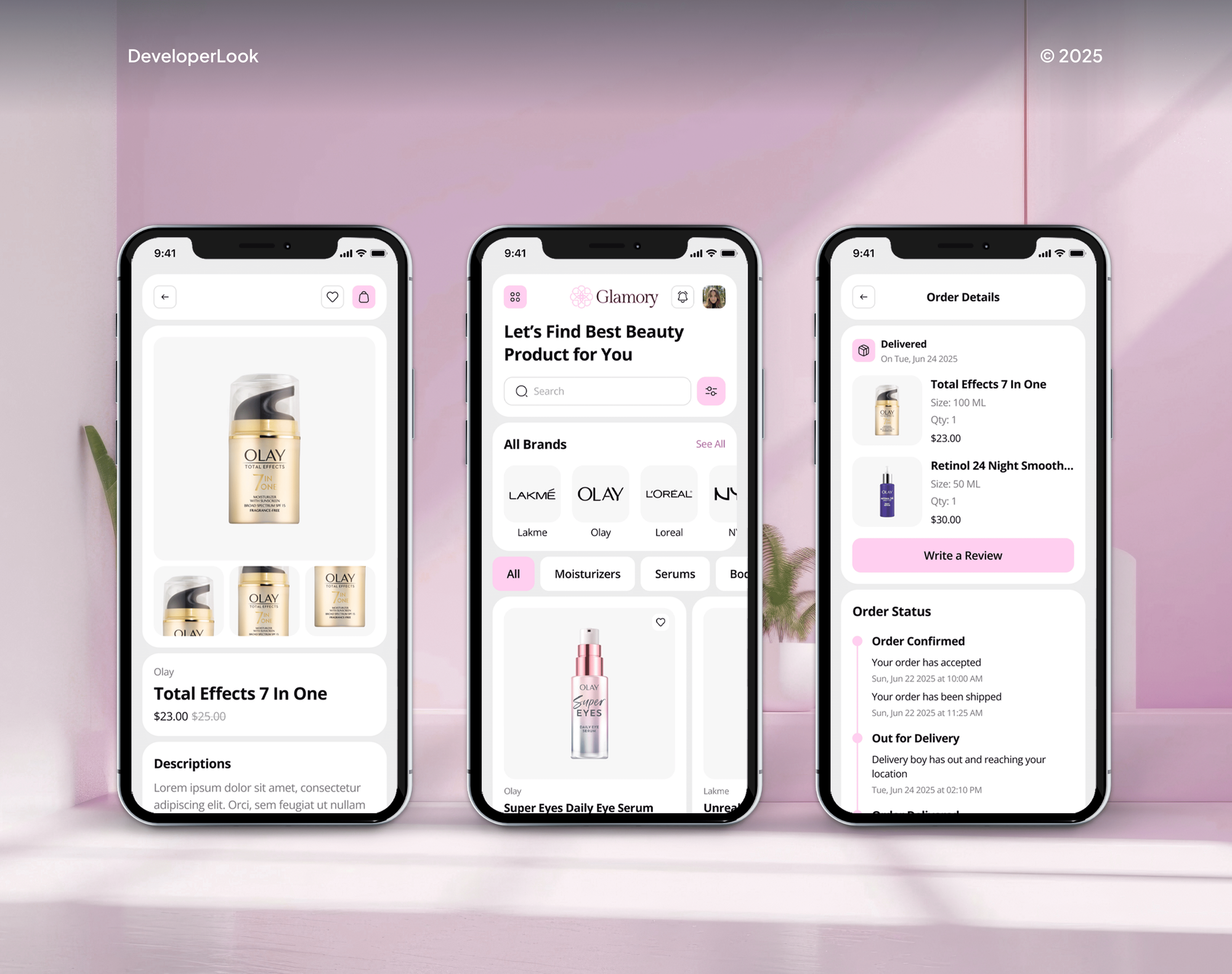
Fuison Fashion Ecommerce Website and Dashboard
- Fashion
- Dashboard
- E-commerce

Custom API integration between any two business systems over REST, GraphQL or webhooks, with rate limit handling, retries and full logging. From $1,499.
Yes
Direct System Connections
Yes
Full Retry & Error Logging
How your project runs
Teams we have built for:














Our Integration Process
You see exactly how your systems will connect and what happens on failure before development starts, not just a finished integration at the end.
We review your systems, their APIs, and where manual work or an iPaaS tool is costing you.
Projects We've Built
A selection of Shopify and ecommerce builds shipped for clients, many involving custom API integrations between systems like this one.


What Our Clients Say
Feedback from teams we have built custom integrations for.
We had a different kind of problem. People were visiting the store, adding products to their carts, and then disappearing before they finished the order. We had tried a few apps and made changes here and there, but nothing really seemed to solve the bigger issue. The team went through the shopping experience with us and pointed out things we hadn't really noticed ourselves. They cleaned up the cart and checkout flow, made the mobile experience much smoother, and helped us make the store feel easier to shop. I’m not going to pretend we fixed everything overnight, but it finally feels like the store is helping the sale instead of getting in the way of it.
The mobile experience is probably my favourite part of the new site. We had spent a lot of time making sure the desktop version looked right, and the team kept pushing us to think about how everything would actually feel on a phone too. They were right. The navigation is clean, the interactions feel natural, and everything we’ve tested so far works exactly as it should. They also went through the links, forms, integrations, and other details more than once before launch, which I really appreciated. And even after going live, we could still reach out when something came up. The whole process felt friendly, organised, and surprisingly straightforward.
We had a pretty specific idea of what we wanted our website to become, but I wasn’t sure how easily we could explain all of it to a development team. There were quite a few moving parts, and we were working toward a deadline, so I expected a few things to get lost along the way. That never really happened. They understood what we were trying to achieve, kept us updated throughout the process, and got everything ready within the agreed timeline. The final site feels much easier to navigate, works beautifully on mobile, and is noticeably smoother for our customers. It was a huge relief seeing the original idea actually turn into the website we had in mind.
150+
Projects shipped
10+
Years in development
Top 3%
Upwork Top Rated Plus
5 stars
Average review score

Want results like these?
Tell us what you are building. You get a reply within 24 hours on business days, then a written estimate.
Work Culture
Getting error handling wrong means silent data loss nobody notices until it's a problem, so the integration has to fail loudly and recover cleanly. These are the habits we bring to every project.
We tell you upfront if a tool like Zapier or Make already covers your needs.
REST, GraphQL, or webhooks, whichever actually fits how your systems work.
Full logging and tuned retry logic instead of silent, opaque sync failures.
Data moves directly between your systems, not through third-party infrastructure.
Real data used to test accuracy, retries, and error handling before launch.
Documentation and an optional retainer so the integration keeps working as APIs change.
Overview
DeveloperLook builds custom API integrations connecting any of your business systems, using REST, GraphQL or webhooks depending on what fits, with rate limit handling, retry logic and full logging built in so failures get caught in minutes, not support tickets. We keep the code and data pathway under your control rather than routing it through a third-party iPaaS. Projects start from $1,499, most complete in 1 to 6 weeks depending on scope.
DEVELOPERLOOK
Project facts · Custom API Integration Services
Reviewed 22 Sep 2026
Good fit
Businesses connecting two systems that don't talk to each other
You're manually moving data between two tools, a CRM, an ERP, a store, or an internal system, because nothing connects them.
Businesses outgrowing Zapier or Make
You've hit rate limits, opaque failures, or per-task pricing on an iPaaS tool and want direct control over the integration instead.
Businesses needing high-volume or high-reliability sync
You're syncing thousands of records a month and need retry logic and monitoring an off-the-shelf automation tool doesn't give you visibility into.
Businesses with security or compliance requirements
You need data moving directly between your systems rather than through a third party's infrastructure.
Businesses unsure whether they need REST, GraphQL or webhooks
You know you need two systems connected but aren't sure what approach or authentication method actually fits.
Not a fit
You specifically need an ecommerce order, inventory, or fulfillment integration.
Our Ecommerce Integration & Automation service is scoped to that.
You're running a handful of simple, low-volume automations and an iPaaS tool like Zapier or Make already works fine for you.
We'll say so upfront rather than building something you don't need.
You need one of our specific platform integrations, like Shopify to Xero, TikTok Shop, or a shipping carrier.
Those services are scoped and priced for that exact connection.
You need the full multichannel commerce platform rather than a single integration.
Our Multichannel Ecommerce Software service covers that.
Not sure we're the right fit?
Book a free call or message us. We'll tell you honestly whether we're the right team.
Pricing
These are starting points in USD. Your final price depends on your scope and integrations, and you get a fixed proposal after a project brief.
For connecting two systems with one reliable integration.
$1,499one-time, USD
For connecting several tools with shared workflows.
$2,999one-time, USD
For complex integrations with custom middleware and reporting.
$5,999one-time, USD
FAQ
Straight answers on custom API integrations, architecture choices, and iPaaS alternatives.
Saimul IslamFounder & CEO, DeveloperLookStill have questions?
Send a message or book a call with the team.
Custom API integration means we connect two or more of your systems directly using their APIs or webhooks, so data moves automatically between them instead of being exported and re-entered by hand or routed through a third-party automation tool.
Projects typically start from $1,499 for a straightforward two-system connection, and scale up with more systems, higher data volume, or custom business logic. You get a fixed quote after reviewing your systems.
Most projects take 1 to 6 weeks depending on how many systems are involved, whether their APIs are well documented, and how much custom logic the integration needs.
REST fits most resource-based integrations and works well with webhooks for event notifications. GraphQL makes sense when you need precise, flexible data from a complex system without over-fetching. We pick based on what your systems actually support and what the integration needs to do.
We build retry logic tuned to each system's rate limits, with full logging so a failure surfaces in minutes instead of being discovered days later, one of the biggest gaps we see with off-the-shelf automation tools, where sync failures are often opaque.
An iPaaS tool like Zapier or Make is faster to set up and fine for low-volume, simple automations. A custom integration makes more sense once you're syncing high volumes, need custom logic, or the recurring iPaaS cost starts outweighing a one-time build.
We use OAuth 2.0 or API key authentication as each system requires, keep credentials out of code, and build a direct connection between your systems rather than routing data through third-party infrastructure.
We include 30 days of support after launch, and offer an optional retainer after that so the integration keeps working as the connected systems update their APIs.
Saimul IslamFounder & CEO, DeveloperLookStill have questions?
Send a message or book a call with the team.
Free 30-min callGoogle Meet
Book a call
In 30 minutes on Google Meet we walk you through how we would build it, how long it takes and what it costs. Then you get a written estimate.
Calendar not showing? Book on cal.com or send a brief.