Master product record
One place for your titles, images, attributes, and costs, mapped to every channel's listing fields.

Multichannel ecommerce software that runs Amazon, Walmart, TikTok Shop, and your store from one hub with one stock count. From $1,400.
1
Hub for every sales channel
100%
Orders in one queue
Teams we have built for:














The Problem
It starts when your second marketplace goes live. Every channel wants its own listings, prices, and order handling, and stock drifts between them.
01 · Oversold stock
Amazon keeps selling an item Shopify sold out of hours ago.
Stock and price rules per channel replace manual updates.
02 · Stale prices
Walmart listings still show last month's price.
Titles, images, prices, and stock live once and flow to every channel.
03 · Scattered orders
TikTok Shop orders sit in a separate tab.
Orders from every channel land together, routed to the right warehouse.
04 · Messy returns
Returns get restocked in a different spreadsheet per channel.
Returns from any channel restock the right SKU.
Your Shopify store sells out of a best seller at 9 a.m., but Amazon keeps taking orders until someone updates it by hand. Walmart listings still show last month's price. TikTok Shop orders sit in a separate tab, and returns from each channel get restocked in a different spreadsheet. By Friday you're refunding oversold orders and apologizing in reviews, while a fifth channel feels impossible to add.
We start by mapping every channel you sell on, the systems behind it, and the rules your team follows from memory. Then we build one hub: a master product record, one order queue, stock and price rules per channel, and returns that restock the right SKU. Each channel connects through its official API. Adding the next one becomes configuration, not another login.
One record per product
Titles, images, prices, and stock live once and flow out to every channel you sell on.
Every order in one queue
Orders from every channel land in one list, routed to the right warehouse or 3PL.
Rules instead of manual edits
Channel rules for price, stock buffers, and listings replace copy and paste updates.
Our Multichannel Build Process
You see how orders, stock, and prices will flow between channels before we build. Channels go live one at a time, after testing.
We map your channels, warehouses, and the rules your team applies by hand, such as price markups or stock buffers. You leave with a channel map and a fixed quote. If an off-the-shelf multichannel app already covers your case, we'll tell you before we quote.
What's Included
Every plan covers the channel review, a master product record, one order queue, stock and price rules, and staged testing. Larger plans add channels, warehouses, and ERP sync.
Compare Options
A multichannel app suits sellers with standard rules, and separate connectors suit one or two channels. We fit when your pricing, routing, or channel mix outgrows both.
| Feature | DeveloperLookBest fit | Multichannel app | Separate connectors |
|---|---|---|---|
| Upfront cost | From $1,400, fixed scope | Low setup, monthly fee | Low per connector |
| Time to go live | 3 to 12 weeks | Days to weeks | Days per channel |
| Channels covered | Any channel with an API | The app's supported list | One channel each |
| Pricing rules | Margin rules you set | Templates the app offers | Set in each app |
| Order routing | Your warehouse and 3PL rules | Standard routing options | Usually none |
| Stock source | One master count | The app's count | Each app syncs separately |
| Data ownership | Your database and code | Stored by the vendor | Spread across apps |
| Ongoing cost | Hosting, optional support | Monthly fee by plan | Several subscriptions |
Projects We've Built
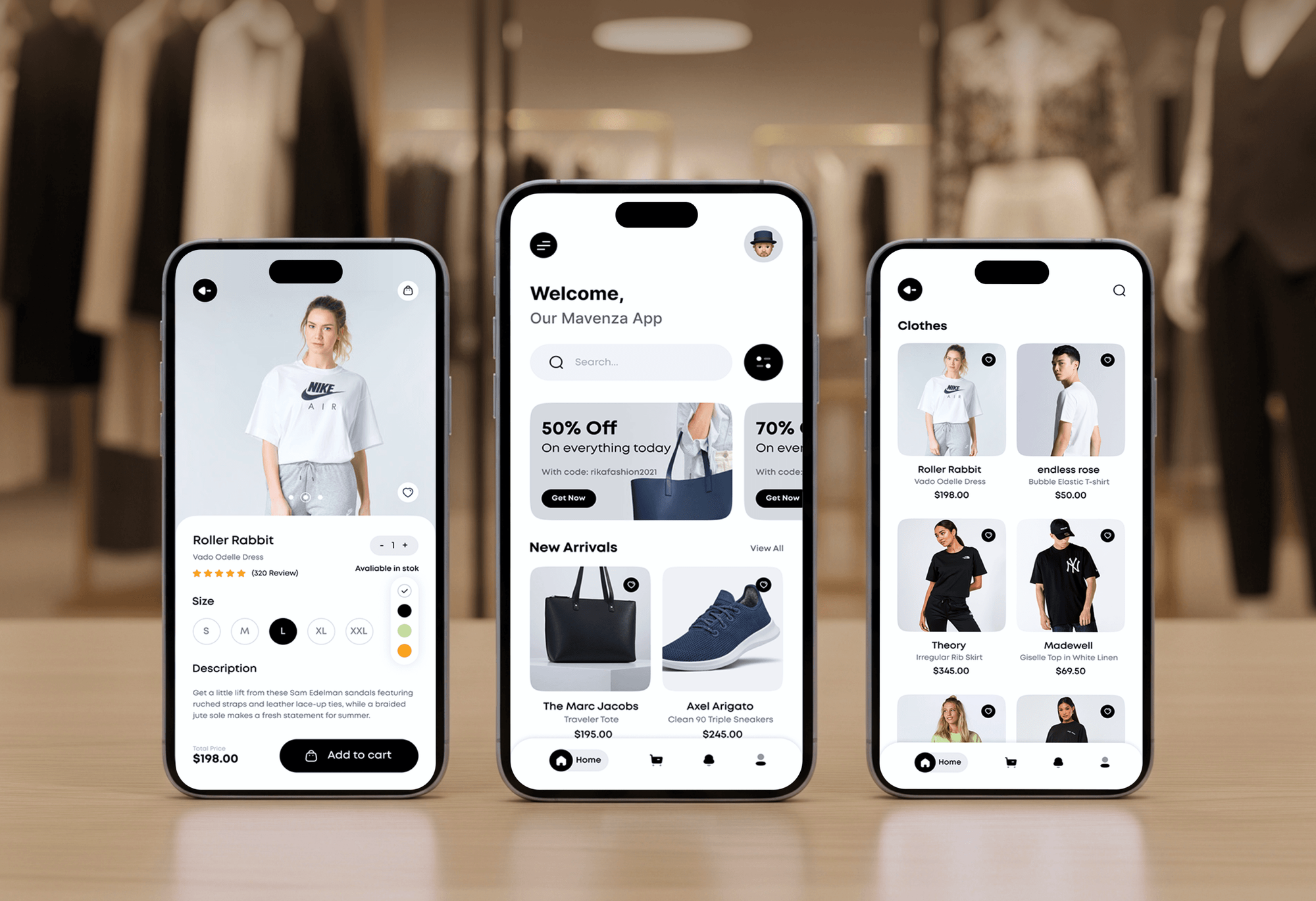
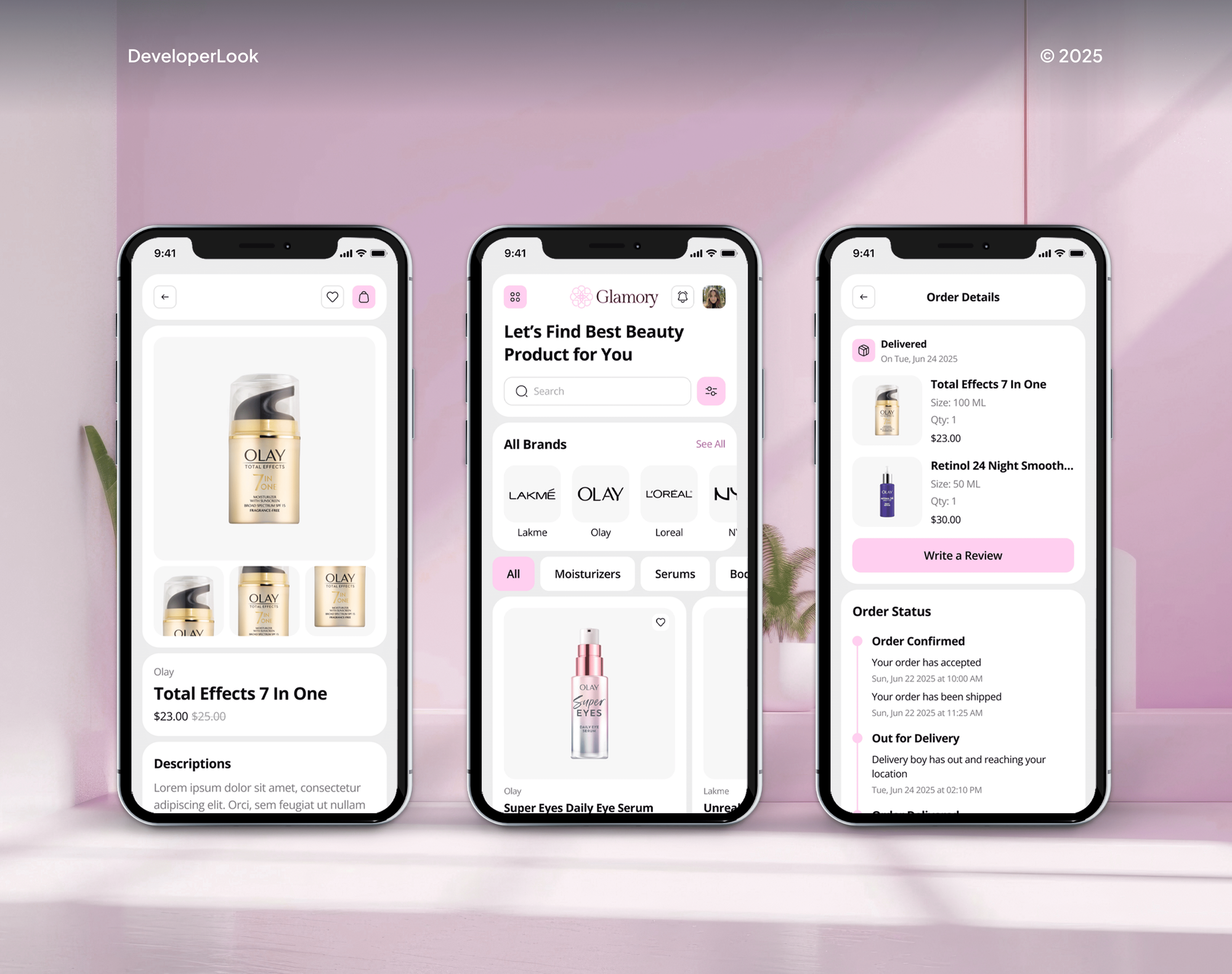
Ecommerce stores and apps we've designed and built. Multichannel work rests on the same foundations: clean product data, careful API work, and staged launches.


What Our Clients Say
Feedback from ecommerce teams we have built stores, integrations, and multichannel tools for.
We had a different kind of problem. People were visiting the store, adding products to their carts, and then disappearing before they finished the order. We had tried a few apps and made changes here and there, but nothing really seemed to solve the bigger issue. The team went through the shopping experience with us and pointed out things we hadn't really noticed ourselves. They cleaned up the cart and checkout flow, made the mobile experience much smoother, and helped us make the store feel easier to shop. I’m not going to pretend we fixed everything overnight, but it finally feels like the store is helping the sale instead of getting in the way of it.
The mobile experience is probably my favourite part of the new site. We had spent a lot of time making sure the desktop version looked right, and the team kept pushing us to think about how everything would actually feel on a phone too. They were right. The navigation is clean, the interactions feel natural, and everything we’ve tested so far works exactly as it should. They also went through the links, forms, integrations, and other details more than once before launch, which I really appreciated. And even after going live, we could still reach out when something came up. The whole process felt friendly, organised, and surprisingly straightforward.
We had a pretty specific idea of what we wanted our website to become, but I wasn’t sure how easily we could explain all of it to a development team. There were quite a few moving parts, and we were working toward a deadline, so I expected a few things to get lost along the way. That never really happened. They understood what we were trying to achieve, kept us updated throughout the process, and got everything ready within the agreed timeline. The final site feels much easier to navigate, works beautifully on mobile, and is noticeably smoother for our customers. It was a huge relief seeing the original idea actually turn into the website we had in mind.
1,000+
Projects shipped
10+
Years of experience
Top 3%
Upwork Top Rated Plus
5 stars
Average review score
Work Culture
One wrong stock number repeats on every channel, so the hub has to be right before it goes live. These habits go into every build.
Amazon gives each Selling Partner API operation its own rate limit, per Amazon's docs. We queue calls per operation, so your busiest sale day slows syncs instead of breaking them.
Walmart can mark a feed processed while single items still fail, per its developer docs. We read every item result, so you hear about a rejected listing the same day.
Syncs take minutes, and a burst of orders can outrun them. Your hub holds back a small buffer on each channel, so a best seller sells out cleanly instead of overselling.
Each marketplace takes a different cut of the sale. Price rules start from your target margin on each channel, so a sale on one isn't quietly losing money.
If a multichannel app already fits your channels and rules, we'll say so before quoting. We build custom only for the gaps those tools leave.
Your code, database, and channel connections run in your own accounts, and the documentation comes with them. Adding a channel later doesn't depend on us.
Overview
DeveloperLook builds custom multichannel ecommerce hubs that run your store, Amazon, Walmart, and TikTok Shop from one place. You get a master product record, one order queue, stock and price rules per channel, and returns that restock the right SKU. Projects start at $1,400 and take 3 to 12 weeks, and the code and data are yours.
DEVELOPERLOOK
Project facts · Multichannel Ecommerce Software
Reviewed 28 Sep 2026 by Saimul Islam
Good fit
Sellers adding a third channel
You sell on Shopify and Amazon, and adding Walmart or TikTok Shop means another login, another stock count, and more manual updates.
Brands that keep overselling
Your best sellers oversell on one channel while another still shows stock, and refunds are eating the margin you gained.
Teams outgrowing a multichannel app
Your multichannel app can't handle your pricing rules, bundles, or warehouse routing, so staff fix orders by hand every morning.
Operations leads wanting one queue
You want multichannel ecommerce management in one place, with every order, return, and stock change visible to your team.
Agencies with marketplace clients
Your agency runs marketplaces for several brands and wants one hub per client, built under your name.
Not a fit
One or two channels
You sell on one or two channels with standard rules. Off-the-shelf ecommerce multichannel software or a channel's own connector costs less than our $1,400 start.
Stock counts only
You only need stock counts matched across channels. Our Multichannel Inventory Sync service is the smaller, cheaper fix.
Adding one channel
You're adding one channel to an existing setup, such as TikTok Shop. Our TikTok Shop Integration service covers that single connection.
Reporting, not operations
You need to see sales and margin across channels, not run operations. Our Ecommerce Dashboard Development service builds that view.
Not sure we're the right fit?
Send a two-line brief. We'll tell you honestly whether we're the right team.
Pricing
These are starting points in USD. Your final price depends on the number of channels, warehouses, and pricing rules, and you get a fixed proposal after a free channel review.
For sellers running their store and one marketplace who want one catalog and order queue.
$1,400one-time, USD
For sellers on up to 5 channels who need routing, pricing rules, and cross-channel returns.
$3,900one-time, USD
For high-volume brands on up to 10 channels with several warehouses and an ERP.
$7,800one-time, USD
For Agencies
You own the client relationship. We supply the build behind it: the channel map, the hub, the connectors, and a staged launch. Your client sees your brand, and you get documentation to support them after handover.
White label: your client only ever sees your brand
Send the client's channels, warehouses, and the rules they apply by hand.
You get the channel map, a timeline, and one fixed price.
We build, launch channel by channel, and document it under your brand.
We work under your brand, so the client relationship stays yours.
A fixed price and a channel map the client approves first.
Each channel goes live separately, so one issue can't stall the rest.
Bring us in for one client hub or several marketplace clients.
The Right Technology for Your Project
We connect every channel through its official API to a hub you own, with an admin built in React for your team.
 Shopify
 WooCommerce
 BigCommerce
 Amazon
 Walmart
 TikTok
 eBay
eBay Microsoft Dynamics 365
 Odoo
Odoo QuickBooks
 Xero
Xero Node.js
 Python
 PostgreSQL
 AWS
AWS Docker
 React
React Next.js
 Slack
Slack Google Sheets
FAQ
Straight answers on cost, timelines, channel sync, pricing rules, and off-the-shelf tools.
 Saimul IslamFounder & CEO, DeveloperLook
Still have questions?
Send a message or book a call with the team.
You manage them from one hub: every channel's orders land in one queue, and one master stock count feeds every listing. Each sale updates that count and pushes new stock levels out through each channel's API, with a small buffer per channel for sync delays. Returns restock the same record.
It needs your store, every marketplace you sell on, and the systems behind them: warehouses or a 3PL, your accounting or ERP, and shipping. Each connection needs admin access and an API app on that channel. We list every connection and the data it carries during the free review.
A two-channel hub starts at $1,400 for your store and one marketplace. Up to 5 channels with pricing rules, routing, and cross-channel returns costs $3,900. A custom platform for up to 10 channels, 3 warehouses, and ERP sync starts at $7,800. You get a fixed price after the free channel review.
A two-channel hub takes 3 to 4 weeks from the channel review to launch. A 5-channel operations hub takes 6 to 8 weeks, and a custom platform takes 10 to 12 weeks. Marketplace API approvals can add days, so we request access in the first week.
Choose off-the-shelf if a multichannel app supports all your channels and your pricing and routing rules fit its settings. Choose custom when you need margin-based pricing, bundles, warehouse routing, or an ERP the app can't reach. We'll tell you when the app is enough, even if that means no project.
Your hub becomes the single source of truth, synced through each platform's official API. Orders arrive by webhook or scheduled pull, and stock and price changes go out as API calls or bulk feeds. Every change is logged, so you can trace any listing's history.
Yes, your hub centralizes orders, stock, and reporting, because every channel writes to the same database. Your team sees one order queue and one stock count, and basic sales reports by channel come with it. For deeper margin analysis, our dashboard service builds on the same data.
Your master record stays the same, and rules adapt it for each channel. Prices follow a markup or minimum margin, and titles, attributes, and images follow a field map. Amazon and Walmart each check listings against their own category requirements, so we test every mapping before it goes live.
Your hub comes with 30, 60, or 90 days of support by plan, covering sync fixes and channel API changes. Marketplaces update their APIs often, so we watch their change notices during that window. After it, your team runs the hub with our documentation, or we quote ongoing care.
You own everything: the code, the database, and the channel connections run in your own cloud and marketplace accounts. We hand over logins, documentation, and a recorded admin walkthrough at launch. Adding a channel later doesn't depend on us, and your order history stays with you.
Saimul IslamFounder & CEO, DeveloperLookStill have questions?
Send a message or book a call with the team.
30-min strategy callGoogle Meet
Book a call
Pick a 30-minute slot that works for you. We meet on Google Meet to align on goals, scope, and the right next step.
