





Intake and assessments
Client intake, home safety checks, and assessments as structured forms that feed the care plan.

For private duty and in-home care agencies who want care plans, visit notes, caregiver credentials, and family updates in one system their caregivers will use.
100%
Care tasks checked each visit
1record
Per client, office and field
How your project runs
01 · FreeTeams we have built for:














The Problem
Most agencies buy a scheduler first. The trouble shows up around it: care plans in binders, visit notes on paper, credentials in a spreadsheet, and families calling the office for updates.
Care plans
Care plans sit in a binder at the client's home.
Care plans
Each care plan task shows on the caregiver's phone at the right visit.
Visit notes
Paper task sheets reach the office a week late.
Visit notes
Caregivers check off tasks and add notes before they clock out.
Credentials
Expired CPR cards go unnoticed until a family asks.
Credentials
Every credential has an expiry date, with warnings to the caregiver and the office.
Families
Relatives call the office every afternoon for updates.
Families
Families read visit notes in their own portal, with the access you approve.
Your care manager writes the care plan after the intake visit, prints it, and leaves it in a binder at the client's home. Caregivers initial a paper task sheet that reaches the office a week later, if it arrives at all. A caregiver's CPR card expired last month, and nobody noticed until the client's family asked. A daughter calls every afternoon to ask whether her father ate lunch. Billing waits on paper timesheets.
We start with the care plan, because every visit should follow it. Your care manager builds it once from the intake assessment, and each task appears on the caregiver's phone at the visit. Caregivers check tasks off, add notes, and flag a change in condition, which reaches the care manager the same hour. Credentials carry expiry dates and warnings. Families see visit notes in their own portal, and invoices come from completed visits, not timesheets.
Care plans on every phone
Tasks from each client's care plan appear at the visit, with a checkbox and a note.
Caregiver credentials tracked
CPR, TB tests, background checks, and training carry expiry dates with early warnings.
Families kept informed
Relatives see visit notes and changes through a portal, so the office phone rings less.
Our Home Care Software Development Process
You approve the care plan templates, forms, and family access rules before design. Then your care managers and a few caregivers test each build on real routes.
We walk through intake, care planning, a typical visit, credentialing, and billing with your office manager and a care manager. You get a scope, a plan for your current scheduler, and a fixed-price estimate.
What's Included
The records your agency runs on, beside your scheduler: client intake, care plans, a caregiver app, credentials, family updates, and billing from completed visits.
Compare Options
An all-in-one agency suite suits most new agencies, and a scheduler plus paper costs least at small size. Here is where each fits once your care plans, forms, and families need more.
| Feature | DeveloperLookBest fit | Agency suite | Scheduler plus paper |
|---|---|---|---|
| Care plan tasks | On the caregiver's phone each visit | Included, in the vendor's format | Paper in the client's home |
| Your forms | Your assessments and wording | Vendor's forms, some edits | Your forms, on paper |
| Family updates | Portal with your access rules | Varies by vendor | Phone calls to the office |
| Credentials | Expiry alerts before booking | Often included | Spreadsheet reminders |
| Scheduling | Keeps your current scheduler | Replaces your scheduler | Your current scheduler |
| Time to start | Pilot in 3 to 4 weeks | Weeks of setup and training | Already running |
| Cost model | Fixed build, no per-client fee | Monthly subscription fees | Staff hours on paperwork |
| Data ownership | You own code and records | Exports on request | Paper files in your office |
Projects We've Built
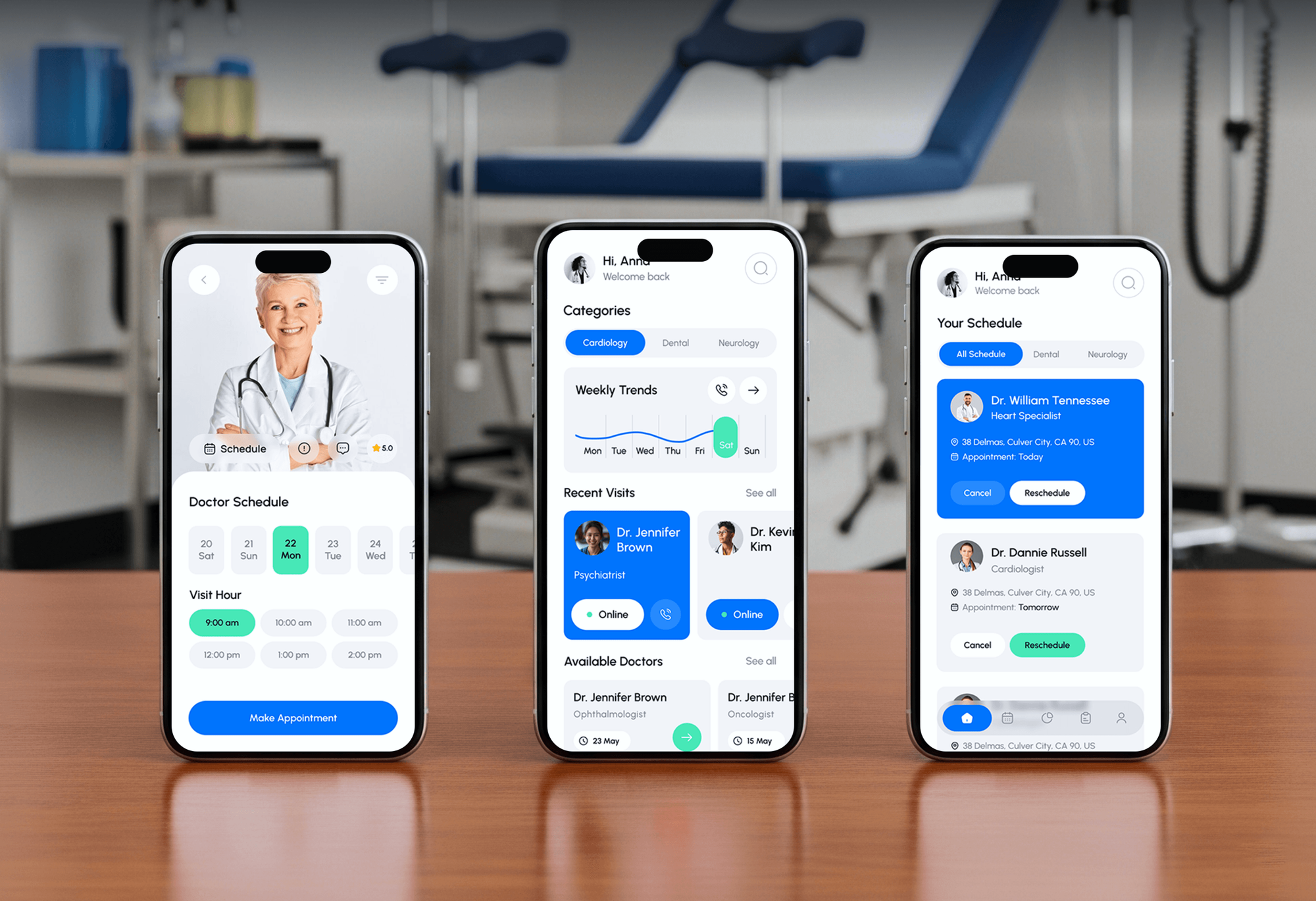
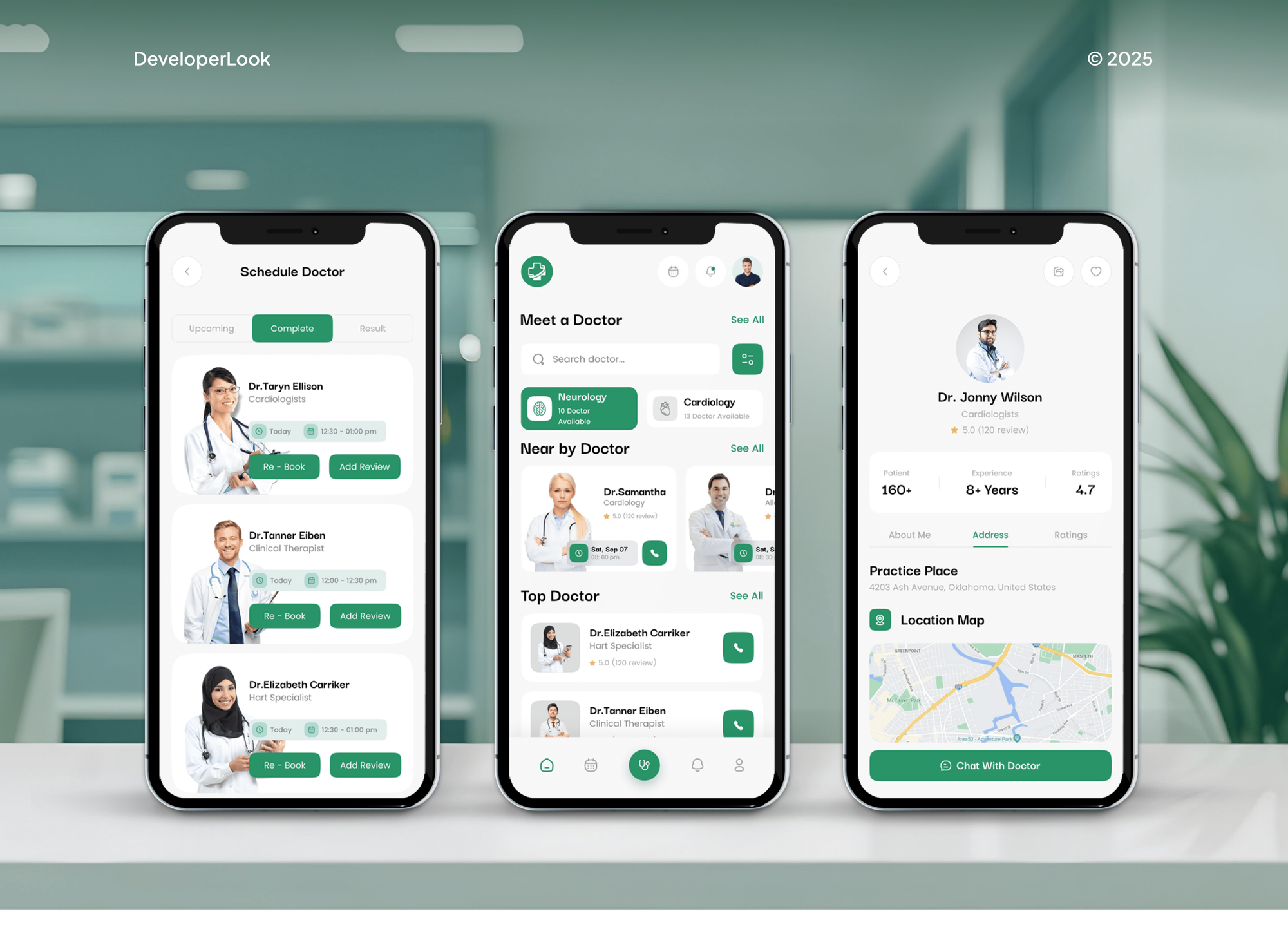
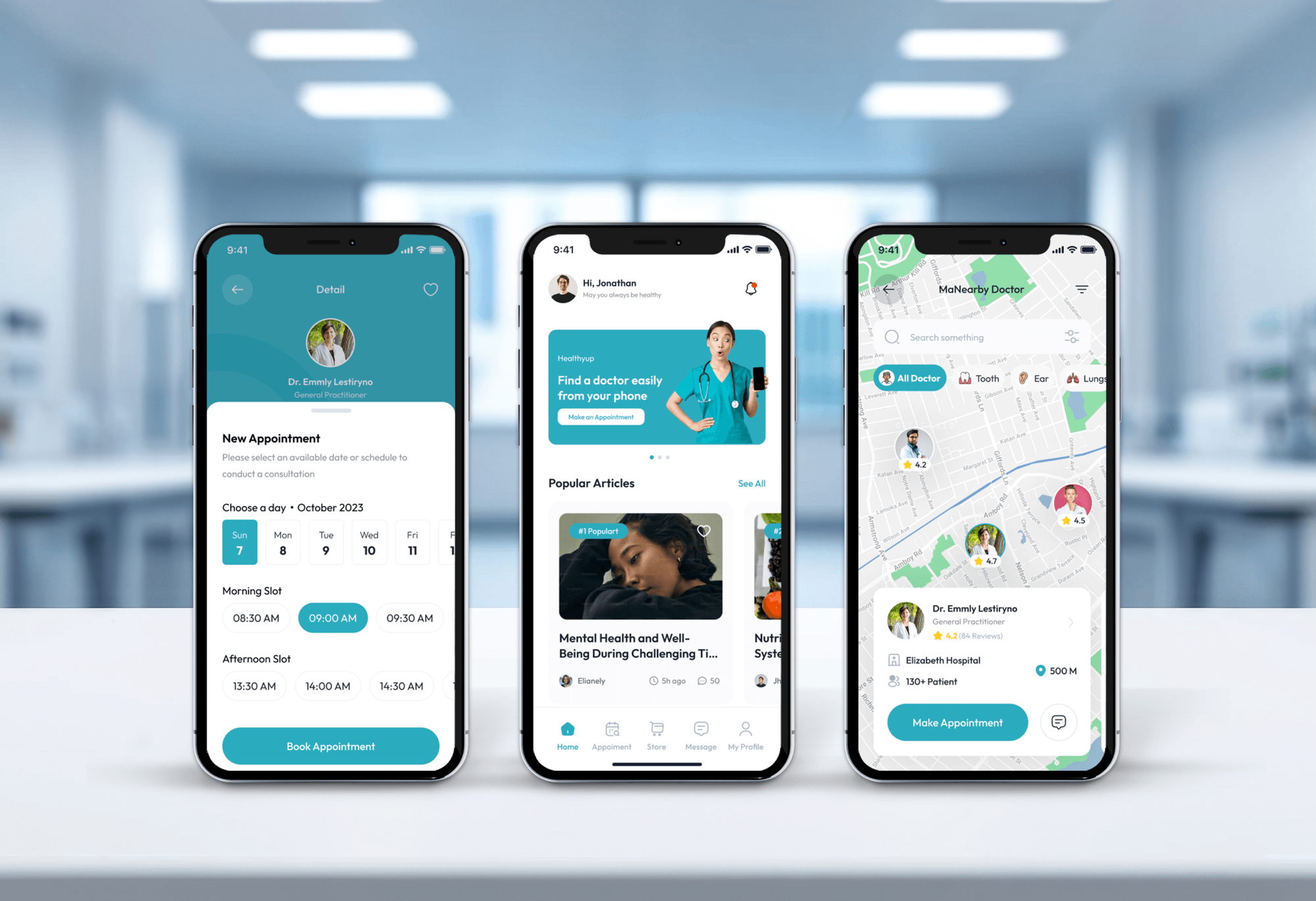
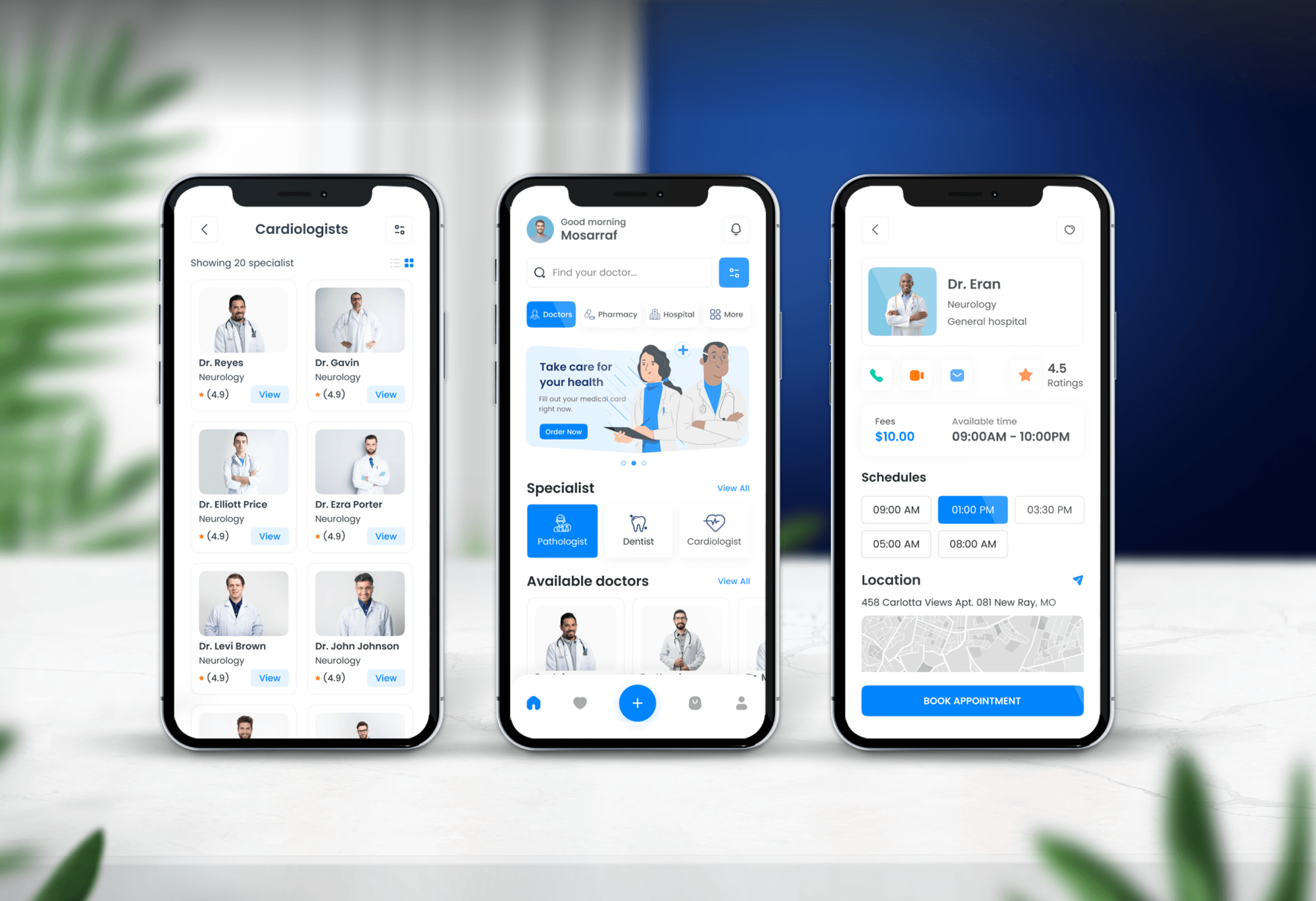
None of these is home care software. DocLink shows live staff availability and a clinic dashboard, and the others show patient records and staff dashboards.
What Our Clients Say
Feedback from teams we have built apps and platforms for.
We had a pretty specific idea of what we wanted our website to become, but I wasn’t sure how easily we could explain all of it to a development team. There were quite a few moving parts, and we were working toward a deadline, so I expected a few things to get lost along the way. That never really happened. They understood what we were trying to achieve, kept us updated throughout the process, and got everything ready within the agreed timeline. The final site feels much easier to navigate, works beautifully on mobile, and is noticeably smoother for our customers. It was a huge relief seeing the original idea actually turn into the website we had in mind.
The mobile experience is probably my favourite part of the new site. We had spent a lot of time making sure the desktop version looked right, and the team kept pushing us to think about how everything would actually feel on a phone too. They were right. The navigation is clean, the interactions feel natural, and everything we’ve tested so far works exactly as it should. They also went through the links, forms, integrations, and other details more than once before launch, which I really appreciated. And even after going live, we could still reach out when something came up. The whole process felt friendly, organised, and surprisingly straightforward.
What I appreciate most is that the website is actually easy for us to manage now. We can update content ourselves instead of sending a developer a message every time we need to change something small. They also paid attention to the technical SEO side, which mattered to us because we didn’t want a new website to create problems for the traffic we already had. I’ve probably asked more questions than I should have since launch, but every question has been handled patiently and without any fuss. The team is easy to work with, they explain things clearly, and when we need something changed, they focus on getting it done rather than making the process complicated.
1,250+
Projects shipped
10+
Years of experience
Top 3%
Upwork Top Rated Plus
5 stars
Average review score
1,250+
Projects shipped
10+
Years of experience
Top 3%
Upwork Top Rated Plus
5 stars
Average review score

Want results like these?
Tell us what you are building. You get a reply within 24 hours on business days, then a written estimate.
Work Culture
Home care software solutions often ask agencies to change how they work. We build around your care managers' forms and your caregivers' phones, and keep the scheduler you trust.
If caregivers won't use the app, nothing else matters. We test with your caregivers on their own phones, with large text turned on and a weak signal.
If your scheduler and EVV setup already work, we connect to them instead of replacing them. Your office keeps the tool it knows, and gains care plans beside it.
Medicaid EVV, state licensing, and documentation rules belong to your administrator and your state. We build the forms and fields those rules call for.
When your agency bills Medicaid or insurers, HIPAA applies, and we sign a business associate agreement before real client records reach us. Until then, we test with sample clients.
If an all-in-one agency suite already fits your forms and branches, we'll tell you before we quote. Custom software pays off when your care model or size outgrows one.
Code, cloud accounts, and every client and caregiver record stay in your name. Switching vendors later doesn't mean retyping years of care history.
Overview
DeveloperLook handles home care software development for private duty and in-home care agencies. We build client intake, care plans with visit task checklists, a caregiver app, credential tracking, family updates, and private pay invoicing. Pilots start at $1,400 and take 3 to 4 weeks, and you own the code and client records.
DEVELOPERLOOK
Project facts · Home Care Software Development
Reviewed 28 Oct 2026 by Saimul Islam
Good fit
Private duty agencies
Your private duty home care software handles schedules, but care plans, visit notes, and family updates still run on paper and phone calls.
Multi-branch care groups
Your branches use different forms and spreadsheets, and you need home care agency software that gives owners one view across all of them.
Agencies serving Medicaid clients
Your Medicaid visits need EVV records your state checks, and your current software for home care agency staff leaves gaps in visit notes.
Home care franchise owners
Your franchise requires its own forms and reports, and you want home care management software that fits them without a costly suite.
Care model founders
You're launching companion care or dementia support with its own routines, and need software built around how your caregivers actually work.
Not a fit
Budget under $1,400
You need a full system for under $1,400. An all-in-one agency suite on a monthly plan is the better start, and we'll say so.
Scheduling is the problem
Your care plans work, but shifts, open visits, and caregiver matching don't. Our home care scheduling software page covers that scheduling engine.
Medicare home health
You're a Medicare-certified home health agency that needs OASIS assessments and Medicare billing. Home health software built for Medicare fits better than a custom private duty build.
Remote vitals monitoring
You want blood pressure or weight readings from clients' homes. Our remote patient monitoring software development page covers device data and nurse alerts.
Not sure we're the right fit?
Book a free call or message us. We'll tell you honestly whether we're the right team.
Pricing
These are starting points in USD. Your final price depends on your forms, number of branches, and scheduler connection, and you get a fixed proposal after a free discovery call.
For Agencies
You own the client relationship. We supply the engineering behind your care agency proposal: care plans, a caregiver app, credentials, and family portals. Everything ships under your brand and in your client's own accounts.
White label: your client only ever sees your brand
Send the agency's forms, scheduler, branch count, and current paperwork.
You get a fixed estimate, a forms plan, and named developers within a week.
We deliver under your brand and hand over code, accounts, and form templates.
Send the agency's forms, scheduler, branch count, and current paperwork.
You get a fixed estimate, a forms plan, and named developers within a week.
We deliver under your brand and hand over code, accounts, and form templates.
The Right Technology for Your Project
The caregiver app works offline and syncs when the signal returns, and the office side connects to your scheduler and payroll through exports or APIs.
 Flutter
 React NativeReact
 Next.js
 TypeScript
 Node.js
 PostgreSQL
 AWS
 Docker
 NestJS
 QuickBooks
 Xero
 Stripe
 Twilio
Related Services
Agency software sits next to scheduling, home monitoring, billing, and your agency's website. These pages cover each of those builds.
This page
Home Care Software Development
Pairs with the 5 services around it
FAQ
Straight answers on cost, timelines, choosing and comparing agency software, EVV, and HIPAA.
Saimul IslamFounder & CEO, DeveloperLookStill have questions?
Send a message or book a call with the team.
Custom home care software development with DeveloperLook starts at $1,400 for a pilot with care plans and visit checklists on caregivers' phones. A full agency system with intake, credentials, a family portal, and billing starts at $4,450. A multi-branch platform starts at $9,200. You get a fixed proposal after a free discovery call.
A pilot takes 3 to 4 weeks, and a full agency system usually takes 10 to 16 weeks. Turning paper forms into structured ones often takes longer than the coding, so we start with your forms in week 1. We move one care team first, then each branch in turn.
Home care software is the system an agency uses to run client care outside a facility: intake, care plans, caregiver visits, notes, and billing. Some products focus on scheduling and EVV, while others try to cover everything. Private duty agencies often pair a scheduler with paper care plans, which is the gap a custom build fills.
A typical platform offers client records, care plans, scheduling, a caregiver app with clock-in, EVV, billing, and payroll. Better ones add family portals, credential tracking, and change-of-condition alerts. Check which features work well for your agency in a real trial, since long feature lists often hide thin ones.
The best choice is the one your caregivers actually use on every visit. For a new agency, an all-in-one suite is usually the right start. Larger agencies with their own forms, several branches, or a distinct care model often keep their scheduler and add custom care plan and family tools around it.
Compare products by listing your own visit tasks, forms, and family questions first, then asking each vendor to show them. Ask a caregiver to try the app on their own phone, offline. A demo built on the vendor's sample agency hides the gaps your real paperwork will expose.
Compare systems on total cost over 3 years, not the first month: per-client or per-caregiver fees, setup, training, and add-ons. Then ask how you'd export client records, care history, and credentials if you leave. A system that can't export your data cleanly costs the most when you outgrow it.
Yes, by connecting to your state's EVV system or aggregator, or to a scheduler that already handles it. The 21st Century Cures Act requires EVV for Medicaid personal care and home health visits, and each state sets its own system and file format. We match your state's specification and test exports before any real visit is billed.
Your agency's software needs HIPAA safeguards when the agency is a covered entity, usually because it bills Medicaid or insurers electronically. Private-pay-only agencies may fall outside HIPAA, but state privacy laws and client trust still apply. We build to HIPAA safeguards either way, and sign a business associate agreement before touching real client records.
You own the code, the cloud accounts, and every client, caregiver, and visit record. Full system builds include 60 days of fixes and form updates after launch. When your forms or state rules change later, we can update them on a monthly plan, or your own developer can.
Saimul IslamFounder & CEO, DeveloperLookStill have questions?
Send a message or book a call with the team.
Free 30-min callGoogle Meet
Book a call
In 30 minutes on Google Meet we walk you through how we would build it, how long it takes and what it costs. Then you get a written estimate.
Calendar not showing? Book on cal.com or send a brief.