










Route and config audit
Every route segment checked for metadata, rendering mode, status code, and Core Web Vitals.

For teams on Next.js: we audit every route against the framework's own SEO tools and fix metadata, sitemaps, status codes, and Core Web Vitals in your code.
2X
More pages earning clicks
100%
Routes with unique metadata
How your project runs
01 · FreeTeams we have built for:














The Problem
It shows up months after launch. The framework renders on the server, yet search results show duplicate snippets, deleted pages, and slow scores on phones.
Shared tags
Dozens of posts share one title and description.
Shared tags
Add generateMetadata to each dynamic route, fed by that page's own data.
Stale sitemap
The sitemap lists deleted pages and misses new ones.
Stale sitemap
Generate sitemap.ts from published content on every build or request.
False 200s
Missing pages return 200 because notFound() fires too late.
False 200s
Call notFound() before streaming starts so missing pages return a real 404.
Slow scripts
A chat widget loads first and pushes INP up on phones.
Slow scripts
Load third-party scripts with lazyOnload or afterInteractive instead of first.
Your team picked Next.js for speed and search, and the blog still ranks below a slower WordPress competitor. Search Console shows dozens of posts with the same description, because only the root layout exports metadata. The sitemap lists drafts you deleted months ago. A missing product page returns a 200, since notFound() fires after streaming starts. A chat widget loads before your main content and pushes Interaction to Next Paint into the red on phones. The framework has the tools. Nobody wired them in.
We start with your routes and next.config, not a generic crawl. For each route segment we check the metadata export, the rendering mode, the status code, and what lands in sitemap.ts and robots.ts. Then we fix them in code: generateMetadata on dynamic routes, notFound() before streaming, and image and script settings that protect Core Web Vitals. The framework's SEO features end up doing their job, instead of sitting unused.
Metadata API wired in
generateMetadata on every dynamic route, with metadataBase, canonicals, and Open Graph tags set.
Sitemap from live routes
sitemap.ts and robots.ts generated from published content instead of a hand-edited file.
Core Web Vitals on key pages
Image, font, and script settings tuned on the templates that earn your search traffic.
Our Next.js SEO Services Process
You see what Google receives from each route before any changes, approve every fix as a ticket, and test each pull request on a preview deployment before it merges.
We read your public routes, next.config, and 3 key pages in Google's URL Inspection tool. You get a short note on what Google receives and the biggest gaps, with no obligation to continue.
What's Included
The full scope: a route and config audit, Metadata API fixes, structured data, generated sitemap and robots files, and honest status codes. Key templates also get Core Web Vitals work.
Compare Options
A generalist agency brings content and link experience, and Next.js defaults already cover server rendering. The gaps sit in how your routes use the framework, and the rows below show who closes them.
| Feature | DeveloperLookBest fit | Generalist SEO agency | Framework defaults |
|---|---|---|---|
| Reads your codebase | Routes, layouts, and next.config | Crawl reports only | Not applicable |
| Metadata per route | generateMetadata on every route type | Recommends tags to add | Only what you export |
| Rendering checks | Static or dynamic, route by route | Rarely checked | Server rendering by default |
| Status codes | notFound() and redirects tested | Spotted after launch | Correct when used early |
| Content and links | Not included, technical only | Their strongest area | Not included |
| Core Web Vitals | Image, font, and script fixes | Reported, rarely fixed | A good starting point |
| Pricing model | Fixed scope from $700 | Monthly retainer | Free, built in |
| Code ownership | Pull requests in your repository | Advice for your developers | Part of the framework |
Projects We've Built
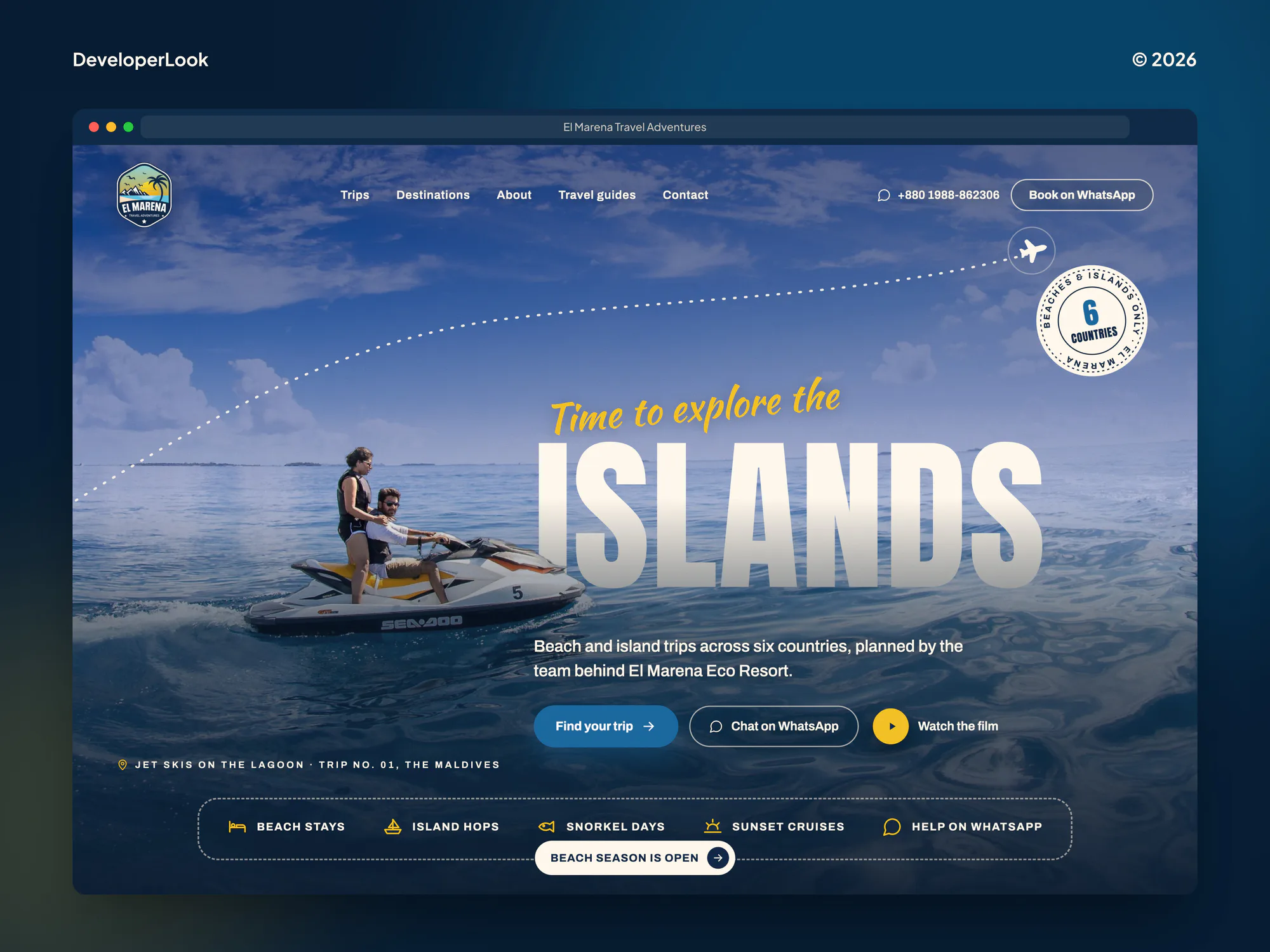
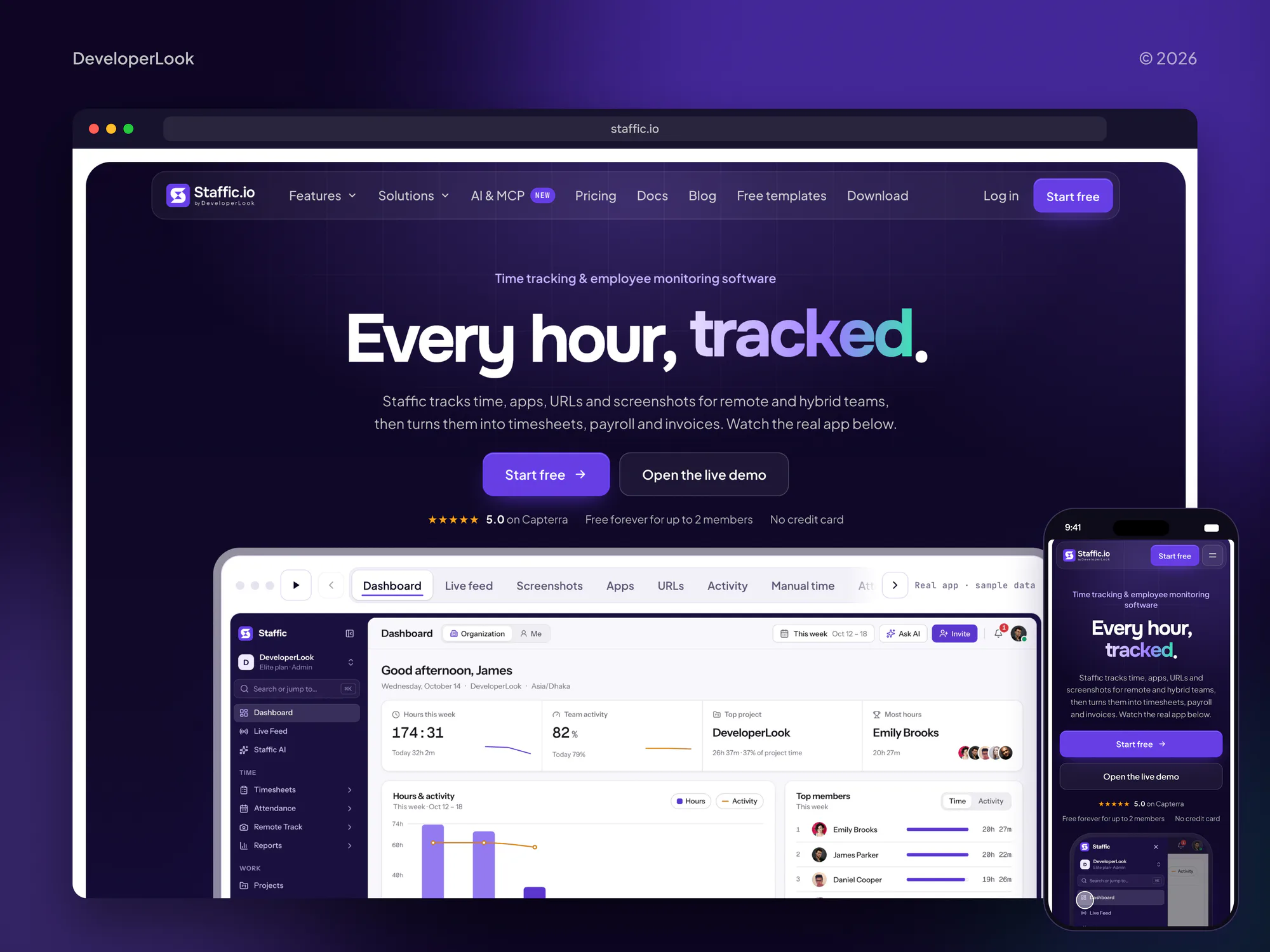
El Marena and the Staffic marketing site are our Next.js builds, and the other two are website projects. All four are builds, not SEO case studies.


What Our Clients Say
Feedback from teams we have built and launched websites for.
We had a pretty specific idea of what we wanted our website to become, but I wasn’t sure how easily we could explain all of it to a development team. There were quite a few moving parts, and we were working toward a deadline, so I expected a few things to get lost along the way. That never really happened. They understood what we were trying to achieve, kept us updated throughout the process, and got everything ready within the agreed timeline. The final site feels much easier to navigate, works beautifully on mobile, and is noticeably smoother for our customers. It was a huge relief seeing the original idea actually turn into the website we had in mind.
The mobile experience is probably my favourite part of the new site. We had spent a lot of time making sure the desktop version looked right, and the team kept pushing us to think about how everything would actually feel on a phone too. They were right. The navigation is clean, the interactions feel natural, and everything we’ve tested so far works exactly as it should. They also went through the links, forms, integrations, and other details more than once before launch, which I really appreciated. And even after going live, we could still reach out when something came up. The whole process felt friendly, organised, and surprisingly straightforward.
What I appreciate most is that the website is actually easy for us to manage now. We can update content ourselves instead of sending a developer a message every time we need to change something small. They also paid attention to the technical SEO side, which mattered to us because we didn’t want a new website to create problems for the traffic we already had. I’ve probably asked more questions than I should have since launch, but every question has been handled patiently and without any fuss. The team is easy to work with, they explain things clearly, and when we need something changed, they focus on getting it done rather than making the process complicated.
1,250+
Projects shipped
10+
Years of experience
Top 3%
Upwork Top Rated Plus
5 stars
Average review score
1,250+
Projects shipped
10+
Years of experience
Top 3%
Upwork Top Rated Plus
5 stars
Average review score

Want results like these?
Tell us what you are building. You get a reply within 24 hours on business days, then a written estimate.
Work Culture
We read the framework's docs for the version you run, work in your repository, and test on preview deployments, so search fixes land like any other feature.
Next.js changes fast, so we check the docs for the version in your package.json first. Advice written for another version can break your build.
Every fix runs on a preview URL before it merges. Your team sees the rendered tags and status codes, not just the diff.
A missing tag in a shared layout repeats on every page below it. Fixing the layout once repairs every route that uses it.
We choose static, dynamic, or revalidated rendering per route by how often its data changes. Faster pages and fresher content stop competing.
Next.js won't outrank WordPress just by being Next.js. If your problem is content or links, we say so and point you to the right service.
Every change uses the framework's own APIs inside your repository. No plugin, proxy, or paid service sits between Google and your site.
Overview
DeveloperLook handles Next.js SEO for sites on the App Router and the Pages Router. We audit every route's metadata, rendering mode, status codes, sitemap, and Core Web Vitals, then fix them with the Metadata API, sitemap.ts, robots.ts, and next/image. Plans start at $700 with a fixed scope, audits take 1 to 2 weeks, and fixes ship as pull requests.
DEVELOPERLOOK
Project facts · Next.js SEO Services
Reviewed 28 Oct 2026 by Saimul Islam
Good fit
Startups that launched on Next.js
Your site launched on Next.js for speed, yet many blog posts share one meta description and Search Console flags duplicate pages without a chosen canonical.
Teams moving to the App Router
Your team is moving from the Pages Router and next/head to the App Router, and you want the Metadata API checked before the switch reaches production.
Content sites with dynamic routes
Your articles or listings use dynamic segments, some render at request time, and sitemap.ts still lists URLs that no longer exist.
Teams comparing SEO partners
Your shortlist has a Next.js SEO agency and a generalist, and you need people who read generateMetadata and route handlers, not just crawl reports.
Agencies shipping Next.js client sites
Your agency builds client sites on Next.js and Vercel, and you want SEO for Next.js reviewed by engineers before each launch.
Not a fit
App is plain React
Your app is a React single-page app on Vite or Create React App. Our React SEO Services page covers prerendering and routing for that setup.
Need the site built
You need a new Next.js site or major features built. Our Next.js Development team builds it, and search checks can run inside that project.
Only speed scores fail
Your metadata and indexing look fine and only Core Web Vitals fail. Our Core Web Vitals Optimization service focuses on that work alone.
Small site, budget under $700
You run a small Next.js brochure site and have less than $700. Check that each page exports metadata and that the sitemap lists every URL first.
Not sure we're the right fit?
Book a free call or message us. We'll tell you honestly whether we're the right team.
Pricing
These are starting points in USD. Your final price depends on your route types and how many templates need code fixes, and you get a fixed proposal after a free Next.js review.
For Agencies
Your agency keeps the client and the roadmap. We take the Next.js search work: route audits, Metadata API fixes, and Core Web Vitals tuning, delivered as pull requests and notes you can send under your name.
White label: your client only ever sees your brand
Send the client's domain, repository access, router type, and launch date.
We review key routes and send a fixed proposal in your branding.
We ship the pull requests, recheck each route, and pass you the summary.
Send the client's domain, repository access, router type, and launch date.
We review key routes and send a fixed proposal in your branding.
We ship the pull requests, recheck each route, and pass you the summary.
The Right Technology for Your Project
Tools we use to read Next.js routes the way Google does, fix them with the framework's own APIs, and measure the result in the field.
 Next.js
 React
 TypeScript
 Node.js
 Vercel
 Google Search Console
 Semrush
 PageSpeed Insights
 Lighthouse
 Chrome DevTools
 Google Analytics (GA4)
 WordPress
 Shopify
Related Services
Services that pair with Next.js and SEO work: the core SEO program, JavaScript and React SEO, Core Web Vitals fixes, and Next.js builds.
This page
Next.js SEO Services
Pairs with the 6 services around it
FAQ
Straight answers on cost, timing, router migrations, and how SEO, Next.js rendering, and WordPress compare.
Saimul IslamFounder & CEO, DeveloperLookStill have questions?
Send a message or book a call with the team.
They start at $700 for a route and config audit, unique metadata on every route type, and sitemap and robots fixes. Code fixes on up to 8 templates cost $1,400, and Pages Router to App Router migrations start at $2,150. Your fixed proposal follows a free review of your routes.
Expect 1 to 2 weeks for the route audit and metadata corrections on a Next.js site. Template fixes or a router migration stretch that to 2 to 5 weeks. Core Web Vitals field data then needs about 28 days to reflect changes, because Google's report uses a rolling 28-day window.
SEO in Next.js means using the framework's built-in tools to give every page complete HTML, accurate metadata, and the right status code. Those tools include the Metadata API, the sitemap and robots file conventions, server rendering, and the image, font, and script components that keep pages fast on phones.
Yes, Next.js is good for SEO because pages render on the server by default, so Google gets full HTML on the first request. Many teams pick Next.js for SEO for exactly this reason. Being good for SEO isn't the same as being optimized, though: missing route metadata or a stale sitemap still costs clicks.
Mostly, yes: server rendering, file-based routes, and real anchor links through next/link come built in. What isn't automatic is metadata on dynamic routes, a sitemap that matches your content, and structured data. Those need code in each route, and that's where most Next.js sites fall short.
Next.js helps by giving you server-rendered HTML, a Metadata API, and image and script components that protect Core Web Vitals. It doesn't write titles, create content, or earn links for you. Treat it as a framework that removes technical blockers, not as a ranking boost on its own.
Compared with client-only frameworks, Next.js improves SEO mainly through server rendering and static generation by default. Against Nuxt, Astro, or Remix the gap is small, because each can send full HTML. Next.js stands out for its built-in Metadata API and its file conventions for sitemaps and robots rules.
No, Next.js doesn't have more SEO than WordPress by default; the two get there differently. WordPress relies on plugins such as Yoast for metadata and sitemaps, while Next.js needs that code written into routes. Next.js can load faster, but content and links decide most rankings on either platform.
Usually because notFound() runs after the response has started streaming. The Next.js docs note that once streaming begins inside a Suspense boundary, the status stays 200, although a noindex tag is added. Fetching the record and calling notFound() before any Suspense boundary renders returns a real 404.
You do: every change is a reviewed pull request in your repository, built on the framework's own APIs. Fix support runs 30 days after release, or 60 days with indexing checks on Router Migration SEO. If a plain metadata export already covers your site, we'll tell you before we quote.
Saimul IslamFounder & CEO, DeveloperLookStill have questions?
Send a message or book a call with the team.
Free 30-min callGoogle Meet
Book a call
In 30 minutes on Google Meet we walk you through how we would build it, how long it takes and what it costs. Then you get a written estimate.
Calendar not showing? Book on cal.com or send a brief.