
Order data pipeline
Orders, refunds, and chargebacks pulled from your platform and gateway into one clean decision database.

Ecommerce fraud detection built on your data: a rules engine, fraud scoring, vendor score blending, and a review queue. From $1,400.
100%
Decisions with a clear reason
2X
Faster manual order reviews
Teams we have built for:














The Problem
Vendor scores learn from everyone's orders. Your risks are specific: resellers hitting one product, gift card abuse, or one region that charges back. Generic rules miss those and block the wrong people.
01 · False declines
Your vendor declined a years-long customer's large order.
Every rule runs in shadow mode on past orders before going live.
02 · Black box
Nobody can explain the score behind either decision.
Each approve, review, or decline is logged with the rules behind it.
03 · Linked accounts
New accounts on one device bought your limited release, then charged back.
Accounts sharing devices, cards, or addresses get linked to one abuser.
04 · Rule pileup
Dozens of old rules stay because nobody dares delete them.
Your vendor's score becomes one input to a single scoring engine.
Your vendor just declined a large order from a customer who has bought from you for years. The same week, 3 new accounts on one device bought your limited release and charged it all back. Nobody can explain either decision, because the score is a black box. So your team adds rules on top: block this country, review anything over a set amount. Each rule catches a little fraud and turns away more good buyers. A year later you have dozens of rules nobody dares to delete, and false declines nobody measures.
We start with your last 12 months of orders, refunds, and chargebacks, and label what was really fraud. Then we build a rules engine that scores each order on many signals at once and returns approve, review, or decline with a reason. Your vendor's score becomes one input, not the final word. Every rule runs in shadow mode on past orders first, so you see its false declines before a customer does.
Decisions you can explain
Every approve, review, or decline is logged with the rules and signals behind it.
Fewer good orders declined
Rules are tested against your real order history before they touch live checkout.
Repeat abusers linked together
Accounts sharing devices, cards, or addresses get connected, so one abuser can't hide behind new emails.
Our Fraud Detection Process
You see the data, the rules, and the test results before launch. Nothing switches on until you approve the replay numbers.
We review up to 12 months of orders, refunds, and chargebacks and label confirmed fraud, abuse, and false declines. You get a short report on where losses come from and whether custom logic is worth building.
What's Included
Every build covers the engine, its data, and a review screen. You own the code and the rules at handover, with tests that prove they work.
Compare Options
Fraud detection software for ecommerce, like Signifyd, suits many stores. In-house rules cost nothing to start. Here's where each one breaks down for a store with unusual fraud.
| Feature | DeveloperLookBest fit | Fraud vendor | In-house rules |
|---|---|---|---|
| Setup cost | Fixed price from $1,400 | Low setup, fee per order | Staff time only |
| Decision transparency | Reason logged for every order | Score with limited explanation | Rules nobody measures |
| Uses your own data | Built from your order history | Network data plus some rules | Whatever your team remembers |
| Chargeback coverage | Not included, pair with a vendor | Covers fraud on approved orders | None |
| Repeat abuser linking | Accounts, devices, and cards linked | Varies by vendor | Manual block lists |
| False decline testing | Shadow mode before launch | Vendor-tuned, hard to inspect | Rarely tested |
| Control over changes | You own the code | Vendor controls the model | Anyone edits, nobody reviews |
| Best for | Unusual catalogs and custom checkouts | Stores that want fraud outsourced | Low volume, simple catalogs |
Projects We've Built
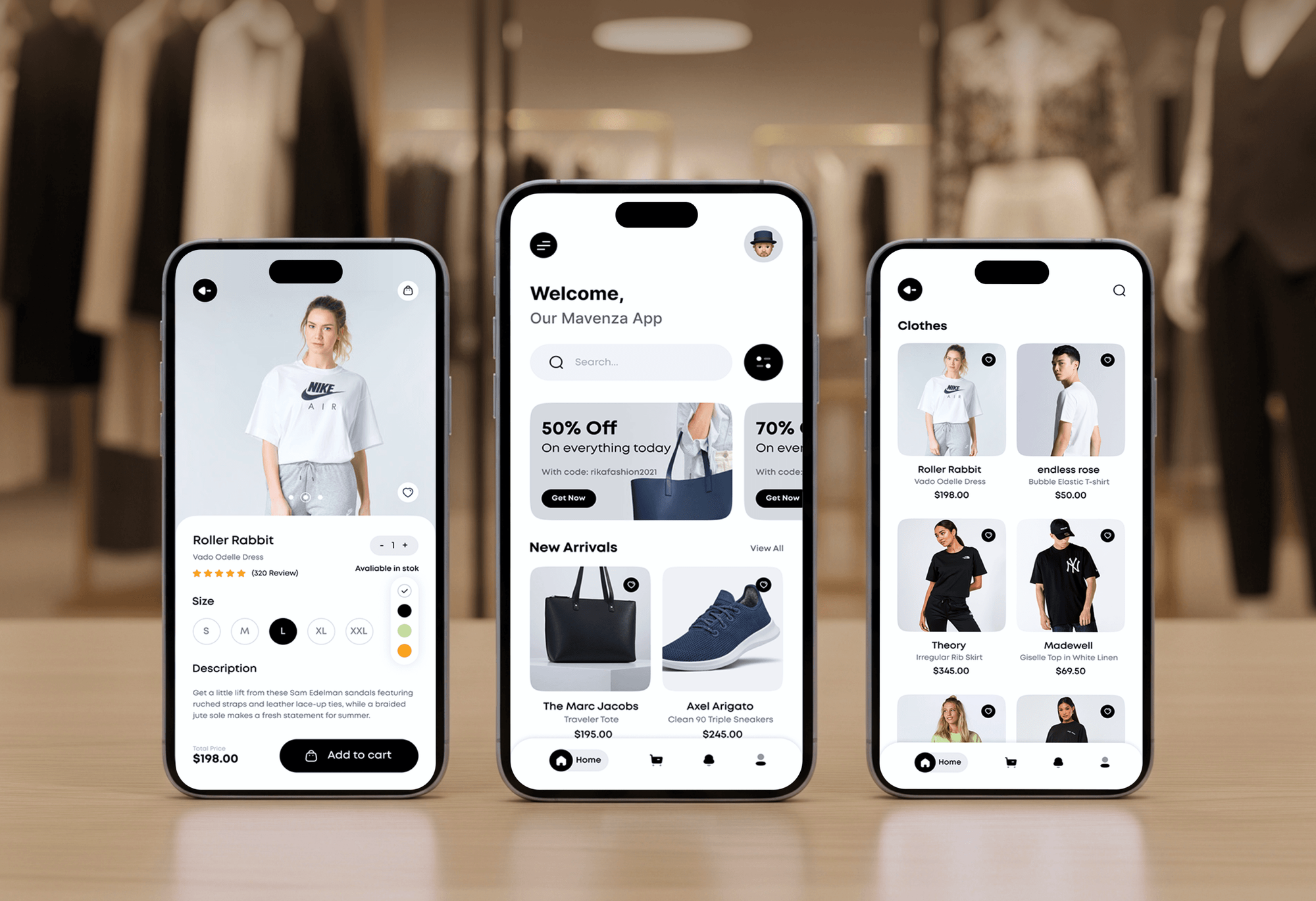
Online stores and shopping apps we've designed and built. Custom fraud logic connects to storefronts like these through order webhooks and APIs.



What Our Clients Say
Feedback from teams we have built ecommerce systems for.
We had a different kind of problem. People were visiting the store, adding products to their carts, and then disappearing before they finished the order. We had tried a few apps and made changes here and there, but nothing really seemed to solve the bigger issue. The team went through the shopping experience with us and pointed out things we hadn't really noticed ourselves. They cleaned up the cart and checkout flow, made the mobile experience much smoother, and helped us make the store feel easier to shop. I’m not going to pretend we fixed everything overnight, but it finally feels like the store is helping the sale instead of getting in the way of it.
The mobile experience is probably my favourite part of the new site. We had spent a lot of time making sure the desktop version looked right, and the team kept pushing us to think about how everything would actually feel on a phone too. They were right. The navigation is clean, the interactions feel natural, and everything we’ve tested so far works exactly as it should. They also went through the links, forms, integrations, and other details more than once before launch, which I really appreciated. And even after going live, we could still reach out when something came up. The whole process felt friendly, organised, and surprisingly straightforward.
We had a pretty specific idea of what we wanted our website to become, but I wasn’t sure how easily we could explain all of it to a development team. There were quite a few moving parts, and we were working toward a deadline, so I expected a few things to get lost along the way. That never really happened. They understood what we were trying to achieve, kept us updated throughout the process, and got everything ready within the agreed timeline. The final site feels much easier to navigate, works beautifully on mobile, and is noticeably smoother for our customers. It was a huge relief seeing the original idea actually turn into the website we had in mind.
1,250+
Projects shipped
10+
Years of experience
Top 3%
Upwork Top Rated Plus
5 stars
Average review score

Want results like these?
Tell us what you are building. You get a reply within 24 hours on business days, then a written estimate.
Work Culture
Custom fraud code can hurt good customers when it's built carelessly. These habits keep every rule measurable, reversible, and yours.
Each approve, review, or decline is logged with the rules and signals behind it. When a customer complains, your team can see exactly why.
New rules score real orders silently before they act on anyone. You see the false declines on a report, not in your support inbox.
Signal weights come from your labeled orders, not a template. If a signal doesn't predict fraud in your store, it doesn't get a vote.
We connect accounts through shared devices, cards, and addresses before flagging anyone. One serial chargebacker can't hide behind a new email.
You get the code, the rules, and the decision data from day one. Your developers can change a threshold without calling us.
If a vendor or tuned platform rules will solve your problem, we'll tell you before we quote. Custom code only makes sense when your fraud is unusual.
Overview
DeveloperLook builds a custom ecommerce fraud detection solution for stores that outgrow vendor rules. It includes a rules engine, weighted risk scores, vendor score blending, and a review queue. Every decision is logged with a reason and tested on your past orders first. Builds start at $1,400 and take 2 to 10 weeks, and you own the code.
DEVELOPERLOOK
Project facts · Ecommerce Fraud Detection Development
Reviewed 28 Sep 2026 by Saimul Islam
Good fit
Stores declining too many good orders
Your vendor declines loyal customers. It can't say why, and you want decisions you can read, test, and change yourself.
Headless and custom checkouts
You run a headless or custom checkout, and plug-in fraud apps don't fit. You need scoring through an API you control.
High-risk catalogs and marketplaces
You sell electronics, gift cards, or limited drops. Resellers and serial chargebackers target a few products, and generic rules can't see the pattern.
Teams running a vendor plus rules
You already use one of the fraud detection solutions for ecommerce, like Signifyd. Your team still keeps adding manual rules on top.
Agencies building client stores
Your agency builds custom stores and needs a white-label partner for fraud logic, review tools, and the testing behind them.
Not a fit
Off-the-shelf tools
You want off-the-shelf fraud tools set up well, not new code. Our Ecommerce Fraud Prevention Services page covers that for less.
Shopify built-in tools
Your store runs on Shopify and needs its built-in fraud tools configured. Shopify Fraud Prevention Setup is faster and cheaper than custom code.
Disputes after shipping
Your problem is disputes on orders you already shipped. Our Chargeback Management Services team handles evidence and representment instead.
Low monthly order volume
You process a few hundred orders a month or fewer. A custom engine won't pay back its $1,400 starting price, so tuned platform rules fit better.
Not sure we're the right fit?
Book a free call or message us. We'll tell you honestly whether we're the right team.
Pricing
These are starting points in USD. Your price depends on order volume, vendors, and your checkout setup, and you get a fixed proposal after a free loss review.
For stores that need their own approve, review, and decline logic on one checkout.
$1,400one-time, USD
For stores that want a vendor score and their own signals in one decision.
$3,800one-time, USD
For high-volume stores and marketplaces with abuse patterns that vendor tools miss.
$7,400one-time, USD
For Agencies
You own the client relationship. We supply the fraud engineering: the rules engine, the scoring, the review app, and the tests, delivered under your brand. Your client gets code they own, and you get documentation your team can maintain.
White label: your client only ever sees your brand
Send the platform, checkout setup, order volume, and the fraud patterns your client sees.
You get a signal map, a rule plan, and a fixed price before you commit.
We build, shadow test, and document the engine, then hand over code your team owns.
We work under your brand, so you keep the relationship and the credit.
Fixed scope, clear milestones, and shadow-mode results you can show the client.
Developers who have built scoring services, webhooks, and review apps before.
Bring us in for one build or a series of client stores.
The Right Technology for Your Project
We build in a stack your team can maintain and connect it to the gateways, platforms, and vendors that feed each decision.
 Node.js
 Python
 Express
 Docker
 PostgreSQL
 MongoDB
 AWS
AWS Cloudflare
 Stripe
 Braintree
 PayPal
 Shopify
 WooCommerce
 BigCommerce
 React
React Next.js
 Slack
Slack Google Sheets
FAQ
Straight answers on cost, build time, vendor blending, false declines, and who owns the code.
Saimul IslamFounder & CEO, DeveloperLookStill have questions?
Send a message or book a call with the team.
A custom engine starts at $1,400 for up to 15 rules, decision logs, and replay testing on your past orders. Blending a vendor score and adding a review queue app costs $3,800, and full platforms with abuser linking start at $7,400. Vendor fees are separate, and you get a fixed quote after the free loss review.
A rules engine takes 2 to 3 weeks to build and test. Scoring with a vendor blend takes 4 to 6 weeks, and a full platform with abuser linking takes 7 to 10 weeks. Shadow mode sits inside those timelines, because it's how we measure false declines before your customers feel them.
Neither wins everywhere: vendors suit hands-off stores, and custom logic suits catalog-specific fraud. Vendors like Signifyd cover fraud chargebacks on the orders they approve, which custom code can't do. Many stores run both. The vendor score becomes one input, and your own rules catch resellers, promo abuse, and repeat offenders.
It adds weighted signals into one risk score, then compares that score with 2 thresholds you set. Below the first, orders approve automatically. Above the second, they decline, and everything between goes to review. Hard rules can override the score, like blocking a card already tied to a chargeback. Every decision is logged with the rules that fired.
Yes, and it usually works better than either alone. We pull the vendor's score or decision through their API and treat it as one weighted signal next to your own data. Your rules can overrule it both ways: approving a loyal customer the vendor flagged, or reviewing an order the vendor passed.
Measure them first, then loosen the rules that cause them. We replay 6 to 12 months of orders to find the good customers each rule would have blocked. Then we replace single-signal blocks with fraud scoring that weighs signals together, send borderline orders to review, and add allow rules for proven repeat buyers.
Yes. Orders between your approve and decline thresholds land in a review queue. Each one shows every signal on one screen: AVS and CVV results, IP distance, email age, order history, and the vendor score. Reviewers approve or cancel with a note, and those outcomes feed back into rule tuning.
We link accounts that share devices, cards, emails, phone numbers, or shipping addresses, then score the whole cluster. A new account tied to past chargebacks or serial refunds gets reviewed before its order ships. For friendly fraud, we also save the order data Visa's Compelling Evidence 3.0 rules ask for, such as IP address and device ID.
Ecommerce fraud detection needs a few months of orders with known outcomes: refunded, charged back, or confirmed fraud. More history makes the weights more reliable. From launch day, we also capture signals your platform may not keep, like device fingerprints and checkout timing, so the engine gets sharper over time.
Yes. You own the code, the rules, the decision data, and the documentation from day one. The engine runs in your own cloud account, and your developers can change any rule or threshold. We tune it for 30 to 90 days depending on your plan, then hand over a monthly tuning checklist.
Saimul IslamFounder & CEO, DeveloperLookStill have questions?
Send a message or book a call with the team.
Free 30-min callGoogle Meet
Book a call
In 30 minutes on Google Meet we walk you through how we would build it, how long it takes and what it costs. Then you get a written estimate.
Calendar not showing? Book on cal.com or send a brief.