
Modeverse Ecommerce Web Design & Development
- Fashion
- Retail
- E-commerce
For US and other non-EU companies selling to EU consumers: a scope check, a gap test of your buying journey against EN 301 549, fixes in code, and your accessibility information page.
27
EU markets, one standard
EN 301549
Web clauses tested by hand
How your project runs
01 · FreeIndustry leaders we work with
 Chrome DevTools
 Lighthouse
 Shopify
 WooCommerce
 BigCommerce
 Magento
 HTML5
 CSS3
 JavaScript
 React
The Problem
It shows up when EU orders grow, a customer complaint mentions accessibility, or your legal team asks whether the European Accessibility Act covers your store or app.
Mouse-only options
Size and color selectors fail without a mouse.
Mouse-only options
Product options rebuilt as real controls for keyboards and screen readers.
Silent errors
Checkout errors show in red, and nobody hears them.
Silent errors
Error messages are announced and tied to the field that caused them.
Missing information
Your terms say nothing about how the service is accessible.
Missing information
We draft the accessibility information page the Act asks you to publish.
Checklist overload
Ten generic EAA checklists, none matched to your store.
Checklist overload
One gap list mapped to EN 301 549 and ranked by user impact.
A customer in France tries to buy from your store with a screen reader and gets stuck on a size selector that only works with a mouse. Your checkout error messages appear in red text that nothing announces. Since June 28, 2025, that journey falls under EU accessibility rules, and your terms say nothing about accessibility. Your team found ten different EAA checklists online, none written for your store. Meanwhile, your EU revenue keeps growing.
We start by confirming you're covered: what you sell, who buys it, and whether you qualify as a microenterprise. Then we test your consumer journey, from product pages to checkout and account, against EN 301 549, which maps to WCAG 2.1 AA for web content. Failures get fixed in your theme or app code and retested, and we write the accessibility information the Act expects you to publish. You get conformance work, not a legal opinion.
Scope checked first
Covered service, microenterprise exemption, and B2B questions answered before any testing starts.
Tested against EN 301 549
Your buying journey checked against the web clauses, which map to WCAG 2.1 AA.
Accessibility information written
The page describing how your service meets the requirements, ready to link from your terms.
Our European Accessibility Act Compliance Process
You agree on the scope, pick the journey we test, approve each code change on a preview, and read the accessibility information before it's published.
We look at what you sell, who buys it, where, and your company size. You learn whether the Act likely covers your service and get a fixed price. If you sell only to businesses or qualify as a microenterprise, we'll tell you before we quote.
Projects We've Built
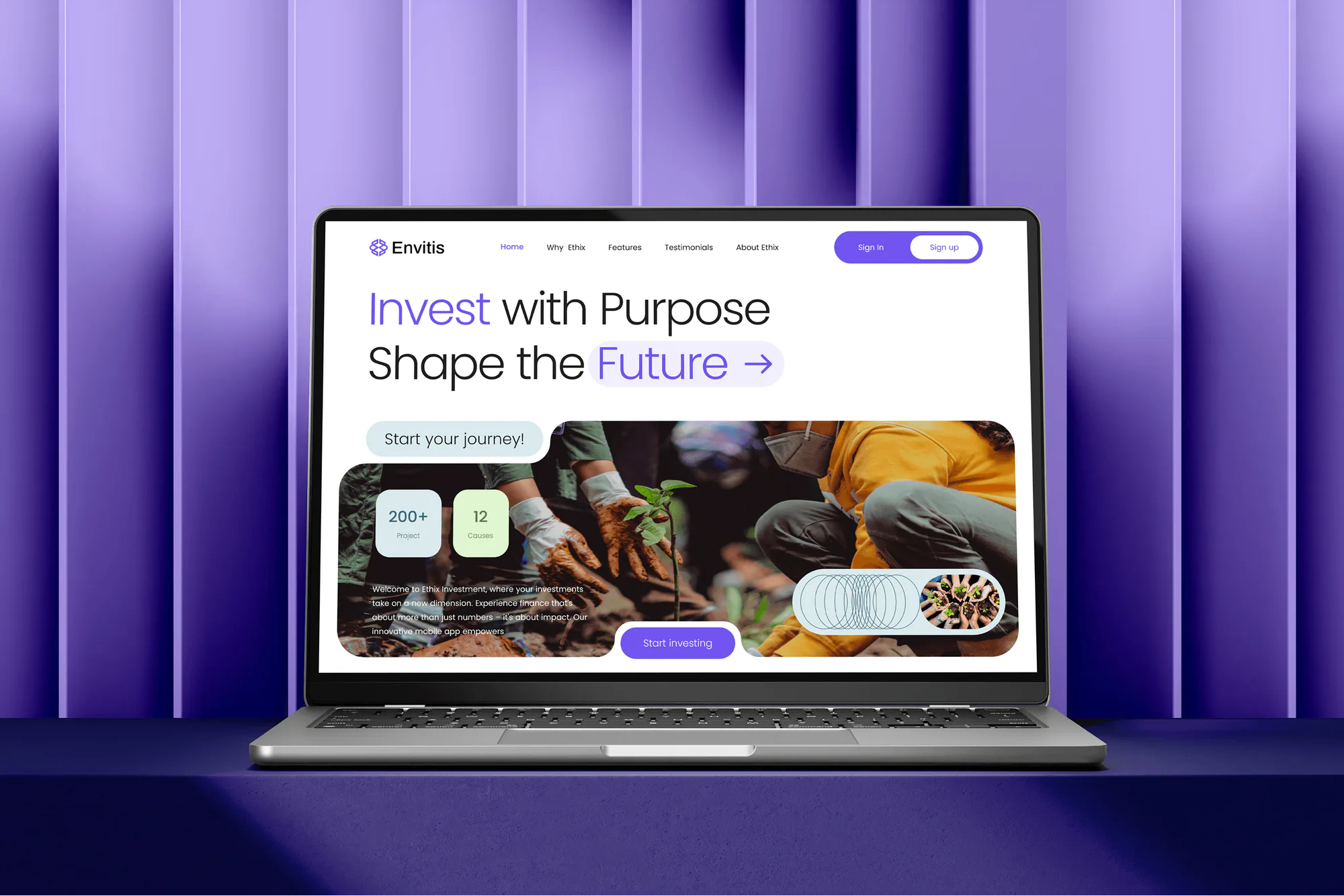
Stores, a travel booking platform, and an investment site our team built. They weren't EAA projects, but product pages, checkouts, and bookings like these are what the Act covers.


What's Included
A scope review, a hands-on test of your consumer journey, code fixes with retests, your accessibility information page, and a watch list for the WCAG 2.2 update.
Compare Options
A legal review gives you a formal opinion on your obligations. An overlay is quick to install. Here is where each one helps and where your customers still get stuck.
| Feature | DeveloperLookBest fit | Overlay widget | Legal review only |
|---|---|---|---|
| Scope advice | Practical scope check | No scope advice | Formal legal opinion |
| Testing method | Manual EN 301 549 tests | Automated scan | Not included |
| Code fixes | Included on fix plans | Script layered on top | |
| Accessibility information | Drafted from test results | Generic statement | Reviewed for legal wording |
| Mobile apps | Included on the top plan | Not covered | Not covered |
| Cost | From $1,100, fixed scope | Low monthly fee | Hourly legal rates |
| Speed to start | Scope check in 1 to 2 days | Minutes to install | Depends on the firm |
| Works for real users | Tested by keyboard and screen reader | Often not | Depends on later fixes |
What Our Clients Say
Feedback from teams we have built websites, stores, and apps for.
We had a pretty specific idea of what we wanted our website to become, but I wasn’t sure how easily we could explain all of it to a development team. There were quite a few moving parts, and we were working toward a deadline, so I expected a few things to get lost along the way. That never really happened. They understood what we were trying to achieve, kept us updated throughout the process, and got everything ready within the agreed timeline. The final site feels much easier to navigate, works beautifully on mobile, and is noticeably smoother for our customers. It was a huge relief seeing the original idea actually turn into the website we had in mind.
The mobile experience is probably my favourite part of the new site. We had spent a lot of time making sure the desktop version looked right, and the team kept pushing us to think about how everything would actually feel on a phone too. They were right. The navigation is clean, the interactions feel natural, and everything we’ve tested so far works exactly as it should. They also went through the links, forms, integrations, and other details more than once before launch, which I really appreciated. And even after going live, we could still reach out when something came up. The whole process felt friendly, organised, and surprisingly straightforward.
What I appreciate most is that the website is actually easy for us to manage now. We can update content ourselves instead of sending a developer a message every time we need to change something small. They also paid attention to the technical SEO side, which mattered to us because we didn’t want a new website to create problems for the traffic we already had. I’ve probably asked more questions than I should have since launch, but every question has been handled patiently and without any fuss. The team is easy to work with, they explain things clearly, and when we need something changed, they focus on getting it done rather than making the process complicated.
1,250+
Projects shipped
10+
Years of experience
5 stars
Clutch rating
5 stars
GoodFirms rating
Excellent
Trustpilot rating
Top 3%
Upwork Top Rated Plus
1,250+
Projects shipped
10+
Years of experience
5 stars
Clutch rating
5 stars
GoodFirms rating
Excellent
Trustpilot rating
Top 3%
Upwork Top Rated Plus

Want results like these?
Tell us what you are building. You get a reply within 24 hours on business days, then a written estimate.
Work Culture
Your EU customers judge your store by whether they can buy from it. These habits keep the work focused on what the Act covers and what your customers actually use.
Some companies are exempt as microenterprises, and B2B-only services sit outside the consumer rules. We check that before you pay for any testing.
We buy something on your store by keyboard and screen reader, on desktop and phone. Automated scans back that up but don't replace it.
We change the theme and app code behind your product options and checkout. Overlays can conflict with the screen readers your customers already use.
Enforcement and penalties are set by each EU country. We do conformance work and say so plainly, so you know when to bring in counsel.
EN 301 549 V4.1.1 moved to WCAG 2.2 in September 2026, but it isn't the legal reference yet. We flag 2.2 gaps now, so the switch won't surprise you.
If you run German or French storefronts, we check that each version declares its language, so screen readers pronounce your content correctly.
Overview
DeveloperLook handles European Accessibility Act compliance for companies selling online to consumers in the EU. We check whether your service is covered, test your buying journey against EN 301 549, fix the failures in your code, and write your accessibility information page. Gap checks start at $1,100, and a typical project runs 1 to 10 weeks.
DEVELOPERLOOK
Project facts · European Accessibility Act Compliance
Reviewed 27 Oct 2026 by Saimul Islam
Good fit
US stores selling into the EU
Your Shopify or WooCommerce store ships to Germany, France, and the Netherlands, and EU orders are now a real share of revenue.
Consumer apps and subscriptions
You sell a consumer app or subscription to people in the EU, and you aren't sure whether the Act covers your service.
Travel and ticketing sites
Your site sells bus, rail, ferry, or flight tickets to EU travelers, and nobody has tested the booking flow with a screen reader.
E-book and banking services
You sell e-books or consumer banking services in the EU, and your reading app or online banking needs an accessibility check.
Agencies with EU-facing clients
Your agency builds stores for clients selling into Europe, and they need European Accessibility Act requirements met before the next release.
Not a fit
B2B-only service
You sell only to businesses, not to consumers. The Act's service rules cover consumer services, so WCAG Audit Services is a cheaper starting point.
Microenterprise services
You have fewer than 10 staff and annual turnover under EUR 2 million, so the service rules likely exempt you. A basic WCAG audit still helps your customers.
Need a legal opinion
You need a lawyer to confirm your obligations in each EU country. We do conformance work, not legal advice, so start with EU counsel.
US-focused Shopify store
Your store sells mainly in the US and needs theme fixes. Shopify ADA Compliance covers the same buying path for US accessibility risk.
Not sure we're the right fit?
Book a free call or message us. We'll tell you honestly whether we're the right team.
Pricing
These are starting points in USD. Your final price depends on your store's template count, any apps, and whether you need code fixes. You get a fixed proposal after a free scope check.
For Agencies
You own the client relationship. We supply the EN 301 549 testing, code fixes, and accessibility information drafts for your EU-facing clients, under your brand. Your client sees one report from one team, and you keep the account.
White label: your client only ever sees your brand
Send the client's store, the EU markets it sells to, and the release date.
We test, fix, and draft the information page for your review first.
Your client receives the fixes, the page, and the record from you.
Send the client's store, the EU markets it sells to, and the release date.
We test, fix, and draft the information page for your review first.
Your client receives the fixes, the page, and the record from you.
The Right Technology for Your Project
Hands-on testing and screen readers lead, followed by the store platforms and theme code we repair for EU-facing companies.
Chrome DevToolsLighthouseShopifyWooCommerceBigCommerce MagentoHTML5CSS3
 JavaScriptReact
 Next.js
FAQ
Straight answers on cost, timelines, what the Act is, who it covers, dates, B2B, WCAG, website requirements, and languages.
Saimul IslamFounder & CEO, DeveloperLookStill have questions?
Send a message or book a call with the team.
European Accessibility Act compliance work from DeveloperLook starts at $1,100. That covers a scope review and an EN 301 549 gap test of up to 8 templates. The $2,850 plan adds code fixes, a published information page, and a full retest. The $5,600 plan covers up to 30 templates, 10 app screens, and a WCAG 2.2 readiness review.
The scope check takes 1 to 2 days and the gap test 1 to 2 weeks. Fixes and a retest add 2 to 5 weeks for most stores, so 3 to 10 weeks covers most projects. Custom product builders, third-party checkouts, and mobile apps take the longest, and we flag them in the free scope check.
The European Accessibility Act is EU Directive 2019/882, which sets accessibility requirements for certain products and services sold to consumers. It covers ecommerce, consumer banking, e-books, electronic communications, audiovisual media access, and parts of passenger transport. Products like computers, phones, and ticket machines are covered too. Each EU country turned it into national law, applying from June 28, 2025.
European Accessibility Act (EAA) compliance means your covered product or service meets the accessibility requirements in the Act's Annex I. For websites and apps, the usual proof is conforming to EN 301 549. The EAA compliance requirements also ask service providers to publish information on how the service meets those requirements, usually in their terms or an equivalent document.
The European Accessibility Act applies from June 28, 2025, to covered services provided to EU consumers. Service contracts agreed before that date can continue unchanged until they expire, but no later than June 28, 2030. EU countries may also let existing self-service terminals stay in use for up to 20 years after they went into service.
The European Accessibility Act applies to companies that sell covered products or provide covered services to consumers in the EU, wherever the company is based. That includes a US store shipping to EU customers. Microenterprises that provide services, with fewer than 10 staff and turnover or balance sheet under EUR 2 million, are exempt from the service rules.
No, not to services sold only to businesses: the Act's service rules cover services provided to consumers. If consumers can also buy from you, the consumer-facing service is in scope, even when most of your revenue is B2B. Some products, such as self-service terminals, are covered regardless of who buys them.
The Act itself doesn't name WCAG, but its harmonised standard, EN 301 549 V3.2.1, maps web content to WCAG 2.1 Level AA. So the European Accessibility Act WCAG target today is 2.1 AA. Version 4.1.1 of EN 301 549, published in September 2026, moves to WCAG 2.2, but it isn't the legal reference until it's cited in the EU's Official Journal.
The European Accessibility Act website requirements say your site must be perceivable, operable, and understandable for people with disabilities, and work with assistive technology. In practice, the EAA accessibility requirements mean keyboard access, text alternatives, enough contrast, clear error messages, and screen reader support across the buying journey. You also publish information on how your service meets them.
The Act sets no EU-wide language for the accessibility information service providers publish. Each EU country's own law can add language rules, and product instructions must be in a language that country chooses. In practice, publish your accessibility information in the languages your storefront already uses, and check national rules with counsel where you sell most.
Saimul IslamFounder & CEO, DeveloperLookStill have questions?
Send a message or book a call with the team.
Free 30-min callGoogle Meet
Book a call
In 30 minutes on Google Meet we walk you through how we would build it, how long it takes and what it costs. Then you get a written estimate.
Calendar not showing? Book on cal.com or send a brief.