Branded lookup page
Customers enter an order number and email and see their shipment in your theme, on your domain.

Shopify order tracking pages with carrier and 3PL updates, delay alerts, and your branding, built to cut where-is-my-order emails. From $800. Free review.
24/7
Order answers without a ticket
1
Branded page for every carrier
Teams we have built for:














The Problem
It shows up once order volume grows, when parcels move through a 3PL and several carriers, and the tracking link stops being enough.
01 · Label created
Tracking says label created for days after an order.
Warehouse milestones and carrier scans share a plain timeline.
02 · Repeat tickets
Agents paste the same tracking link back all day.
Customers find the answer on your site, not in your support queue.
03 · Late alerts
Customers learn about delays only when they write in.
Delay and exception alerts reach customers before they think to write.
04 · Status page
Shopify's status page only shows what the carrier scanned.
An app block on the status page links customers to your full timeline.
A customer orders on Monday. On Wednesday, their tracking link still says label created, because your 3PL hasn't handed the parcel to the carrier. They email support. Your agent looks up the order, copies the tracking number, and pastes the same link back. Multiply that by forty a day, and a full-time role goes to one question. Shopify's status page helps, but it can only show what the carrier has scanned.
We start with your carriers, your 3PL, and the questions your team answers most. Then we build a branded page that shows every step, from packed at the warehouse to delivered, with a delivery estimate. Alerts go out when a parcel stalls, and every shipping email links to it. Customers find the answer on your site, not in your support queue.
Every step on one timeline
Warehouse milestones and carrier scans in one plain timeline, under your brand.
Alerts before the email
Delay and exception alerts reach customers before they think to write in.
A link from Shopify's own page
An app block on Shopify's order status page sends customers to your full timeline.
Our Tracking Build Process
You approve the status labels, alert rules, and page design before we build, then watch real shipments move through the page.
We check your carriers, 3PL, shipping emails, and a sample of last month's support tickets. You'll know whether Shopify's own page already covers you, and only then do we quote.
What's Included
A branded lookup page, carrier and 3PL events, delay banners, alerts, an app block on Shopify's page, and live shipment tests, all on your own domain.
Compare Options
A tracking app is quick to install, and Shopify's default page costs nothing. Here's where each one stops answering customers before they write in.
| Feature | DeveloperLookBest fit | Tracking app | Shopify default |
|---|---|---|---|
| Setup time | 1 to 6 weeks | A day or two | Already live |
| Upfront cost | From $800 | Monthly app fee | |
| Branding | Your theme and domain | App templates | Colors, fonts, and logo |
| 3PL milestones | Merged into the timeline | Varies by app | Not shown |
| Delay alerts | Rules you approve | Preset triggers | Standard shipping emails |
| Upsells | Picks based on the order | Some apps | Through app blocks |
| Ticket reporting | Before and after counts | Varies by app | Not included |
| Ownership | Your code and data | Vendor's platform | Shopify's page |
Projects We've Built
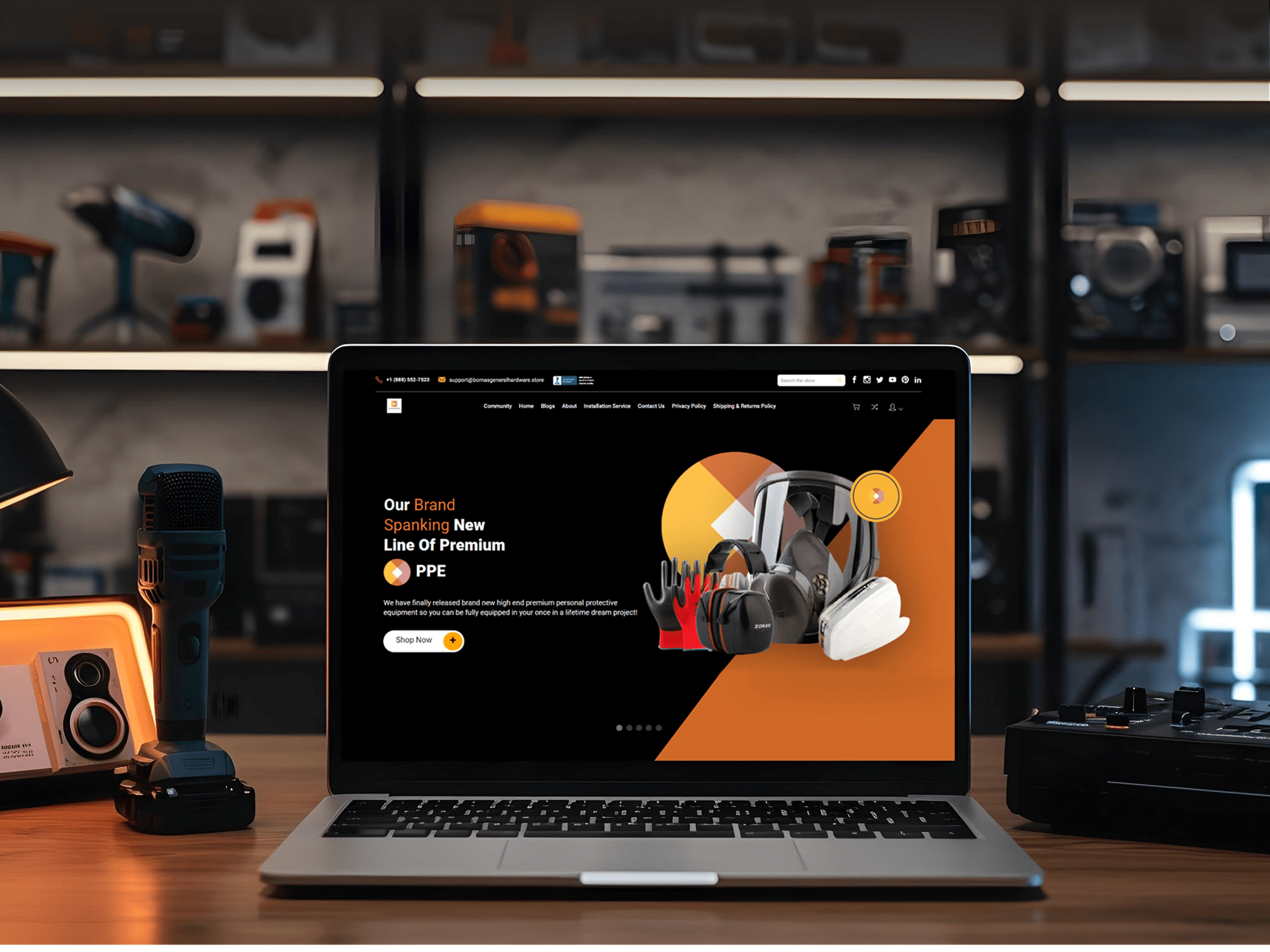
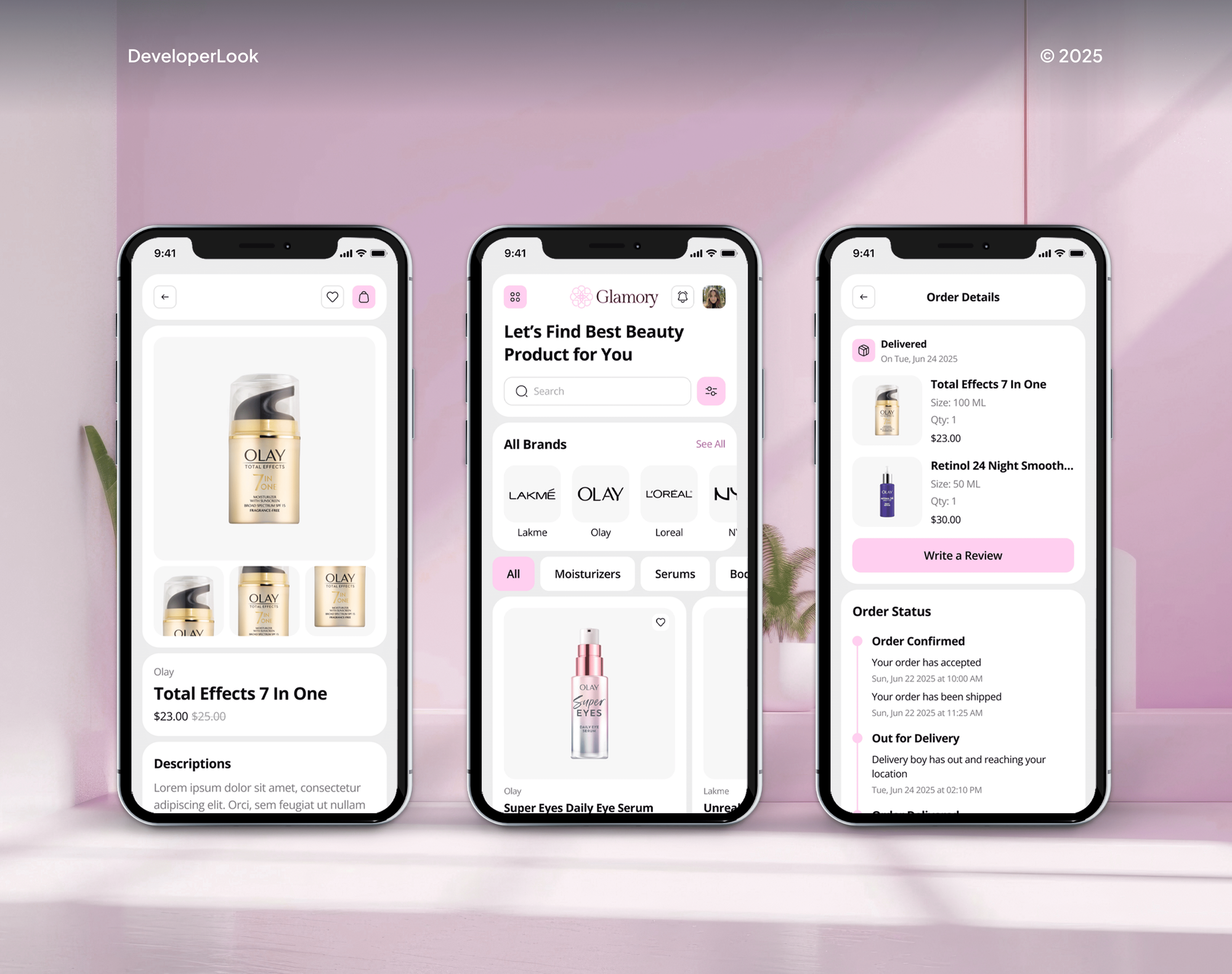
Shopify and ecommerce stores we've built for clients, where the order page, emails, and support flow all have to agree.


What Our Clients Say
Feedback from ecommerce teams we have built post-purchase and support tools for.
We had a different kind of problem. People were visiting the store, adding products to their carts, and then disappearing before they finished the order. We had tried a few apps and made changes here and there, but nothing really seemed to solve the bigger issue. The team went through the shopping experience with us and pointed out things we hadn't really noticed ourselves. They cleaned up the cart and checkout flow, made the mobile experience much smoother, and helped us make the store feel easier to shop. I’m not going to pretend we fixed everything overnight, but it finally feels like the store is helping the sale instead of getting in the way of it.
The mobile experience is probably my favourite part of the new site. We had spent a lot of time making sure the desktop version looked right, and the team kept pushing us to think about how everything would actually feel on a phone too. They were right. The navigation is clean, the interactions feel natural, and everything we’ve tested so far works exactly as it should. They also went through the links, forms, integrations, and other details more than once before launch, which I really appreciated. And even after going live, we could still reach out when something came up. The whole process felt friendly, organised, and surprisingly straightforward.
We had a pretty specific idea of what we wanted our website to become, but I wasn’t sure how easily we could explain all of it to a development team. There were quite a few moving parts, and we were working toward a deadline, so I expected a few things to get lost along the way. That never really happened. They understood what we were trying to achieve, kept us updated throughout the process, and got everything ready within the agreed timeline. The final site feels much easier to navigate, works beautifully on mobile, and is noticeably smoother for our customers. It was a huge relief seeing the original idea actually turn into the website we had in mind.
1,000+
Projects shipped
10+
Years of experience
Top 3%
Upwork Top Rated Plus
5 stars
Average review score
Work Culture
Branded tracking only works if customers believe it. These habits keep your statuses accurate, your alerts useful, and your support queue quiet.
We test with live tracking numbers from each carrier you use, not sample data. Odd statuses show up in testing instead of your inbox.
Carrier statuses get rewritten into words your customers understand. A carrier exception becomes a sentence that says what happens next.
Every alert links to your tracking page, not a generic help center. Customers get their answer in one tap, without logging in.
Your support team reviews every status label before launch. They know which words customers misread, so the page answers the real question.
Shopify's default page and a tracking app cover many stores well. If one fits you, we'll tell you before we quote.
The code, tracking data, and API accounts stay in your name. Any developer can maintain and extend the code after us.
Overview
DeveloperLook builds Shopify order tracking pages that answer where-is-my-order questions before they reach support. We add carrier and 3PL events, delay banners, email and SMS alerts, and a block on Shopify's status page. Pages start at $800, most launch within 2 to 4 weeks, and we'll say when Shopify's own page is enough.
DEVELOPERLOOK
Project facts · Shopify Order Tracking Page
Reviewed 28 Sep 2026 by Saimul Islam
Good fit
Stores buried in order status emails
Your inbox gets dozens of where-is-my-order emails a day, and most customers already have a tracking link in their inbox.
Stores using more than one carrier
You ship with UPS, USPS, and a regional carrier, so customers land on three tracking sites that look nothing like your store.
Stores shipping through a 3PL
Your 3PL packs orders a day after purchase, and customers email because nothing shows until the carrier's first scan.
Brands with long delivery windows
Your products ship from overseas, so customers wait two weeks and start wondering whether anything is happening.
Agencies running post-purchase work
Your client wants branded tracking before peak season, and you'd like it delivered under your agency's brand.
Not a fit
Standard tracking app features
You only want the standard features of an order tracking app. Shopify's App Store has several, and our $800 build would add little.
Labels and live rates
Carrier labels and live rates are the real gap. Our Shipping API Integration service handles that part of your stack.
Returns, not deliveries
Returns are the problem, not deliveries. Our Shopify Returns Portal Development service builds the return side.
Sales and win-back emails
You want emails that sell and win customers back, not shipment updates. Our Post-Purchase Email Automation service covers those flows.
Not sure we're the right fit?
Send a two-line brief. We'll tell you honestly whether we're the right team.
Pricing
These are starting points in USD. Your price depends on carriers, 3PL feeds, and alert channels, and you get a fixed proposal after a free tracking review.
For stores that want one branded page where customers look up any order.
$800one-time, USD
For stores shipping through several carriers or a 3PL that want alerts.
$1,900one-time, USD
For brands that want tracking to sell, deflect tickets, and feed support.
$3,900one-time, USD
For Agencies
You own the client relationship. We supply the post-purchase engineering: tracking pages, carrier feeds, warehouse milestones, and alerts. Your client talks to your team, and you receive the code, label guide, and API accounts.
White label: your client only ever sees your brand
Send the carriers, 3PL, and shipping emails, and we reply with questions.
You get a fixed quote and a page mockup to share with your client.
We build it, run real shipments through it, then hand you the code and label guide.
You present the page design while we build in the background.
Fixed scope per carrier and alert set, so your quote holds.
Developers who have wired carrier APIs, 3PL feeds, and Shopify events.
Launch the page now and add alerts before peak season.
The Right Technology for Your Project
We build on Shopify's app proxy and fulfillment events, then add the carriers, alert tools, and helpdesk your team already uses.
 ShopifyShopify Flow
 GraphQL
 Remix
Remix UPS
UPS FedEx
FedEx USPS
USPS DHL
DHL Twilio
 Gorgias
 Zendesk
 Slack
Slack Node.js
 React
React PostgreSQL
 AWS
AWSFAQ
Straight answers on tracking cost, carrier data, status page branding, and alerts.
 Saimul IslamFounder & CEO, DeveloperLook
Still have questions?
Send a message or book a call with the team.
Custom tracking starts at $800 for a branded lookup page built on Shopify's own tracking data. Carrier and 3PL events with delay banners and alerts cost $1,900. A post-purchase hub with product picks, returns links, and helpdesk lookups costs $3,900. Your fixed quote follows a free review of your carriers.
A branded lookup page takes 1 to 2 weeks. Adding carrier and 3PL events with alerts takes 3 to 4 weeks, and a full post-purchase hub takes 5 to 6 weeks. Testing real tracking numbers from each carrier you use takes the biggest share of that time.
Customers track orders from the order status page. Shopify links it in the confirmation and shipping emails, and it shows statuses like On its way, Out for delivery, and Delivered for supported carriers. Other carriers get a tracking link. The Shop app adds live map tracking and push notifications.
You build it as a storefront page where customers enter an order number and email. It reads the Shopify order tracking number, pulls carrier events from a tracking API, and shows a timeline in your theme. We serve it through an app proxy, so it runs on your own domain.
Answer the question before customers ask it. Show a delivery estimate on your branded page, send alerts when a parcel stalls, and link that page from every shipping email. When a package is late, a delay banner with a new date heads off the email to support.
Yes, both appear on one timeline. Carrier scans come from a multi-carrier API, and 3PL milestones like picked and packed come from your 3PL's API or webhooks. We also post events back to Shopify, so Shopify's own page and its Out for delivery emails stay in step.
Yes, within Shopify's limits: you set colors, fonts, and your logo, and apps add blocks on the Basic plan or higher. Script edits to that page stopped working once Shopify retired them, for every store by August 2026. For full design control, we build a separate tracking page on your storefront.
Yes, and your lookup page is a good place for both. Product picks based on the order sit below the timeline, and a delay banner appears when a carrier reports a problem. Upsells stay under the status, so customers see their answer first and your offer second.
Yes, each carrier or 3PL event can trigger an email or text. Shopify sends its own Out for delivery and Delivered emails when it receives those events. We add alerts for delays, exceptions, and pickups through Klaviyo, Shopify Flow, or Twilio, each linking back to your branded page.
You own the code, the tracking data, and any tracking API account we set up. None of it runs on a server of ours, and no license fee arrives later. Support runs 30 to 90 days after launch, depending on plan, and covers carrier changes and Shopify API updates.
Saimul IslamFounder & CEO, DeveloperLookStill have questions?
Send a message or book a call with the team.
30-min strategy callGoogle Meet
Book a call
Pick a 30-minute slot that works for you. We meet on Google Meet to align on goals, scope, and the right next step.
