
Written contract spec
Functions, roles, events, and invariants in plain English, approved by you before development starts.

For Web3 founders and product teams: Solidity contracts specced, tested to break, and deployed with admin keys you control, from $1,300.
100%
Source verified on-chain
10K+
Fuzz runs per property
How your project runs
Teams we have built for:














The Problem
Most contract failures start before the first line of code. There's no written spec, the tests only check the happy path, and one person holds the keys to everything.
01 · Testing
Tests only cover the happy path with friendly inputs.
Foundry fuzz and invariant tests try hostile inputs and odd call orders.
02 · Admin keys
One laptop holds the key that can pause everything.
Admin roles move to a Safe multisig with a timelock before launch.
03 · Transparency
Unverified source leaves holders guessing what they sign.
Every deployed contract gets verified source on the block explorer.
04 · Upgrades
A live bug means a migration and a public post-mortem.
We decide upfront between immutable code and an audited upgrade proxy.
Your launch is set for Thursday. The contract passed every test your developer wrote, but those tests only check the happy path: one user, normal amounts, nothing hostile. Nobody has tried a reentrant call, a rounding edge, or two deposits in the same block. The key that can pause or upgrade everything lives in a browser wallet on one laptop. The source isn't verified, so holders can't read what they're signing. And once it's live, a bug isn't a quick fix. It's a migration, a public post-mortem, and funds that may not come back.
We start with a written spec: every function, every role, and the invariants that must hold no matter who calls what. Then we build on audited OpenZeppelin components, try to break the code with Foundry fuzz and invariant tests, and run Slither before review. Admin keys move to a Safe multisig with a timelock, and the source is verified on the explorer. Your contract ships tested against attackers, not just against the demo.
Spec before Solidity
Functions, roles, and invariants written down and approved before any contract code exists.
Tested to break
Fuzz and invariant tests throw random inputs and odd call orders at every public function.
Keys you control
Admin roles sit behind a Safe multisig and timelock instead of one developer's wallet.
Our Smart Contract Development Services Process
You approve the spec before any code exists, see the test results before deployment, and sign the mainnet transaction from your own multisig.
We read your whitepaper, product spec, or existing code and ask what the contract must not allow. You get a short list of risks, a chain recommendation, and a fixed quote. If an audited open-source contract already does the job, we'll tell you before we quote.
What's Included
Every project covers the spec, the Solidity, and tests that try to break it. You also get deploy scripts, verified source, and a handover your team can run alone.
Compare Options
A freelancer can be quick and affordable, and a template works for a plain token. Here is where each one holds up once real funds and admin keys are involved.
| Feature | DeveloperLookBest fit | Freelancer | DIY template |
|---|---|---|---|
| Planning | Written spec with invariants | Often starts from chat messages | Template defaults, no spec |
| Customization | Built to your rules | Built to your rules | Limited to template options |
| Security testing | Fuzz, invariant, and Slither runs | Varies by developer | Only the template's own tests |
| Speed to testnet | 3 to 4 weeks for one contract | Often faster for small jobs | Same day for a standard token |
| Admin key setup | Safe multisig and timelock | Usually the deployer's wallet | Usually the deployer's wallet |
| Support | 30 to 90 days after launch | Depends on availability | Community forums |
| Ownership | Your code, keys, and scripts | Your code | Template license terms apply |
| Cost predictability | Fixed price after the spec | Hourly, can grow | Lowest upfront cost |
Projects We've Built
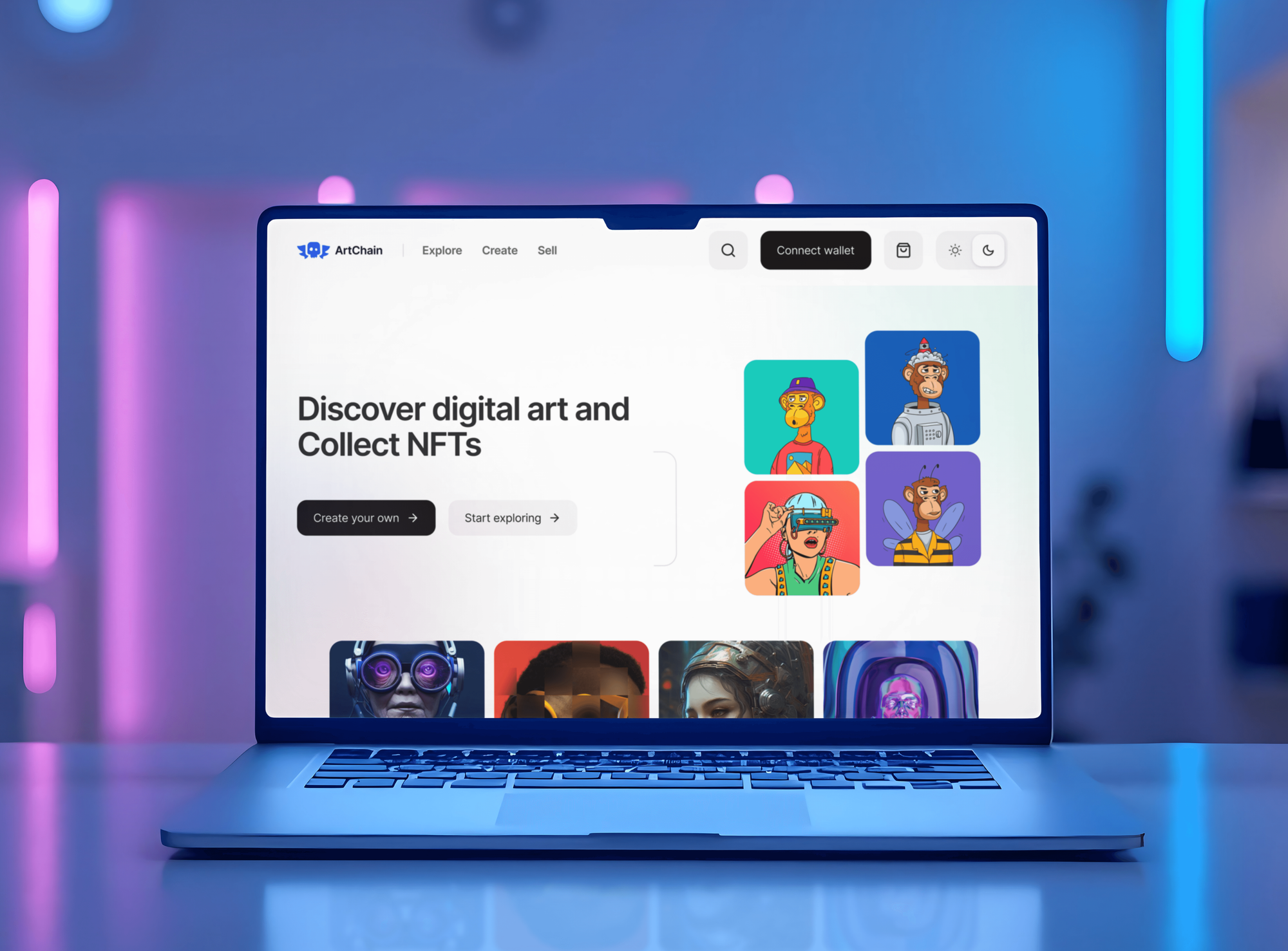
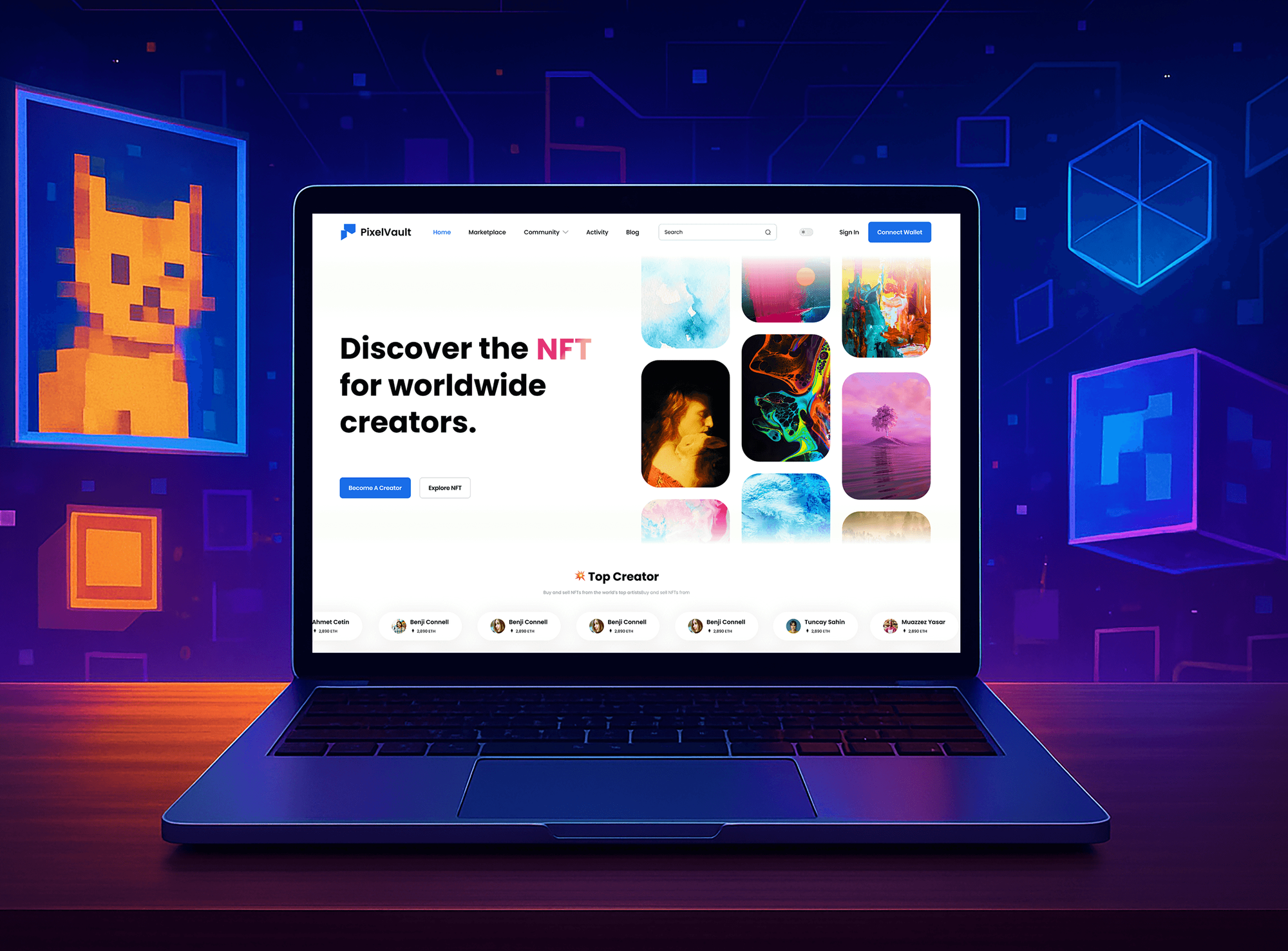
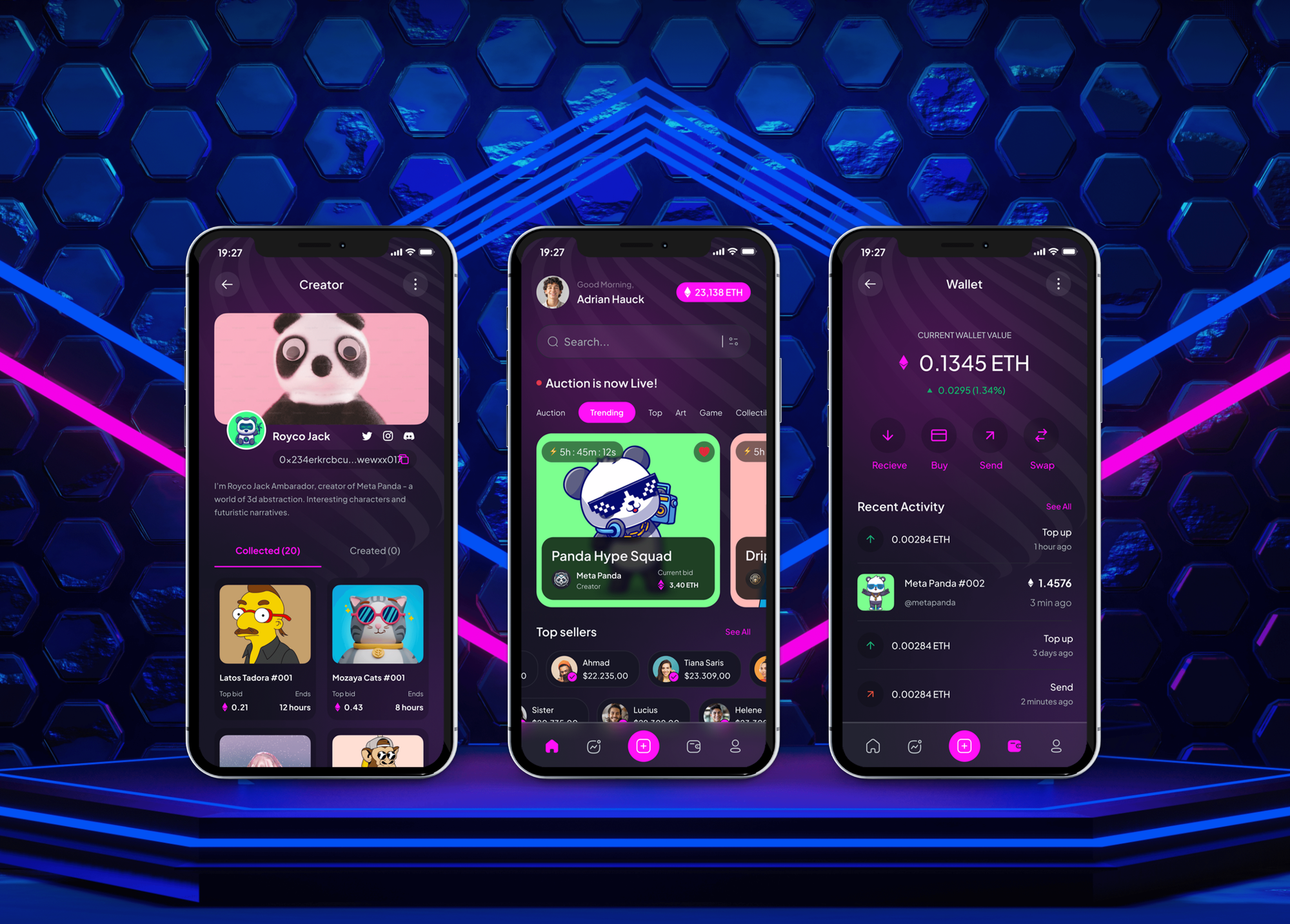
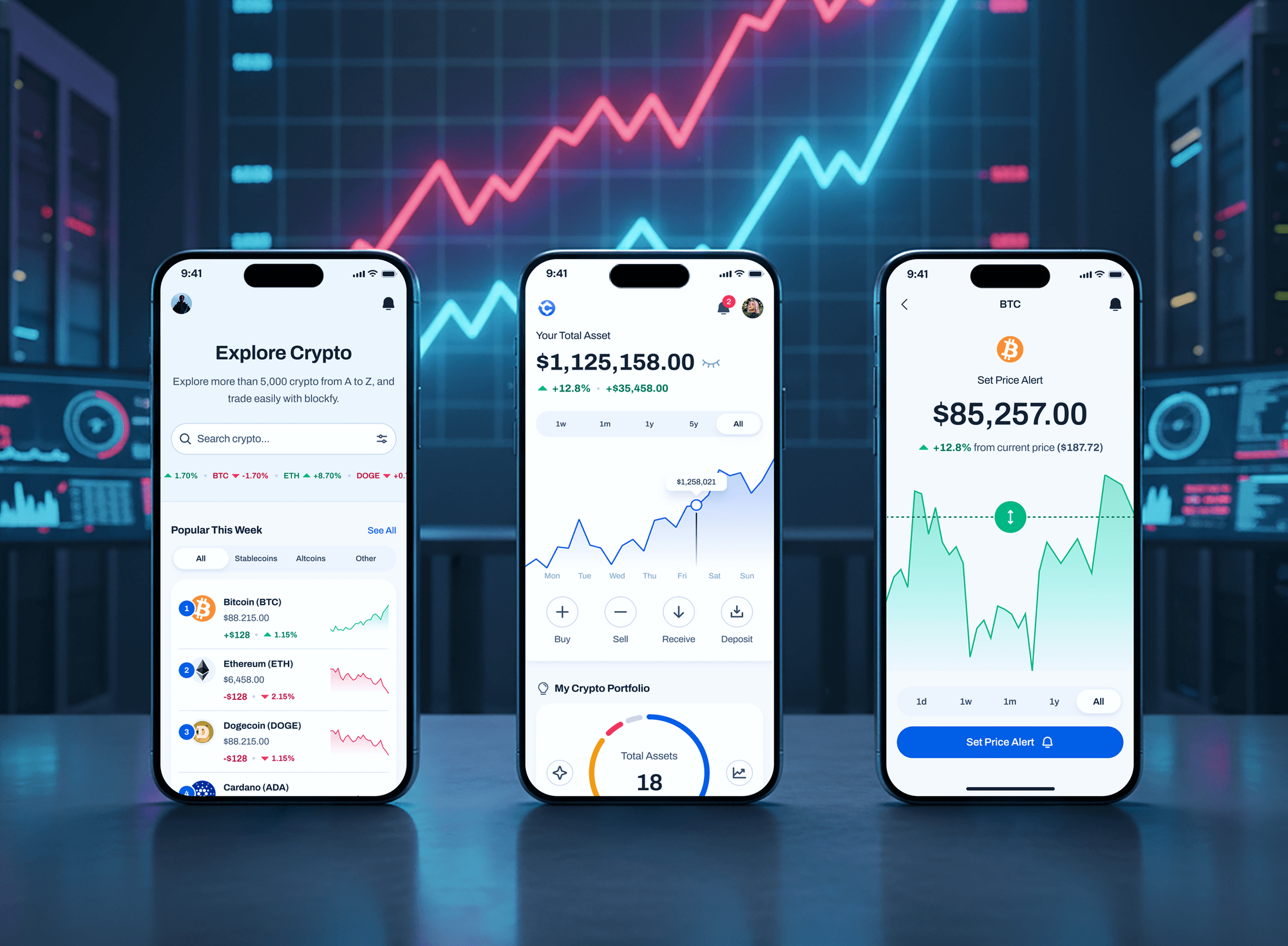
Crypto and NFT apps we designed and built, with wallet connection, bidding, and on-chain transaction flows. They show the product side your contracts plug into.
What Our Clients Say
Feedback from teams we have built websites, apps, and integrations for.
We had a pretty specific idea of what we wanted our website to become, but I wasn’t sure how easily we could explain all of it to a development team. There were quite a few moving parts, and we were working toward a deadline, so I expected a few things to get lost along the way. That never really happened. They understood what we were trying to achieve, kept us updated throughout the process, and got everything ready within the agreed timeline. The final site feels much easier to navigate, works beautifully on mobile, and is noticeably smoother for our customers. It was a huge relief seeing the original idea actually turn into the website we had in mind.
The mobile experience is probably my favourite part of the new site. We had spent a lot of time making sure the desktop version looked right, and the team kept pushing us to think about how everything would actually feel on a phone too. They were right. The navigation is clean, the interactions feel natural, and everything we’ve tested so far works exactly as it should. They also went through the links, forms, integrations, and other details more than once before launch, which I really appreciated. And even after going live, we could still reach out when something came up. The whole process felt friendly, organised, and surprisingly straightforward.
What I appreciate most is that the website is actually easy for us to manage now. We can update content ourselves instead of sending a developer a message every time we need to change something small. They also paid attention to the technical SEO side, which mattered to us because we didn’t want a new website to create problems for the traffic we already had. I’ve probably asked more questions than I should have since launch, but every question has been handled patiently and without any fuss. The team is easy to work with, they explain things clearly, and when we need something changed, they focus on getting it done rather than making the process complicated.
1,250+
Projects shipped
10+
Years of experience
Top 3%
Upwork Top Rated Plus
5 stars
Average review score

Want results like these?
Tell us what you are building. You get a reply within 24 hours on business days, then a written estimate.
Work Culture
Contracts hold other people's money, and they're hard to take back. These habits come from shipping crypto products where every transaction is public and permanent.
We list what must stay true, like supply matching balances, before writing a function. Every test and review then checks those rules, so new features can't quietly break them.
Our own tests attack the contract with random inputs, repeated calls, and odd orderings. You'd rather we find the edge case on a testnet than a stranger on mainnet.
We don't call our own review an audit. For contracts holding serious value, we recommend an independent firm, prepare the audit pack, and fix the findings with you.
We deploy from your multisig, not ours, and keep no admin role after handover. Control of the contract sits with your signers from the first block.
We measure gas per function in the test suite and cut storage writes where it matters. Your users pay less per transaction, and you see the numbers before launch.
The approved spec sets the price, so a new idea becomes a change order you can accept or skip. You know the cost before we start, not after.
Overview
DeveloperLook handles smart contract development for Web3 founders and product teams. We write the spec, build Solidity contracts on OpenZeppelin, and test them with Foundry fuzz and invariant tests. Deployed code is verified, with admin keys behind a Safe multisig. Projects start at $1,300, take 3 to 12 weeks, and the scope is fixed before we build.
DEVELOPERLOOK
Project facts · Smart Contract Development Services
Reviewed 22 Oct 2026 by Saimul Islam
Good fit
Founders with a spec and no Solidity team
You have the product mapped out and a launch date set. Now you need to hire Ethereum smart contract developers who write the spec before the code.
Teams taking a contract from testnet to mainnet
Your contract works on Sepolia, but nobody has fuzzed it, the deployer key sits on one laptop, and mainnet is three weeks away.
Product teams adding on-chain features
Your app already has users, and you want escrow, memberships, or rewards enforced on-chain without rebuilding the parts that already work.
Projects launching on more than one chain
You plan to launch on Base and Arbitrum as well as Ethereum, and you want one codebase with addresses, roles, and settings tracked per chain.
Agencies with a new Web3 client
Your agency signed a Web3 client and needs Solidity work behind the scenes, with tests and docs your team can present as its own.
Not a fit
Standard token launch only
You only need a standard ERC-20 or BEP-20 token, maybe with vesting. Our Token Development Services page covers that at a lower starting price.
Lending or vault protocol
You're building a lending market, vault, or staking protocol where the math carries most of the risk. Our DeFi Development Services team scopes that work.
Unsure a blockchain fits
You're not sure a blockchain belongs in your product yet. Start with our Blockchain Consulting Services, which can end with a plain database recommendation.
Budget under $1,300
Your budget is under $1,300, or you only need an unchanged copy of an open-source contract. A no-code token or NFT tool is the cheaper way to do that.
Not sure we're the right fit?
Book a free call or message us. We'll tell you honestly whether we're the right team.
Pricing
These are starting points in USD. Your final price depends on contract count, upgrade needs, and chain count, and you get a fixed proposal after a free contract review.
For teams that need one contract, such as an NFT, escrow, or membership contract, built from a spec.
$1,300one-time, USD
For products with up to 4 interacting contracts, upgrade needs, and an audit on the roadmap.
$4,200one-time, USD
For launches that need the contracts, a wallet-connected front end, and more than one chain.
$8,600one-time, USD
For Agencies
You own the client relationship. We work as your white-label smart contract development agency, supplying the spec, the Solidity, the tests, and the deploy scripts. Everything ships under your agency name, with docs your team can present.
White label: your client only ever sees your brand
Send the client's whitepaper, target chain, and launch date, plus any existing contracts.
You get a fixed quote, then we write, test, and rehearse the contracts on a testnet.
Your team presents the verified contracts and runbook under your brand, with our support.
Your name on the spec, test report, and runbook, and we stay off client calls.
Fixed scope per contract, with test and testnet milestones dated in the plan.
Contracts built on OpenZeppelin and tested with Foundry fuzz and invariant runs.
Take on Web3 clients without hiring a full-time Solidity developer.
The Right Technology for Your Project
We use the tools the Ethereum ecosystem relies on for testing and deployment, so any auditor or future developer can pick up the code.
 Next.js
 TypeScript
 Node.js
FAQ
Straight answers on cost, timelines, deployment, upgrades, cross-chain builds, and audits.
Saimul IslamFounder & CEO, DeveloperLookStill have questions?
Send a message or book a call with the team.
Smart contract development with DeveloperLook starts at $1,300 for one contract built from a written spec, fuzz-tested, and deployed with verified source. A suite of up to 4 interacting contracts with an upgrade proxy starts at $4,200. Contracts plus a dApp on up to 3 chains start at $8,600. Smart contract developer cost depends mostly on how many contracts interact and how much value they hold. The free review ends in a fixed quote.
Most single contracts take 3 to 4 weeks from the free review to mainnet. A suite with an upgrade proxy and invariant tests takes 6 to 9 weeks. Adding a dApp and more chains stretches it to about 12 weeks. An independent audit adds its own queue time, so we book it from the spec stage instead of waiting for the code.
A smart contract developer writes, tests, and deploys code that runs on a blockchain, most often in Solidity for Ethereum and other EVM chains. The job is closer to building financial infrastructure than a website. The code is public, hard to change, and holds value. If you hire smart contract developers, ask to see their test suites before their portfolios.
We develop a smart contract in five steps, from a free review to the mainnet launch. In between come a written spec with invariants, the Solidity build with unit tests, and fuzz testing with a testnet rehearsal. You approve the spec before any code exists, and every later step ends with a test report or a testnet address you can check.
We write smart contracts in Solidity, starting from audited OpenZeppelin components for tokens, access control, and upgrades instead of hand-rolling them. Each public function checks its inputs first, updates state before any external call, and emits events your app can index. We keep contracts small and single-purpose, which makes them cheaper to test and easier for an auditor to read.
We deploy with a script, not by hand, so every chain gets the same steps in the same order. The script runs first on Sepolia or the chain's testnet, then on mainnet from your Safe multisig. Afterward we verify the source on the block explorer, move admin roles to your signers, and record every address in a shared address book.
Cross-chain smart contract development works best with one codebase, deterministic addresses, and an established messaging protocol such as Chainlink CCIP instead of a homemade bridge. We test the failure paths: a message that arrives late, twice, or not at all. Each chain gets its own settings file for gas tokens, oracles, and signers, so a Base deploy can't inherit Ethereum's values by mistake.
Only if it was built to be upgradeable. An immutable contract can't change, so a fix means deploying a new version and moving users across. An upgradeable one sits behind a proxy, such as OpenZeppelin's UUPS or transparent pattern, so approved signers can swap the logic later. We help you choose before the build. Upgrades add flexibility, but they also ask holders to trust whoever holds the upgrade key.
No. Nobody should audit their own code, so we test hard, run Slither, and prepare an audit pack with the spec, test results, and known risks. For contracts that will hold meaningful value, we recommend an independent audit firm, coordinate the schedule, and fix their findings with you before launch. That keeps the audit honest and the launch date realistic.
You own everything: the repository, the deployment scripts, the verified contracts, and every admin role. We deploy from your Safe multisig and keep no keys or roles after handover. Your plan includes 30, 60, or 90 days of post-launch support for questions and fixes to our own work. Longer support is available as a separate agreement.
Saimul IslamFounder & CEO, DeveloperLookStill have questions?
Send a message or book a call with the team.
Free 30-min callGoogle Meet
Book a call
In 30 minutes on Google Meet we walk you through how we would build it, how long it takes and what it costs. Then you get a written estimate.
Calendar not showing? Book on cal.com or send a brief.