
Storefront templates
Store Framework blocks or FastStore pages for home, category, and product templates, built to your design.

For brands already selling on VTEX: storefront features, custom apps, and integrations built and tested in workspaces before they reach production, from $1,450.
100%
Changes tested before production
1account
All apps and code in yours
How your project runs
Teams we have built for:














The Problem
VTEX stores often outlive the team that built them. Custom apps pile up, integrations run on old scripts, and each release goes out with fingers crossed.
01 · Lost knowledge
Nobody knows which custom app controls each page.
We map every installed app, block, and workspace before changing anything.
02 · Risky releases
Changes go straight to production without a test.
Each change is built and reviewed in its own workspace first.
03 · Fragile syncs
An ERP script fails, and orders stop syncing.
Integrations move to VTEX APIs and Orders Feed, with error alerts.
04 · Offline products
Products stay offline because a SKU lacks an image.
Catalog checks find SKUs missing images, prices, or stock before launch.
Your store runs on VTEX, but the team that set it up has moved on. A new promo block needs a developer, and nobody remembers which custom app controls the product page. Your ERP sends orders through a script that fails on weekends. Tax looks wrong on some carts. Products stay offline because a SKU is missing an image. And every change goes straight to production, so each release feels like a gamble.
We start with your VTEX account: installed apps, workspaces, catalog health, and every integration. Then each change gets built in its own workspace, reviewed, and tested before it reaches production. Storefront work happens in Store Framework or FastStore, whichever your store runs. Integrations move to VTEX's own APIs and feeds, such as Orders Feed for your ERP. Releases become routine instead of a gamble.
Custom apps you own
Apps and blocks built in your VTEX account, with code your own team can read.
Workspaces before production
Every change built and reviewed in its own workspace, then promoted when you approve.
Integrations on VTEX APIs
ERP, tax, and order systems connected through VTEX's APIs, feeds, and apps.
Our VTEX Development Services Process
You approve the scope and the workspace plan, preview every change on its own link, and pick the release window before anything reaches production.
We review your VTEX account, installed apps, storefront framework, catalog, and integrations. You get a list of risks and quick wins, a plan for the work you asked about, and a fixed quote.
What's Included
Every project covers storefront work, custom apps, workspace testing, catalog work, integrations, and a planned release, sized to what your store needs next.
Compare Options
An in-house developer knows your business best, and a large agency brings more hands. Here's where each one fits a VTEX store and where gaps open up.
| Feature | DeveloperLookBest fit | In-house developer | Generic agency |
|---|---|---|---|
| Planning | Account review before quoting | Knows your history | Discovery phase first |
| Platform skills | React, GraphQL, IO apps | Depends on the hire | Varies by team |
| Testing | Workspace for every change | Up to your process | Usually staged |
| Integrations | ERP, tax, and OMS by API | Learned on the job | Often included |
| Speed to start | Review in 2 to 4 days | After hiring | Weeks of onboarding |
| Ongoing support | Fixed support window | Full-time on your store | Retainer based |
| Ownership | Apps in your account | Yours | Check the contract |
| Cost | From $1,450, fixed scope | Full-time salary | Monthly retainer |
Projects We've Built
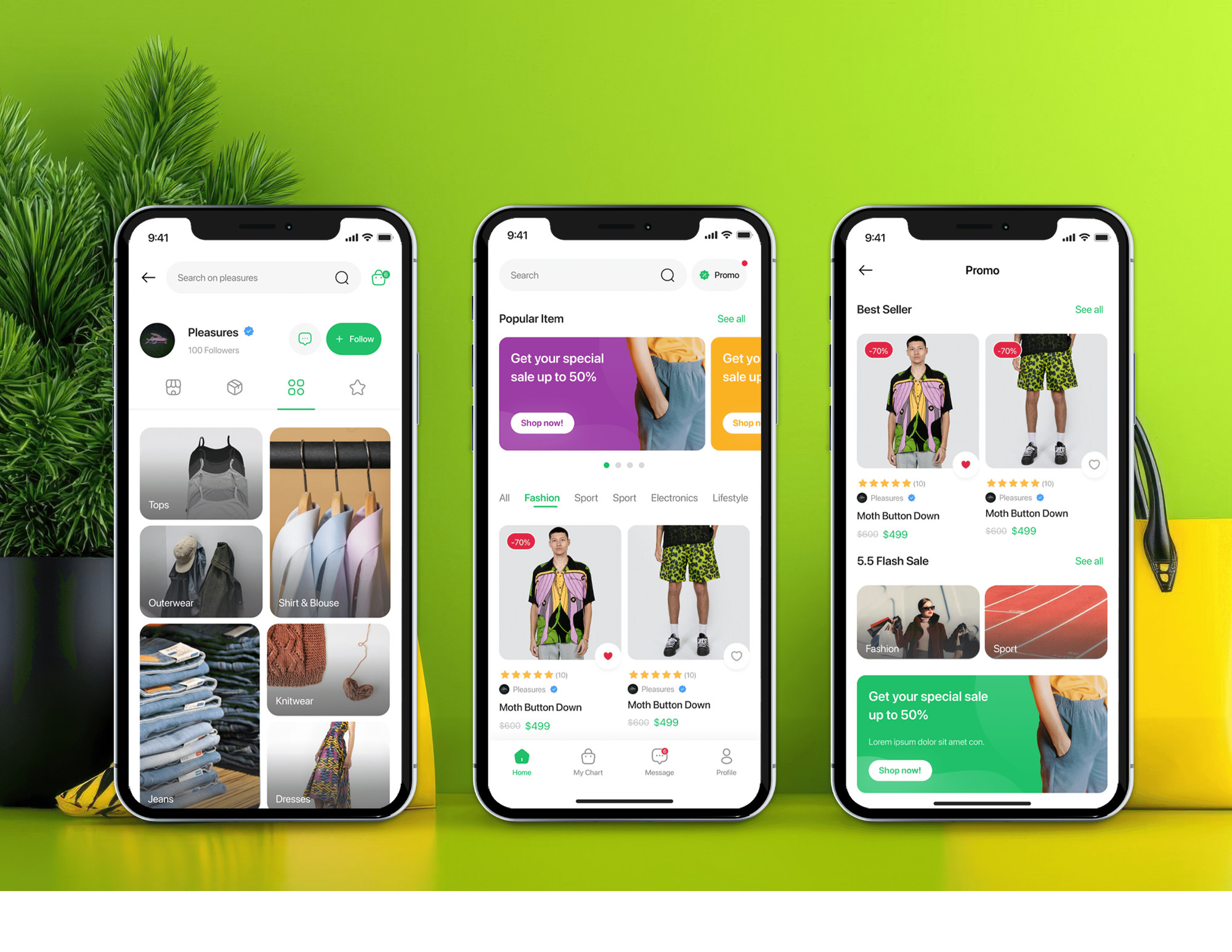
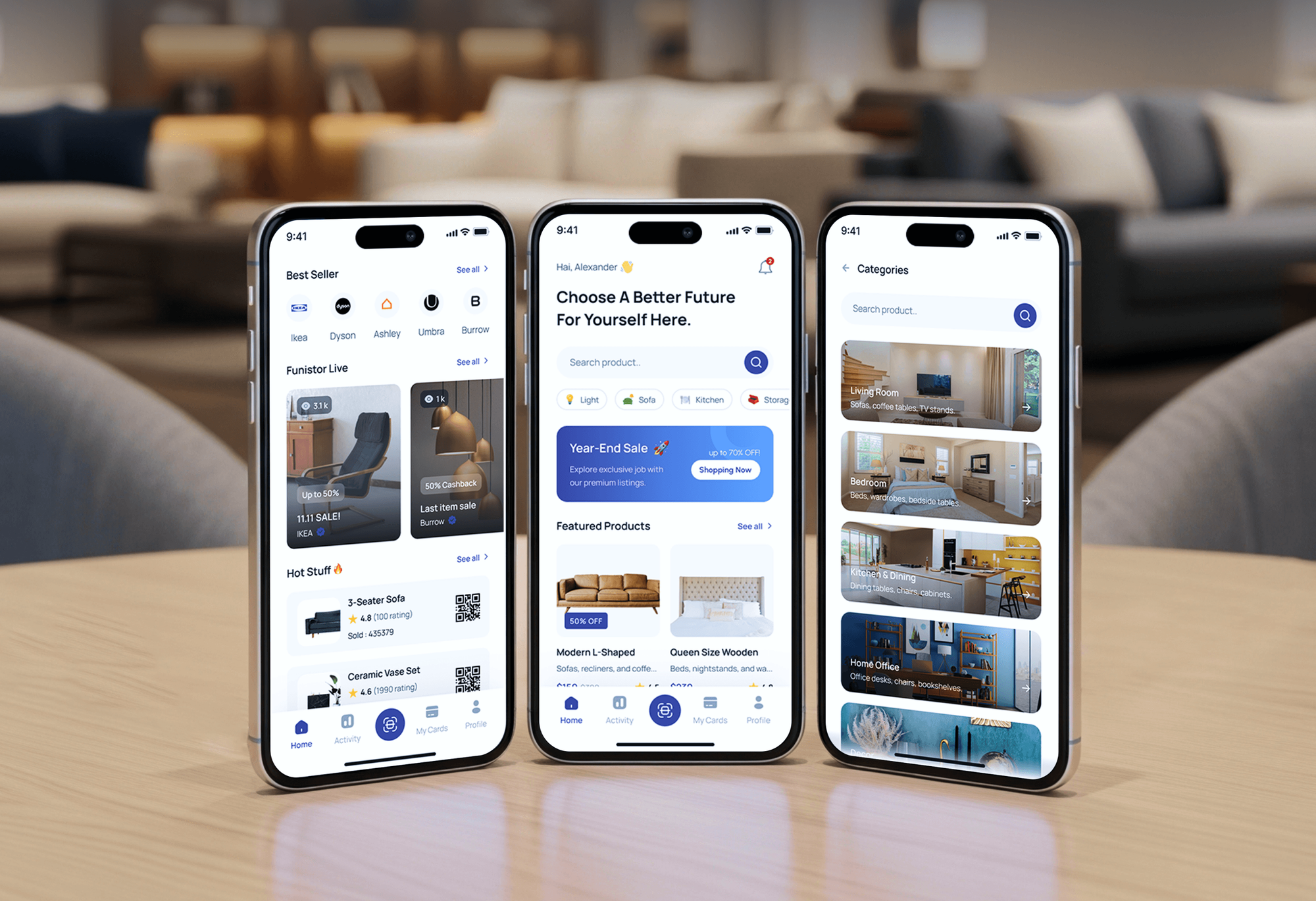
Fashion and furniture stores, apps, and admin dashboards our team designed and built, with the catalogs and order flows that larger commerce platforms run on.


What Our Clients Say
Feedback from teams we have built online stores and store features for.
We had a pretty specific idea of what we wanted our website to become, but I wasn’t sure how easily we could explain all of it to a development team. There were quite a few moving parts, and we were working toward a deadline, so I expected a few things to get lost along the way. That never really happened. They understood what we were trying to achieve, kept us updated throughout the process, and got everything ready within the agreed timeline. The final site feels much easier to navigate, works beautifully on mobile, and is noticeably smoother for our customers. It was a huge relief seeing the original idea actually turn into the website we had in mind.
The mobile experience is probably my favourite part of the new site. We had spent a lot of time making sure the desktop version looked right, and the team kept pushing us to think about how everything would actually feel on a phone too. They were right. The navigation is clean, the interactions feel natural, and everything we’ve tested so far works exactly as it should. They also went through the links, forms, integrations, and other details more than once before launch, which I really appreciated. And even after going live, we could still reach out when something came up. The whole process felt friendly, organised, and surprisingly straightforward.
What I appreciate most is that the website is actually easy for us to manage now. We can update content ourselves instead of sending a developer a message every time we need to change something small. They also paid attention to the technical SEO side, which mattered to us because we didn’t want a new website to create problems for the traffic we already had. I’ve probably asked more questions than I should have since launch, but every question has been handled patiently and without any fuss. The team is easy to work with, they explain things clearly, and when we need something changed, they focus on getting it done rather than making the process complicated.
1,250+
Projects shipped
10+
Years of experience
Top 3%
Upwork Top Rated Plus
5 stars
Average review score

Want results like these?
Tell us what you are building. You get a reply within 24 hours on business days, then a written estimate.
Work Culture
VTEX stores carry a lot of revenue on one platform. These habits keep changes safe, integrations visible, and your own team able to take over.
If Shopify or your current setup covers what you need, we'll say so before you commit to VTEX work. Platform choices are expensive to undo.
Every change starts in its own workspace and reaches production only after review. Your live store keeps selling while we build.
Each custom app gets a short note on what it does, where it runs, and how to change it. The next developer starts from facts, not guesses.
We don't claim VTEX partner status. You get engineers who read the platform's documentation closely and test against your real catalog.
Apps, storefront code, and integration settings live in your VTEX account and your repository. Nothing stops you from moving to another team.
We watch orders, tax, and errors after each release. If something breaks, the people who built it fix it during the support window.
Overview
DeveloperLook offers VTEX development for brands already selling on VTEX. We build Store Framework or FastStore storefront features, custom VTEX apps, catalog imports, and integrations with tax, ERP, and order systems. Work starts at $1,450, takes 1 to 12 weeks, and every app lives in your VTEX account.
DEVELOPERLOOK
Project facts · VTEX Development Services
Reviewed 7 Oct 2026 by Saimul Islam
Good fit
Brands already selling on VTEX
Your store runs on VTEX, the original implementation team has moved on, and you need a VTEX developer who can read their code.
Teams short on platform engineers
Your in-house team has a backlog of storefront features, and you want experienced VTEX developers for a fixed scope instead of a new hire.
Brands connecting ERP or tax
Your ERP, Avalara account, or warehouse system needs a reliable VTEX integration instead of a script that fails quietly.
Brands comparing platforms
You're weighing vtex vs shopify for your next replatform and want an honest technical read before signing either contract.
Agencies with VTEX clients
Your agency has a client on VTEX and needs VTEX commerce development delivered under your brand, with the code in the client's account.
Not a fit
Need an official partner
Your contract requires a firm from the VTEX partners program. We aren't in it, so start with VTEX's own partner directory.
Moving off VTEX
You've decided to leave VTEX for another platform. Our Ecommerce Replatforming Services page covers the full move, including data and redirects.
Composable, not one platform
You want separate services for search, content, and checkout. Our Composable Commerce Development Agency service plans that path instead.
Budget under $1,450
Your budget is under $1,450 and the change is a setting in the VTEX Admin. VTEX's own help center often covers that without a developer.
Not sure we're the right fit?
Book a free call or message us. We'll tell you honestly whether we're the right team.
Pricing
These are starting points in USD. Your final price depends on the apps, templates, and integrations involved, and you get a fixed proposal after a free VTEX review.
For VTEX stores that need one custom component, app, or fix.
$1,450one-time, USD
For brands reworking storefront templates and connecting one back-office system.
$4,600one-time, USD
For brands launching a new storefront, a FastStore build, or several integrations.
$9,400one-time, USD
For Agencies
You own the client relationship. We supply the VTEX engineering behind it: custom apps, storefront templates, catalog work, and integrations. It's delivered under your brand and built in the client's own account.
White label: your client only ever sees your brand
Send the client's account access, goals, roadmap, and current integrations.
You get the risks, a build plan, and a fixed price to resell.
Work tested in workspaces, released, and documented for your team.
Specs and release notes go out under your agency's name.
Engineers who build apps, blocks, and GraphQL queries on VTEX.
A price set by apps, templates, and integrations in scope.
Extra hands when a VTEX client's roadmap outgrows your team.
The Right Technology for Your Project
We work in VTEX's own development tools and APIs, so every app and integration stays supported by the platform you pay for.
 React
 TypeScript
 Next.js
 GraphQL
 Node.js
 Avalara
 SAP
FAQ
Straight answers on what VTEX is, its development platform, catalog size, Avalara, Shopify, cost, timelines, and code ownership.
Saimul IslamFounder & CEO, DeveloperLookStill have questions?
Send a message or book a call with the team.
VTEX work with DeveloperLook starts at $1,450 for one custom app, block, or fix, built and tested in a workspace. Storefront templates with one integration, such as ERP orders or Avalara tax, start at $4,600. New storefronts, FastStore builds, or up to 3 integrations start at $9,400. Your VTEX license is billed separately by VTEX.
A single VTEX feature takes 1 to 2 weeks, including workspace testing and release. Storefront templates with one integration take 4 to 6 weeks. A new storefront or several integrations take 6 to 12 weeks, because each connected system needs testing with real orders, taxes, and catalog data.
VTEX is a commerce platform for large brands and retailers, covering online stores, marketplaces, and order management in one system. The company trades on the New York Stock Exchange under the ticker VTEX. Stores run on VTEX's cloud, and developers extend them with custom apps and storefront frameworks.
VTEX runs the store, checkout, catalog, and order management for brands that sell online, often across several stores or sellers. Its account types include main stores, franchise stores that share a catalog, and seller accounts that join a marketplace. Brands add features through apps from the VTEX App Store or through custom builds.
For most launches, yes. VTEX hosts the platform and runs checkout and the admin, but storefront templates, custom apps, and ERP or tax integrations need developers. That can be your own team, an implementation firm, or a fixed-scope VTEX developer like us for a defined piece of work.
VTEX suits brands that need marketplaces, franchise stores, and order management built into one platform. Shopify suits brands that want a faster launch, public plan prices, and a large app store. VTEX's pricing page asks for your annual GMV and leads to a sales demo, so your total cost depends on that quote.
VTEX IO is the platform's development layer for building apps that extend a store. Developers write them in React, TypeScript, Node.js, and GraphQL, then test them in isolated workspaces with the CLI before release. Store Framework storefronts are built from these app blocks, while FastStore storefronts use Next.js instead.
Yes. VTEX doesn't publish a store-wide product limit that we've found, and its catalog is built for large retailers. The limit that matters more is 50 SKUs per product by default, which VTEX Support can raise. For 18,000 products, the real work is the import, the specifications, and an image on every SKU so it can go live.
Avalara and VTEX connect through the Avalara Tax Calculator app, which links checkout and order management to Avalara's real-time tax service. Checkout sends the cart to Avalara on each change, and tax is committed when the order is invoiced. The tax call waits up to 5 seconds with no retry, so we test slow responses too.
You do. Custom apps are published under your VTEX account, and the source code sits in your repository. We document each app's purpose and settings, then remove our access when you ask. Support covers fixes for 14 to 45 days, depending on your plan, and later changes can be quoted as small fixed jobs.
Saimul IslamFounder & CEO, DeveloperLookStill have questions?
Send a message or book a call with the team.
Free 30-min callGoogle Meet
Book a call
In 30 minutes on Google Meet we walk you through how we would build it, how long it takes and what it costs. Then you get a written estimate.
Calendar not showing? Book on cal.com or send a brief.