
Code and cartridge audit
A review of cartridges, controllers, jobs, and integrations, ranked by risk and the cost to fix.

For retailers already on Salesforce B2C Commerce: storefront features, cartridges, and fixes shipped in fixed-price sprints, from $1,250.
2X
Faster storefront releases
100%
Code reviewed before deploy
How your project runs
Teams we have built for:














The Problem
Commerce Cloud handles scale well. The slowdown comes from heavy cartridges, a thin bench of developers, and release cycles that stretch for weeks.
01 · Releases
Small storefront changes wait weeks for the next release window.
Fixed-price sprints ship reviewed code versions on a steady schedule.
02 · Old cartridges
An old cartridge runs on every page, and nobody knows why.
Each cartridge gets reviewed, then trimmed, rewritten, or removed.
03 · Landing pages
Merchandisers file a ticket for every new landing page.
Page Designer components let your team build pages without a developer.
04 · Speed
Category pages slow down as promotions and scripts stack up.
Key templates get profiled and fixed, starting with category and product pages.
Your merchandising team wants a new landing page for a launch, and the ticket waits three sprints. A cartridge from years ago runs on every page, and nobody remembers why. Category pages slow down as promotions stack up. Each release needs a code version switch in Business Manager, so changes get batched and delayed. Your partner's next opening is next quarter. The license is paid, but the storefront moves slower than your marketing.
We start with a code and storefront review on a sandbox: cartridges, controllers, custom jobs, and page speed. Then we work through your backlog in fixed-price sprints, building features as clean cartridges or Composable Storefront components. Page Designer components let merchandisers build pages themselves. Every change is peer reviewed, tested in a sandbox, and activated as a new code version. Releases ship in weeks, not quarters.
Every change peer reviewed
No code reaches a code version until a second developer has read it.
Page Designer for merchandisers
Reusable components let your team build campaign pages in Business Manager without filing a ticket.
Sandbox before activation
Features run on an on-demand sandbox with test orders before any code version goes live.
Our Salesforce Commerce Cloud Development Process
You see the findings first, approve each sprint's scope, and test every feature on a sandbox before it's activated on your site.
We talk through your storefront, your backlog, and what's slowing releases down. You get an honest view of whether you need a sprint, a health check, or nothing from us at all.
What's Included
Each engagement is sized to your backlog. Most combine these six parts, whether your store runs on SFRA or the Composable Storefront.
Compare Options
An in-house developer knows your business best, and a large systems integrator suits multi-year programs. Here's how each compares for a steady storefront backlog.
| Feature | DeveloperLookBest fit | In-house hire | Large integrator |
|---|---|---|---|
| Getting started | Review and first sprint in weeks | Months to find and onboard | Long discovery and contract phase |
| Storefront features | SFRA cartridges or PWA Kit | Depends on one person's skills | Full team, large minimum scope |
| Merchandiser tools | Page Designer components included | If time allows | Often a separate project |
| Testing | Peer review and sandbox tests | Self-reviewed unless the team grows | Dedicated QA team |
| Release pace | A code version every sprint | Limited by one person's time | Batched into large releases |
| Business knowledge | Learned in the first audit | Deepest knowledge of your business | Account team learns over time |
| Ownership | Code and docs in your repository | Stays with your team | Yours, under contract terms |
| Cost | Fixed sprints from $1,250 | Full salary and benefits | Highest rates and minimums |
Projects We've Built
Ecommerce apps and admin dashboards our team designed and built. They are not Commerce Cloud builds; they show our catalog, cart, and admin tool work.
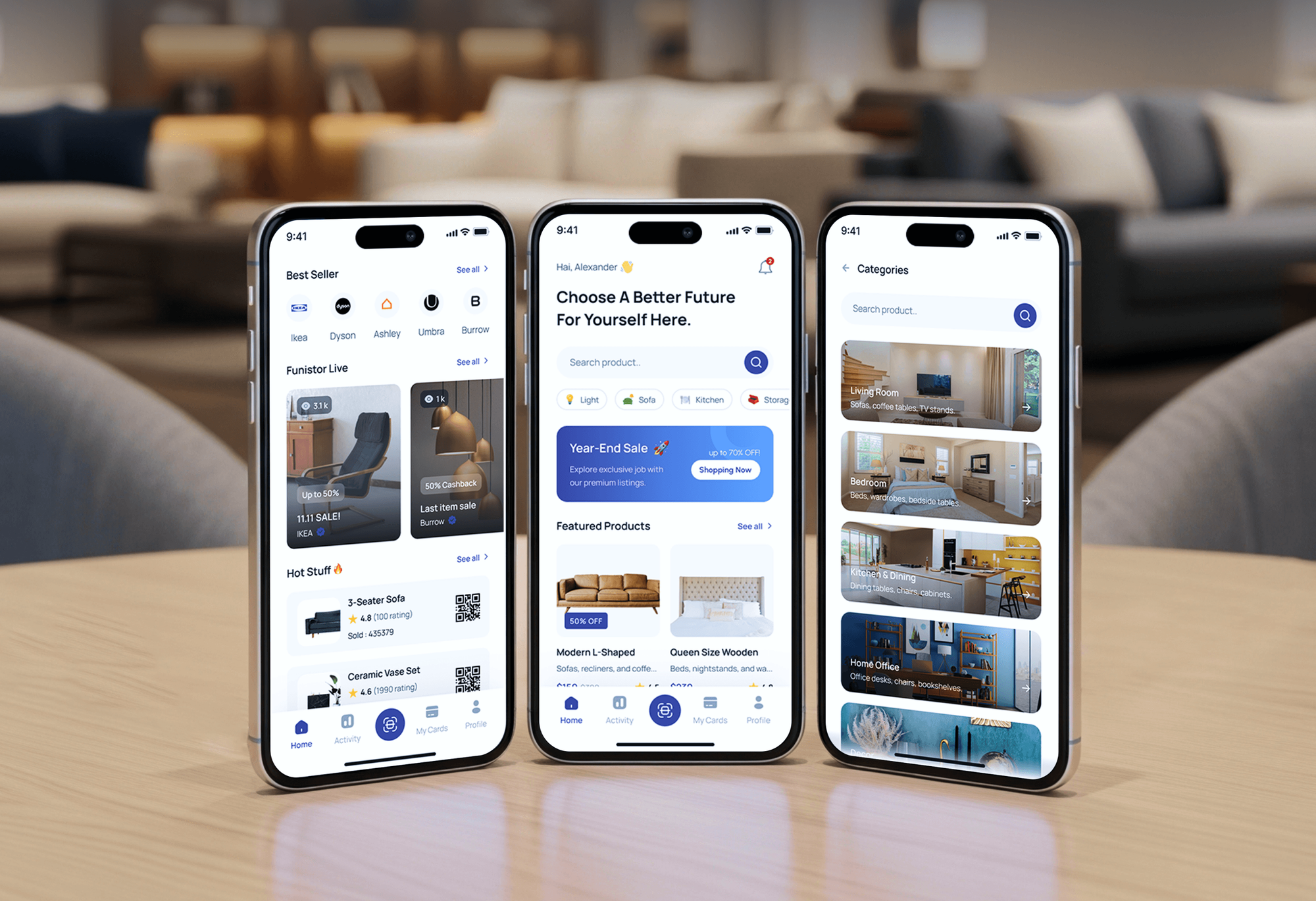

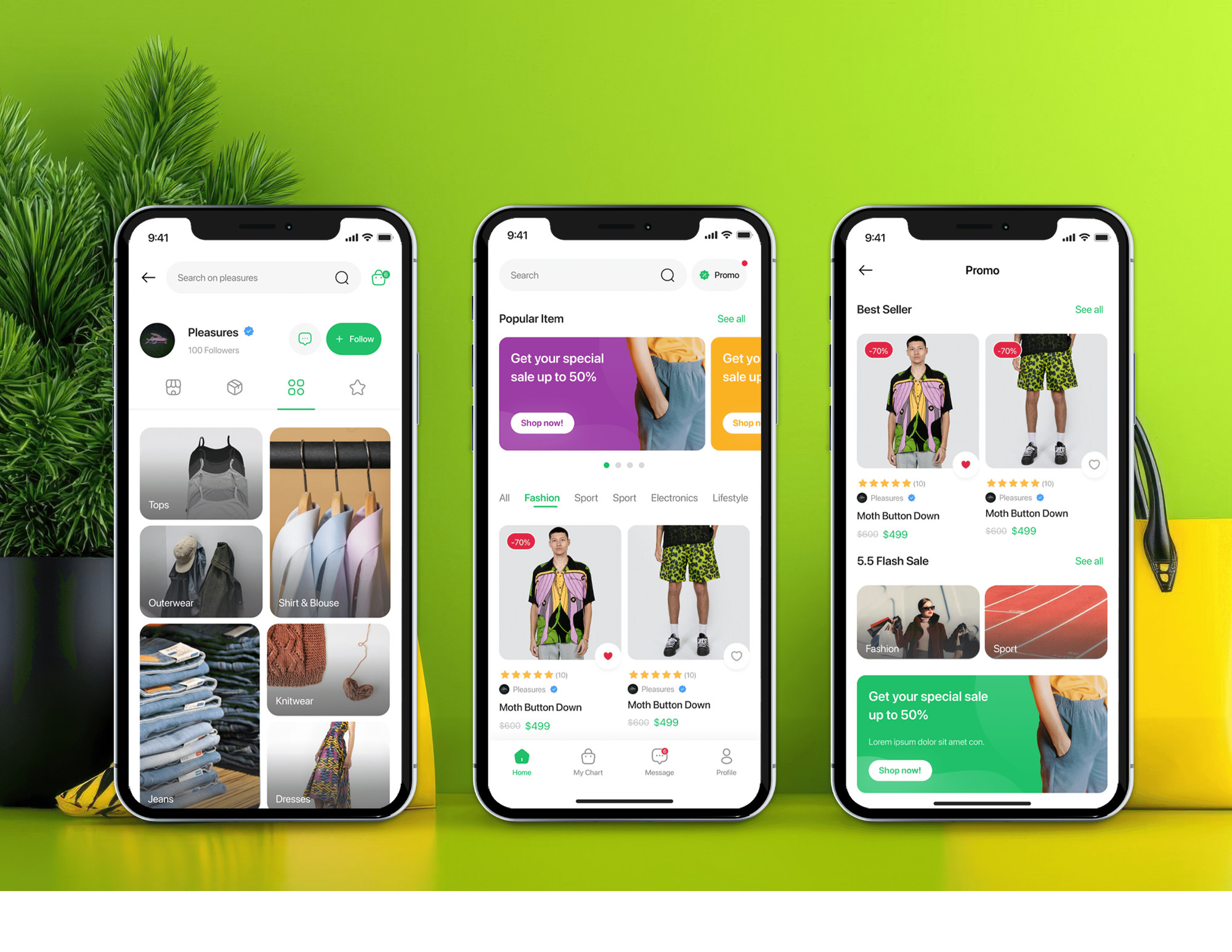
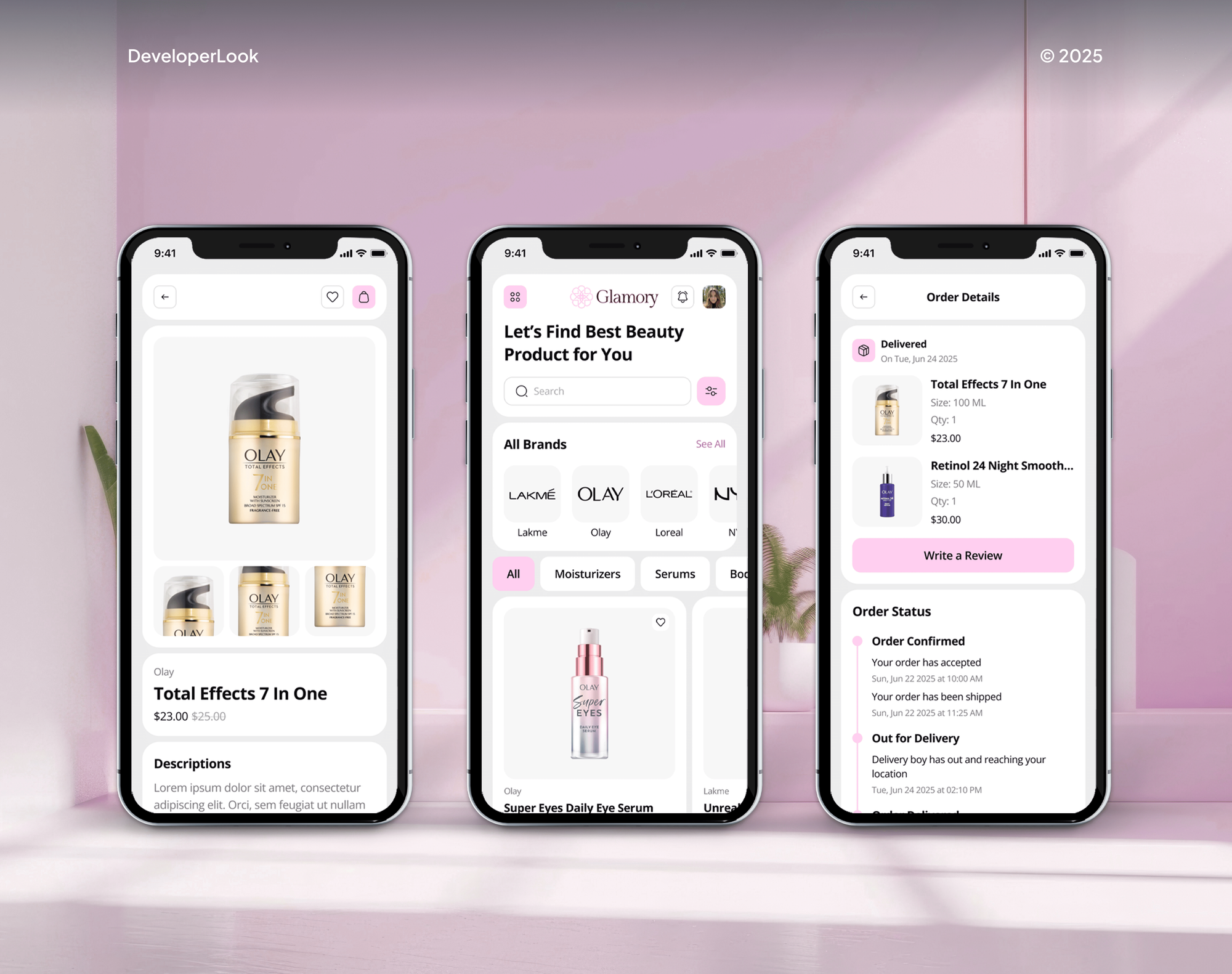
What Our Clients Say
Feedback from teams we have built online stores and websites for.
We had a pretty specific idea of what we wanted our website to become, but I wasn’t sure how easily we could explain all of it to a development team. There were quite a few moving parts, and we were working toward a deadline, so I expected a few things to get lost along the way. That never really happened. They understood what we were trying to achieve, kept us updated throughout the process, and got everything ready within the agreed timeline. The final site feels much easier to navigate, works beautifully on mobile, and is noticeably smoother for our customers. It was a huge relief seeing the original idea actually turn into the website we had in mind.
The mobile experience is probably my favourite part of the new site. We had spent a lot of time making sure the desktop version looked right, and the team kept pushing us to think about how everything would actually feel on a phone too. They were right. The navigation is clean, the interactions feel natural, and everything we’ve tested so far works exactly as it should. They also went through the links, forms, integrations, and other details more than once before launch, which I really appreciated. And even after going live, we could still reach out when something came up. The whole process felt friendly, organised, and surprisingly straightforward.
What I appreciate most is that the website is actually easy for us to manage now. We can update content ourselves instead of sending a developer a message every time we need to change something small. They also paid attention to the technical SEO side, which mattered to us because we didn’t want a new website to create problems for the traffic we already had. I’ve probably asked more questions than I should have since launch, but every question has been handled patiently and without any fuss. The team is easy to work with, they explain things clearly, and when we need something changed, they focus on getting it done rather than making the process complicated.
1,250+
Projects shipped
10+
Years of experience
Top 3%
Upwork Top Rated Plus
5 stars
Average review score

Want results like these?
Tell us what you are building. You get a reply within 24 hours on business days, then a written estimate.
Work Culture
Salesforce Commerce Cloud managed services should feel like an extension of your own team. These habits keep releases steady and the code readable.
A second developer reads every pull request before it reaches a code version. Mistakes get caught in review, not in your checkout.
We keep the previous code version in place when we release. If something looks wrong, switching back takes minutes, not a new deploy.
If your store would run cheaper on another platform, we'll say so, even when it means less work for us. Some brands outgrow Commerce Cloud's costs.
Work ships in fixed-price sprints with dates agreed upfront. Your merchandisers know when features land and can plan campaigns around them.
Each release comes with notes your merchandisers and managers can read, not only developers. Everyone knows what changed and what to test.
Cartridges, PWA Kit code, and documentation live in your company's repository. You keep everything if you change partners or hire in-house.
Overview
DeveloperLook offers Salesforce Commerce Cloud development for retailers already licensed on B2C Commerce. We audit cartridges and custom code, build SFRA or Composable Storefront features, create Page Designer components, and release through tested code versions. Sprints start at $1,250, most run 1 to 12 weeks, and every change is peer reviewed.
DEVELOPERLOOK
Project facts · Salesforce Commerce Cloud Development
Reviewed 7 Oct 2026 by Saimul Islam
Good fit
Retailers on Salesforce B2C Commerce
You run Commerce Cloud, your feature backlog keeps growing, and your current partner quotes months before anyone can start.
Teams testing a headless front end
Your team wants to try the Composable Storefront on a few pages before committing the whole site to PWA Kit.
Brands hiring Commerce Cloud developers
You want to hire Salesforce Commerce Cloud developers for sprints, without a long agency retainer or a slow full-time search.
Merchandisers waiting on developers
Your merchandisers want new landing pages each season, and Page Designer components would let them build pages without filing a ticket.
Agencies needing Commerce Cloud capacity
Your agency has a Commerce Cloud client and needs a Salesforce Commerce Cloud developer to deliver cartridges and fixes under your brand.
Not a fit
Leaving Commerce Cloud
You plan to leave Commerce Cloud to cut license costs. Our Shopify Plus Migration Services team handles that replatform with data and redirects.
Small store, new platform
You run a small store and are only now choosing a platform. Our Ecommerce Website Development team can compare lighter platforms that cost far less.
New license implementation
You need a certified implementation partner for a brand-new Salesforce license. Salesforce's AppExchange lists those firms, and we join once your store is live.
Budget under $1,250
Your budget for Commerce Cloud work is under $1,250. Your current partner's support hours may cover one small fix more cheaply.
Not sure we're the right fit?
Book a free call or message us. We'll tell you honestly whether we're the right team.
Pricing
These are starting points in USD. Your final price depends on storefront type, backlog size, and integrations, and you get a fixed proposal after a free storefront review.
For licensed B2C Commerce teams that need code, speed, and SEO issues found and the first fixes made.
$1,250one-time, USD
For teams with a backlog of storefront features on SFRA or the Composable Storefront.
$4,400one-time, USD
For brands that need larger work, such as new checkout steps or a Composable Storefront pilot.
$9,200one-time, USD
For Agencies
You own the client relationship. We supply the Salesforce Commerce Cloud engineering: cartridges, PWA Kit features, and Page Designer components under your brand. Fixed sprint prices protect your margin, and your client reviews work on a sandbox.
White label: your client only ever sees your brand
Send sandbox access, the backlog, and your client's release dates for review.
You get an audit, a sprint plan, and a fixed price per sprint.
Reviewed code versions, release notes, and documentation in your client's repository.
Your branding on every release note, with client contact only if you want it.
Cartridge and React work handled by the same small team.
Sprint quotes you can resell, with no surprise hours at month end.
Extra Commerce Cloud developers for peak season without new hires.
The Right Technology for Your Project
We work with Salesforce's own storefront frameworks and tooling, so your code stays supportable as B2C Commerce changes.
 Salesforce
 JavaScript
 Node.js
 React
 Docker
 Stripe
 PayPal
 Apple Pay
 Avalara
FAQ
Straight answers on Commerce Cloud costs, platform fit, SEO, subscriptions, and hiring developers.
Saimul IslamFounder & CEO, DeveloperLookStill have questions?
Send a message or book a call with the team.
Salesforce doesn't publish Commerce Cloud license prices; its pricing page asks you to contact sales for a quote. On top of the license, you pay for implementation and ongoing development. Development work with DeveloperLook starts at $1,250 for a storefront health check, with feature sprints from $4,400 and extended builds from $9,200.
Salesforce Commerce Cloud is Salesforce's ecommerce platform, and its retail product is Salesforce B2C Commerce. It runs storefronts, catalogs, pricing, promotions, and checkout as a hosted service, with Business Manager as the admin. Brands build storefronts on SFRA, a cartridge-based reference architecture, or on the headless Composable Storefront built with PWA Kit.
Retailers and consumer brands use it to run large storefronts, often several brands, countries, and languages from one setup. Teams use it for merchandising, promotions, and product listings tied to other Salesforce clouds. It's built for enterprise catalogs and traffic, which is why licensing and development cost more than on lighter platforms.
Choose Salesforce Commerce Cloud when you run many brands or countries from one setup and already rely on other Salesforce clouds. Shopify usually wins on cost, speed to launch, and the size of its app ecosystem. If you're deciding from scratch, we'll lay out both platforms' running costs before recommending either one.
Usually not. License costs, implementation effort, and the need for specialized developers suit larger retailers better than small stores. Most small businesses get more for their budget on Shopify, BigCommerce, or WooCommerce. Those are the Salesforce Commerce Cloud alternatives we compare for clients before any work starts.
Yes, but usually through a partner rather than out of the box. Most B2C Commerce stores add subscriptions with a certified cartridge, such as Ordergroove's, listed on Salesforce AppExchange. We install and configure the cartridge, connect it to your product pages and checkout, and test renewals, skips, and cancellations before launch.
Yes, when it's set up well. Business Manager handles URL rules, XML sitemaps, page meta tag rules, and 301 redirects for retired URLs. Composable Storefront pages are rendered on the server through Managed Runtime, so search engines see the full content. Most SEO problems we find come from duplicate category URLs and slow templates, not the platform itself.
It sits at the enterprise end, next to Adobe Commerce, with strong multi-site, merchandising, and Salesforce data links. Shopify Plus and BigCommerce cost less and launch faster, while Adobe Commerce gives more hosting control. The main Salesforce Commerce Cloud limitations are cost, a smaller developer pool, and slow release cycles without good tooling.
Start with a written backlog and sandbox access, then test candidates on a small paid task, such as one cartridge fix. Ask how they review code and release code versions safely. When you hire Commerce Cloud developers through us, the first step is a free storefront review, then a fixed-price health check.
You can find them through Salesforce's AppExchange consulting listings, specialist agencies, freelance platforms, and Salesforce's Trailblazer Community. Agencies give you a team with review and testing built in, while freelancers cost less but carry more risk. DeveloperLook offers Commerce Cloud developers in fixed-price sprints, without a long retainer.
Saimul IslamFounder & CEO, DeveloperLookStill have questions?
Send a message or book a call with the team.
Free 30-min callGoogle Meet
Book a call
In 30 minutes on Google Meet we walk you through how we would build it, how long it takes and what it costs. Then you get a written estimate.
Calendar not showing? Book on cal.com or send a brief.