
API spec and test plan
An up-to-date OpenAPI spec and a list of test cases for every endpoint in scope.

For teams whose apps, partners, and mobile clients all depend on one API: tests that catch breaking changes on every pull request, from $750.
5min
API regression run in CI
100%
Endpoints in scope tested
How your project runs
Teams we have built for:














The Problem
API bugs rarely show on screen. A renamed field, a looser validation rule, or an expired token breaks the mobile app and partner integrations first.
01 · Renamed field
One renamed field broke the mobile app.
Contract tests compare every response with the schema your clients expect.
02 · Hidden failure
Every UI test passed while the API changed.
API tests run on their own, beneath the UI, on every pull request.
03 · Silent webhook
The warehouse webhook started dropping shipments overnight.
Webhook payloads and retries are tested against a mock receiver.
04 · Late discovery
The team found out from support tickets.
A failing contract test blocks the merge before anyone deploys.
Your developer renamed one field in the orders endpoint, and every UI test passed. The web app looked fine. Then the mobile app started crashing on the order screen, a partner's sync failed overnight, and the webhook to your warehouse began dropping shipments. Nobody had tested the API on its own, so nobody noticed the contract changed. Your team found out from 3 different support tickets.
We start with your API spec, or we write one from your code and traffic. Then we build tests that call every endpoint in scope: valid and invalid input, expired tokens, wrong roles, and the exact response shape each client expects. The suite runs in CI on every pull request. A renamed field fails the build, not your partner's sync.
Tests against your spec
Every response is checked against the OpenAPI schema your apps and partners rely on.
Auth and error cases
Expired tokens, wrong roles, and bad input get tested as hard as the happy path.
Webhooks and integrations
Outgoing webhooks and third-party calls are tested with mocks, so partners aren't surprised by changes.
Our API Testing Services Process
You approve the endpoint list and test cases before we automate them, and every failing test shows the request, the response, and what was expected.
We review your API docs or OpenAPI spec, a sample of real traffic, and the clients that depend on it. You get the endpoints to cover, the risks we see, and a fixed price.
What's Included
Tests for the layer your apps, partners, and mobile clients share: functional and negative cases, contracts, auth, webhooks, and a suite that runs in CI.
Compare Options
Manual Postman checks are quick for one endpoint, and UI tests already touch some API calls. Here's where each leaves gaps that REST API testing closes.
| Feature | DeveloperLookBest fit | Manual checks | UI tests only |
|---|---|---|---|
| Coverage | Every endpoint in scope | Endpoints someone remembers | Only calls the UI makes |
| Negative cases | Invalid input, auth, and limits | Rarely tested | Hard to reach from the UI |
| Contract checks | Schema checked on every run | By eye, if at all | Not checked |
| Speed | Minutes for the full suite | Fast for one endpoint | Slower, browser-driven |
| Failure detail | Request, response, and expected value | Whatever someone noticed | A screenshot of the symptom |
| Integrations | Webhooks and third parties mocked | Tested against live services | Mostly not covered |
| Repeatability | Runs on every pull request | Depends on who remembers | Runs in CI, but slowly |
| Cost | Fixed price from $750 | Free, but uses developer time | Already paid for, partial coverage |
Projects We've Built
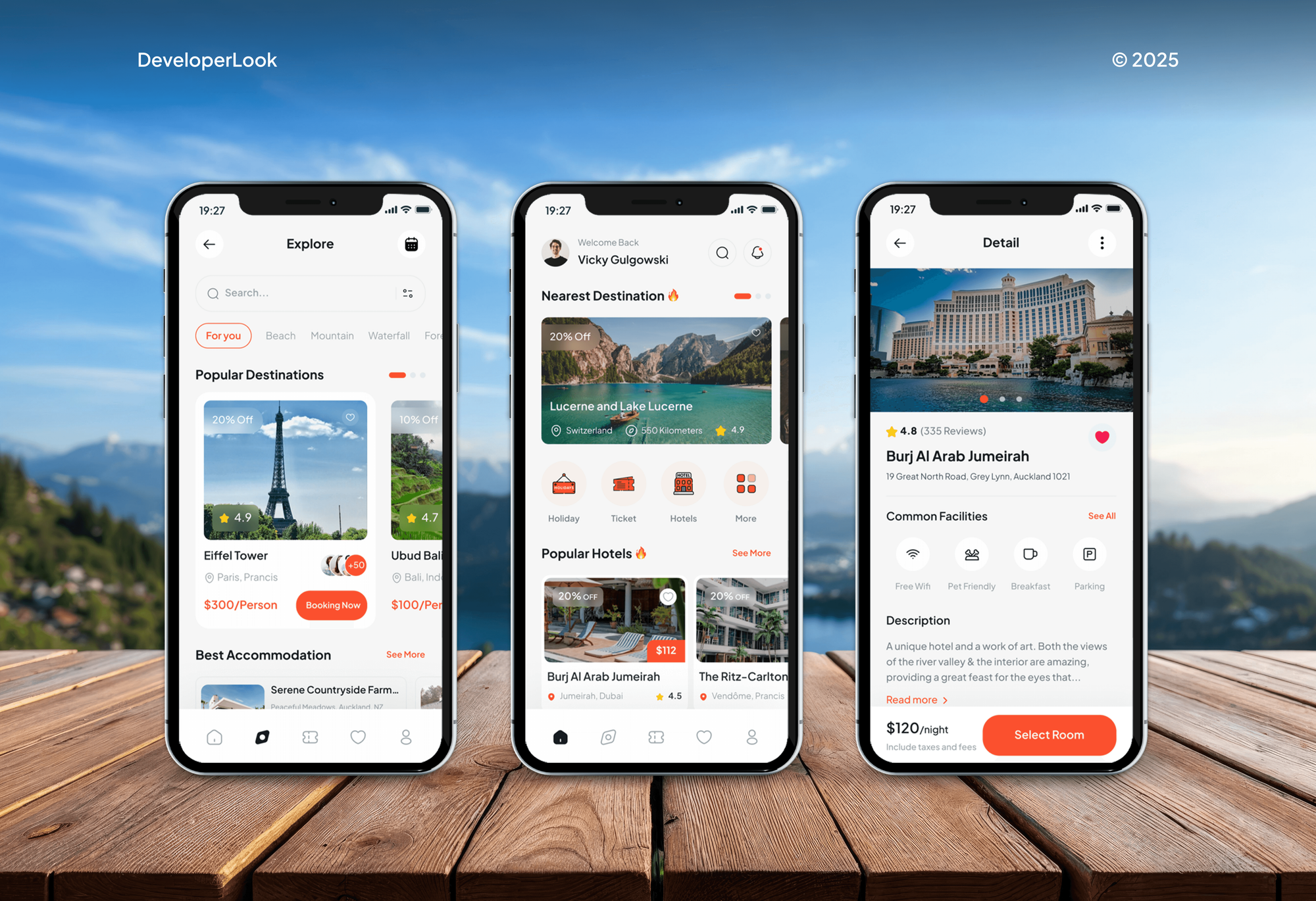
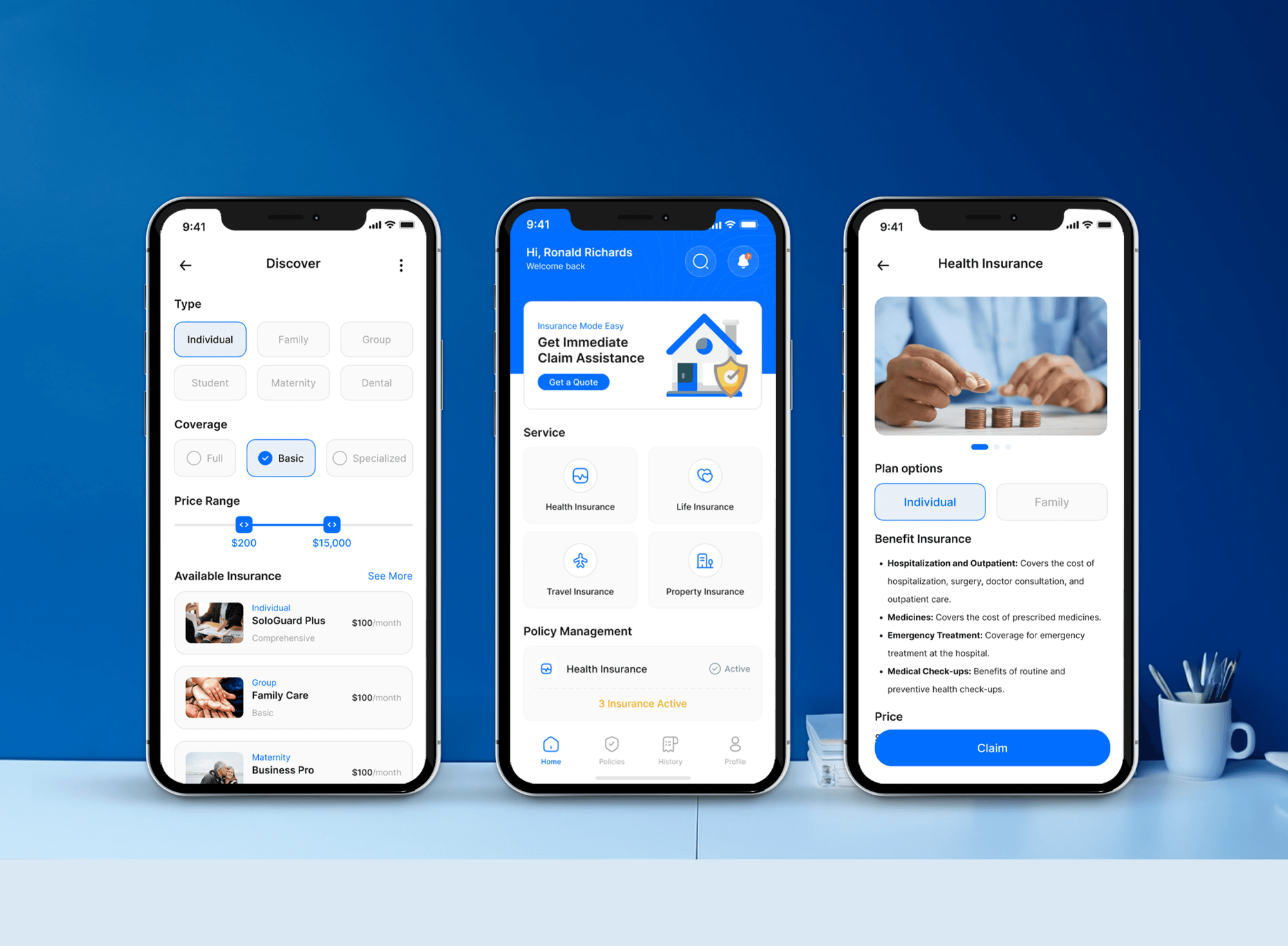
Travel, ecommerce, and insurance products our team designed and built, where a mobile app and an admin dashboard read from the same API a test suite protects.


What Our Clients Say
Feedback from teams we have designed and built web and mobile products for.
We had a pretty specific idea of what we wanted our website to become, but I wasn’t sure how easily we could explain all of it to a development team. There were quite a few moving parts, and we were working toward a deadline, so I expected a few things to get lost along the way. That never really happened. They understood what we were trying to achieve, kept us updated throughout the process, and got everything ready within the agreed timeline. The final site feels much easier to navigate, works beautifully on mobile, and is noticeably smoother for our customers. It was a huge relief seeing the original idea actually turn into the website we had in mind.
The mobile experience is probably my favourite part of the new site. We had spent a lot of time making sure the desktop version looked right, and the team kept pushing us to think about how everything would actually feel on a phone too. They were right. The navigation is clean, the interactions feel natural, and everything we’ve tested so far works exactly as it should. They also went through the links, forms, integrations, and other details more than once before launch, which I really appreciated. And even after going live, we could still reach out when something came up. The whole process felt friendly, organised, and surprisingly straightforward.
What I appreciate most is that the website is actually easy for us to manage now. We can update content ourselves instead of sending a developer a message every time we need to change something small. They also paid attention to the technical SEO side, which mattered to us because we didn’t want a new website to create problems for the traffic we already had. I’ve probably asked more questions than I should have since launch, but every question has been handled patiently and without any fuss. The team is easy to work with, they explain things clearly, and when we need something changed, they focus on getting it done rather than making the process complicated.
1,250+
Projects shipped
10+
Years of experience
Top 3%
Upwork Top Rated Plus
5 stars
Average review score

Want results like these?
Tell us what you are building. You get a reply within 24 hours on business days, then a written estimate.
Work Culture
An API test suite only helps if it's fast, readable, and honest about what it covers. These habits keep it that way after handover.
We agree on what each endpoint should return before writing a test. Tests built on guesses only confirm whatever the code already does.
Each run creates and cleans up its own users and records. Tests don't fight over shared data, so failures point to real bugs.
Third-party APIs such as payment or SMS providers get mocked in CI. You don't pay per test run or hit their rate limits.
Functional API tests check that auth works as designed. Finding ways to break it is a penetration test, and we'll say when you need one.
Most API suites finish in minutes, so developers run them on every pull request instead of saving them for release day.
Postman collections, test code, and the spec live in your repository. Your team can extend them without us or a paid platform.
Overview
DeveloperLook provides API testing services for REST and GraphQL APIs. We test every endpoint in scope for valid and invalid input, auth, and response contracts. The suite mocks third-party services and runs in your CI on every pull request. API test packs start at $750 and take 1 to 2 weeks.
DEVELOPERLOOK
Project facts · API Testing Services
Reviewed 8 Oct 2026 by Saimul Islam
Good fit
SaaS teams with public APIs
Your customers build on your API, and you need API testing services that catch breaking changes before their integrations fail.
Teams with mobile and web clients
Your mobile app and web app share one backend, and you want automated API testing so a backend change can't break either silently.
Teams replacing manual Postman checks
Your developers click through Postman before each release, and you want API test automation that runs those checks on every merge.
Teams moving to microservices
You're splitting a monolith into services and need API contract testing, so each team can deploy without breaking another.
Agencies building client APIs
Your agency builds backends for clients and wants API automation testing delivered under your brand with every handover.
Not a fit
Need API security testing
You need to find ways to break auth, injection flaws, or data leaks. That's API penetration testing, a security service separate from functional tests.
Browser flows matter most
Your bugs show up in browser flows, not the API. Our Test Automation Services page covers browser tests that run on every pull request.
Need the API built
You need an API built or connected to other systems, not tested. Our API Integration & Development page covers that build work.
Budget under $750
Your budget is under $750. Save your 10 most-used requests in a Postman collection and add a status check to each one.
Not sure we're the right fit?
Book a free call or message us. We'll tell you honestly whether we're the right team.
Pricing
These are starting points in USD. Your final price depends on the number of endpoints, the auth setup, and the integrations to mock, and you get a fixed proposal after a free API review.
For APIs that need their core endpoints tested and checked in CI before the next release.
$750one-time, USD
For APIs with mobile, web, and partner clients that all break when a contract changes.
$1,900one-time, USD
For microservices and public APIs where several teams deploy on their own schedules.
$3,900one-time, USD
For Agencies
You own the client relationship. We test the APIs behind your client projects under your brand, so backends ship with a suite that proves they work. Collections and test code go straight into the client's repository.
White label: your client only ever sees your brand
Send the spec or docs, staging access, and the clients that depend on it.
We write and automate the tests, then wire them into the client's CI.
Deliver the backend with a passing test suite under your agency's name.
Test suites and reports carry your agency's branding.
Each backend ships with tests your client's team can run.
Add API testers for one project without a permanent hire.
An up-to-date API spec comes with every test suite.
The Right Technology for Your Project
We use the API tools your developers already know, so the suite is easy to read, run locally, and extend.
 OpenAPI
 GraphQL
 Node.js
 Laravel
 Python
 Docker
FAQ
Straight answers on API testing, automation, manual checks, cloud environments, and costs.
Saimul IslamFounder & CEO, DeveloperLookStill have questions?
Send a message or book a call with the team.
An API Test Pack from DeveloperLook starts at $750 and covers up to 20 endpoints. An Automated API Suite for up to 60 endpoints, with contract and webhook tests, starts at $1,900. An API Quality Program with Pact and performance tests starts at $3,900, and you get a fixed price after a free API review.
An API test pack for up to 20 endpoints takes 1 to 2 weeks, and a full automated suite takes 3 to 5 weeks. A missing or outdated spec adds a few days, because we document the endpoints before testing them. Retests after your fixes happen within the same window.
API testing is sending requests straight to an API and checking the responses, without going through a user interface. Each test checks the status code, the response body, the headers, and how fast it answered. It catches bugs in business logic and data that a UI test would only show as a vague error.
In software testing, API testing sits between unit tests and UI tests: it checks how services talk to each other. Testing API endpoints this way is faster and more stable than browser testing, because there's no page to load. Most teams run many more API tests than UI tests for that reason.
Start from the API spec, list the cases for each endpoint, then send requests and assert on the responses. Cover valid input, invalid input, missing auth, the wrong role, and edge cases like empty lists and pagination. Tools like Postman or Playwright's request API make each check repeatable.
API automation testing is running API checks as code that executes on its own, usually in CI on every pull request. Instead of a developer clicking Send in Postman, a test runner calls each endpoint and compares the result with what's expected. A full suite often finishes in minutes.
API testing can be both, and good teams use each where it fits. Manual checks in Postman or Insomnia help when exploring a new endpoint. Once the behavior is agreed, those checks should become automated API testing that runs on every change, so nobody has to remember to rerun them.
Turn each manual check into code with a test runner, then run it in CI. We usually run Postman collections with Newman, or write tests with Playwright, Jest, or Pytest, add seeded test data, and mock third-party services. API test automation works best when every test is checked against your OpenAPI spec.
In cloud environments, API testing checks that services keep their contracts as they deploy and scale on their own. Microservices, serverless functions, and managed gateways each add a network hop that can fail. Tests in each environment catch config differences, like a missing secret or a gateway rule, before users do.
Your developers do, and the suite is built for that. Tests live in your repository next to the code, with a spec and a short guide for adding cases. We stay on for 14 to 30 days to retest fixes and help with the first new tests your team writes.
Saimul IslamFounder & CEO, DeveloperLookStill have questions?
Send a message or book a call with the team.
Free 30-min callGoogle Meet
Book a call
In 30 minutes on Google Meet we walk you through how we would build it, how long it takes and what it costs. Then you get a written estimate.
Calendar not showing? Book on cal.com or send a brief.