
Phone-ready 3D models
Your CAD files or photos turned into glTF and USDZ models sized for phones and headsets.

For product, retail, and training teams: AR on iPhone and Android and VR on Meta Quest, tested on real devices. From $1,400.
1build
For iPhone and Android
100%
Tested on real devices
How your project runs
Teams we have built for:














The Problem
AR and VR projects stall between the demo and the store. Models are too heavy for phones, tracking drifts on real floors, and a headset build that runs on a gaming PC stutters on standalone hardware.
01 · Heavy models
Product models take ages to load on mid-range phones.
We rebuild models within polygon and texture budgets before any app code.
02 · Tracking
The virtual sofa floats above the real floor.
We test plane detection on real floors, rugs, and low light before review.
03 · Headset lag
The VR pilot stutters on standalone headsets.
Scenes get profiled on the actual Meta Quest, not a desktop PC.
04 · Stuck in demo
Months later, the prototype still runs on one phone.
Each plan ends with a live web AR page or a store-ready build.
Your team saw a slick AR demo at a trade show and wants the same for your products. The agency prototype ran on one developer's new iPhone. On a mid-range Android phone, the sofa model floats a hand's width above the floor and takes ages to load. Your VR training pilot looks sharp on a gaming PC, then stutters on the standalone headsets you bought for staff. Months in, you still can't put it in front of real customers.
We start by choosing the lightest format that does the job: a web AR viewer, a mobile AR app, or a VR build. We prepare 3D models in Blender with polygon and texture budgets, then build with Unity's AR Foundation for iPhone and Android, or OpenXR for Meta Quest. Every scene gets profiled on the real target device before you review it. Your pilot reaches users, not just a conference stand.
One build, two platforms
Unity's AR Foundation runs the same AR app on iPhone with ARKit and Android with ARCore.
3D models made phone-ready
Polygon and texture budgets set per device, so models load fast and still look sharp.
VR built for Meta Quest
OpenXR builds for standalone headsets, profiled on the device instead of a desktop PC.
Our AR VR App Development Process
You approve the format and the 3D asset plan first, then test builds on your own phones or headsets every week before anything goes to a store.
We talk through who will use the experience, on which devices, and what success looks like. You get a recommended format (web AR, mobile AR, or VR), a fixed price, and a timeline.
What's Included
Every project covers the format choice, phone-ready 3D models, the build, on-device testing, and launch. That launch might be a web page, an app store, or a headset store.
Compare Options
A no-code AR builder is quick for simple product views, and a game studio shines at entertainment titles. Here's how an AR VR app development company compares for business projects.
| Feature | DeveloperLookBest fit | Game studio | No-code AR builder |
|---|---|---|---|
| Best suited for | Business AR and VR tools | Games and entertainment | Simple product views |
| Custom interactions | Built around your use case | Deep, game-style mechanics | Limited to templates |
| 3D model prep | Prepared for each device | Strong in-house art teams | You supply ready models |
| Device testing | Real phones and headsets | Usually thorough | Varies by platform |
| Business connections | CMS or API connected | Rarely in scope | Basic analytics only |
| Time to launch | 2 to 12 weeks | Often several months | Days for simple views |
| Code ownership | Unity project and assets are yours | Varies by contract | Hosted on their platform |
| Starting cost | Fixed price from $1,400 | Higher studio rates | Monthly subscription |
Projects We've Built
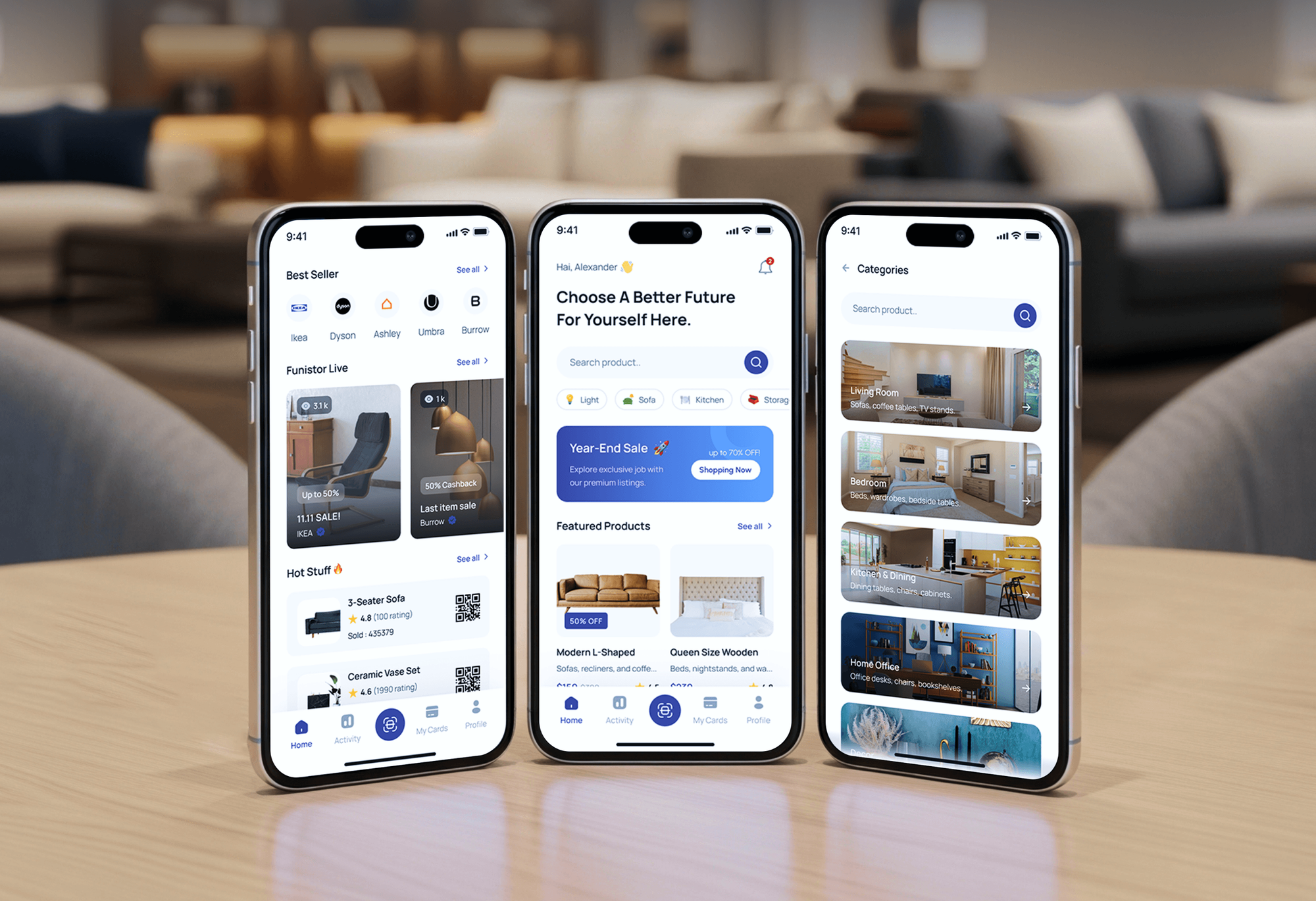
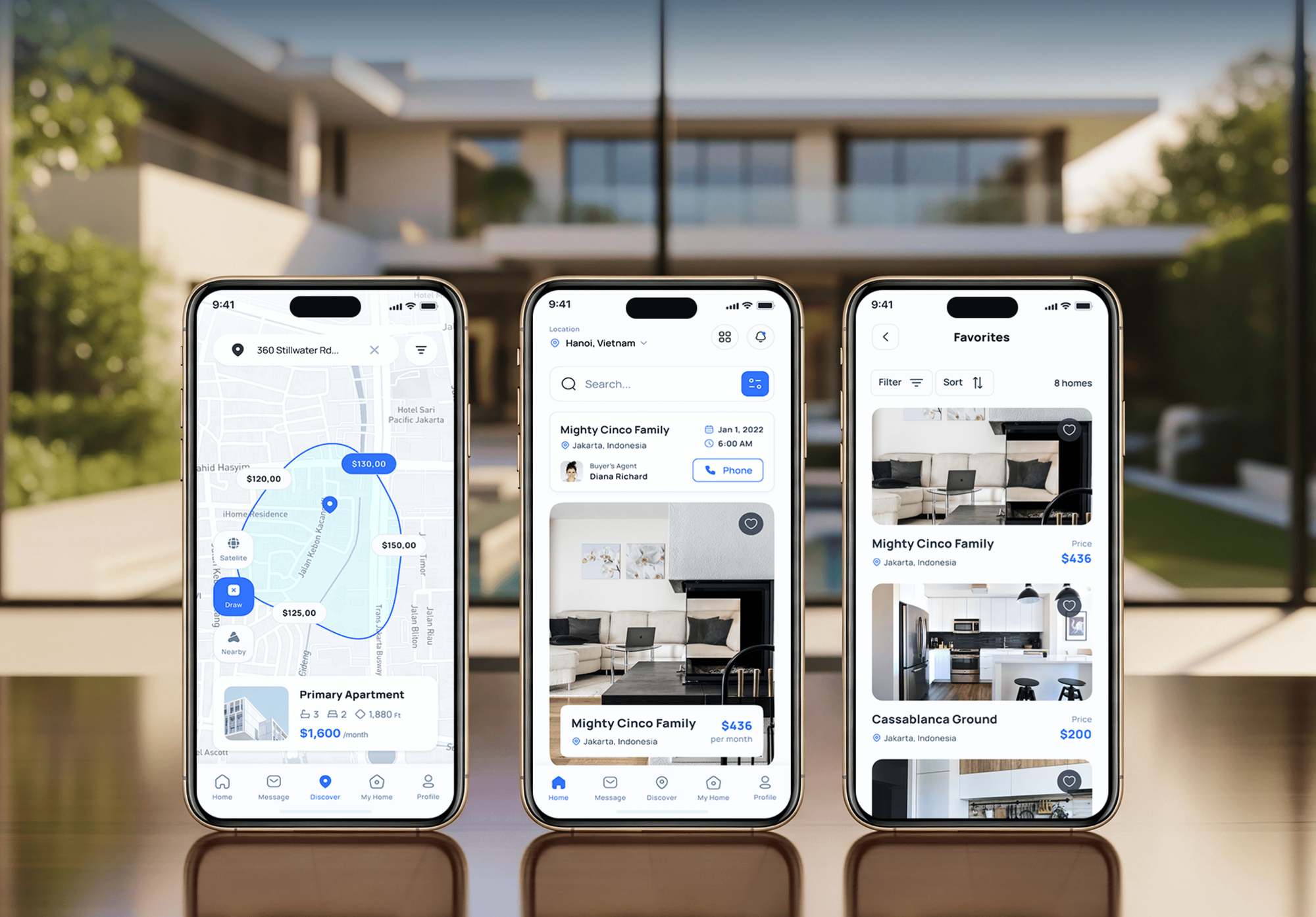
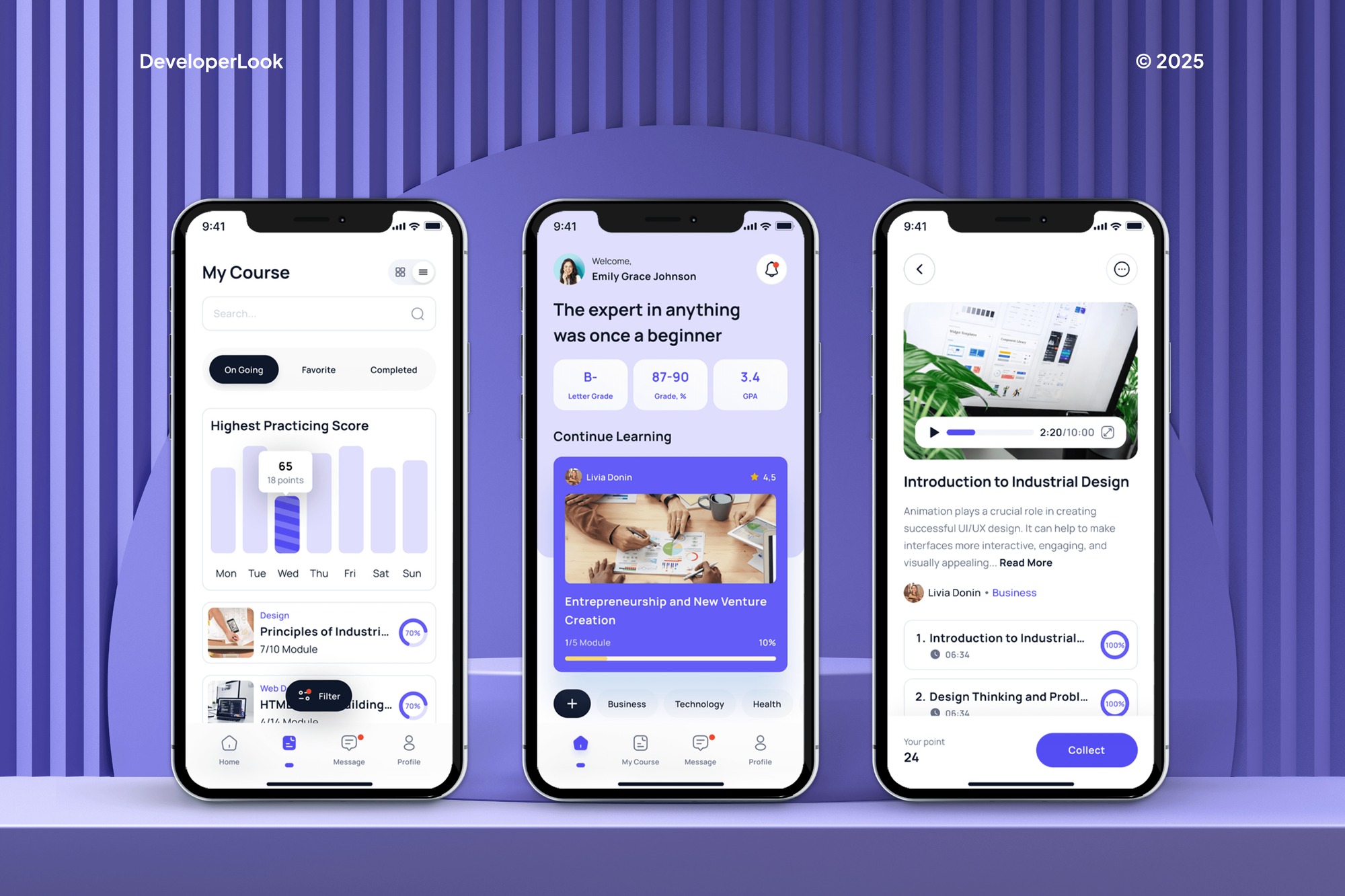
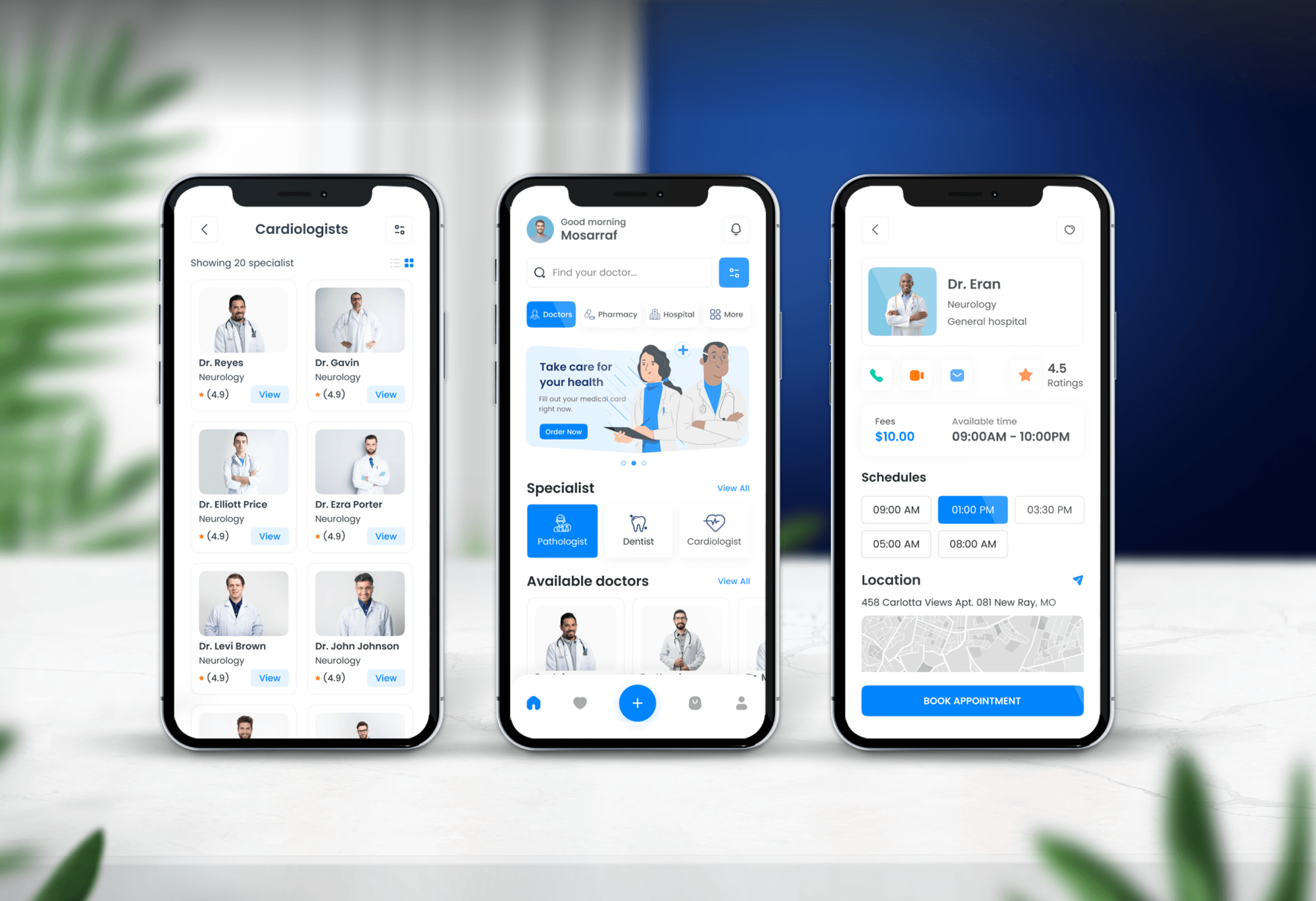
These are mobile apps and product builds, not AR or VR projects. They show the app engineering, UX, and backend work an AR or VR product depends on.
What Our Clients Say
Feedback from teams we have designed and built apps and websites for.
We had a pretty specific idea of what we wanted our website to become, but I wasn’t sure how easily we could explain all of it to a development team. There were quite a few moving parts, and we were working toward a deadline, so I expected a few things to get lost along the way. That never really happened. They understood what we were trying to achieve, kept us updated throughout the process, and got everything ready within the agreed timeline. The final site feels much easier to navigate, works beautifully on mobile, and is noticeably smoother for our customers. It was a huge relief seeing the original idea actually turn into the website we had in mind.
The mobile experience is probably my favourite part of the new site. We had spent a lot of time making sure the desktop version looked right, and the team kept pushing us to think about how everything would actually feel on a phone too. They were right. The navigation is clean, the interactions feel natural, and everything we’ve tested so far works exactly as it should. They also went through the links, forms, integrations, and other details more than once before launch, which I really appreciated. And even after going live, we could still reach out when something came up. The whole process felt friendly, organised, and surprisingly straightforward.
What I appreciate most is that the website is actually easy for us to manage now. We can update content ourselves instead of sending a developer a message every time we need to change something small. They also paid attention to the technical SEO side, which mattered to us because we didn’t want a new website to create problems for the traffic we already had. I’ve probably asked more questions than I should have since launch, but every question has been handled patiently and without any fuss. The team is easy to work with, they explain things clearly, and when we need something changed, they focus on getting it done rather than making the process complicated.
1,250+
Projects shipped
10+
Years of experience
Top 3%
Upwork Top Rated Plus
5 stars
Average review score

Want results like these?
Tell us what you are building. You get a reply within 24 hours on business days, then a written estimate.
Work Culture
AR VR app development rewards teams that test early and keep scope honest. These habits move your project from a demo to real users.
We test builds on the phones and headsets your users own, not just new flagship models. Problems with tracking, heat, or load time show up early, while they're cheap to fix.
If a web AR viewer does the job, we won't sell you an app. Fewer installs mean more customers actually try the experience.
In VR we avoid camera moves that make people queasy and keep text readable at arm's length. Staff finish training sessions instead of taking the headset off early.
If a 3D product page or a short video explains your product better than AR, we'll tell you before we quote. AR earns its cost when scale or placement really matters.
You get a new build on your device every week through TestFlight, an Android test track, or a Quest release channel. Your feedback shapes the next build, not the final invoice.
The Unity project, 3D assets, and store listings stay in your accounts. Any Unity developer can pick up the work later without a license from us.
Overview
DeveloperLook provides AR VR app development services for product, retail, and training teams. We prepare phone-ready 3D models and build web AR viewers, Unity AR apps for iPhone and Android, and Meta Quest VR experiences. Every scene gets tested on real devices. Projects start at $1,400, take 2 to 12 weeks, and you own the project files.
DEVELOPERLOOK
Project facts · AR VR App Development Services
Reviewed 7 Oct 2026 by Saimul Islam
Good fit
Furniture and home goods brands
You want shoppers to place a sofa or a lamp in their own room at true size before they buy, right from your product page.
Retailers comparing AR partners
You're comparing an augmented reality development company or two and want one that starts with a small web AR pilot before an app.
Training and safety teams
You need a virtual reality development company to turn a risky or costly hands-on procedure into a repeatable VR training scene on Meta Quest.
Real estate and property marketers
Your buyers want to walk through a model unit in VR, and your architect's 3D files already exist.
Agencies with immersive briefs
Your agency won an AR or VR brief and needs an ar vr development company to build it under your brand while you own the client.
Not a fit
Need options and pricing
You want buyers to configure colors, parts, and prices in 3D before ordering. Our 3D Product Configurator Development page covers that build, with AR viewing included.
A standard mobile app
Your app doesn't need AR or VR at all, just solid screens and a backend. Our mobile app development page is the better place to start.
Console or PC game
You're making an entertainment game for consoles or PC. A specialist game studio fits better than our business-focused AR and VR team.
Budget under $1,400
Your budget is under $1,400. A 3D model in a free web viewer on your product page, or a short 360 video, will serve you better for now.
Not sure we're the right fit?
Book a free call or message us. We'll tell you honestly whether we're the right team.
Pricing
These are starting points in USD. Your final price depends on model count, target devices, and interactions, and you get a fixed proposal after a free use case call.
For product pages that need view-in-your-room AR on iPhone and Android, with no app install.
$1,400one-time, USD
For brands and training teams that need an installable AR app on iPhone and Android.
$4,300one-time, USD
For teams that need the mobile AR app plus a Meta Quest VR mode from one project.
$8,800one-time, USD
For Agencies
You own the client relationship. We supply the Unity developers who build your immersive briefs under your brand. Quotes are fixed per format, test builds reach your devices first, and store listings sit in your client's accounts.
White label: your client only ever sees your brand
Send the idea, the target devices, any 3D files, and the launch date.
We recommend web AR, mobile AR, or VR and send a fixed quote.
Weekly test builds for your review, then launch in your client's accounts.
Test builds, demo videos, and store listings prepared under your agency's name.
Client CAD files and renders turned into phone-ready 3D models.
Fixed quotes per format, so you can price immersive pitches with confidence.
Builds checked on real phones and headsets before they reach your client.
The Right Technology for Your Project
We prepare models in Blender, build in Unity with AR Foundation and OpenXR, use native AR viewers on the web, and test on real phones and headsets.
 Three.js
 Babylon.js
 Blender
FAQ
Straight answers on AR versus VR, cost, timelines, devices, 3D models, and owning the project.
Saimul IslamFounder & CEO, DeveloperLookStill have questions?
Send a message or book a call with the team.
AR VR development is building apps that add 3D content to a camera view (augmented reality) or place users inside a virtual space (virtual reality). AR runs on phones, tablets, and the web, while VR needs a headset such as Meta Quest. Both depend on lightweight 3D models, reliable tracking, and careful performance work.
AR adds digital objects to the real world, while VR replaces the surroundings with a virtual space. That makes AR a fit for product previews, guided setup, and marketing on phones people already own. VR suits training, walkthroughs, and simulations where full focus matters. Many projects start with AR because there's no headset to buy.
Our AR VR app development services start at $1,400 for a web AR viewer with up to 5 product models. A Unity AR app for iPhone and Android starts at $4,300, and an AR app with a Meta Quest VR mode starts at $8,800. You get a fixed price after a free use case call.
A web AR viewer takes 2 to 3 weeks, and a mobile AR app takes 6 to 8 weeks. Adding a Meta Quest VR mode brings most projects to 10 to 12 weeks. The 3D models drive the schedule, so having CAD files or existing models ready saves the most time.
No, web AR opens from the phone's browser: iPhone shows models in AR Quick Look, and Android uses Scene Viewer. An app makes sense when you need saved scenes, several objects at once, or features the built-in viewers don't offer. We recommend the lighter option whenever it covers your use case.
We build AR for iPhone and iPad with ARKit, Android phones with ARCore, and mobile browsers. For VR, we target Meta Quest headsets through OpenXR. Apple Vision Pro apps are scoped separately, since visionOS uses its own frameworks and needs its own design review. Every build gets tested on the target device before launch.
Yes, we turn CAD files, existing renders, or product photos into lightweight glTF and USDZ models in Blender. Each model gets polygon and texture limits for phones and headsets, so it loads quickly and still looks accurate. Very detailed or reflective products may need extra modeling time, which we price upfront.
Unity's AR Foundation lets one project run on iPhone with ARKit and on Android with ARCore, so most business apps don't need two separate codebases. We switch to native Swift with RealityKit, or Kotlin with ARCore, when an app needs deep platform features or a very small download.
Ask VR development companies to show a build running on the headset you plan to use, not a video. Then check who prepares the 3D models, how they test comfort and frame rate, and who owns the project files. We answer all of these during the free use case call.
Yes, the Unity project, the 3D models, and the store listings are yours, with no license fee. Each plan includes 30 to 60 days of bug fixes after launch. After that, we can handle OS and headset updates on request, or any Unity developer can continue the work.
Saimul IslamFounder & CEO, DeveloperLookStill have questions?
Send a message or book a call with the team.
Free 30-min callGoogle Meet
Book a call
In 30 minutes on Google Meet we walk you through how we would build it, how long it takes and what it costs. Then you get a written estimate.
Calendar not showing? Book on cal.com or send a brief.