
Exposure check
DNS history, subdomains, and mail headers checked for anything that reveals your origin's real address.

For stores, SaaS products, and booking sites that lose money every minute offline: an edge network in front, the origin hidden, and attack mode one switch away. From $800.
L3to L7
Floods filtered before your server
1switch
To raise defenses during an attack
How your project runs
Teams we have built for:














The Problem
It shows up during a launch, a sale, or an online dispute. Pages time out, your host suspends the account, and nobody knows who to call.
01 · Exposed origin
Old DNS records still reveal the server's real IP address.
Leaked records are removed, and the origin accepts edge traffic only.
02 · Costly endpoints
Search and login pages fall over under a request flood.
Rate limits and caching stop expensive pages from overwhelming the server.
03 · Host null-route
Your host blocks the whole IP until the attack stops.
The edge network takes the flood, so your host doesn't have to step in.
04 · No plan
Nobody knows which setting to change when traffic spikes.
A one-page runbook names the switch, the contacts, and the customer message.
Your site slows to a crawl on a Monday morning, then stops answering at all. The server's CPU is pinned while thousands of requests hit your search and login pages. Your host's answer is to null-route the IP address until the traffic stops. You put a CDN in front of the site last year, but the origin's address still shows up in old DNS records, so attackers simply go around it. Nobody on the team knows which setting would help.
Our DDoS protection services start by finding everything that exposes your origin. Then we put the site and APIs behind an edge network that absorbs floods before they reach you, and your server accepts traffic only from that edge. Logins, search, and checkout get rate limits, and a stricter attack mode waits, switched off, until you need it. When an attack starts, you flip one setting instead of opening a ticket.
Edge absorbs the flood
Network and request floods are filtered by the edge network before they reach your server.
Origin address kept private
Your server accepts only edge traffic, and old records that leaked its address are cleaned up.
Attack mode on one switch
A stricter rule set waits ready, so your team raises defenses without writing rules mid-attack.
Our DDoS Protection Services Process
You approve every DNS change and rate limit before it goes live, and you get the attack runbook before we hand over access.
We check where your DNS points, whether your origin IP is public, what your host and CDN already provide, and which endpoints cost the most to serve. You get a short exposure report and a fixed price. If your current CDN plan already covers you, we'll tell you before we quote.
What's Included
Edge setup, origin lockdown, caching and rate limits, an attack mode you can switch on, traffic alerts, and a runbook, on Cloudflare, AWS, Azure, or Google Cloud.
Compare Options
A CDN's default settings already absorb many network floods, and your host may filter some traffic for free. Here is how DDoS protection services compare when an attack targets your app.
| Feature | DeveloperLookBest fit | CDN defaults | Hosting provider |
|---|---|---|---|
| Network floods | Absorbed at the edge | Absorbed at the edge | Often null-routed |
| App-layer floods | Rate limits per endpoint | Generic protection only | Rarely filtered |
| Origin exposure | Leaks found and closed | Origin often still public | The origin is the target |
| Caching | Rules for heavy pages | Static files only | Depends on the host |
| Attack mode | Pre-built, one switch | Manual toggle, no custom rules | |
| Runbook | Contacts, steps, and messages | Support ticket queue | |
| Time to start | About 1 week | Minutes to sign up | Already in place |
| Cost | From $800 one-time | Free tier available | Included in hosting |
Projects We've Built
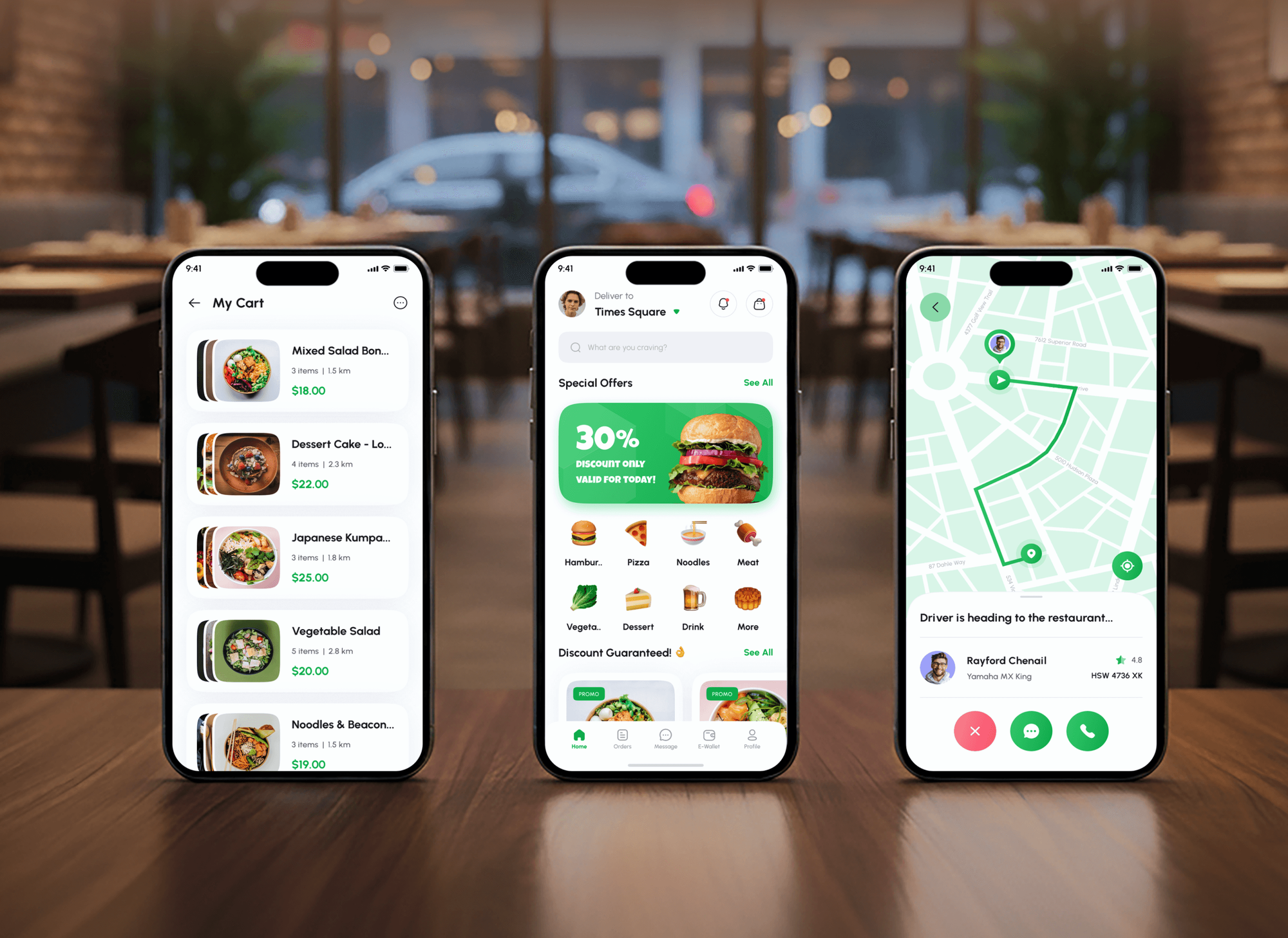
Booking platforms, a fashion store, and a delivery app we designed and built. Products like these lose sales by the minute when a traffic flood takes them offline.



What Our Clients Say
Feedback from teams we have built apps, platforms, and websites for.
We had a pretty specific idea of what we wanted our website to become, but I wasn’t sure how easily we could explain all of it to a development team. There were quite a few moving parts, and we were working toward a deadline, so I expected a few things to get lost along the way. That never really happened. They understood what we were trying to achieve, kept us updated throughout the process, and got everything ready within the agreed timeline. The final site feels much easier to navigate, works beautifully on mobile, and is noticeably smoother for our customers. It was a huge relief seeing the original idea actually turn into the website we had in mind.
The mobile experience is probably my favourite part of the new site. We had spent a lot of time making sure the desktop version looked right, and the team kept pushing us to think about how everything would actually feel on a phone too. They were right. The navigation is clean, the interactions feel natural, and everything we’ve tested so far works exactly as it should. They also went through the links, forms, integrations, and other details more than once before launch, which I really appreciated. And even after going live, we could still reach out when something came up. The whole process felt friendly, organised, and surprisingly straightforward.
What I appreciate most is that the website is actually easy for us to manage now. We can update content ourselves instead of sending a developer a message every time we need to change something small. They also paid attention to the technical SEO side, which mattered to us because we didn’t want a new website to create problems for the traffic we already had. I’ve probably asked more questions than I should have since launch, but every question has been handled patiently and without any fuss. The team is easy to work with, they explain things clearly, and when we need something changed, they focus on getting it done rather than making the process complicated.
1,250+
Projects shipped
10+
Years of experience
Top 3%
Upwork Top Rated Plus
5 stars
Average review score

Want results like these?
Tell us what you are building. You get a reply within 24 hours on business days, then a written estimate.
Work Culture
Flood defenses only help if they're ready before the attack. These habits keep every limit tested, every contact current, and every switch easy to find.
We look for every way your origin's address can leak before we move a single DNS record. Hiding a server only works if nothing still points at it.
Each rate limit starts in log or count mode where the provider allows it. We tighten it only after seeing what normal visitors actually do.
We test only your own properties, at low volume, with written authorization and inside each provider's testing policy. Nobody floods anything to prove a point.
The runbook lists who to call at your host and edge provider, with account details. During an attack, nobody has to search old emails for a support link.
No setup can promise to stop every attack. We tell you what each layer covers, what it doesn't, and where a paid provider tier would add protection.
The edge provider, DNS, and cloud accounts are yours, and our access is removed at handover. You don't need us to keep the protection running.
Overview
DeveloperLook sets up DDoS protection services for websites and APIs. We put your site behind an edge network, hide and lock the origin, rate-limit expensive endpoints, and prepare an attack mode with a runbook. Setup starts at $800 and takes about 1 week for one site, with provider fees paid to the provider.
DEVELOPERLOOK
Project facts · DDoS Protection Services
Reviewed 23 Oct 2026 by Saimul Islam
Good fit
Online stores before a big sale
Your biggest sale of the year is weeks away, and the last traffic spike took checkout down for an afternoon.
SaaS products with public APIs
Your API gets hammered by a misbehaving client script or a deliberate flood, and you need per-endpoint limits that keep paying customers online.
Sites already hit once
A flood took your site down last month, your host null-routed it, and you want DDoS attack protection in place before it happens again.
Teams weighing cloud tiers
You run on AWS or Azure and want to know whether standard cloud DDoS protection is enough or a paid tier is worth it.
Agencies hosting client sites
Your agency hosts client sites on several providers, and you want one DDoS protection service setup your team can repeat on each of them.
Not a fit
Need app exploits blocked
Your concern is SQL injection and script attacks on forms, not floods. Our web application firewall setup filters those requests at the edge.
Office network, not websites
You need firewalls, segmentation, and VPNs hardened at your office or data center, not web traffic. Our network security services cover that from $1,050.
Round-the-clock response
You need people watching and mitigating attacks around the clock. A provider's managed DDoS services with a response team fit that better than a one-time setup.
Small site already on a CDN
Your brochure site already sits behind a CDN's free plan with the origin hidden. You may already have the basic protection you need.
Not sure we're the right fit?
Book a free call or message us. We'll tell you honestly whether we're the right team.
Pricing
These are starting points in USD. Your price depends on the number of sites and APIs and your cloud setup, and you get a fixed proposal after a free exposure check. Provider fees are paid to the provider.
For one website that needs an edge network in front and its origin hidden.
$800one-time, USD
For products with several domains or APIs that need limits per endpoint.
$1,950one-time, USD
For cloud or data center setups that need paid tiers and an upstream plan.
$4,100one-time, USD
For Agencies
You own the client relationship. We supply the flood protection work behind it: edge setup, origin lockdown, rate limits, and attack runbooks written for your support team. Your clients get protection in place without you hiring a network engineer.
White label: your client only ever sees your brand
Send each client's domains, hosting, and any past outages or attacks.
We run an exposure check and give you a fixed price per client.
We set up the edge, lock each origin, and hand runbooks to your team.
You talk to clients while we set up protection under your brand.
Cloudflare, AWS, Azure, or Google Cloud, matched to each client's hosting.
Attack runbooks branded and worded for your own support desk.
One origin lockdown and rate limit standard across your client sites.
The Right Technology for Your Project
We use the edge network your hosting fits best, and keep DNS, firewall, and rate limit settings documented so your team can change them safely.
 Cloudflare
 AWS CloudFront and Shield
 Azure DDoS Protection
 Google Cloud Armor
 Slack
FAQ
Straight answers on DDoS protection pricing, setup time, protecting websites and data centers, testing, and cloud tiers.
Saimul IslamFounder & CEO, DeveloperLookStill have questions?
Send a message or book a call with the team.
DDoS protection services at DeveloperLook start at $800 for one website: edge setup, origin lockdown, rate limits, and an attack runbook. The $1,950 plan covers up to 3 sites or APIs with per-endpoint limits and alerts. The $4,100 plan adds paid cloud tiers, an upstream scrubbing plan, and a runbook walkthrough. Provider fees, such as a CDN plan, go to the provider.
Setting up flood protection for one website takes about 1 week. DNS and edge setup take 2 to 3 days, origin lockdown 1 to 2 days, and rate limits a few more. APIs, several domains, or paid cloud tiers take 2 to 5 weeks, mostly because limits need real traffic data before they're tightened.
DDoS protection is the set of defenses that keeps a site reachable when someone floods it with traffic from many machines at once. Network floods are absorbed by a provider with more capacity than the attacker. Application floods are filtered with rate limits, challenges, and caching. Good DDoS protection solutions also hide the origin, so attackers can't go around them.
You protect against DDoS attacks in layers: absorb, hide, limit, and prepare. Put the site behind an edge network that absorbs floods, and lock the origin so it only accepts that edge. Add rate limits and caching to expensive pages and APIs. Then write down who flips which switch, because an attack is the wrong time to read documentation.
To protect a website, start with an edge proxy in front of every hostname, not just www. Remove old DNS records that reveal the server's address, and block direct access at the server's firewall. Cache pages that don't change per visitor. Then limit login and search requests per client, since those pages cost the most to serve.
Companies protect against floods by treating them as an operations problem, not a single setting. That means an edge provider under contract, hidden origin servers, rate limits on revenue pages, and alerts that reach a person. It also means a runbook with provider contacts and a ready customer message. DDoS mitigation services cover the technical side, while your team owns the decisions.
Protecting a data center usually means stopping floods upstream, before they fill your internet links. On-site appliances can't help once the pipe is full. The common options are your ISP's mitigation service or a scrubbing provider that takes over your IP ranges through BGP during an attack. We plan the routing, contacts, and test steps, and you contract the provider.
You test it with permission, at low volume, and inside each provider's rules. AWS allows DDoS simulation tests only through approved partners, and Cloudflare permits simulations against your own non-shared properties. We review the configuration, confirm the origin rejects direct traffic, and send small, authorized bursts to check that rate limits trigger. We don't launch real floods.
Most sites don't need a paid tier, as long as the free layer has rate limits, caching, and a hidden origin. AWS Shield Standard is automatic at no extra charge. Shield Advanced is listed at $3,000 per month with a 1-year commitment, plus data transfer fees, and adds response team access on Business or Enterprise support. Azure sells DDoS Network Protection and IP Protection tiers.
Your runbook takes over, and the edge network mitigates many floods automatically. The runbook names the switch that turns on attack mode, the provider contacts, and the message for customers. For hands-on help after the 30-day window, a DDoS mitigation service request goes through a short support block or your provider's own response team.
Saimul IslamFounder & CEO, DeveloperLookStill have questions?
Send a message or book a call with the team.
Free 30-min callGoogle Meet
Book a call
In 30 minutes on Google Meet we walk you through how we would build it, how long it takes and what it costs. Then you get a written estimate.
Calendar not showing? Book on cal.com or send a brief.