Master stock count
One number per SKU that your channels read, stored where your business already trusts it.

Inventory sync for Shopify, Amazon, eBay, Walmart, and your 3PL: one stock count, channel buffers, and nightly checks. From $1,100.
100%
Channels updated after sales
1
Stock count for every channel
How your project runs
Teams we have built for:














The Problem
Shopify, a marketplace, and a warehouse each keep their own number, and the gaps widen every time someone sells, returns, or recounts.
01 · Mismatched counts
Shopify, Amazon, and Walmart each show a different count.
Every channel reads from a master count per SKU.
02 · Oversells
Two customers buy the last unit minutes apart.
Each channel gets a buffer, so a slow update doesn't oversell.
03 · Manual copying
Your team copies counts between admins every morning.
Sales, returns, and deliveries update the master count first.
04 · Lost returns
Returns go back on one channel but not the others.
A nightly check compares every channel with the master and fixes drift.
It's Saturday, and your best seller shows 4 units in Shopify, 6 on Amazon, and 2 on Walmart. The real number is 1, sitting on a shelf at your 3PL. Two customers buy it ten minutes apart, and one order gets canceled on Monday. Your team starts each morning copying counts between admins. Returns go back on one channel and don't reach the others. Every oversell costs you a refund, and marketplaces track your cancellation rate.
We start with one master stock count per SKU, usually in Shopify or your warehouse system. Every sale, return, and delivery updates that count first. Then the sync sends it to each channel, minus that channel's buffer. A nightly check compares every channel with the master and fixes any drift. Your team stops copying numbers, and your last unit sells once, not twice.
One master count per SKU
Every channel reads from the same number instead of keeping its own version of your stock.
A buffer for each channel
A few units held back on marketplaces, so a slow update doesn't turn into an oversell.
Drift caught every night
A reconciliation run compares your listed stock with the true count and corrects the gaps.
Our Stock Sync Process
You see the SKU map, your channel buffers, and a test run on real counts before your live listings change.
We list every channel, warehouse, and app that changes stock, and pull sample SKUs from each. You get a written map of where counts drift today and what the sync would cover.
What's Included
Your master stock count, channel connections, buffers and reserves, warehouse feeds, failure handling, and a nightly check, all tested and documented for your team.
Compare Options
A sync app suits simple catalogs, and manual updates work at a handful of orders a day. Here's where each one breaks.
| Feature | DeveloperLookBest fit | Sync app | Manual updates |
|---|---|---|---|
| Setup time | 2 to 8 weeks | Same day | None |
| Upfront cost | From $1,100 | Low monthly fee | Staff hours |
| Channel buffers | Set per channel | One global rule | Guesswork |
| Wholesale reserves | Reserves you control | Rarely supported | A spreadsheet note |
| 3PL or ERP counts | Feed the master count | Depends on the app | Copied by hand |
| Failed updates | Retried, then alerted | Varies by app | Found by customers |
| Drift checks | Nightly report | Limited or none | Weekly recount |
| Ownership | Your code and accounts | Vendor's platform | Your spreadsheet |
Projects We've Built
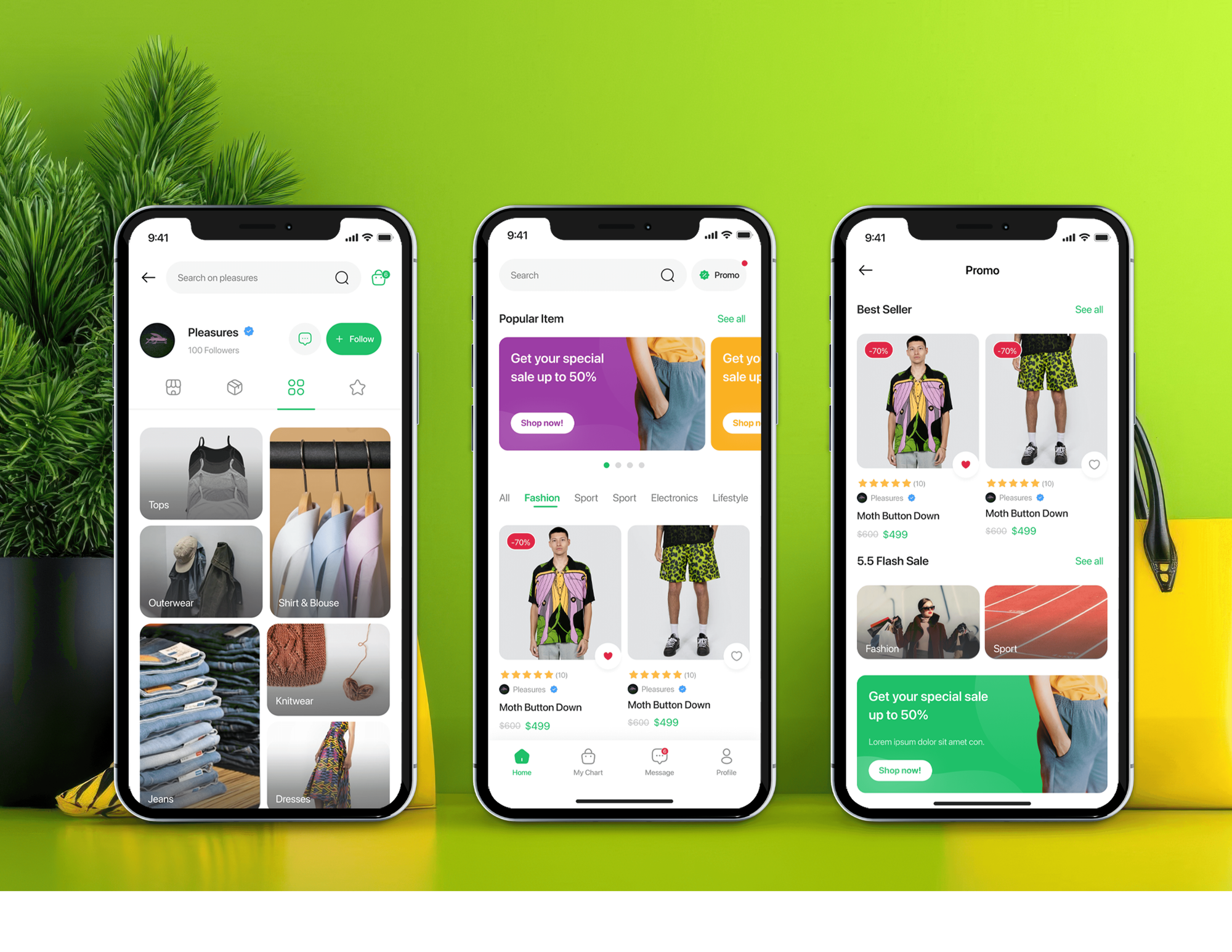
Ecommerce builds we've shipped for clients, including stores that sell across several channels and run backend stock connections.



What Our Clients Say
Feedback from ecommerce teams we have built stock and marketplace integrations for.
We had a different kind of problem. People were visiting the store, adding products to their carts, and then disappearing before they finished the order. We had tried a few apps and made changes here and there, but nothing really seemed to solve the bigger issue. The team went through the shopping experience with us and pointed out things we hadn't really noticed ourselves. They cleaned up the cart and checkout flow, made the mobile experience much smoother, and helped us make the store feel easier to shop. I’m not going to pretend we fixed everything overnight, but it finally feels like the store is helping the sale instead of getting in the way of it.
The mobile experience is probably my favourite part of the new site. We had spent a lot of time making sure the desktop version looked right, and the team kept pushing us to think about how everything would actually feel on a phone too. They were right. The navigation is clean, the interactions feel natural, and everything we’ve tested so far works exactly as it should. They also went through the links, forms, integrations, and other details more than once before launch, which I really appreciated. And even after going live, we could still reach out when something came up. The whole process felt friendly, organised, and surprisingly straightforward.
We had a pretty specific idea of what we wanted our website to become, but I wasn’t sure how easily we could explain all of it to a development team. There were quite a few moving parts, and we were working toward a deadline, so I expected a few things to get lost along the way. That never really happened. They understood what we were trying to achieve, kept us updated throughout the process, and got everything ready within the agreed timeline. The final site feels much easier to navigate, works beautifully on mobile, and is noticeably smoother for our customers. It was a huge relief seeing the original idea actually turn into the website we had in mind.
1,000+
Projects shipped
10+
Years of experience
Top 3%
Upwork Top Rated Plus
5 stars
Average review score
Work Culture
A wrong stock number turns into a canceled order and a marketplace warning. These habits keep your count right everywhere you sell, including the days something breaks.
We agree which system holds the true count before we write any code. That stops two tools from quietly overwriting each other at 2 a.m.
We size each channel's buffer from its order speed and update delay, not a round number. Fast marketplaces get more cover, and quiet ones keep more units live.
When a marketplace API is down, updates wait in a queue and retry on their own. Nothing depends on someone spotting a red error in a log.
A nightly job compares your listings with the true count and fixes the gaps. You get a short report instead of learning about problems from canceled orders.
We test on copies of your counts and with test orders before any live listing changes. You see each channel update before launch day.
The code, API keys, and marketplace app registrations sit in your accounts. If you change developers later, nothing has to be rebuilt.
Overview
DeveloperLook builds inventory sync that keeps one stock count across Shopify, Amazon, eBay, Walmart, TikTok Shop, and your 3PL. We map SKUs, set a buffer per channel, update every channel after each sale, and run a nightly check that fixes drift. Projects start at $1,100, two channels go live in 2 to 3 weeks, and you own the code.
DEVELOPERLOOK
Project facts · Multichannel Inventory Sync
Reviewed 28 Sep 2026 by Saimul Islam
Good fit
Shopify sellers adding a second marketplace
You just listed on Amazon or Walmart, and your team now updates stock in two admins after every sale.
Brands selling on four or more channels
Your stock count lives in Shopify, three marketplaces, and a spreadsheet, and none of them agree by Friday afternoon.
Stores whose 3PL holds the real count
Your 3PL or warehouse system has the true number, and you need every channel to read from it instead of from Shopify.
Teams outgrowing a connector app
You tried a multi-channel inventory sync app, but it can't hold units back for wholesale orders or count bundles correctly.
Agencies with marketplace clients
Your agency runs a client's Shopify store, and their marketplace stock needs a sync built and supported under your brand.
Not a fit
One marketplace, simple catalog
You sell on Shopify plus one marketplace with a simple catalog. Shopify's Marketplace Connect app covers Amazon, eBay, and Walmart for less than our $1,100 start.
Full multichannel hub
You need orders, listings, and routing for every channel, not only stock. Our Multichannel Ecommerce Software service builds that full hub.
Reorders and transfers
You want an inventory management software Shopify integration for reorder points and transfers inside your admin. Our Shopify Inventory Management System service covers that.
One marketplace both ways
You need one marketplace connected both ways, with listings and orders. See our Shopify Amazon Integration or Shopify eBay Integration service instead.
Not sure we're the right fit?
Send a two-line brief. We'll tell you honestly whether we're the right team.
Pricing
These are starting points in USD. Your final price depends on channel count, where your true count lives, and catalog size, and you get a fixed proposal after a free channel review.
For Shopify stores adding one marketplace that need both stock counts kept in step.
$1,100one-time, USD
For sellers on up to 5 channels with a 3PL or wholesale orders to protect.
$2,700one-time, USD
For high-volume brands with several warehouses and an ERP that owns the count.
$5,300one-time, USD
For Agencies
You own the client relationship. We supply the stock sync engineering: SKU mapping, channel APIs, buffers, and warehouse feeds. Your client sees your brand on every call, and your team gets the runbook and the code.
White label: your client only ever sees your brand
Send the client's channels, SKU count, and warehouse setup, and we reply with questions.
You get a fixed proposal and a SKU map to present under your own brand.
We build, test with real orders, and hand over the code and documentation to your team.
You run the calls, and we join as your team only when you ask.
Fixed scope and dates per channel, so you can quote the client with confidence.
Marketplace APIs, rate limits, and retry logic handled by developers who've shipped them.
Add one channel for a client now and five more next quarter.
The Right Technology for Your Project
We use each channel's own API, a queue for retries, and a database that keeps your stock count with its full change history.
 Shopify
 Amazon
 eBay
eBay Walmart
 TikTok
 Etsy
Etsy SAP
SAP Microsoft Dynamics 365
 Odoo
Odoo Sage
Sage QuickBooks
 Node.js
 Python
 PostgreSQL
 AWS
AWS Docker
 Slack
Slack Twilio
 Google Sheets
 Power BI
FAQ
Straight answers on sync speed, overselling, channel buffers, and what happens when a marketplace goes down.
 Saimul IslamFounder & CEO, DeveloperLook
Still have questions?
Send a message or book a call with the team.
A custom multichannel sync starts at $1,100 for Shopify plus one marketplace. Up to 5 channels with a 3PL feed and wholesale reserves costs $2,700, and warehouse-wide builds with an ERP start at $5,300. You get a fixed quote after a free channel review.
Two channels go live in 2 to 3 weeks. Up to 5 channels with a 3PL feed takes 4 to 6 weeks, and ERP-driven builds take 6 to 8 weeks. We launch one channel at a time, so each one runs live for a few days before the next joins.
You pick one system as the master count and connect everything else to it. Usually that's your 3PL or WMS. If you already run cloud inventory management with API integration, it can hold the master instead. Sales, returns, and deliveries change that count first, then your listings.
Most channels update within minutes of a sale. Shopify sends a webhook when a stock level changes, and Amazon, eBay, and TikTok Shop accept item-level updates through their APIs. Large Walmart catalogs often use bulk inventory feeds, which process in batches. We size each channel's buffer to cover its own delay.
We stop overselling with three layers: one master count, a buffer on each channel, and a nightly check. The master drops as soon as any channel sells. The buffer covers the gap before other channels update, and the check fixes anything that slipped. Your last few units can also be listed on your own store only.
For most stores, the best setup is webhooks for speed plus scheduled API checks for accuracy. Webhooks report sales fast but can arrive late or twice, so a scheduled pass confirms counts. Middleware such as n8n works at low volume, but a direct inventory management integration handles rate limits and retries better at scale.
A Shopify Walmart integration sends your stock to Walmart by SKU and pulls Walmart orders into Shopify. Walmart's inventory API accepts single-item updates or bulk feeds, and it tracks stock per ship node if you ship from several warehouses. Walmart orders then arrive as Shopify orders, so your team packs them the usual way.
Each channel gets its own buffer, and wholesale or preorder stock gets a hard reserve. A buffer hides a few units from one channel, sized from how fast it sells and how slowly it updates. A reserve holds units for confirmed purchase orders, so no marketplace can sell them. You adjust both in one settings table.
When a channel's API is down, its updates wait in a queue and retry on their own. The other channels keep syncing as usual. If the outage drags on, you get an alert. The nightly check then confirms your listings match the true count again.
Support runs 30 to 90 days after launch, depending on your plan. In that window we fix bugs, tune buffers, and handle marketplace API changes. The code, API keys, and app registrations sit in your accounts, so any developer you hire can take over later.
Saimul IslamFounder & CEO, DeveloperLookStill have questions?
Send a message or book a call with the team.
30-min strategy callGoogle Meet
Book a call
Pick a 30-minute slot that works for you. We meet on Google Meet to align on goals, scope, and the right next step.
