Location priority rules
Priority by location, stock, distance, and cost, written so your team can read and change them.

Shopify order management for multi-warehouse brands: routing rules, split limits, backorder holds, and ERP links. From $1,350.
100%
Orders routed by your rules
1
Queue for every order exception
Teams we have built for:














The Problem
It starts once a second location ships orders. Shopify picks a warehouse, splits what one location can't fill, and leaves backorders for your team to sort out by hand.
01 · Wrong splits
A two-item order splits across warehouses and needs two labels.
An order splits only when no single location can ship it in time.
02 · Silent backorders
A backordered item holds up an order, and nobody tells the customer.
Backorders hold only the missing items, and the customer gets a date.
03 · Inbox chaos
Broken orders surface in your inbox on Friday.
Orders that break a rule collect in an exception list with reasons.
04 · Manual routing
Manual fixes add up to someone's full-time job.
Plain-language rules decide which warehouse ships what.
An order for a jacket and boots comes in at 9 a.m. The jacket sits in New Jersey, the boots in Nevada, and the order splits across both. You pay for two labels on one small order. Another order waits on a backordered item, and nobody tells the customer. By Friday, support is answering where-is-my-order emails all afternoon. Each manual fix takes minutes, and at a few hundred orders a day, those minutes become someone's full-time job.
We start with your locations, stock, and shipping costs, then write routing rules you can read: which warehouse ships what, and when an order may split. Orders that break a rule land in one exception queue instead of your inbox. Backorders hold only the missing items, and the customer gets a notice with a date. Orders go to the right place first, not after a Friday cleanup.
Rules you can read
Routing written in plain terms, like ship from the closest warehouse that has everything.
Splits only when needed
An order splits only when no single location can ship it within your promised time.
One exception queue
Stuck, held, and failed orders collect in one list, each with a reason attached.
Our OMS Build Process
You approve the rules and the exception list in plain language before we build, then watch them run on test orders.
We map your locations, 3PLs, shipping costs, and the orders your team fixes by hand each week. You get a list of rules that would have routed those orders correctly.
What's Included
Routing rules, split and backorder handling, an exception queue, customer notices, and links to your ERP and shipping tools, all tested on replayed orders before launch.
Compare Options
Shopify's default routing suits many stores with two locations, and an order app adds common rules cheaply. Here's where each option stops fitting.
| Feature | DeveloperLookBest fit | Order app | Shopify defaults |
|---|---|---|---|
| Setup time | 2 to 8 weeks | A few days | Already on |
| Upfront cost | From $1,350 | Monthly fee | |
| Routing logic | Your exact rules | Preset options | Closest, fewest splits |
| Split control | Limits you set | Basic settings | Minimize splits |
| Backorders | Missing items held | Varies by app | Handled by hand |
| Exceptions | One queue with reasons | App dashboard | Order list filters |
| ERP and shipping | Connected both ways | Depends on connectors | Separate apps |
| Ownership | Your code and rules | Vendor's platform | Shopify settings |
Projects We've Built
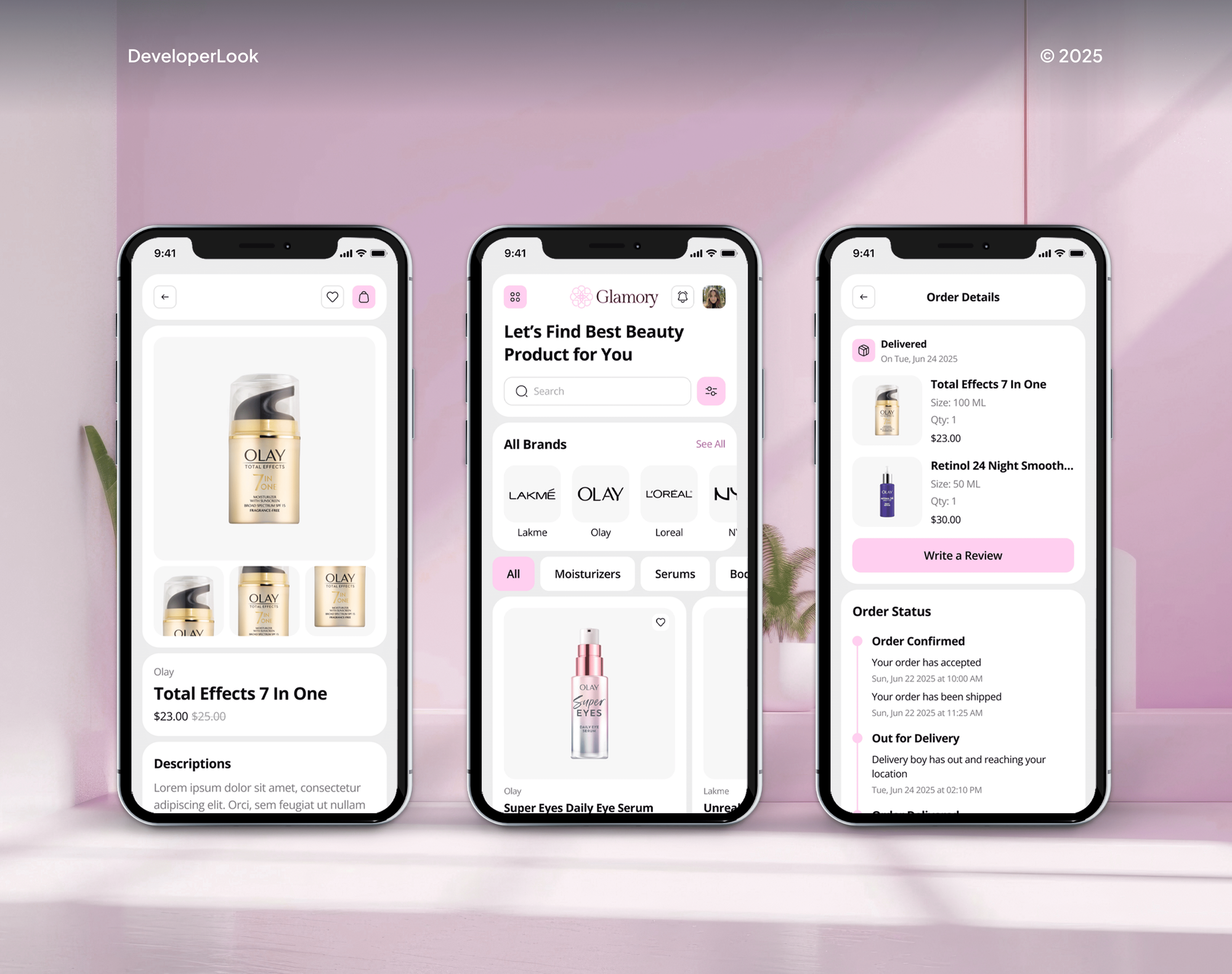
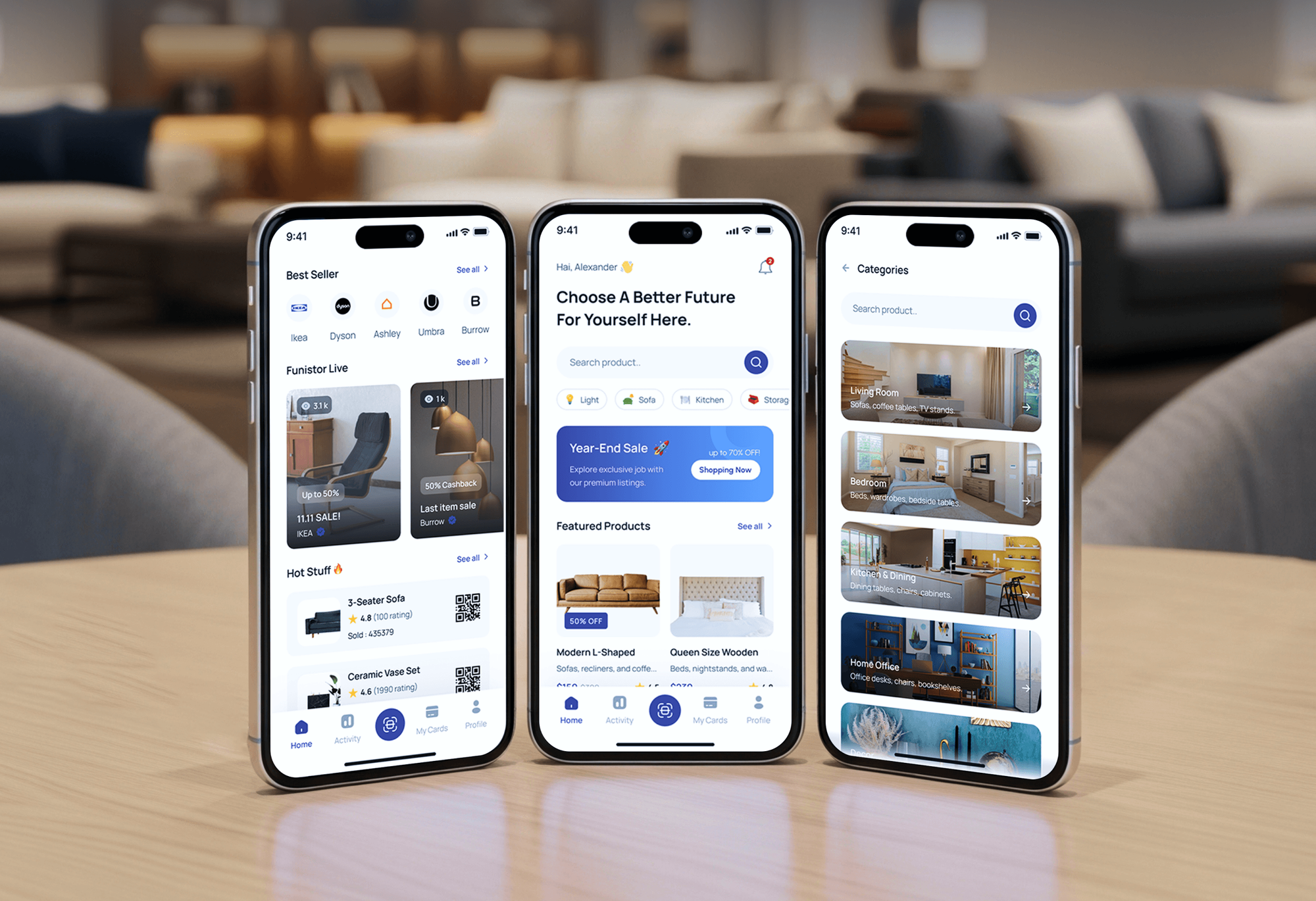
Shopify and ecommerce builds we've shipped for clients, including stores with several fulfillment locations and backend order tools.


What Our Clients Say
Feedback from ecommerce teams we have built order and fulfillment systems for.
We had a different kind of problem. People were visiting the store, adding products to their carts, and then disappearing before they finished the order. We had tried a few apps and made changes here and there, but nothing really seemed to solve the bigger issue. The team went through the shopping experience with us and pointed out things we hadn't really noticed ourselves. They cleaned up the cart and checkout flow, made the mobile experience much smoother, and helped us make the store feel easier to shop. I’m not going to pretend we fixed everything overnight, but it finally feels like the store is helping the sale instead of getting in the way of it.
The mobile experience is probably my favourite part of the new site. We had spent a lot of time making sure the desktop version looked right, and the team kept pushing us to think about how everything would actually feel on a phone too. They were right. The navigation is clean, the interactions feel natural, and everything we’ve tested so far works exactly as it should. They also went through the links, forms, integrations, and other details more than once before launch, which I really appreciated. And even after going live, we could still reach out when something came up. The whole process felt friendly, organised, and surprisingly straightforward.
We had a pretty specific idea of what we wanted our website to become, but I wasn’t sure how easily we could explain all of it to a development team. There were quite a few moving parts, and we were working toward a deadline, so I expected a few things to get lost along the way. That never really happened. They understood what we were trying to achieve, kept us updated throughout the process, and got everything ready within the agreed timeline. The final site feels much easier to navigate, works beautifully on mobile, and is noticeably smoother for our customers. It was a huge relief seeing the original idea actually turn into the website we had in mind.
1,000+
Projects shipped
10+
Years of experience
Top 3%
Upwork Top Rated Plus
5 stars
Average review score
Work Culture
Routing mistakes cost you shipping fees and customer trust. These habits keep your orders moving to the right place, even on your busiest days of the year.
Every routing rule gets written in plain language and approved by you first. If a rule surprises you later, you can find it in one document.
We replay your real orders through the new rules before launch. You see the shipping cost and split count they would have produced.
Every held or failed order shows why it stopped and what fixes it. Your team clears the queue instead of guessing what went wrong.
Backorder and delay notices go out before customers write in. Your support team answers fewer where-is-my-order emails each week.
Shopify's own routing rules already handle many two-warehouse stores. If they cover your case, we'll tell you before we quote.
The code, rules, and order history stay in your accounts. Any developer can pick up the runbook and change a rule later.
Overview
DeveloperLook builds Shopify order management for brands that ship from several warehouses or 3PLs. We set routing rules, split orders only when stock forces it, hold backorders with customer notices, and connect your ERP and shipping tools. Projects start at $1,350, routing rules go live in 2 to 3 weeks, and you own the code.
DEVELOPERLOOK
Project facts · Shopify Order Management System
Reviewed 28 Sep 2026 by Saimul Islam
Good fit
Brands shipping from two or more warehouses
Your orders route to whichever location Shopify picks, and your team reassigns a dozen of them by hand every morning.
Stores tired of split shipments
You pay for two boxes and two labels when one warehouse could have shipped the whole order a day later.
Shopify Plus brands with complex routing
Your routing depends on product tags, customer type, or warehouse capacity, and Shopify's default rules can't express it.
Teams connecting ERP and shipping tools
Your ERP owns the order record, ShipStation prints labels, and a custom order management system has to keep all three in step.
Agencies with fulfillment-heavy clients
Your client's store outgrew its routing setup, and you need a Shopify OMS built quietly under your agency's name.
Not a fit
Single warehouse
You ship everything from one warehouse. Shopify's built-in fulfillment covers you, and our $1,350 routing build would add little.
ShipStation labels only
You only need labels, rates, and tracking from ShipStation. Our Shopify ShipStation Integration service is the smaller, cheaper fit.
3PL sync only
Your outsourced warehouse needs stock and tracking synced, not routing rules. Our Shopify 3PL Integration service covers that.
Stock counts differ
Your stock count differs across Amazon, Walmart, and your store. Our Multichannel Inventory Sync service fixes stock, not order routing.
Not sure we're the right fit?
Send a two-line brief. We'll tell you honestly whether we're the right team.
Pricing
These are starting points in USD. Your price depends on locations, connected systems, and exception rules, and you get a fixed proposal after a free fulfillment review.
For stores with 2 or 3 locations that need orders routed and split by clear rules.
$1,350one-time, USD
For multi-warehouse brands that need routing, customer notices, and shipping tools connected.
$3,400one-time, USD
For Shopify Plus brands running an ERP as the order record across several stores.
$7,200one-time, USD
For Agencies
You own the client relationship. We supply the order routing engineering: rules, fulfillment order handling, and ERP or 3PL links. Your client deals with your team, and you get the rules document and the code.
White label: your client only ever sees your brand
Send the client's locations, order volume, and connected systems, and we reply with questions.
You receive a fixed quote and a rules draft to share with your client.
We build, replay past orders, and hand over the code and the runbook.
You run the meetings, and we work quietly behind your brand.
Fixed scope per location and system, so your client quote holds.
Fulfillment orders, holds, and splits handled by developers who've shipped them.
Start with routing rules and add ERP sync next quarter.
The Right Technology for Your Project
We build on Shopify's fulfillment orders API, keep rules and order history in your own database, and connect the tools your warehouse already uses.
 Shopify
 GraphQL
 Node.js
 React
React UPS
UPS FedEx
FedEx USPS
USPS DHL
DHL SAP
SAP Microsoft Dynamics 365
 Odoo
Odoo QuickBooks
 PostgreSQL
 AWS
AWS Slack
Slack Twilio
FAQ
Straight answers on OMS cost, routing to warehouses and 3PLs, split shipments, backorders, and build time.
 Saimul IslamFounder & CEO, DeveloperLook
Still have questions?
Send a message or book a call with the team.
A custom order management system for Shopify starts at $1,350 for routing rules across up to 3 locations. A full OMS with customer notices and ShipStation or 3PL handoff costs $3,400, and ERP-driven hubs on Shopify Plus start at $7,200. Your fixed quote comes after a free fulfillment review.
Rules for up to 3 locations go live in 2 to 3 weeks. A custom OMS with notices and shipping tools takes 4 to 6 weeks, and an ERP-driven hub takes 6 to 8 weeks. Replaying your past orders takes a few days in every plan, and it's where most rule changes happen.
An order management system decides where each order ships from, when it can ship, and who hears about it. On Shopify, that means routing orders to warehouses or 3PLs, splitting only when needed, holding backorders, and updating customers and your ERP. The OMS Shopify stores need depends on how many locations ship.
You need an OMS once two or more locations ship orders and your team fixes routing by hand. Other signs include split shipments you didn't want, backorders tracked in a spreadsheet, or an ERP that must see every order. One warehouse with simple orders doesn't need one.
Yes, routing to several warehouses and 3PLs is the core job. Shopify's own routing can favor the closest location or fewer splits. We add your rules on top: stock depth, capacity, cost, or product type. Orders move between your own locations through Shopify's fulfillment orders API, and 3PLs receive fulfillment requests.
Yes, connecting those three is part of every full build. Orders flow from Shopify to the OMS, which sends them to your ERP as the record and to ShipStation or your 3PL for labels. Tracking comes back to Shopify, so customers still get the usual shipping emails.
We set split limits, ship what's in stock, and hold only the missing items. Shopify lets an app hold specific line items while the rest of the order ships. Your rules decide when an order waits and when it ships in parts, which is custom order fulfillment Shopify doesn't set up by default.
Yes, status updates go out automatically at the moments customers care about. Shopify already sends shipping confirmations. We add notices for backorders, split shipments, and delays through Shopify Flow, Klaviyo, or SMS. Each message says what's happening and when to expect the rest of the order.
You own it, including the code, the rules document, and the order history in your accounts. Nothing runs on a platform we control, and there's no monthly license. If you change developers, the runbook explains every rule and where it lives. Hosting runs in your own cloud account.
Each plan includes 30 to 90 days of support after launch. In that window we review the exception queue with you, tune rules that still stall orders, and handle Shopify API version updates. After that, you can book changes as small fixed-price jobs whenever you need them.
Saimul IslamFounder & CEO, DeveloperLookStill have questions?
Send a message or book a call with the team.
30-min strategy callGoogle Meet
Book a call
Pick a 30-minute slot that works for you. We meet on Google Meet to align on goals, scope, and the right next step.
