

Data map and path plan
Each of your data elements mapped to FHIR resources or HL7 v2 segments, with its path and approvals listed.

For health app teams and clinics who need patient data moving between systems without retyping: the right connection for each data type, with every message logged.
20+ hrs
Retyping saved every week
100%
Messages logged and replayable
How your project runs
01 · FreeTeams we have built for:














The Problem
Integrations stall when every data need goes down the same path. Some data is easy over FHIR, some only flows as HL7 messages, and some needs the EHR vendor's approval first.
One path
One approach was forced onto every data type.
One path
Each of your data needs gets its own path: FHIR, HL7 v2, or a vendor program.
Lab results
Results arrive as faxed PDFs that staff retype.
Lab results
An HL7 v2 results feed files lab values straight into the right patient record.
Approvals
Vendor app review took longer than the build itself.
Approvals
Vendor approval steps and their usual wait go into the plan from day one.
Failures
Failed messages go unnoticed until a clinician complains.
Failures
Every message is logged, failures alert your team, and any message can be replayed.
Your app needs today's appointments, the patient's allergies, and a way to send a visit summary back. The team picked one approach for all three, and it covers one. Lab results still arrive as faxed PDFs that staff retype. The EHR vendor's app review took longer than the build, and nobody planned for it. When a message fails at night, nobody knows until a clinician asks why a result is missing. Your pilot clinic starts asking when the integration will be finished.
We start with your data needs, not a favorite tool. Each need gets its own path. FHIR R4 APIs carry what your EHR exposes, and HL7 v2 feeds carry your labs and admissions. The vendor's own program covers write access that needs approval. Vendor review time goes into your plan from day one. Every message is logged and can be replayed, so a failure gets fixed and resent instead of discovered weeks later.
A path for each data need
FHIR APIs, HL7 v2 feeds, or vendor programs, chosen per data type instead of one tool for everything.
Vendor approvals in the plan
Sandbox access, app registration, and your customers' sign-off steps get scheduled before the build starts.
Logged and replayable
Every message is stored with its status, so your team can fix and resend failed ones.
Our EHR Integration Services Process
You approve the data map, see each connection pass in the EHR vendor's sandbox, and watch live traffic in a dashboard after go-live.
We list what data your app or clinic needs, in which direction, and how often. You get a first read on the path for each item, the vendor steps involved, and a fixed-price estimate.
What's Included
Every connection your data needs, built and monitored. You get the data map, FHIR and HL7 v2 connections, vendor registration support, error handling, and a dashboard your team can read.
Compare Options
An integration platform is quickest when it already supports your EHR and data, and your in-house IT knows your systems best. Here is where each holds up for your app or clinic.
| Feature | DeveloperLookBest fit | Integration platform | In-house IT |
|---|---|---|---|
| Path per data type | FHIR, HL7 v2, or vendor program | Platform's supported paths only | Depends on staff skills |
| Vendor approvals | Planned from day one | Platform may hold approvals | Learned along the way |
| Custom mapping | Built to your data model | Limited to platform mapping | Yes, given time |
| Error handling | Logged, alerted, and replayable | Included dashboards | Often email alerts only |
| Time to first data | Weeks, after approvals | Fastest for supported EHRs | Slower beside other work |
| Monthly cost | Hosting only after build | Per-connection or per-record fees | Staff time |
| Ownership | Your code and interfaces | Platform-owned connectors | |
| Support | 60 days, then optional | Vendor support tiers | Internal team only |
Projects We've Built
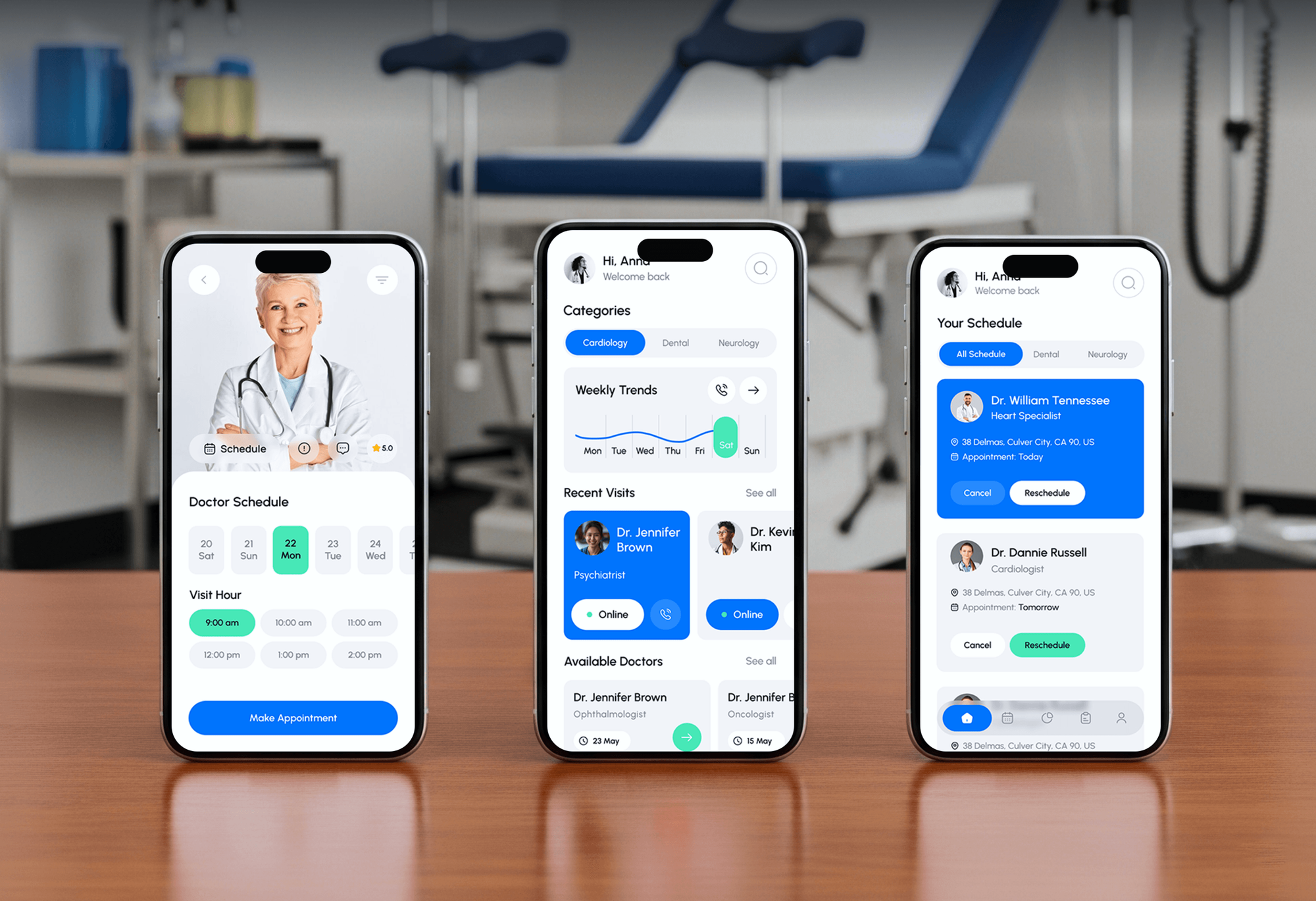
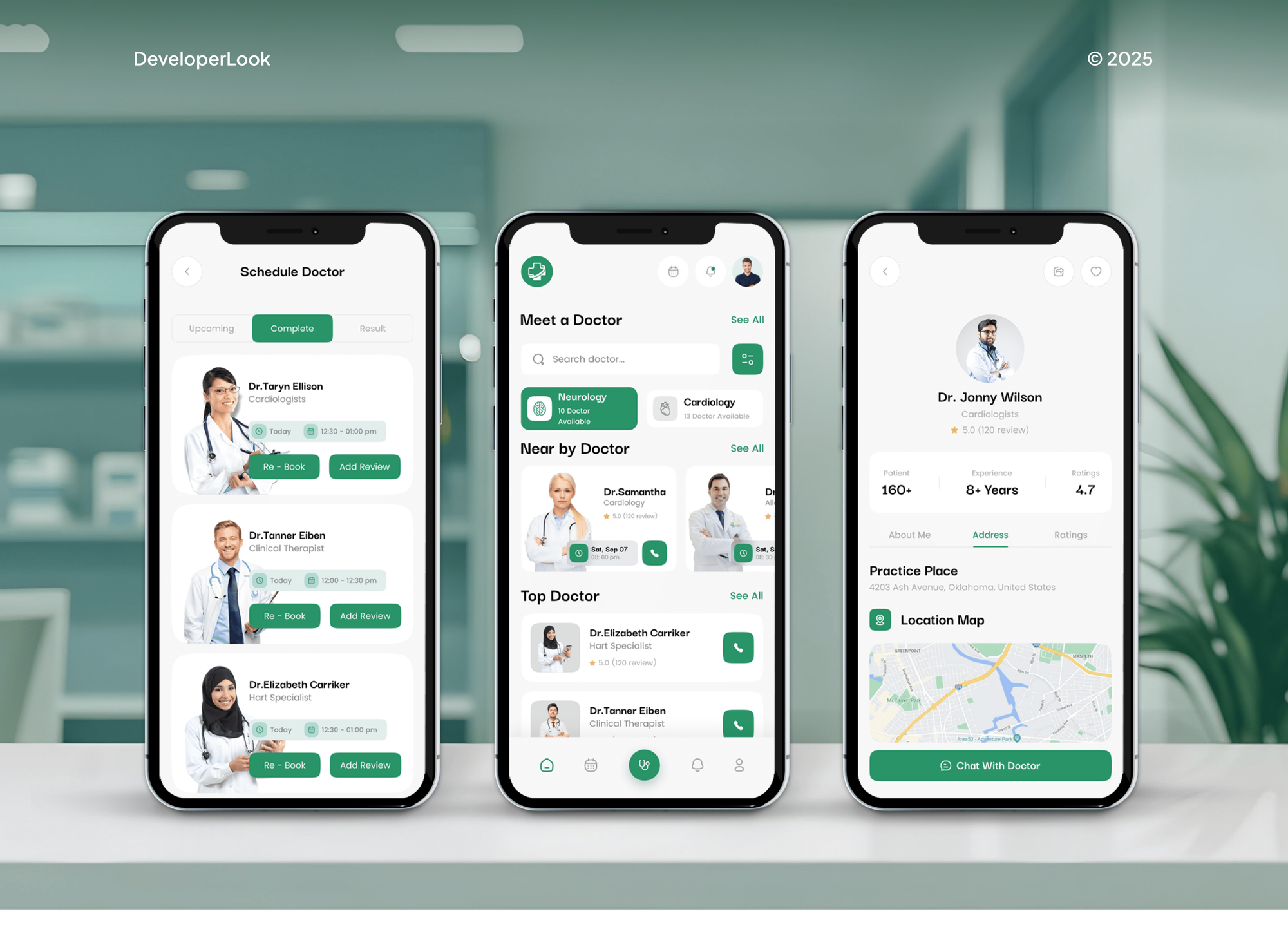
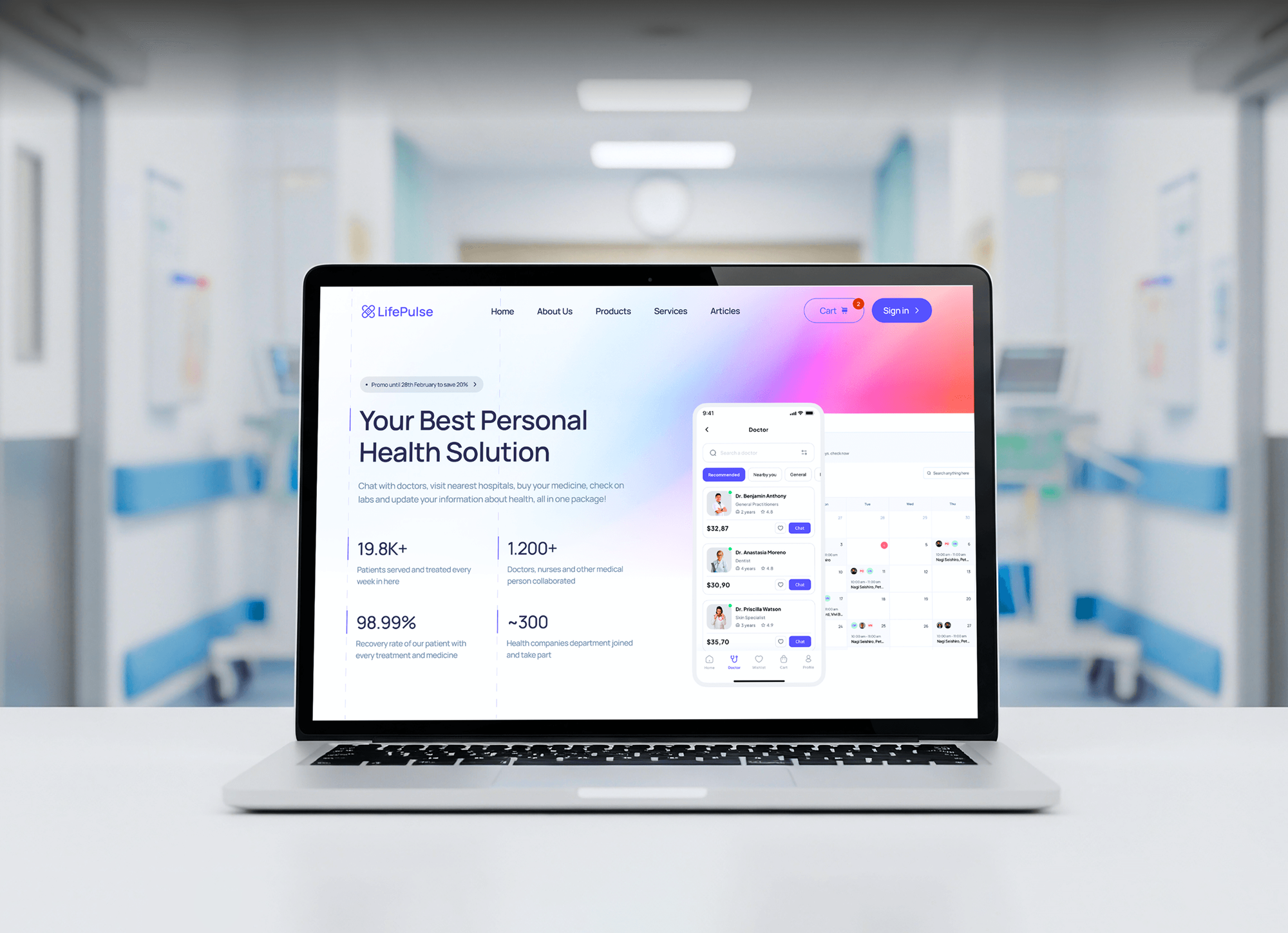
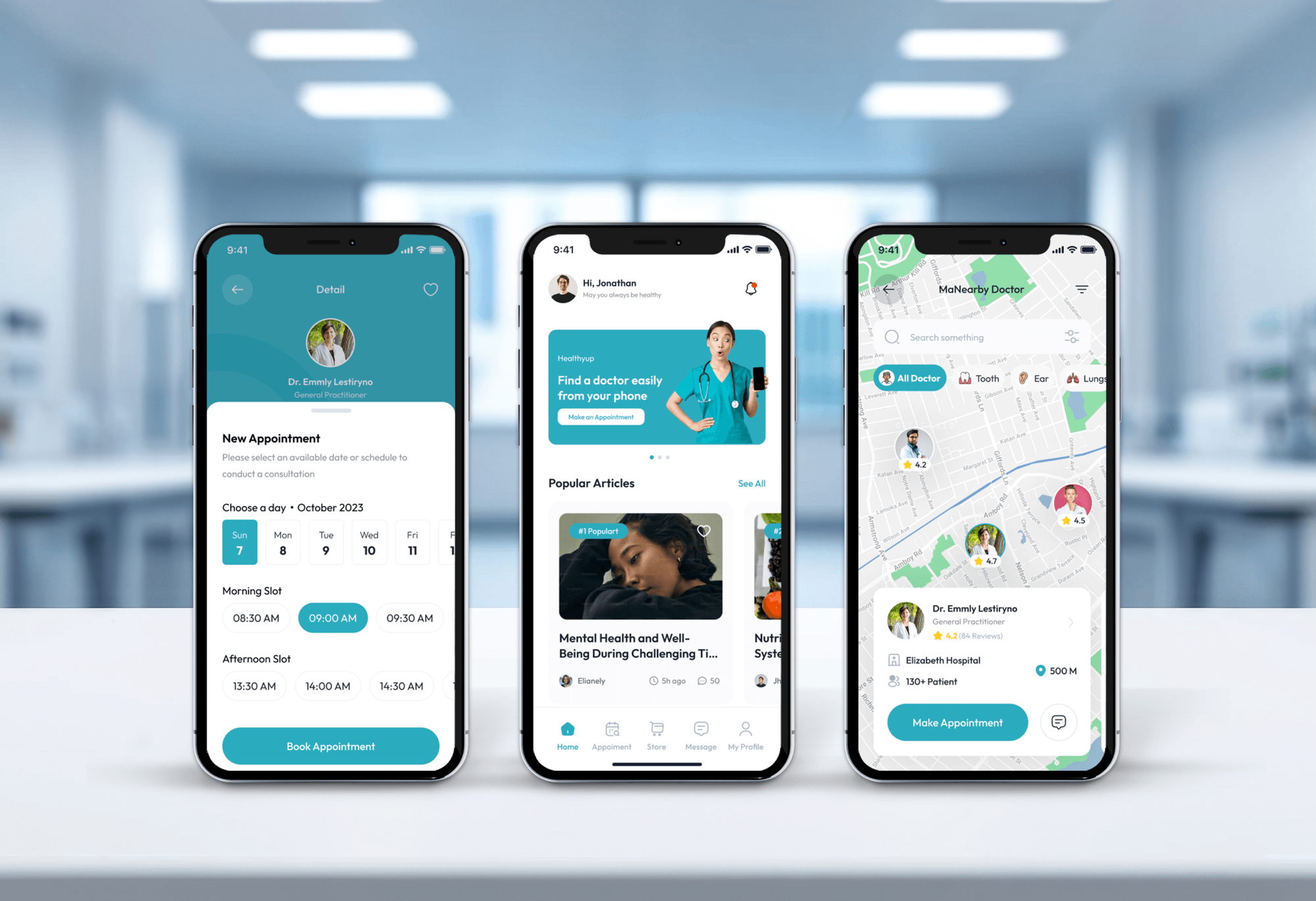
Patient apps and clinic dashboards we built that hold appointments, patients, and records. They aren't EHR integrations; they show the data your integration moves.
What Our Clients Say
Feedback from teams we have built apps, integrations, and web platforms for.
We had a pretty specific idea of what we wanted our website to become, but I wasn’t sure how easily we could explain all of it to a development team. There were quite a few moving parts, and we were working toward a deadline, so I expected a few things to get lost along the way. That never really happened. They understood what we were trying to achieve, kept us updated throughout the process, and got everything ready within the agreed timeline. The final site feels much easier to navigate, works beautifully on mobile, and is noticeably smoother for our customers. It was a huge relief seeing the original idea actually turn into the website we had in mind.
The mobile experience is probably my favourite part of the new site. We had spent a lot of time making sure the desktop version looked right, and the team kept pushing us to think about how everything would actually feel on a phone too. They were right. The navigation is clean, the interactions feel natural, and everything we’ve tested so far works exactly as it should. They also went through the links, forms, integrations, and other details more than once before launch, which I really appreciated. And even after going live, we could still reach out when something came up. The whole process felt friendly, organised, and surprisingly straightforward.
What I appreciate most is that the website is actually easy for us to manage now. We can update content ourselves instead of sending a developer a message every time we need to change something small. They also paid attention to the technical SEO side, which mattered to us because we didn’t want a new website to create problems for the traffic we already had. I’ve probably asked more questions than I should have since launch, but every question has been handled patiently and without any fuss. The team is easy to work with, they explain things clearly, and when we need something changed, they focus on getting it done rather than making the process complicated.
1,250+
Projects shipped
10+
Years of experience
Top 3%
Upwork Top Rated Plus
5 stars
Average review score
1,250+
Projects shipped
10+
Years of experience
Top 3%
Upwork Top Rated Plus
5 stars
Average review score

Want results like these?
Tell us what you are building. You get a reply within 24 hours on business days, then a written estimate.
Work Culture
An integration is only as good as its worst night. These habits keep electronic medical records integration predictable for your clinicians and your support team.
We list every element of your data and its direction before picking FHIR, HL7, or a vendor program. You avoid a connection that covers one need out of three.
EHR vendors and their customers review apps on their own schedule. That wait goes into your plan, so nobody calls the integration late while it waits on a form.
Matching rules check identifiers before any data files to your charts. Likely duplicates go to a review queue instead of merging quietly into the wrong patient.
A failed message triggers an alert to the people who can fix it. Your clinicians shouldn't be the ones who notice a missing result.
Many EHR APIs read far more than they write. If writing a field back needs a vendor program or an HL7 feed, we say so before you plan around it.
Your code, mappings, and interface engine channels sit in your accounts with documentation. Changing teams later doesn't mean rebuilding your connections.
Overview
DeveloperLook provides EHR integration services for health apps and clinics that need patient data moving without retyping. We map each data need, build FHIR R4 or HL7 v2 connections, handle vendor registration, and log every message. Plans start at $1,150, most connections take 5 to 12 weeks, and you own the interfaces.
DEVELOPERLOOK
Project facts · EHR Integration Services
Reviewed 28 Oct 2026 by Saimul Islam
Good fit
Health app teams going to clinics
Your app is ready, and your first clinic customer wants it reading appointments and writing visit summaries back into their EHR.
Clinics with retyped results
Your staff retype lab and imaging results from faxes and portals, and you want an HL7 feed filing them into your charts.
Digital health vendors selling to Epic sites
Your buyers run Epic, and you need Epic EHR integration through its public FHIR APIs before your sales cycle stalls on IT review.
Groups running several EHRs
Your practice group runs two or three EHRs after acquisitions, and you need one healthcare data integration layer that reports across all of them.
Oncology and specialty programs
Your oncology or specialty program needs treatment plans, labs, and referrals shared between its own software and the hospital's EHR.
Not a fit
athenahealth only
Your only EHR is athenahealth and you need its Marketplace path planned around its API tiers. Our athenahealth Integration Services page covers that work in depth.
Need a new chart
Your current system can't chart the way you work, so connecting it won't help. Our EHR and EMR Software Development service builds the chart itself.
Booking widget only
You only want patients to book online through your EHR's own scheduler. Our Patient Self-Scheduling Software Integration service is the faster, cheaper fit.
Budget under $1,150
Your budget is under $1,150, or the EHR already offers a ready connector for your app. Use that connector first; we'll tell you if it covers you before we quote.
Not sure we're the right fit?
Book a free call or message us. We'll tell you honestly whether we're the right team.
Pricing
These are starting points in USD. Your final price depends on the EHR vendor, data types, and flow direction, and you get a fixed proposal after a free data needs call.
For Agencies
You own the client relationship. We supply the integration engineering for your healthcare client, from the data map and vendor registration to go-live monitoring. Your brand stays on the plan and the runbook, and your client's IT team talks to you.
White label: your client only ever sees your brand
Send the client's EHR, data needs, and app details, and we scope it in writing.
We map each data need, then build in the vendor sandbox under your brand.
You switch the client to production while we monitor and fix for 60 days.
Send the client's EHR, data needs, and app details, and we scope it in writing.
We map each data need, then build in the vendor sandbox under your brand.
You switch the client to production while we monitor and fix for 60 days.
The Right Technology for Your Project
Standards and tools we use to move patient data between EHRs and apps, with the logging and replay a production health integration needs.
 OpenAPI
 Node.js
 Python
 PostgreSQL
 AWS
 Google Cloud
 Docker
Related Services
Healthcare and integration services that sit on either side of an EHR connection, from the apps and charts we build to scheduling and athenahealth work.
This page
EHR Integration Services
Pairs with the 6 services around it
FAQ
Straight answers on cost, timelines, FHIR and HL7, Epic, and how EHR integration works.
Saimul IslamFounder & CEO, DeveloperLookStill have questions?
Send a message or book a call with the team.
EHR integration services start at $1,150 for a read-only FHIR connection to one EHR, covering up to 5 FHIR resources. Two-way integration with write-back and one HL7 v2 feed is $3,600. A multi-EHR data layer for up to 3 EHR vendors starts at $7,400. Interface engine licenses and hosting are billed to your own accounts.
A read-only FHIR connection takes 3 to 5 weeks, and two-way integration takes 5 to 12 weeks. The EHR vendor's registration and each customer's approval often take as long as the build, so they go into your plan first. Your clinic's IT team also needs time to open interfaces and test real workflows.
EHR integration links your electronic health record with the other systems your practice uses, such as a patient app, a lab, or a scheduler. It runs over FHIR APIs, HL7 v2 messages, or vendor-specific programs. Good EHR data integration also covers matching the right patient, handling errors, and logging every message.
FHIR REST APIs give certified EHRs the same basic data shapes and calls, so one integration pattern works across your vendors. US certification rules require certified EHRs to offer FHIR R4 APIs with US Core profiles and SMART on FHIR authorization. You still handle each vendor's registration and gaps, but your core mapping gets reused.
You integrate with Epic through its public FHIR APIs on open.epic, registering your app and testing in Epic's sandbox first. Epic's Vendor Services program and its Showroom listings are optional for many apps. Each Epic customer still approves and activates your app for their organization, and write access often needs extra review.
List what your medical app needs to read and write, then pick a path for each item. SMART on FHIR lets clinicians launch your app inside the EHR with the patient already open. Backend FHIR access suits background syncs, and HL7 v2 feeds suit labs and admissions. Test every path in the vendor's sandbox before production.
EHR-integrated check-in pulls the day's appointments from the EHR and lets patients confirm details and insurance on their phone. Updates then write back to the chart, so your front desk sees arrivals without retyping. Write-back may need a vendor program or an HL7 feed, because many FHIR APIs read more than they write.
DeveloperLook does oncology EHR integration for cancer programs and the software vendors that serve them. Oncology adds treatment plans, chemotherapy orders, staging, and frequent lab results to the usual data. We map those to FHIR resources or HL7 v2 messages where your EHR supports them, and flag any data the hospital's systems don't expose.
Scheduling platforms read open slots from your EHR, book appointments back into it, and send your staff hours to a timekeeping or payroll system. The EHR side uses FHIR Appointment and Schedule resources or HL7 v2 scheduling messages. The timekeeping side is usually a REST API or a file export, matched by employee ID.
You own the code, mappings, and interface channels, all in your own accounts with a runbook. We monitor message volume and fix mapping issues for 60 days after go-live. After that, your IT team can run the EMR system integration themselves, or keep us on for new data types and vendor changes.
Saimul IslamFounder & CEO, DeveloperLookStill have questions?
Send a message or book a call with the team.
Free 30-min callGoogle Meet
Book a call
In 30 minutes on Google Meet we walk you through how we would build it, how long it takes and what it costs. Then you get a written estimate.
Calendar not showing? Book on cal.com or send a brief.