Text invite and sign-up
Checkout sends a secure link, identity is checked once, and patients set up MFA or a passkey.

For practices and clinic groups who want patients signed up at checkout, then finding results, messages, and bills without calling the front desk.
1text
From checkout to sign-up
24/7
Results and visit notes online
Teams we have built for:














The Problem
Most practices already have a portal from their EHR vendor. Trouble shows up when activation codes expire, parents can't see a child's records, and patients call to ask whether results are in.
Activation
Printed codes get lost before patients reach home.
Activation
A text invite at checkout opens sign-up on the patient's own phone.
Proxies
Parents and caregivers can't see the records they manage.
Proxies
Proxy access follows your policy, with age-based switches for teen privacy.
Results
Patients call because results arrive with no explanation.
Results
Results post with a plain-language note and a link to message the care team.
Logins
Staff spend mornings resetting forgotten usernames.
Logins
Phone or email sign-in with MFA or a passkey means fewer reset calls.
Your front desk hands out a printed activation code, and most patients lose it in the car. The ones who sign up pick a username they forget by the next visit. A mother calls because she can't see her 15-year-old's lab results, and nobody is sure she should. Results post with codes nobody explains, so patients call again. Your staff spend mornings resetting passwords and reading results over the phone.
We start with the moment a patient leaves your office. Checkout triggers a text invite, identity is checked once, and the portal opens on the patient's phone without an app download. Records come from your EHR through its FHIR patient access API, so nothing is retyped. Proxy rules for parents and caregivers follow your policy, and results arrive with plain-language notes. Your staff answer fewer calls, not more password resets.
Sign-up from a text
Checkout sends a link, and patients finish sign-up before they reach the car.
Proxy access done right
Parents, adult children, and caregivers get the access your policy allows, and no more.
Records from your EHR
Results, visit notes, and medication lists arrive through FHIR, so your staff retype nothing.
Our Patient Portal Development Process
You see the patient journey mapped and approve the access rules and EHR data list. Then you test the portal with staff and a few real patients before launch.
We walk through check-in, checkout, results, and billing calls with your front desk and a clinician. You get the list of calls a portal can absorb, a recommended EHR connection, and a fixed-price estimate.
What's Included
A portal patients open from a text, connected to your EHR and payments, with the access rules, staff tools, and reports your front desk needs.
Compare Options
Your EHR's built-in portal costs nothing extra, and a portal SaaS launches quickly for standard needs. Here is where each fits when patients stall at sign-up or you run more than one EHR.
| Feature | DeveloperLookBest fit | EHR's own portal | Portal SaaS |
|---|---|---|---|
| Sign-up path | Text invite at checkout | Printed or emailed code | Email invite, vendor flow |
| EHR connection | FHIR plus your own workflows | Built in, no setup | Selected EHRs only |
| Proxy rules | Your policy, set by age | Vendor's fixed rules | Varies by vendor |
| Branding | Your practice brand throughout | EHR vendor branding | Vendor branding often shows |
| Several EHRs | One portal across locations | One EHR only | Some vendors support several |
| Time to launch | Pilot in 3 to 4 weeks | Already included | Weeks after signing |
| Upfront cost | From $1,300 for a pilot | Included in EHR fees | Setup plus monthly fees |
| Code ownership | You own code and accounts | No code to own | No code to own |
Projects We've Built
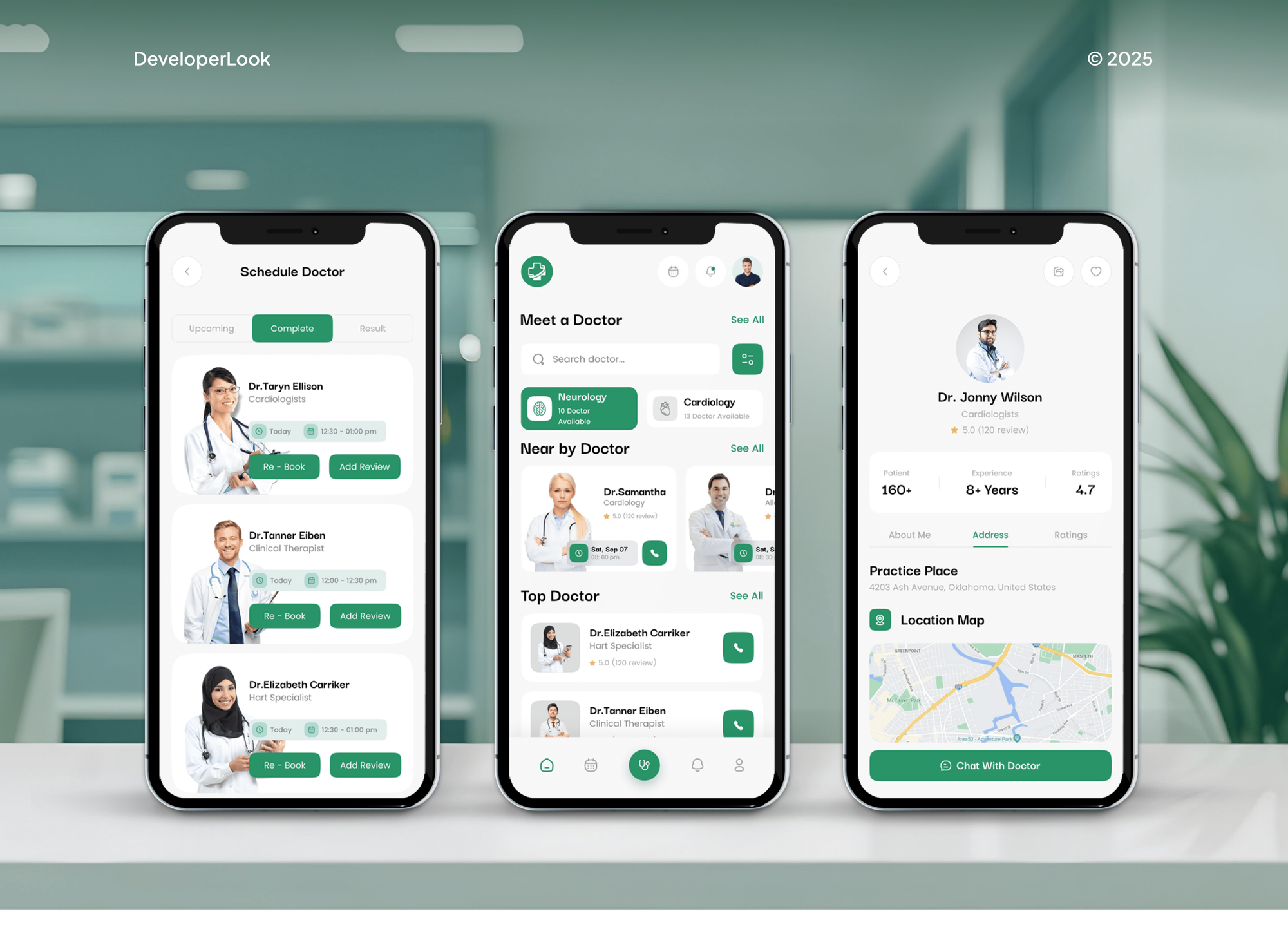
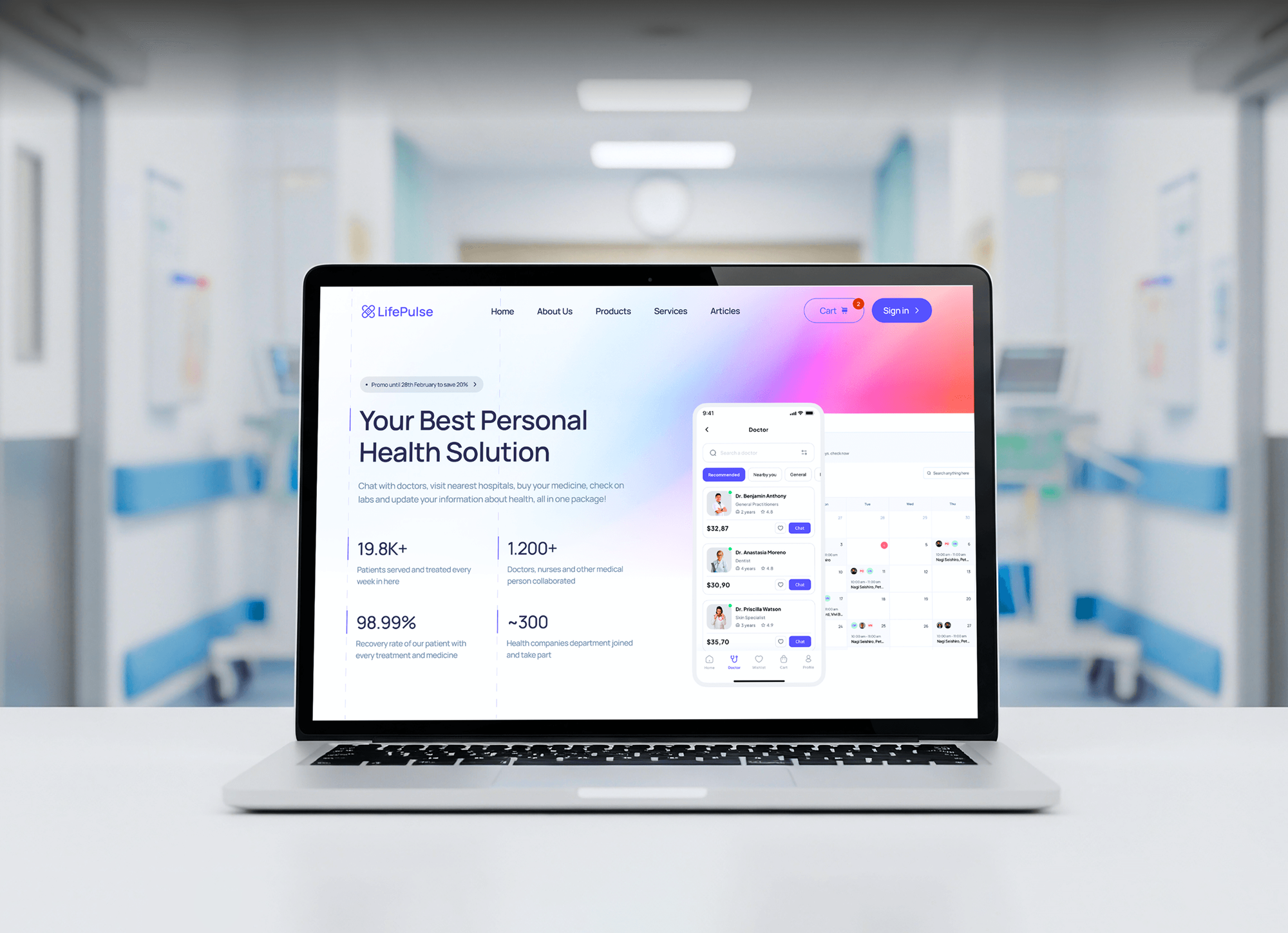
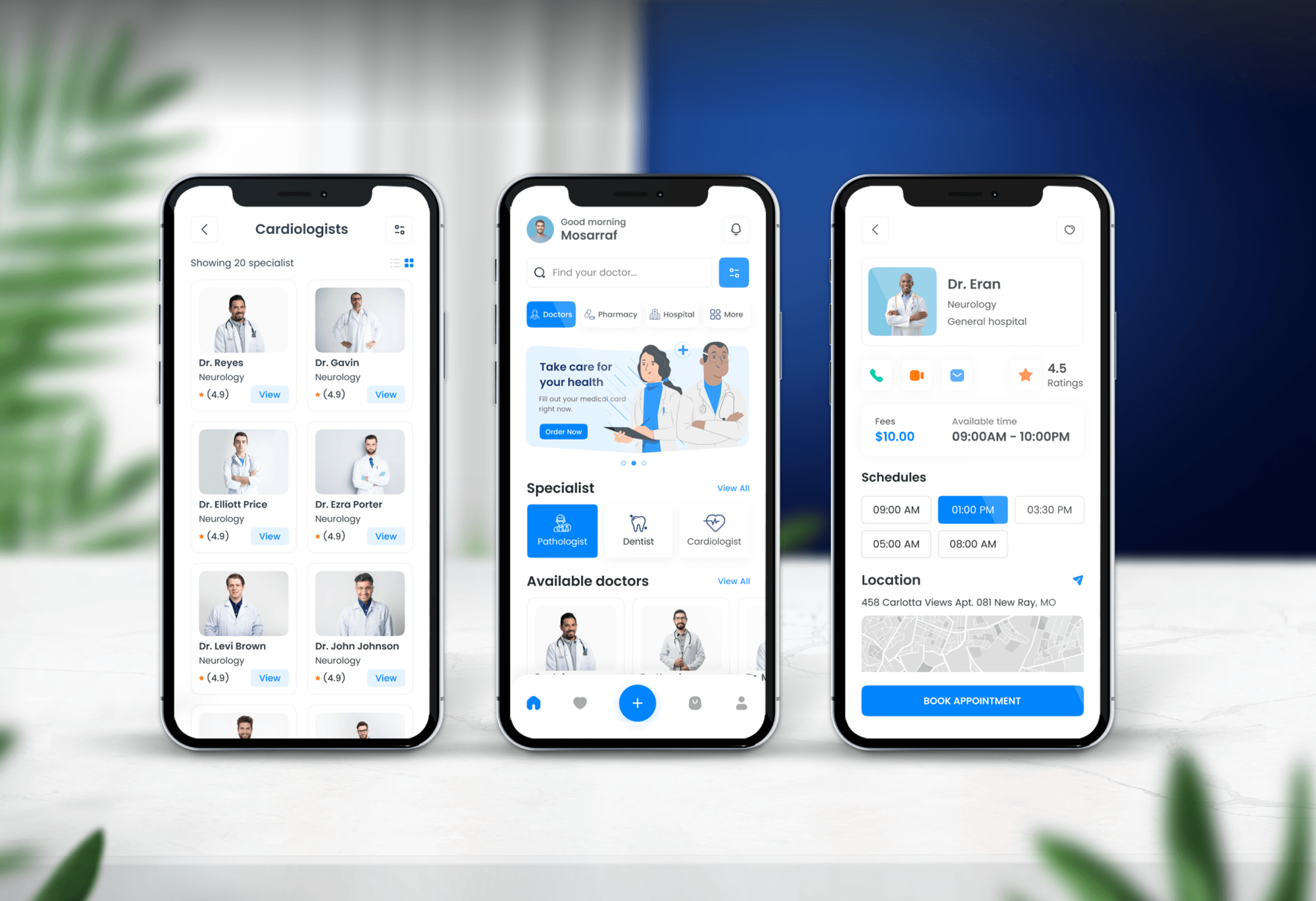
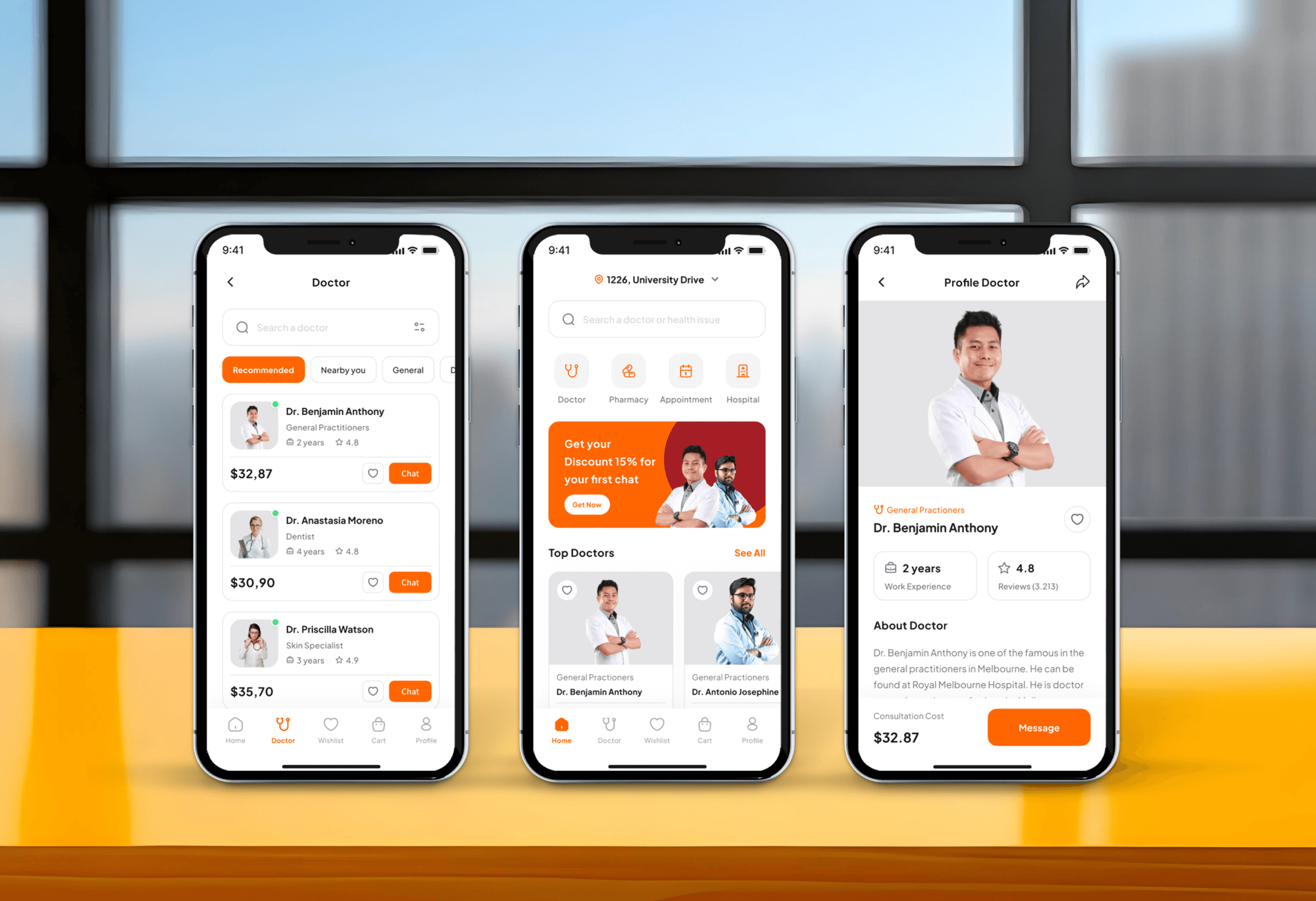
These patient apps let people book, consult online, keep records, and manage prescriptions, the same building blocks a portal uses. None was built on a client's EHR.
What Our Clients Say
Feedback from teams we have built apps and platforms for.
We had a pretty specific idea of what we wanted our website to become, but I wasn’t sure how easily we could explain all of it to a development team. There were quite a few moving parts, and we were working toward a deadline, so I expected a few things to get lost along the way. That never really happened. They understood what we were trying to achieve, kept us updated throughout the process, and got everything ready within the agreed timeline. The final site feels much easier to navigate, works beautifully on mobile, and is noticeably smoother for our customers. It was a huge relief seeing the original idea actually turn into the website we had in mind.
The mobile experience is probably my favourite part of the new site. We had spent a lot of time making sure the desktop version looked right, and the team kept pushing us to think about how everything would actually feel on a phone too. They were right. The navigation is clean, the interactions feel natural, and everything we’ve tested so far works exactly as it should. They also went through the links, forms, integrations, and other details more than once before launch, which I really appreciated. And even after going live, we could still reach out when something came up. The whole process felt friendly, organised, and surprisingly straightforward.
What I appreciate most is that the website is actually easy for us to manage now. We can update content ourselves instead of sending a developer a message every time we need to change something small. They also paid attention to the technical SEO side, which mattered to us because we didn’t want a new website to create problems for the traffic we already had. I’ve probably asked more questions than I should have since launch, but every question has been handled patiently and without any fuss. The team is easy to work with, they explain things clearly, and when we need something changed, they focus on getting it done rather than making the process complicated.
1,250+
Projects shipped
10+
Years of experience
Top 3%
Upwork Top Rated Plus
5 stars
Average review score
1,250+
Projects shipped
10+
Years of experience
Top 3%
Upwork Top Rated Plus
5 stars
Average review score

Want results like these?
Tell us what you are building. You get a reply within 24 hours on business days, then a written estimate.
Work Culture
Patient portal software companies sell one product to every practice. We build around the calls your front desk takes, and we'll say when your EHR's own portal is enough.
Before design, we list the calls your front desk takes each day. Success is measured in the calls your staff stop taking, not in features shipped.
Proxy and teen privacy rules come from your compliance lead and state law, not our defaults. We build the switches, and your team decides how they're set.
We sign a business associate agreement before touching real records. Until then, we build against EHR sandboxes and test patients, so nothing real is at risk.
We test with large text, screen readers, and older phones, aiming for WCAG 2.2 AA. Many of your portal users are older patients or caregivers managing several accounts.
If your EHR's built-in portal can do the job with better setup, we'll tell you before we quote. Sometimes a smarter invite process beats a new build.
Code, cloud accounts, and EHR app registrations sit in your name. If you change developers or EHRs later, the portal moves with you.
Overview
DeveloperLook handles patient portal development for medical practices and clinic groups. We build text-invite sign-up, results and visit notes from your EHR through FHIR, secure messages, forms, bill pay, and proxy access for caregivers. Pilots start at $1,300 and take 3 to 4 weeks, and you own the code.
DEVELOPERLOOK
Project facts · Patient Portal Development
Reviewed 28 Oct 2026 by Saimul Islam
Good fit
Primary care and pediatric practices
Your EMR patient portal software works, but few families activate it, and parents call about a child's results every morning.
Multi-location clinic groups
Your locations run 2 different EHRs, so patients juggle 2 portals and your brand disappears behind the vendors' logos.
Specialty practices with long care plans
Your patients follow months of instructions, forms, and check-ins, and a generic portal shows them only a list of results.
Digital health and care companies
You've spoken to a patient portal software company whose product can't hold your care model, and you need a portal you control.
Agencies serving healthcare clients
Your agency runs a health system's website and needs developers who know FHIR, proxy rules, and BAAs to deliver a portal under your name.
Not a fit
Budget under $1,300
You want a full portal for under $1,300. Turning on and promoting your EHR's built-in portal is the better first step, and we'll say so.
Only online booking
You only need patients to book visits online. Our patient scheduling software integration page covers booking through your EHR's own scheduler.
Replacing the EHR itself
You want charting, orders, and billing rebuilt, not a patient-facing layer. That's a records system, covered by our custom EHR and EMR development page.
No access to EHR data
Your EHR offers no API or export, and you can't change vendors. A portal without records would frustrate patients, so we'd advise against building one.
Not sure we're the right fit?
Book a free call or message us. We'll tell you honestly whether we're the right team.
Pricing
These are starting points in USD. Your final price depends on your EHR's API, your locations, and mobile apps, and you get a fixed proposal after a free discovery call.
For Agencies
You own the client relationship. We supply the portal engineering behind your proposal: EHR connections, proxy rules, payments, and BAA paperwork, delivered under your agency's name and in your client's own accounts.
White label: your client only ever sees your brand
Send the client's EHR, locations, and the calls they want the portal to absorb.
You get a fixed estimate, an access plan, and named developers within a week.
We deliver under your brand and hand over code, accounts, and EHR registrations.
Send the client's EHR, locations, and the calls they want the portal to absorb.
You get a fixed estimate, an access plan, and named developers within a week.
We deliver under your brand and hand over code, accounts, and EHR registrations.
The Right Technology for Your Project
Patients get a fast web portal first and an app only when they need one, connected to your EHR through standard FHIR APIs.
 React
 Next.js
 TypeScript
 Node.js
 FlutterReact Native
 Stripe
 Twilio
 AWS
 PostgreSQL
Related Services
Portals depend on EHR data, often add online booking, and need a HIPAA review. These pages cover the work around your portal.
This page
Patient Portal Development
Pairs with the 6 services around it
FAQ
Straight answers on cost, timelines, EHR connections, and choosing between a vendor portal and a custom build.
Saimul IslamFounder & CEO, DeveloperLookStill have questions?
Send a message or book a call with the team.
Patient portal development with DeveloperLook starts at $1,300 for a pilot with text-invite sign-up and results from one EHR. A full portal with messages, forms, bill pay, and proxy access starts at $3,950. A multi-EHR portal with iOS and Android apps starts at $8,400. You get a fixed proposal after a free discovery call.
A pilot takes 3 to 4 weeks, and a full portal usually takes 8 to 14 weeks. Much of the wait sits outside the code: EHR vendors need time to approve app registrations and production access. We start that paperwork in week 1, so it runs alongside design instead of after it.
Patient portal software is a secure website or app where patients see their health records and handle routine tasks with a practice. Typical features are lab results, visit summaries, medication lists, messages, forms, appointment requests, and bill pay. Most portals read data from the practice's EHR, so a portal is only as good as that connection.
Developing a portal well needs a front desk lead, a clinician, a privacy or compliance lead, your EHR administrator, and a few real patients. The front desk knows which calls to remove, and clinicians decide how results are explained. Compliance sets proxy and teen privacy rules. Patients test the sign-up, which is where most portals lose people.
Federal incentives prompted most of them. The 2009 HITECH Act funded Meaningful Use programs that rewarded providers for giving patients online access to their records. Later, the 21st Century Cures Act's information blocking rule barred providers from delaying patients' access to their electronic health information without a valid exception. Many portals were built to satisfy those rules, which is why they feel like compliance tools.
Good alternatives are your EHR's built-in portal, consumer health apps that read records through FHIR, secure texting, and online forms tools. Many patient portal software vendors overlap with these options. If patients only need reminders and forms, texting plus forms may be enough. A custom portal earns its cost when several needs meet in one place.
The best patient portal software for a small practice is usually the one built into its EHR, set up properly. Activation drops when sign-up is awkward, so a text invite at checkout matters more than extra features. A custom build makes sense for clinic groups with several EHRs, a distinct care model, or a brand the vendor portal hides.
Choose a patient portal software company by testing sign-up on a phone yourself, as a test patient. Then ask which EHRs it connects to and how, who controls proxy rules, and who owns the data and code. If the vendor can't show activation working from a text message, your patients will struggle too.
A custom portal connects to an EHR through the vendor's FHIR patient access API, usually with SMART on FHIR sign-in. Certified EHRs must offer this kind of API under federal rules, though write access for messages and forms varies by vendor. Where FHIR falls short, we use the vendor's own API or an HL7 interface and document each path.
You own the portal's code, cloud accounts, and EHR app registrations, and patient data stays in your EHR and your cloud. Full portal builds include 60 days of fixes and activation tuning after launch. We sign a business associate agreement before touching real patient data, and you can move support in-house whenever you like.
Saimul IslamFounder & CEO, DeveloperLookStill have questions?
Send a message or book a call with the team.
Free 30-min callGoogle Meet
Book a call
In 30 minutes on Google Meet we walk you through how we would build it, how long it takes and what it costs. Then you get a written estimate.
Calendar not showing? Book on cal.com or send a brief.