
Patient data map
A diagram of every form, upload, chat, and tag, showing where patient details travel and who stores them.

HIPAA compliant website fixes and builds: BAA-covered forms and hosting, no tracking on patient pages, a posted privacy notice. From $950.
100%
Patient forms under signed BAAs
A+
SSL Labs grade at launch
Teams we have built for:














The Problem
It rarely looks like a breach. A contact form emails symptoms to a shared inbox, and a pixel on your booking page reports who asked for what.
01 · Gmail forms
Your form plugin emails patient details to a shared Gmail inbox.
Form tools, hosts, and email services sign a BAA or get replaced.
02 · Pixel leaks
The Meta pixel on your form page logs every visit.
Ad pixels and analytics come off booking, form, and portal pages.
03 · Stored copies
A copy of each submission sits in your web host's database.
Submissions sit in encrypted storage on covered hosting.
04 · Badge thinking
After a complaint, you explain it to the Office for Civil Rights.
You end with a vendor list for your auditor, not a badge.
A patient fills out your appointment request with a name, a phone number, and knee pain after surgery. The form plugin emails it to a shared Gmail inbox, a copy sits in your web host's database, and the Meta pixel on that page logs the visit. None of those vendors signed a Business Associate Agreement. Nobody meant any harm. But if a patient complains, you're the one explaining it to the Office for Civil Rights.
We start by mapping every place patient details enter or leave your site: forms, booking, uploads, chat, email, and tags. Each vendor that touches them signs a BAA or gets replaced. Tracking comes off scheduling and form pages. Your privacy notice goes up where HIPAA asks, and every page runs over HTTPS with HSTS. You end with a vendor list for your auditor, not a badge that says certified.
Signed BAAs for every vendor
Form tools, hosts, and email services that touch patient details sign one or get replaced.
Tags off patient pages
Ad pixels and analytics stay off booking, form, and portal pages, following HHS guidance.
Encrypted in transit and at rest
HTTPS with HSTS on every page, plus encrypted storage wherever submissions are kept.
Our HIPAA Website Process
You see the data map, the vendor list, and a tested staging copy before your live site changes. Each step ends with something you sign off.
Secure medical website design starts with a map. Your free audit covers every form, booking tool, chat widget, and tag. You get a data map, the vendors that need agreements, and a fixed-price proposal.
What's Included
Every place patient details touch your site, covered: forms, booking, hosting, email, tags, and the paperwork that proves it to an auditor.
Compare Options
A form add-on fixes one form quickly, and a checklist costs nothing. Here is what each covers when an auditor asks about your whole site.
| Feature | DeveloperLookBest fit | HIPAA form add-on | DIY checklist |
|---|---|---|---|
| Scope covered | Forms, tags, hosting, email | The forms it replaces | Whatever you check |
| BAA coverage | Every vendor touching data | The add-on vendor only | You chase each vendor |
| Tracking tags | Removed from patient pages | Not addressed | Hard to verify alone |
| Data storage | Moved to a covered host | Kept with the vendor | Your current host |
| Setup speed | 2 to 3 weeks | Same day for one form | Depends on your time |
| Upfront cost | From $950, fixed scope | A monthly plan fee | Free, apart from time |
| Audit evidence | Vendor list and screenshots | The vendor's own BAA | Your own notes |
| Launch support | 30 to 90 days included | Vendor help desk | No outside help |
Projects We've Built
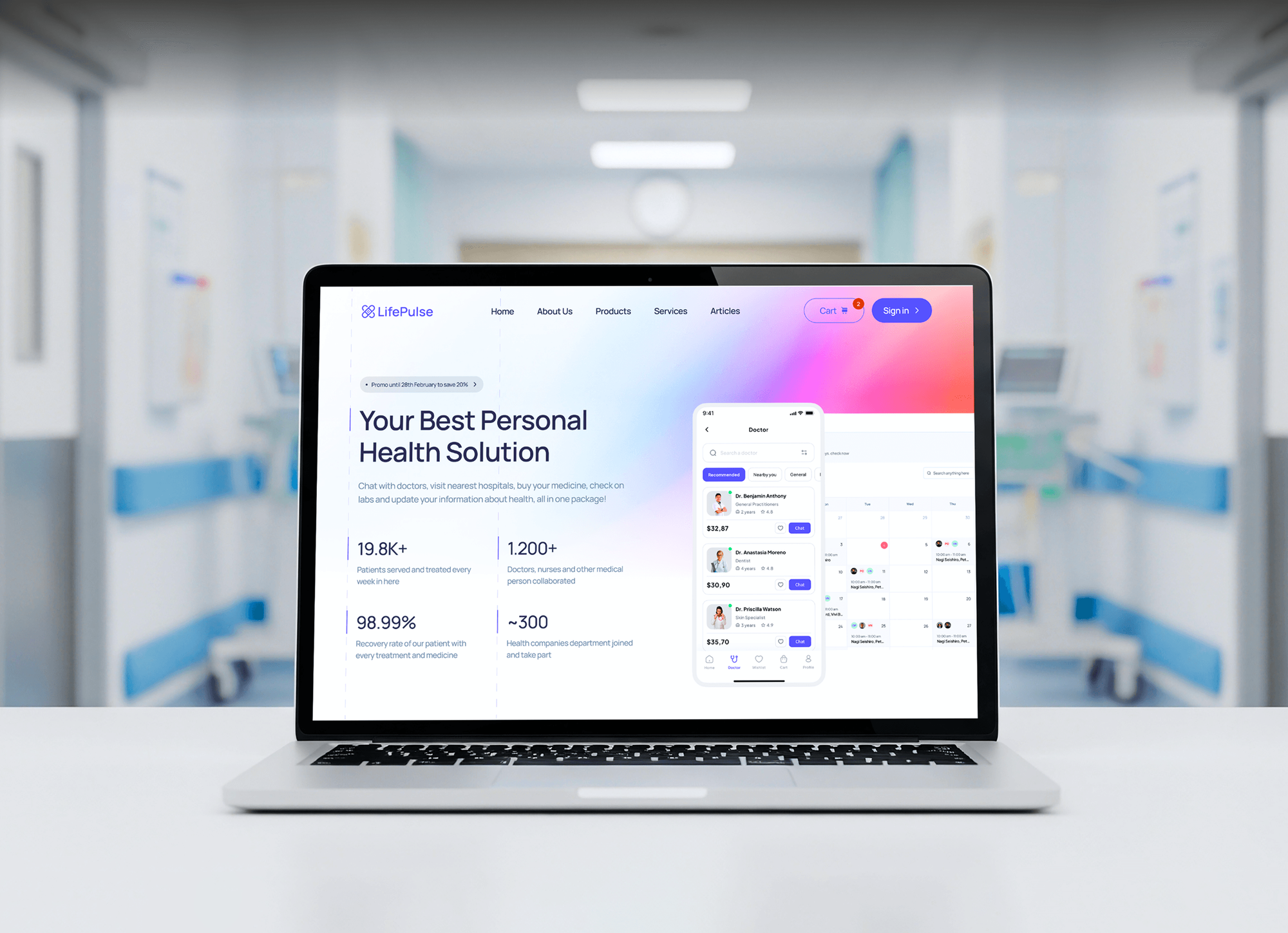
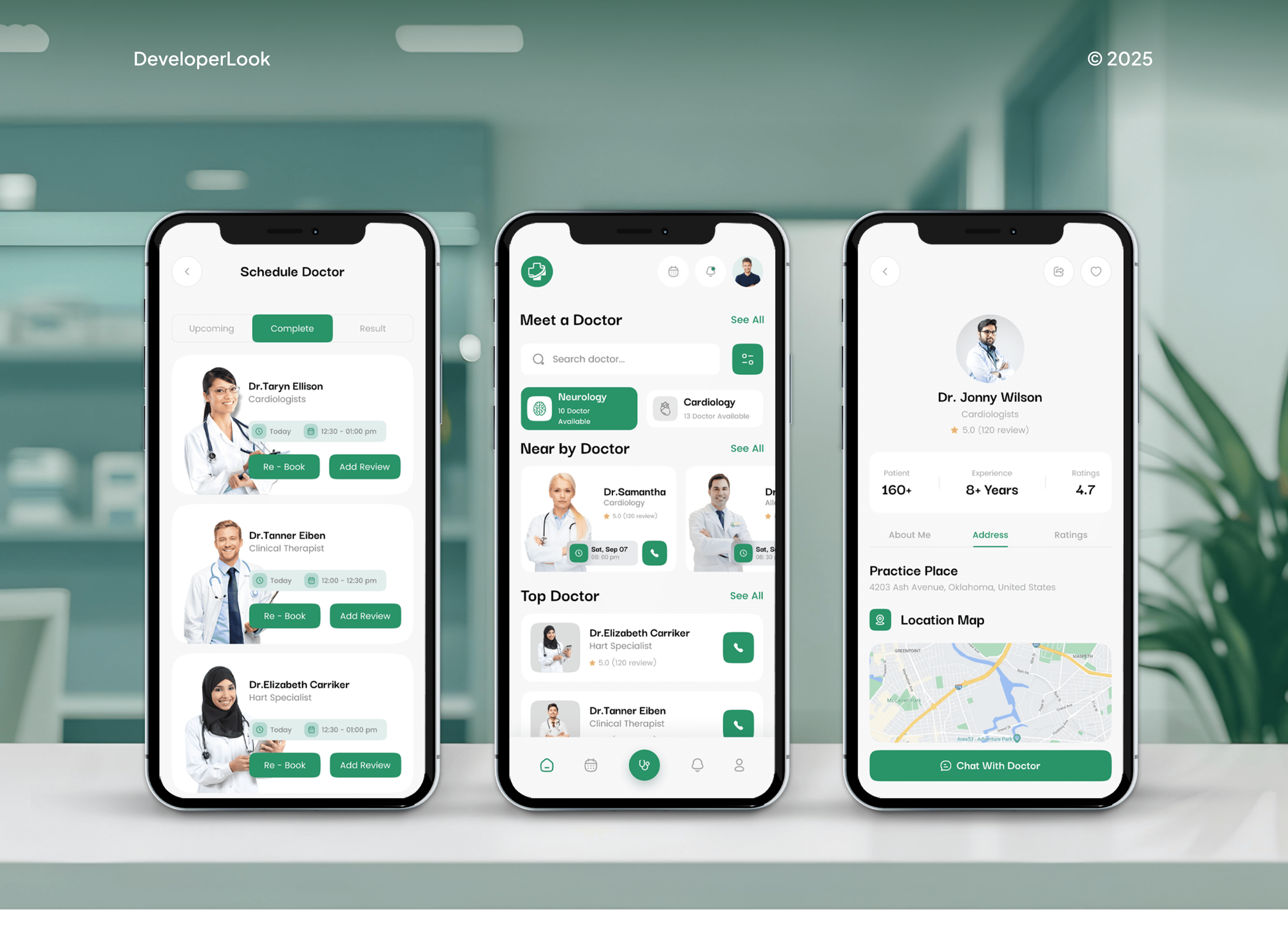
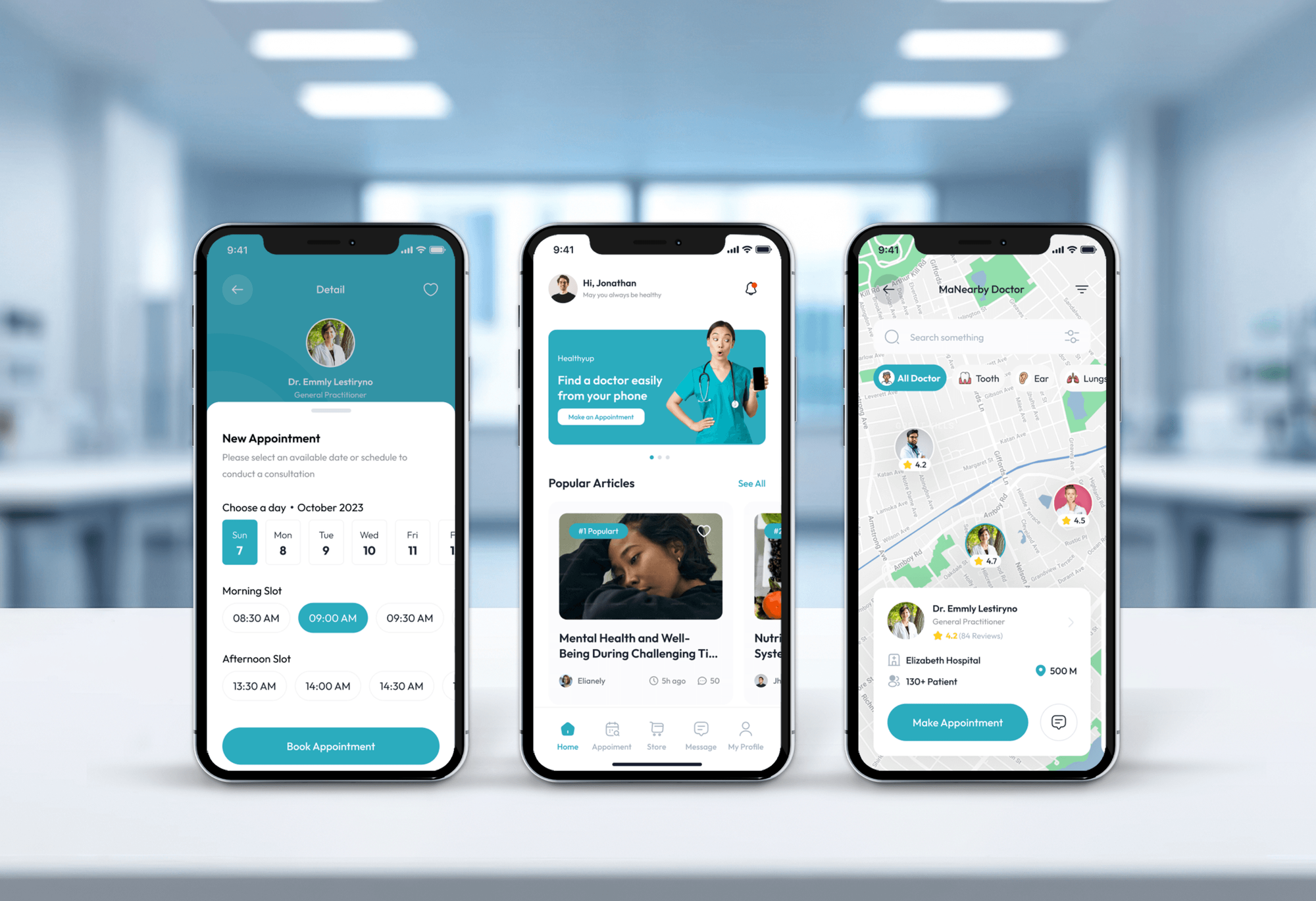
Medical websites and patient apps we have designed and built, where forms, logins, and records had to stay private from the first release.

What Our Clients Say
Feedback from teams we have built private forms, portals, and apps for.
We had a pretty specific idea of what we wanted our website to become, but I wasn’t sure how easily we could explain all of it to a development team. There were quite a few moving parts, and we were working toward a deadline, so I expected a few things to get lost along the way. That never really happened. They understood what we were trying to achieve, kept us updated throughout the process, and got everything ready within the agreed timeline. The final site feels much easier to navigate, works beautifully on mobile, and is noticeably smoother for our customers. It was a huge relief seeing the original idea actually turn into the website we had in mind.
The mobile experience is probably my favourite part of the new site. We had spent a lot of time making sure the desktop version looked right, and the team kept pushing us to think about how everything would actually feel on a phone too. They were right. The navigation is clean, the interactions feel natural, and everything we’ve tested so far works exactly as it should. They also went through the links, forms, integrations, and other details more than once before launch, which I really appreciated. And even after going live, we could still reach out when something came up. The whole process felt friendly, organised, and surprisingly straightforward.
What I appreciate most is that the website is actually easy for us to manage now. We can update content ourselves instead of sending a developer a message every time we need to change something small. They also paid attention to the technical SEO side, which mattered to us because we didn’t want a new website to create problems for the traffic we already had. I’ve probably asked more questions than I should have since launch, but every question has been handled patiently and without any fuss. The team is easy to work with, they explain things clearly, and when we need something changed, they focus on getting it done rather than making the process complicated.
1,250+
Projects shipped
10+
Years of experience
Top 3%
Upwork Top Rated Plus
5 stars
Average review score

Want results like these?
Tell us what you are building. You get a reply within 24 hours on business days, then a written estimate.
Work Culture
Compliance work fails when someone assumes a vendor is covered. These habits swap assumptions for signed agreements, tested settings, and records you keep.
Before a form goes live, the vendor behind it has signed a BAA with your practice. If a vendor won't sign, we replace it instead of hoping.
We open each booking, form, and portal page in browser tools and list every request it makes. Pixels that could see health details come off.
We test your TLS setup with SSL Labs and confirm storage encryption in each vendor's settings. You keep the grade and the screenshots.
HHS doesn't certify websites or recognize private HIPAA badges. You get evidence to show an auditor instead of a seal on your footer.
If your site collects no patient details at all, we'll tell you before we quote. Some practices only need a notice page and a tag cleanup.
Your practice signs each BAA and owns each form, hosting, and email account. We work inside them, and you remove our access when we finish.
Overview
DeveloperLook builds a HIPAA compliant website for medical and dental practices, or fixes the one you have. We map where patient details flow, move forms and booking to covered vendors, keep tags off patient pages, and post your privacy notice. Fixes start at $950 and take 2 to 3 weeks, and you get a written list of every vendor and its BAA.
DEVELOPERLOOK
Project facts · HIPAA Compliant Website Design Services
Reviewed 28 Sep 2026 by Saimul Islam
Good fit
Practices with an older site
Your contact form emails symptom details to a shared inbox, and nobody knows which plugins or pixels can see them.
Clinics on Wix or Squarespace
You built the site yourself and need to know which features your builder's BAA covers before patients use your forms.
Groups moving intake online
You want new patients to finish history forms before the visit, stored in your own covered cloud with access logs.
Marketing leads at medical groups
You run ads and need conversion counts in Meta and Google without sending any health details to either one.
Agencies with healthcare clients
Your clinic clients ask about HIPAA, and you need BAAs, tag reviews, and form rebuilds handled under your brand.
Not a fit
One intake form
Your budget is under $950 and you have one intake form. A form vendor's HIPAA plan, such as Jotform Gold, can cover it alone.
Full clinic website
You need a full clinic site with provider profiles and booking. Our Medical Website Design service builds that, privacy included.
Legal or risk analysis
You need legal advice or a formal HIPAA risk analysis. A healthcare attorney or compliance consultant fits that role, and we handle the website.
Surgical gallery site
You mainly want before-and-after galleries and surgical consults. Our Plastic Surgery Website Design page covers consent-tracked galleries.
Not sure we're the right fit?
Book a free call or message us. We'll tell you honestly whether we're the right team.
Pricing
These are starting points in USD. Your final price depends on your forms, vendors, and data storage, and you get a fixed proposal after a free audit.
For sites that need forms, tags, and vendors fixed in 2 to 3 weeks.
$950one-time, USD
For a new site built around private forms and booking, live in 5 to 7 weeks.
$2,750one-time, USD
For groups storing custom intake in their own BAA-covered cloud, built in 8 to 10 weeks.
$6,300one-time, USD
For Agencies
You keep the clinic relationship. We handle the parts agencies avoid: vendor BAAs, tag reviews on patient pages, form rebuilds, and the records your client files away, all under your brand.
White label: your client only ever sees your brand
Send the site URL, the client's current vendors, and any BAAs they already hold.
You get the data map, a fixed quote, and a timeline to approve.
We make the fixes, then pass you the vendor list and screenshots under your brand.
Our work ships under your brand, and the client relationship stays yours.
A fixed scope, a data map, and dated milestones before the live site changes.
Form rebuilds, tag removal, and cloud intake handled by senior developers.
Take on one practice's fix or a whole roster of healthcare sites.
The Right Technology for Your Project
We choose vendors that sign a BAA for anything touching patient data, and keep the rest of the stack simple enough for your team to maintain.
 Next.js
 Node.js
 PostgreSQL
 AWS
AWS Cloudflare
 Chrome DevTools
 OWASP
OWASP Lighthouse
 WordPress
 Webflow
FAQ
Straight answers on cost, BAAs, hosting, encryption, tracking pixels, and website builders.
Saimul IslamFounder & CEO, DeveloperLookStill have questions?
Send a message or book a call with the team.
Fixing your current site starts at $950. That covers a review of every form, tag, and vendor, a move to covered form tools, and your privacy notice. A new HIPAA-ready site costs $2,750, and custom intake in your own covered cloud starts at $6,300. Vendor fees, like Jotform Gold, bill separately.
Fixes take 2 to 3 weeks, a new HIPAA-ready site takes 5 to 7, and custom intake builds take 8 to 10. The slowest step is usually waiting on vendor agreements or confirming who needs admin access. Your most sensitive forms, such as intake, get fixed first.
Your site is compliant when every part that touches patient information meets HIPAA's rules, since HIPAA governs the data, not the design. That takes signed BAAs with each vendor, encryption and access controls, and no tracking that leaks health details. Your Notice of Privacy Practices must also appear prominently on the site.
Civil penalties from HHS start at $145 per violation and reach $2,190,294 a year for repeated violations of one requirement. Those are the January 2026 inflation-adjusted amounts, and they rise with culpability. Cases often end in corrective action plans, and an impermissible disclosure can require breach notices to patients.
Yes, when your site stores or processes patient information on that host. HHS says a cloud host is a business associate even if it only keeps encrypted data without the key. A brochure site whose forms post straight to a covered vendor may store none itself. HIPAA compliant website hosting starts with knowing which case you're in.
You serve every page over HTTPS with TLS 1.2 or later and HSTS, so form data is encrypted from browser to server. The receiving vendor stores it encrypted at rest, as Jotform does on its HIPAA plan. Encryption is an addressable safeguard under HIPAA today, and a January 2025 HHS proposal would make it required.
Keep pixels off any page where patients book, fill in forms, or log in, because HHS says tracking there can disclose patient data. Google offers no BAA for Google Analytics and bars it from HIPAA-covered pages, so it stays on general pages. Ad reporting uses conversion events that carry no health details.
Some builders now sign a BAA for part of their platform. Wix turns on PHI protection for upgraded plans before you sign its BAA, while Squarespace's BAA covers only its Acuity scheduling tool, not site forms. With any builder, check which features the agreement names and keep patient forms on covered tools.
Yes, with the $950 fix, which keeps your design and content. We replace the forms and any host that won't sign an agreement, strip tags from patient pages, and post your privacy notice. A rebuild only makes sense when your platform can't be covered for the features you use.
Your practice holds all of them. Each BAA is signed between your practice and the vendor, and every form, hosting, and email account sits in your name. We work through our own logins, which you remove at handover, so nothing depends on us after launch.
Saimul IslamFounder & CEO, DeveloperLookStill have questions?
Send a message or book a call with the team.
Free 30-min callGoogle Meet
Book a call
In 30 minutes on Google Meet we walk you through how we would build it, how long it takes and what it costs. Then you get a written estimate.
Calendar not showing? Book on cal.com or send a brief.