
Service line pages
One page per service line with conditions treated, doctors, locations, and a clear next step for patients.

For community hospitals and small health systems: a site where patients find a doctor, a service, the ER, and a price estimate without calling. From $1,450.
90+
Mobile PageSpeed score
100%
Templates tested to WCAG 2.1 AA
How your project runs
Teams we have built for:














The Problem
It shows up after years of departments adding their own pages. Patients looking for a cardiologist, the ER, or a price estimate land on pages written for staff.
01 · Duplicates
Three cardiology pages disagree about which doctors still practice there.
Each service line gets one owned page, tied to the provider directory.
02 · Wayfinding
The ER address hides under About Us.
Emergency and campus pages lead with the address, parking, and the right entrance.
03 · Pricing
The price estimator link sits where nobody scrolls.
A Price Transparency footer link reaches your charges file, shoppable services, and estimator.
04 · Edits
A phone number change waits two weeks for IT.
Department editors update their own pages through approval steps your marketing team controls.
A father with a feverish toddler searches your hospital's name at 2 a.m. The home page opens with a foundation gala banner, and the ER address sits under About Us. A week later his mother needs a cardiology follow-up. She finds three cardiology pages, two listing doctors who left last year. The price estimator link hides in a footer nobody scrolls to. Meanwhile, your marketing team waits two weeks for IT to change one phone number.
We start with the tasks patients and families come to do: find care, find a doctor, find the building, and understand the bill. Each service line gets one owned page. The directory pulls from one list your medical staff office keeps current. ER and campus pages put the address and parking first. Department editors update their own pages through approval steps. Patients find care in a few taps, not through a phone tree.
One page per service line
Cardiology, orthopedics, maternity, and every other service line gets one current page with its doctors and locations.
ER and campus wayfinding
Emergency, urgent care, and campus pages lead with the address, parking, and the entrance a visitor needs.
Price transparency within reach
Your standard charges file, shoppable services, and estimator linked where CMS rules and patients expect them.
Our Hospital Website Design Process
You approve the audit findings, the service line map, the clickable design, and the staging site. Clinical content goes live only after the department that owns it signs off.
We crawl your current site, review which patient tasks people complete, and list duplicate and outdated pages. You get an audit report, a content inventory, and a fixed price you can use in your business case.
What's Included
Service line and provider pages, location and ER wayfinding, price transparency links, portal and scheduling links, and accessibility testing, planned as one site your editors can keep current.
Compare Options
Lists of the best hospital website design examples favor big systems with big budgets. An enterprise agency suits those systems, and an in-house team knows your departments best.
| Feature | DeveloperLookBest fit | Enterprise agency | In-house team |
|---|---|---|---|
| Planning approach | Patient tasks first | Brand and research workshops | Department requests first |
| Service line pages | One owned page each | Strong, with large budgets | Grows page by page |
| Price transparency | Footer link and plain page | Usually covered | Often left to finance |
| Accessibility | WCAG 2.1 AA tested | Usually tested | Depends on staff skills |
| Tracking review | Every tag reviewed on staging | Often included | Rarely reviewed |
| Launch speed | 8 to 20 weeks | Longer, larger programs | Fits around other work |
| Upfront cost | From $1,450, fixed scope | Highest upfront cost | Salaries already budgeted |
| Ownership | Code and accounts yours | Often licensed platforms | Yours, while staff stay |
Projects We've Built
A healthcare website and patient apps with hospital dashboards from our portfolio. None was a full hospital site, but each handled doctors, appointments, and patient data.
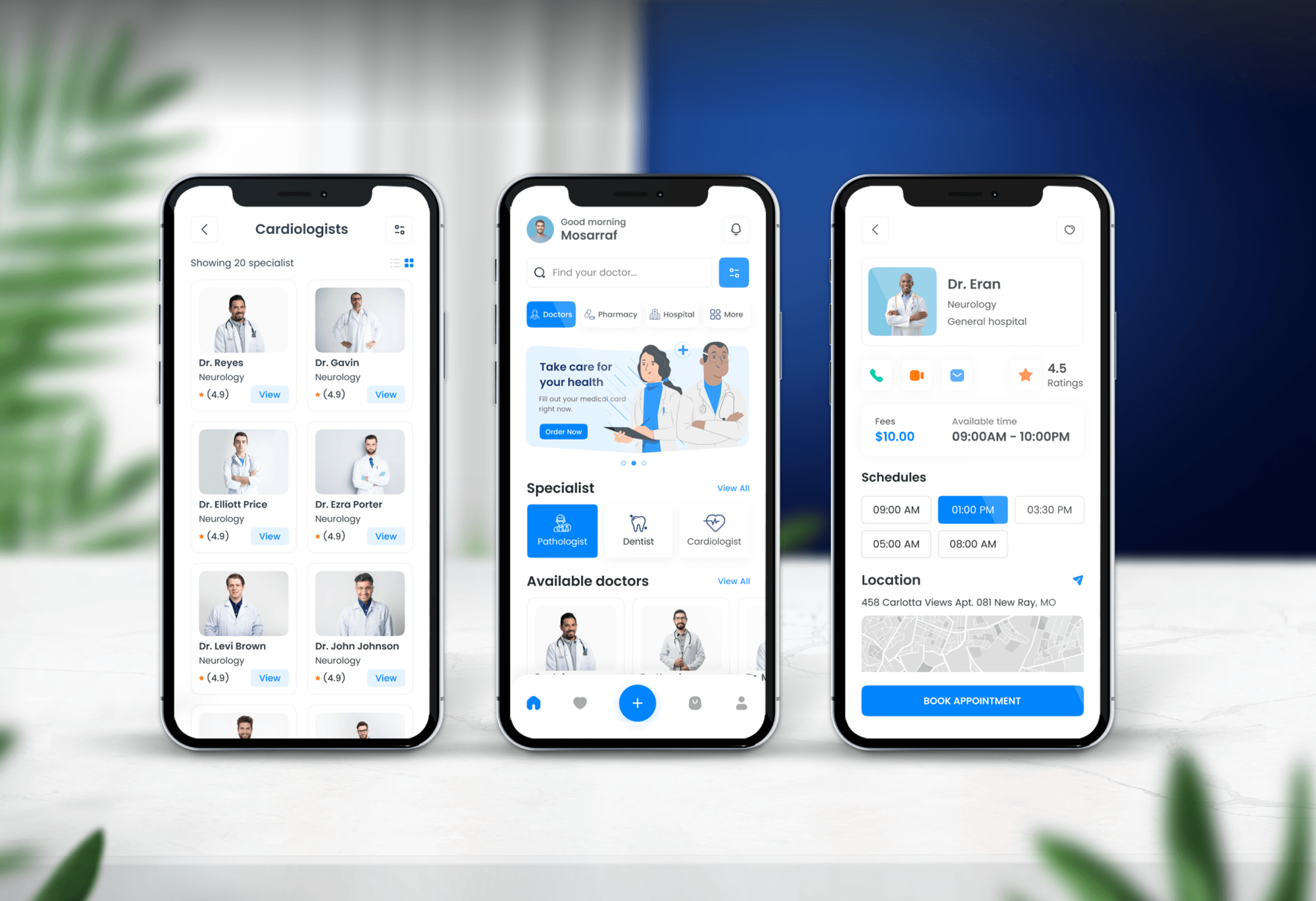
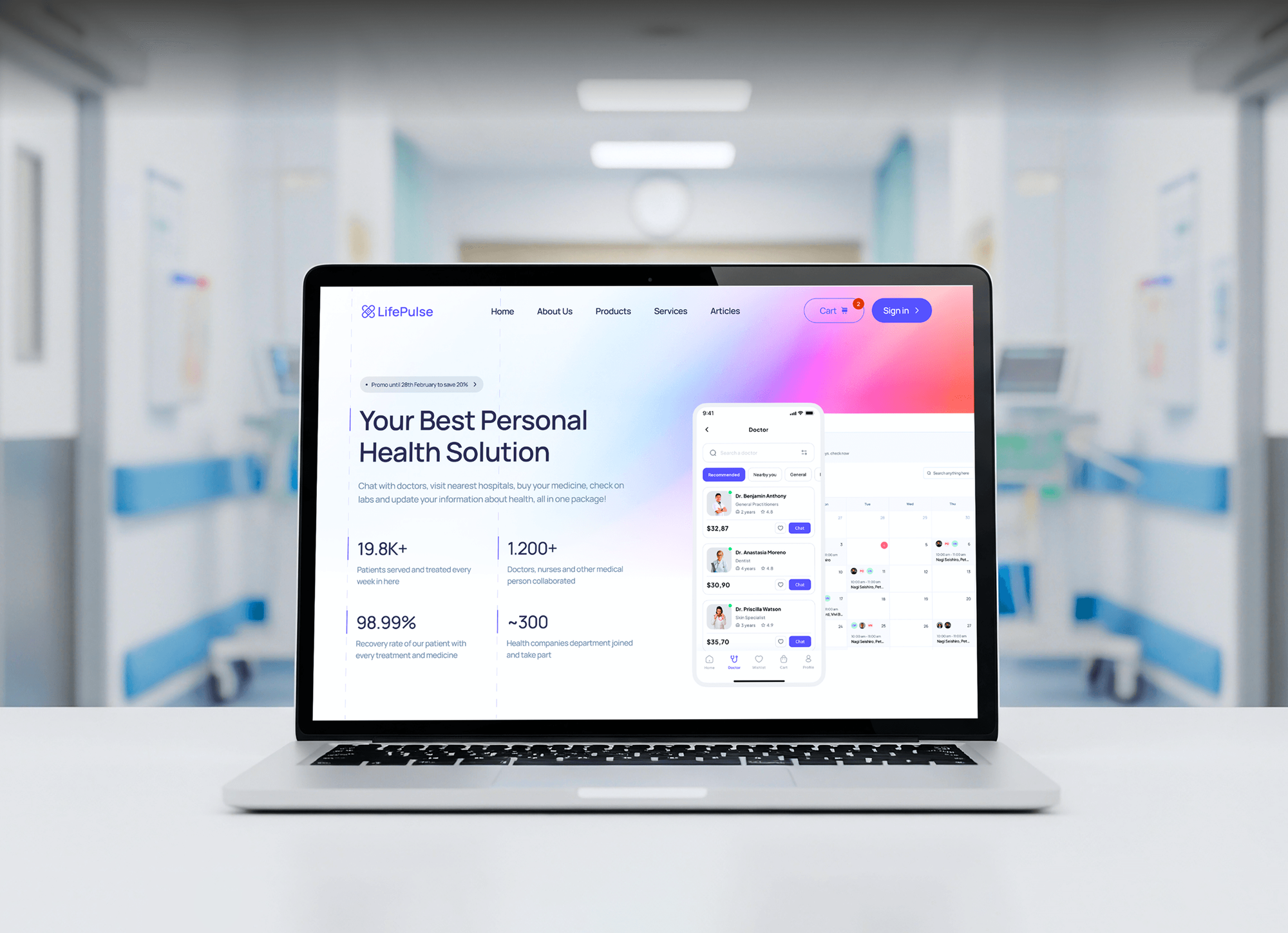
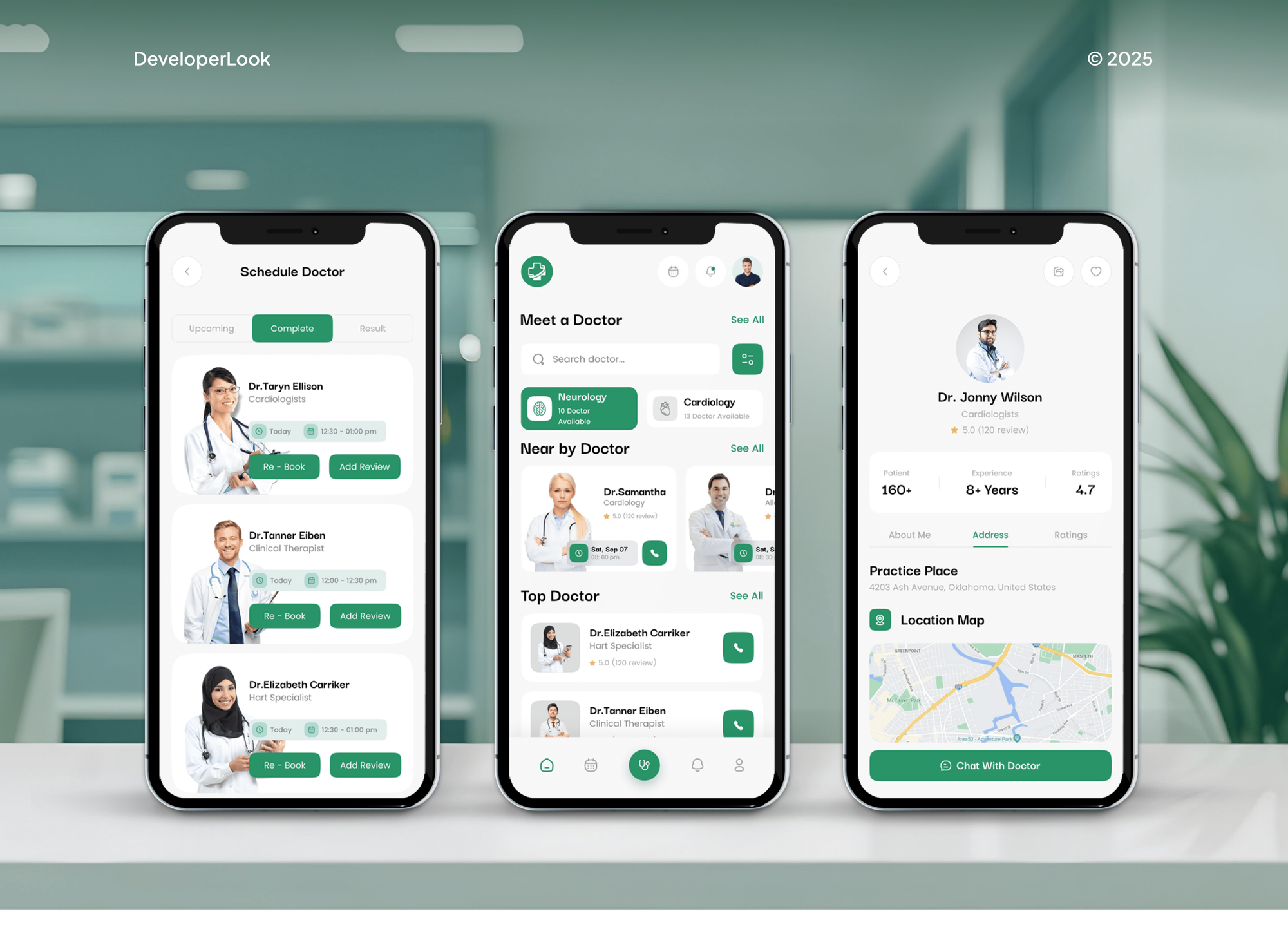
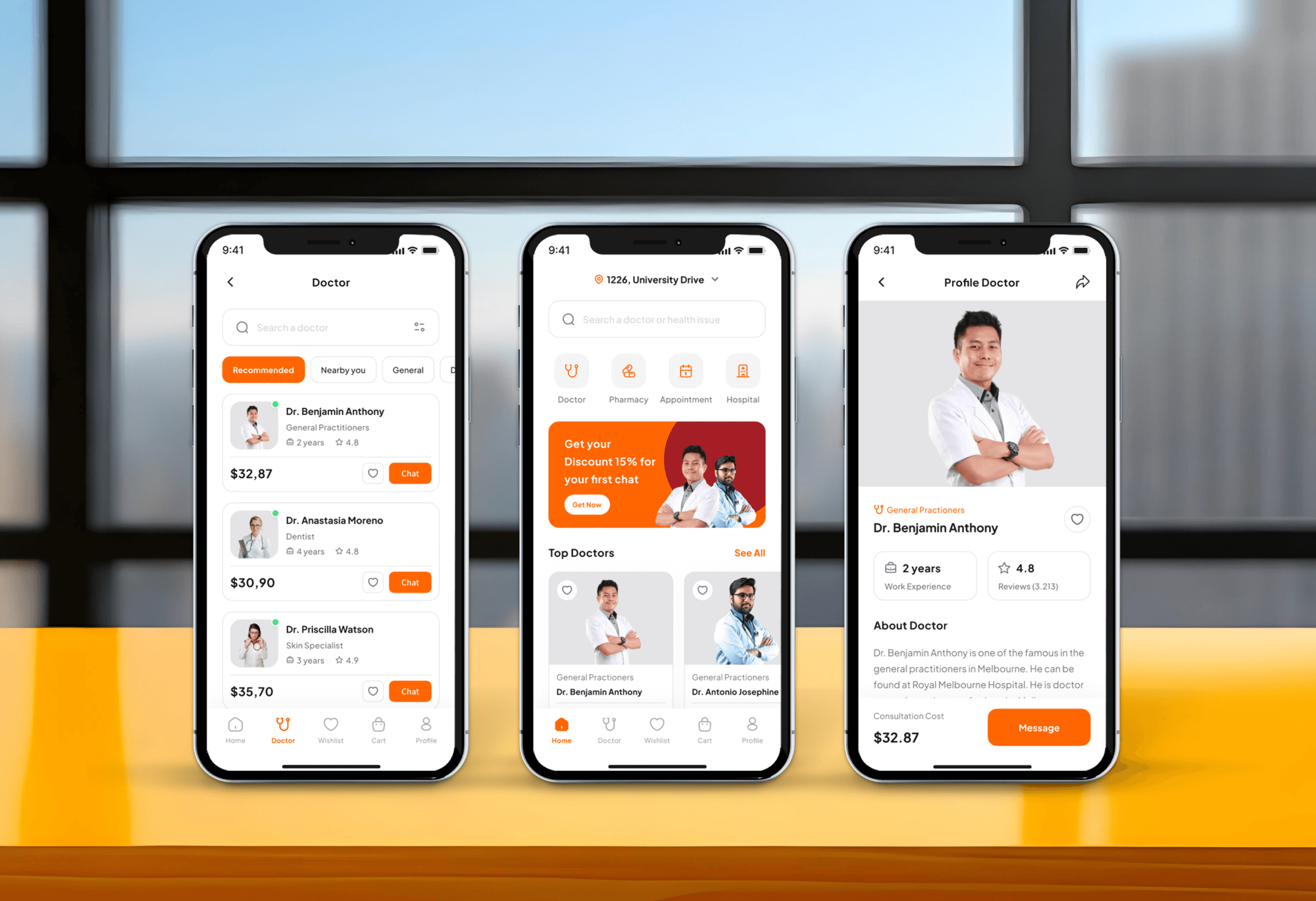
What Our Clients Say
Feedback from teams we have built websites and patient apps for.
We had a pretty specific idea of what we wanted our website to become, but I wasn’t sure how easily we could explain all of it to a development team. There were quite a few moving parts, and we were working toward a deadline, so I expected a few things to get lost along the way. That never really happened. They understood what we were trying to achieve, kept us updated throughout the process, and got everything ready within the agreed timeline. The final site feels much easier to navigate, works beautifully on mobile, and is noticeably smoother for our customers. It was a huge relief seeing the original idea actually turn into the website we had in mind.
The mobile experience is probably my favourite part of the new site. We had spent a lot of time making sure the desktop version looked right, and the team kept pushing us to think about how everything would actually feel on a phone too. They were right. The navigation is clean, the interactions feel natural, and everything we’ve tested so far works exactly as it should. They also went through the links, forms, integrations, and other details more than once before launch, which I really appreciated. And even after going live, we could still reach out when something came up. The whole process felt friendly, organised, and surprisingly straightforward.
What I appreciate most is that the website is actually easy for us to manage now. We can update content ourselves instead of sending a developer a message every time we need to change something small. They also paid attention to the technical SEO side, which mattered to us because we didn’t want a new website to create problems for the traffic we already had. I’ve probably asked more questions than I should have since launch, but every question has been handled patiently and without any fuss. The team is easy to work with, they explain things clearly, and when we need something changed, they focus on getting it done rather than making the process complicated.
1,250+
Projects shipped
10+
Years of experience
Top 3%
Upwork Top Rated Plus
5 stars
Average review score

Want results like these?
Tell us what you are building. You get a reply within 24 hours on business days, then a written estimate.
Work Culture
Website design for hospitals involves dozens of stakeholders and strict rules. These habits keep the project moving and every rule accounted for.
Clinical pages go live only after the clinician or department you name approves them. We write for patients, but your experts own the medical facts.
We list every pixel and analytics tag before launch and keep ad trackers off pages that could reveal health information. HHS guidance on tracking technologies shapes that review.
We test each template against WCAG 2.1 AA as we build it, not after launch. The HHS Section 504 rule sets that standard for many hospitals' websites.
Each department editor learns the CMS and the approval steps on staging. A site that only IT can change starts going stale the week it launches.
If your current CMS can carry a cleanup instead of a rebuild, we'll tell you before we quote. A content audit sometimes solves more than a redesign.
Domain, hosting, CMS, and analytics accounts stay in the hospital's name. If you change vendors later, your content and code go with you.
Overview
DeveloperLook provides hospital website design for community hospitals and small health systems. We build service line pages, a find-a-doctor directory, location and ER pages, price transparency links, and templates tested to WCAG 2.1 AA. Projects start at $1,450 and take 8 to 20 weeks, with fixed scope and every account in your name.
DEVELOPERLOOK
Project facts · Hospital Website Design
Reviewed 8 Oct 2026 by Saimul Islam
Good fit
Critical access and rural hospitals
Your site was built years ago by a vendor who's gone, and you need a fast site with ER directions and price information.
Community hospitals planning a redesign
Your board wants a business case before approving a hospital website redesign, and you need an audit and a fixed price to build it.
Small systems with several campuses
You've added clinics and a second hospital, and patients can't tell which campus offers what or where each doctor sees patients.
Marketing teams stuck behind IT tickets
Your marketing team waits weeks for simple edits, and you want department editors with approval steps instead of a ticket queue.
Agencies with a hospital client
You won a hospital account and need a build partner who knows service lines, price transparency links, and tracking rules.
Not a fit
Single clinic or practice
You run one clinic or physician practice rather than a hospital. Our Medical Website Design page fits multi-provider clinics better.
Tracking fixes only
Your site is fine, but its forms and tracking tags worry your privacy officer. Our HIPAA Compliant Website Design service fixes those without a rebuild.
Price file data work
You need the machine-readable price file built from your chargemaster. That's work for your revenue cycle team or pricing vendor, and we build the pages around it.
Budget under $1,450
Your budget is under $1,450, or your parent system's web team already controls your site. Working through that team is the cheaper route.
Not sure we're the right fit?
Book a free call or message us. We'll tell you honestly whether we're the right team.
Pricing
These are starting points in USD. Your final price depends on page count, campuses, and directory size, and you get a fixed proposal after a free site audit.
For critical access and small community hospitals that need a clear, fast site with core pages.
$1,450one-time, USD
For community hospitals replacing a sprawling site with service lines, a directory, and editor roles.
$3,900one-time, USD
For small systems with up to 4 hospitals and their clinics on one shared site.
$8,400one-time, USD
For Agencies
You own the hospital relationship and the brand work. We supply the build: service line templates, the provider directory, price transparency links, and accessibility testing, delivered under your agency's name.
White label: your client only ever sees your brand
Send the RFP, the current site, the campus list, and brand guidelines.
We return a fixed quote, a timeline, and one lead developer.
We build, test, and train editors, all under your agency's brand.
We stay behind your brand through every hospital meeting and approval.
Staging links and milestone reviews before your client's committee sees anything.
Senior developers handle directories, migrations, and headless CMS builds.
Add a hospital account without hiring a full web team.
The Right Technology for Your Project
We pick the CMS your editors can manage, connect the patient tools you already run, and test speed and accessibility on every template.
 Figma
 WordPress
 Next.js
 Algolia
 Cloudflare
 Lighthouse
 PageSpeed Insights
 Google Search Console
FAQ
Straight answers on cost, redesign planning, RFPs, regulations, platforms, and what makes a hospital site work.
Saimul IslamFounder & CEO, DeveloperLookStill have questions?
Send a message or book a call with the team.
Our hospital sites start at $1,450 for a community hospital site of up to 15 pages with ER, visitor, and price transparency pages. Redesigns with a find-a-doctor directory and editor roles start at $3,900. Systems with up to 4 hospitals start at $8,400. Each price is fixed after a free site audit.
Because patients check it before they call, drive, or book. It's where people confirm the ER address, find a doctor who takes their insurance, pay a bill, and see the prices CMS requires you to publish. Hospitals inside a larger system still need clear pages of their own.
A good one lets a stressed visitor find care, a doctor, a location, or a bill in a few taps. The best hospital websites have one page per service line, a searchable directory, ER details on the first screen, and plain language. They also load fast on older phones and work with screen readers.
Success is measured in completed patient tasks, not page views. Track directory searches that end in a call or booking, ER direction clicks, portal logins started, and estimator use. Fewer calls asking for basic details is another good sign. We set up these measures in GA4 on public pages without collecting health details.
Start with what the current site costs you in calls, lost referrals, and staff time. Pull analytics for top patient tasks, count duplicate and outdated pages, and log how long edits take. Then add risks, such as accessibility gaps and tracking tags on sensitive pages. Our free audit gives you those findings and a fixed price.
A good RFP lists your patient tasks, page count, campuses, and the systems the site links to, such as your EHR portal. Ask vendors how they test accessibility, review tracking, migrate content, and train editors, and who owns the code afterward. Include a budget range, so the proposals you get compare like for like.
The must-haves are pre-registration forms covered by a BAA, insurance card upload, consent capture, and a confirmation that says what happens next. Forms should save progress, work on phones, and send data to your registration system instead of email. Keep ad and analytics tags off every intake page.
Yes, several. CMS price transparency rules require a machine-readable file of standard charges, a consumer-friendly display of shoppable services, a cms-hpt.txt file, and a footer link. HIPAA governs patient data in forms and tracking, and the HHS Section 504 rule sets WCAG 2.1 AA for many hospitals. Your compliance team confirms how each applies.
Most run a content management system with strong editor roles, such as Drupal, WordPress, Sitecore, or Optimizely. Some pair a headless CMS with a Next.js front end. For hospital website development, we use WordPress, Drupal, or a headless setup, chosen by your number of editors and the patient tools you connect.
Redesign when the structure or platform no longer fits, not on a fixed calendar. In between, keep pages current with monthly content reviews and a yearly accessibility and tracking audit. Duplicate service pages, edits that need IT, and failing accessibility tests are the signs a full redesign is due.
Saimul IslamFounder & CEO, DeveloperLookStill have questions?
Send a message or book a call with the team.
Free 30-min callGoogle Meet
Book a call
In 30 minutes on Google Meet we walk you through how we would build it, how long it takes and what it costs. Then you get a written estimate.
Calendar not showing? Book on cal.com or send a brief.