











First notice of loss intake
An online form for your policyholders and agents with photo upload, policy match, and a claim number on submit.

For carriers, MGAs, TPAs, and agencies: claims that move from first report to payment on time, and quotes built from your own rating rules. From $1,200.
2X
Faster claim cycle times
24/7
Online first notice of loss
Teams we have built for:














The Problem
It shows when a state deadline slips or an agent waits two days for a quote. Claim details sit in email threads, and rates live in a spreadsheet only one underwriter trusts.
Scattered reports
Loss details arrive across emails, calls, and texted photos.
Scattered reports
One online intake form matches the policy and opens the claim.
Missed deadlines
State acknowledgment and decision dates live in someone's calendar.
Missed deadlines
Each claim gets timers for its state's acknowledgment and decision deadlines.
Spreadsheet rates
Only one underwriter understands the rating spreadsheet.
Spreadsheet rates
Rating tables are versioned by state and effective date, readable by your staff.
Lost history
Rebuilding a claim's history takes a day of inbox searching.
Lost history
Every note, reserve change, and payment sits in one logged claim record.
A policyholder reports a burst pipe on Saturday by email, with photos split across three messages. On Monday an adjuster finds it, re-keys the details, and asks for the policy number again. The acknowledgment deadline is closer than anyone realizes. Meanwhile, one of your agents needs a quote for a small contractor, and your underwriter is the only person who understands the rating spreadsheet. When a regulator or reinsurer asks for a claim's history, someone spends a day rebuilding it from inboxes.
We start with the claim file. First notice of loss arrives through one online form that matches the policy, collects photos, and opens a claim with its state deadlines already set. Your adjusters work from a queue with diary tasks, reserves, and payment approvals in the same record. Quotes come from rating tables your team can read and version by state and effective date, so your filed rates stay the source instead of a spreadsheet.
One intake for every loss
Your policyholders and agents report losses online with photos, and each claim opens matched to its policy.
Deadlines tracked by state
Acknowledgment and decision timers follow the rules of the state where each claim is handled.
Rates your team can read
Rating tables are versioned by effective date, so quotes match the rates your carrier filed.
Our Insurance Claims and Quoting Software Process
You see every claim stage and deadline mapped before design starts, test intake with your own sample losses, and approve the rating tables line by line.
We walk through your claim types, states, intake channels, and rating sheets with your claims and underwriting leads. You get a workflow map, a deadline table by state, and a fixed-price proposal.
What's Included
Your build covers online loss intake, the adjuster's claim file, state deadline tracking, reserves and payments, quoting from versioned rating tables, and testing with your own claims.
Compare Options
A core claims suite suits large carriers with long implementation budgets, and an in-house team suits steady roadmaps. Here is where focused claims management software built for your team fits.
| Feature | DeveloperLookBest fit | Core claims suite | In-house team |
|---|---|---|---|
| Time to first release | 8 to 20 weeks | Many months of implementation | 6 to 12 months to hire |
| Fit to your workflow | Built around your claim types | Configured within the suite's model | Built around your claim types |
| Breadth of features | What you need first | Very broad out of the box | Grows with your hires |
| State deadline rules | Set per state with your team | Often included as configuration | Depends on your hires |
| Rating tables | Versioned and readable by your staff | Inside the suite's rating engine | Built when prioritized |
| Upfront cost | Fixed price per release | License plus implementation fees | Salaries before first release |
| Ongoing fees | No per-user license fees | Annual license by user or premium | Payroll and tools |
| Code ownership | You own the code | Vendor owns the platform | You own the code |
Projects We've Built
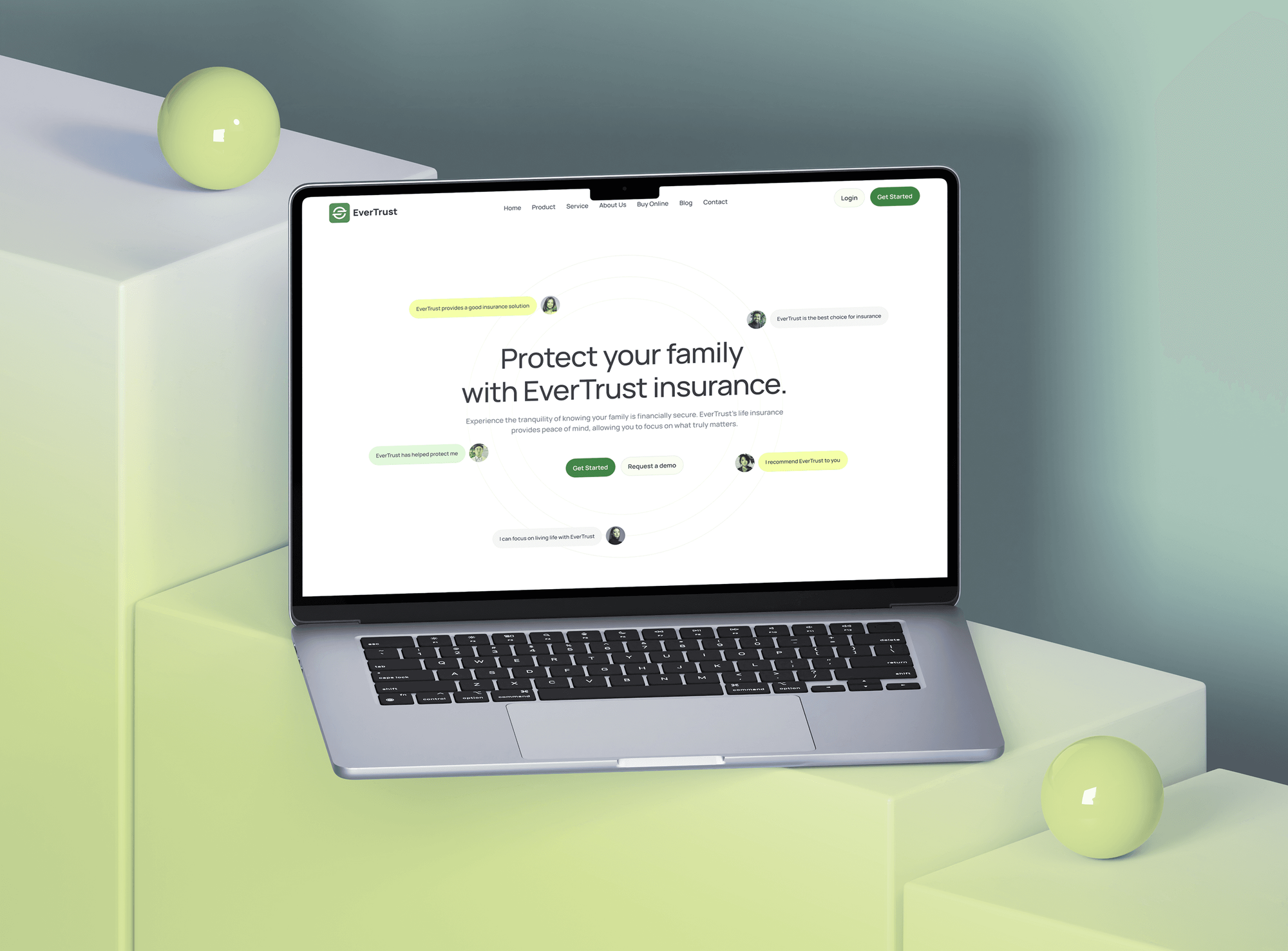
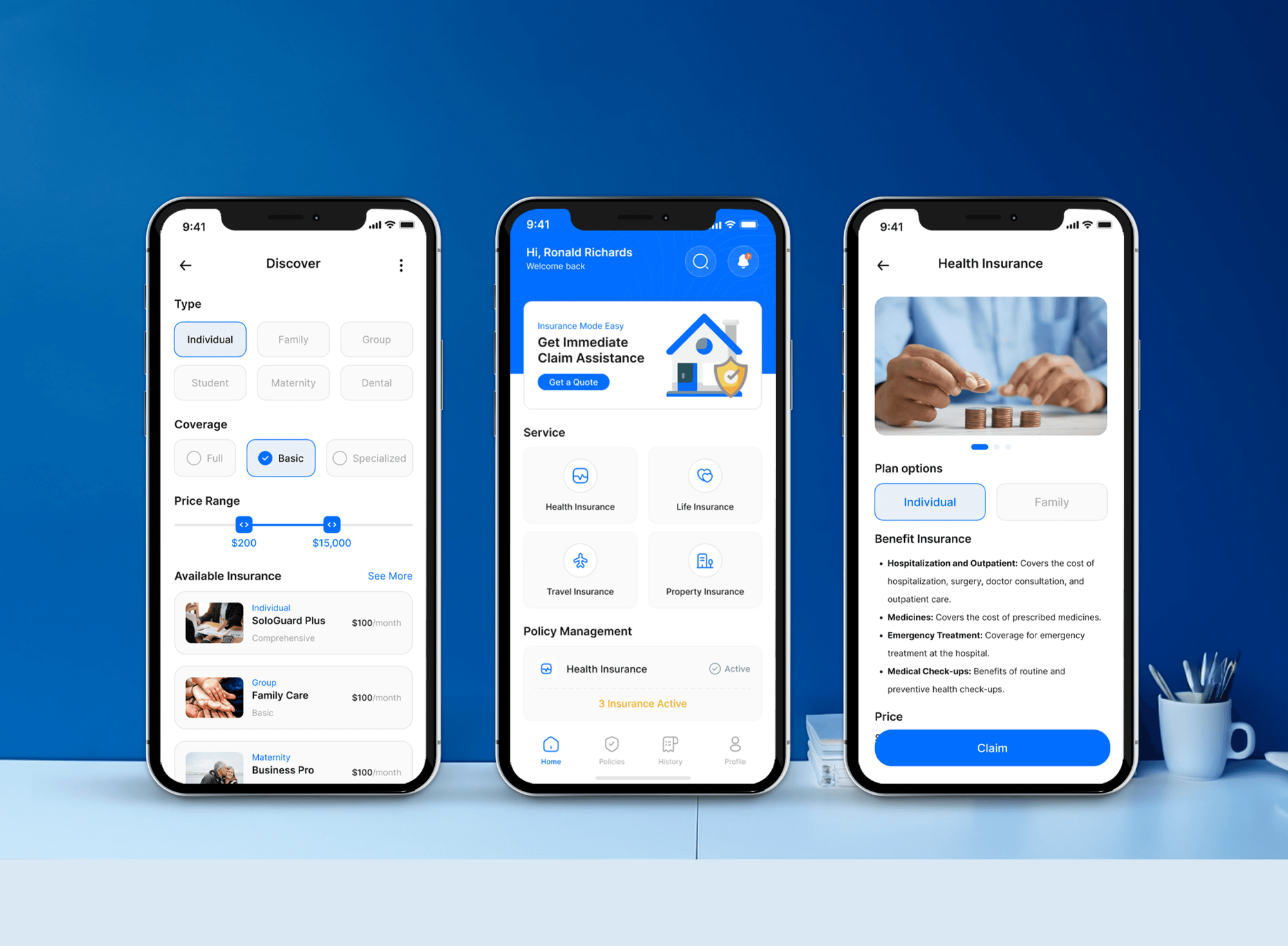
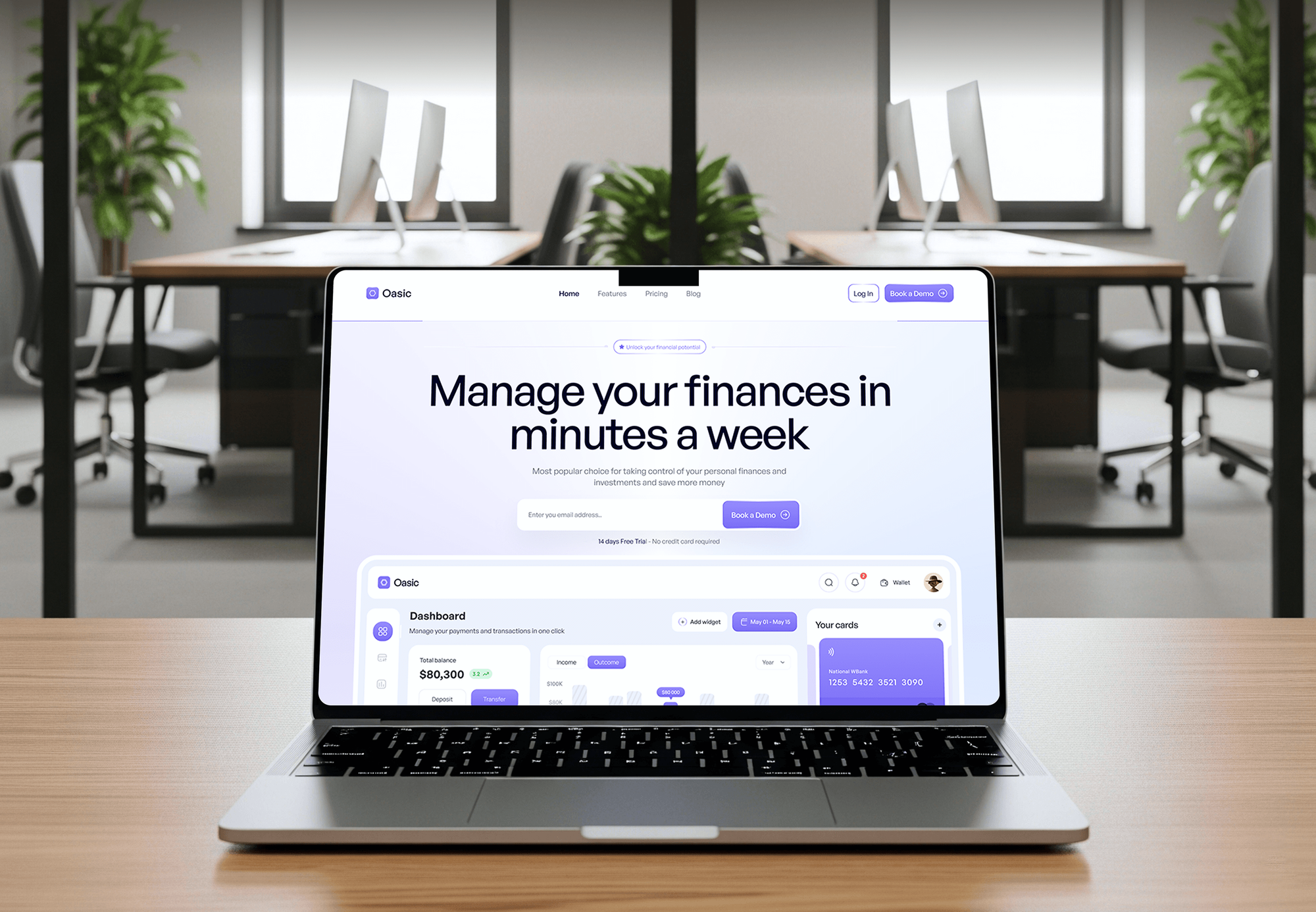
EverTrust and Dualcare are insurance builds we designed and built, with policies, claims submission, and admin dashboards. Oasic and Finto are finance dashboards with invoicing and payments.

What Our Clients Say
Feedback from teams we have built insurance apps, dashboards, and web products for.
We had a pretty specific idea of what we wanted our website to become, but I wasn’t sure how easily we could explain all of it to a development team. There were quite a few moving parts, and we were working toward a deadline, so I expected a few things to get lost along the way. That never really happened. They understood what we were trying to achieve, kept us updated throughout the process, and got everything ready within the agreed timeline. The final site feels much easier to navigate, works beautifully on mobile, and is noticeably smoother for our customers. It was a huge relief seeing the original idea actually turn into the website we had in mind.
The mobile experience is probably my favourite part of the new site. We had spent a lot of time making sure the desktop version looked right, and the team kept pushing us to think about how everything would actually feel on a phone too. They were right. The navigation is clean, the interactions feel natural, and everything we’ve tested so far works exactly as it should. They also went through the links, forms, integrations, and other details more than once before launch, which I really appreciated. And even after going live, we could still reach out when something came up. The whole process felt friendly, organised, and surprisingly straightforward.
What I appreciate most is that the website is actually easy for us to manage now. We can update content ourselves instead of sending a developer a message every time we need to change something small. They also paid attention to the technical SEO side, which mattered to us because we didn’t want a new website to create problems for the traffic we already had. I’ve probably asked more questions than I should have since launch, but every question has been handled patiently and without any fuss. The team is easy to work with, they explain things clearly, and when we need something changed, they focus on getting it done rather than making the process complicated.
1,250+
Projects shipped
10+
Years of experience
Top 3%
Upwork Top Rated Plus
5 stars
Average review score
1,250+
Projects shipped
10+
Years of experience
Top 3%
Upwork Top Rated Plus
5 stars
Average review score

Want results like these?
Tell us what you are building. You get a reply within 24 hours on business days, then a written estimate.
Work Culture
Your claims system holds policyholder data and decides when deadlines fall, and a regulator can ask for any claim's history. These habits keep files complete and rates under your control.
We write each state's acknowledgment and decision rules into the system only after your compliance team confirms them. Your adjusters see dates they can rely on, not our guesses.
We build rating tables from the rates and rules you filed with each state, and change them only on your request. Pricing and filings stay with your actuaries and underwriters.
We build MFA, access logs, and encryption in from the first sprint. States that adopted the NAIC data security model law expect notice within 72 hours of a confirmed cybersecurity event.
Notes, reserve changes, payments, and status updates are logged with who made them and when. A claim's full history becomes a report, not a day of digging.
If a packaged claims suite already fits your lines and volume, we'll say so before quoting. A focused build makes sense when a suite's cost or rigidity outweighs its breadth.
Your company holds the code, the claims database, and the hosting account from day one. Your claims data stays in your own environment, not in a shared product.
Overview
DeveloperLook handles insurance claims management software development for carriers, MGAs, TPAs, and agencies. We build first notice of loss intake, adjuster workflows with state deadlines, reserves and payments, and quoting from versioned rating tables. Projects start at $1,200, take 8 to 20 weeks, and you own the code.
DEVELOPERLOOK
Project facts · Insurance Claims and Quoting Software
Reviewed 28 Oct 2026 by Saimul Islam
Good fit
Regional carriers outgrowing email claims
Your claims team takes losses by email and phone, tracks deadlines in calendars, and needs one system before the next storm season.
MGAs that quote and handle claims
You underwrite under a carrier's authority and need quoting software for insurance that applies its rates and sends clean claim files back.
Third-party administrators serving several carriers
You handle claims for several carriers, each with its own forms and limits, and you need insurance claims software that keeps them apart.
Agencies quoting commercial lines
Your agency re-keys the same applicant details into every carrier portal, and you want one intake that prefills commercial applications.
Insurtechs launching a new product
You're launching an insurtech product and need insurance claims processing software and a quoting flow ready before your carrier partner's deadline.
Not a fit
Need a full core suite
You need policy administration, billing, and claims for many lines from one vendor on day one. A core insurance suite fits that scope better than a focused build.
Agency website only
You need a new website for your agency, not claims or quoting software. Our Insurance Agency Website Design page covers that.
Agency CRM only
You need to track prospects, renewals, and follow-ups. Our CRM for Insurance Agents page covers choosing and setting one up.
Budget under $1,200
Your budget is under $1,200, or a simple quote calculator on your website covers your case. If it does, we'll tell you before we quote.
Not sure we're the right fit?
Book a free call or message us. We'll tell you honestly whether we're the right team.
Pricing
These are starting points in USD. Your final price depends on your lines of business, the states you handle, and the systems we connect. You get a fixed proposal after a free claims review.
For Agencies
You own the client relationship. We supply the claims and rating engineering behind the portals your carrier, MGA, and agency clients use. We build under your brand and document every deadline and rating rule for your client's compliance review.
White label: your client only ever sees your brand
Send the client's lines, states, and intake channels, and we agree on the scope together.
A fixed proposal goes out under your agency's brand, with each engineer named.
We build, run the parallel claims test, train staff, and hand over the code.
Send the client's lines, states, and intake channels, and we agree on the scope together.
A fixed proposal goes out under your agency's brand, with each engineer named.
We build, run the parallel claims test, train staff, and hand over the code.
The Right Technology for Your Project
We build web portals and adjuster screens on proven tools, keep claim files in a logged database, and connect your policy and payment systems through their APIs.
 React
 Next.js
 TypeScriptReact Native
 Node.js
 Python
 PostgreSQL
 AWS
 Docker
Related Services
Payment builds for claim payouts, CRM and website work for agencies, quote calculators, insurance cybersecurity, and our fintech app hub.
This page
Insurance Claims and Quoting Software
Pairs with the 6 services around it
FAQ
Straight answers on cost, timelines, choosing software, cycle times, commercial quoting, analytics, and ownership.
Saimul IslamFounder & CEO, DeveloperLookStill have questions?
Send a message or book a call with the team.
Insurance claims software from DeveloperLook starts at $1,200 for an online intake portal with an adjuster queue and state deadline timers. Full claim files with reserves, payments, and quoting from your rating tables start at $3,800. A platform with policy system integrations, commercial lines quoting, and fraud rules starts at $8,400. You get a fixed quote after a free claims review.
Insurance claims management software development takes 8 to 20 weeks with us. An intake portal with an adjuster queue takes about 8 weeks. Claim files, reserves, payments, and quoting take 12 to 16, and a platform with policy system integrations about 20. Agreeing on state deadline rules with your compliance team often takes longest.
Claims management software moves each claim through set stages: first notice of loss, assignment, investigation, reserves, decision, payment, and closing. Each stage has tasks, deadlines, and approval rules. Your adjusters work from a queue, every note and payment lands in the claim record, and managers watch open claims, aging, and reserves on a dashboard.
The best claims management software is the one that fits your lines, states, and volume, not the one with the longest feature list. Large carriers often choose a core suite. Smaller carriers, MGAs, and TPAs often get more from focused software built around their own workflow. Test each one on a few of your real claims first.
Choose it by running your own claim types through it, not by reading feature lists. Check that it tracks your states' deadlines, handles your reserve and payment approvals, and reads policy data from your system. Then compare the total cost over several years, including licenses and change requests.
Evaluate vendors with a scripted demo using your own claims, not their sample data. Ask how they set state deadlines, such as California's 15 calendar days to acknowledge a claim and 40 days to accept or deny after proof of claim. Then check audit logs, data exports, and what each workflow change costs, and call two references with similar lines.
Pick software that removes waiting, since much of a claim's cycle time is idle time. Look for complete intake at first notice of loss, automatic assignment, diary tasks with due dates, and status updates your claimants can see without calling. Simple, low-value claims should move through fast-track rules. Then measure days per stage, not only total days to close.
Choose it by how much re-keying it removes. Good commercial lines quoting software prefills ACORD applications, such as the ACORD 125 commercial insurance application, from one intake. It should also show which carriers' appetites fit the risk and sync quotes to your agency management system. Check that it covers the carriers and lines you actually write.
Claims analytics development covers dashboards built from your own claim records: open claims by age, cycle time per stage, reserve changes, and adjuster workload. Our insurance claims analytics software development services start with clean data in the claim file, then add the views your managers and reinsurers ask for. Predictive fraud scoring comes later, once the history is reliable.
You own the code, the claims database, and the hosting account, and your data stays in your environment. At handover you get the repository, deployment notes, and runbooks, and your adjusters and agents get training. Your 60 days of post-launch support then cover workflow tweaks, rate table updates, and small fixes.
Saimul IslamFounder & CEO, DeveloperLookStill have questions?
Send a message or book a call with the team.
Free 30-min callGoogle Meet
Book a call
In 30 minutes on Google Meet we walk you through how we would build it, how long it takes and what it costs. Then you get a written estimate.
Calendar not showing? Book on cal.com or send a brief.