




Check-ins and mood tracking
Daily or weekly check-ins, mood logs, and PHQ-9 or GAD-7 questionnaires, scored and charted for your clinicians.

For therapy practices and digital health startups who want clients supported between sessions, without journals or check-ins leaking to ad tools.
1tap
Crisis help from any screen
100%
Health screens free of trackers
How your project runs
01 · FreeTeams we have built for:














The Problem
The trouble starts when a therapy app is built like a fitness tracker. Analytics tools see journal entries, crisis moments have no path, and clinicians can't see what happened between sessions.
Homework
Worksheets from sessions get lost before the next appointment.
Homework
Clinician-written exercises live in the app, assigned per client, with gentle reminders.
Trackers
Analytics tools see screen names from health journals.
Trackers
Health screens ship without ad or analytics libraries, checked again before each release.
Crisis
A worrying journal entry gets a breathing exercise.
Crisis
A help button and approved wording route users to 988 and emergency numbers.
Insight
Therapists ask how the week went at every session.
Insight
PHQ-9 and GAD-7 scores reach the therapist's dashboard before the appointment.
Your clients finish a session with homework, then lose the worksheet before Thursday. Your first prototype logs moods, but its analytics library sends screen names like Panic Journal to an ad network. A user writes at 2 a.m. that they don't feel safe, and the app answers with a breathing exercise. Your clinicians can't see check-in scores before the next appointment, so they ask again. Then a partner clinic asks who signs the BAA, and nobody knows.
We start with the riskiest moments, not the feature list. Before design, we map who sees what: client, therapist, and supervisor. We write the crisis path with your clinical lead, with 988 and local emergency numbers one tap from every screen. Ad and analytics libraries stay off health screens, and we sign a business associate agreement before touching real client data. Check-in scores reach the clinician before the session, not after it.
Crisis path designed first
Help is one tap from every screen, and your clinical lead approves the wording.
No trackers on health screens
Journals, check-ins, and messages stay out of advertising and analytics tools by design.
Scores before the session
Check-in results reach the therapist dashboard ahead of each appointment, not during it.
Our Mental Health App Development Process
You approve the care model, crisis path, and privacy plan before design. Then you test every build with your clinicians and a small pilot group.
We go through who your app serves, who writes its clinical content, and which rules apply: HIPAA, the FTC's Health Breach Notification Rule, or both. You get a scope, a privacy outline, and a fixed-price estimate.
What's Included
Everything a client app and its therapist side need: check-ins, exercises, messaging, a crisis path, a dashboard, and a privacy review, delivered in your accounts.
Compare Options
A no-code builder is cheapest for a simple journaling app, and a therapy platform launches fastest for standard teletherapy. Here is where each one fits when the app carries your own care model.
| Feature | DeveloperLookBest fit | No-code builder | Therapy platform |
|---|---|---|---|
| Clinical content | Your clinicians' exercises and wording | You build every screen yourself | Vendor library, limited edits |
| Crisis handling | Path approved by your clinical lead | Depends on your own setup | Vendor's standard crisis screen |
| Tracking libraries | Kept off every health screen | Builder defaults may add them | Set by the vendor |
| Signs a BAA | Yes, before touching client data | Varies by plan | Varies by vendor |
| Time to launch | Pilot in 2 to 3 weeks | Days for a simple app | Days once you subscribe |
| Upfront cost | From $1,200 for a pilot | Low monthly fee | Monthly fee per clinician |
| Brand and flows | Built around your care model | Template layouts | Vendor branding often shows |
| Code ownership | You own code and accounts | Locked to the builder | No code to own |
Projects We've Built
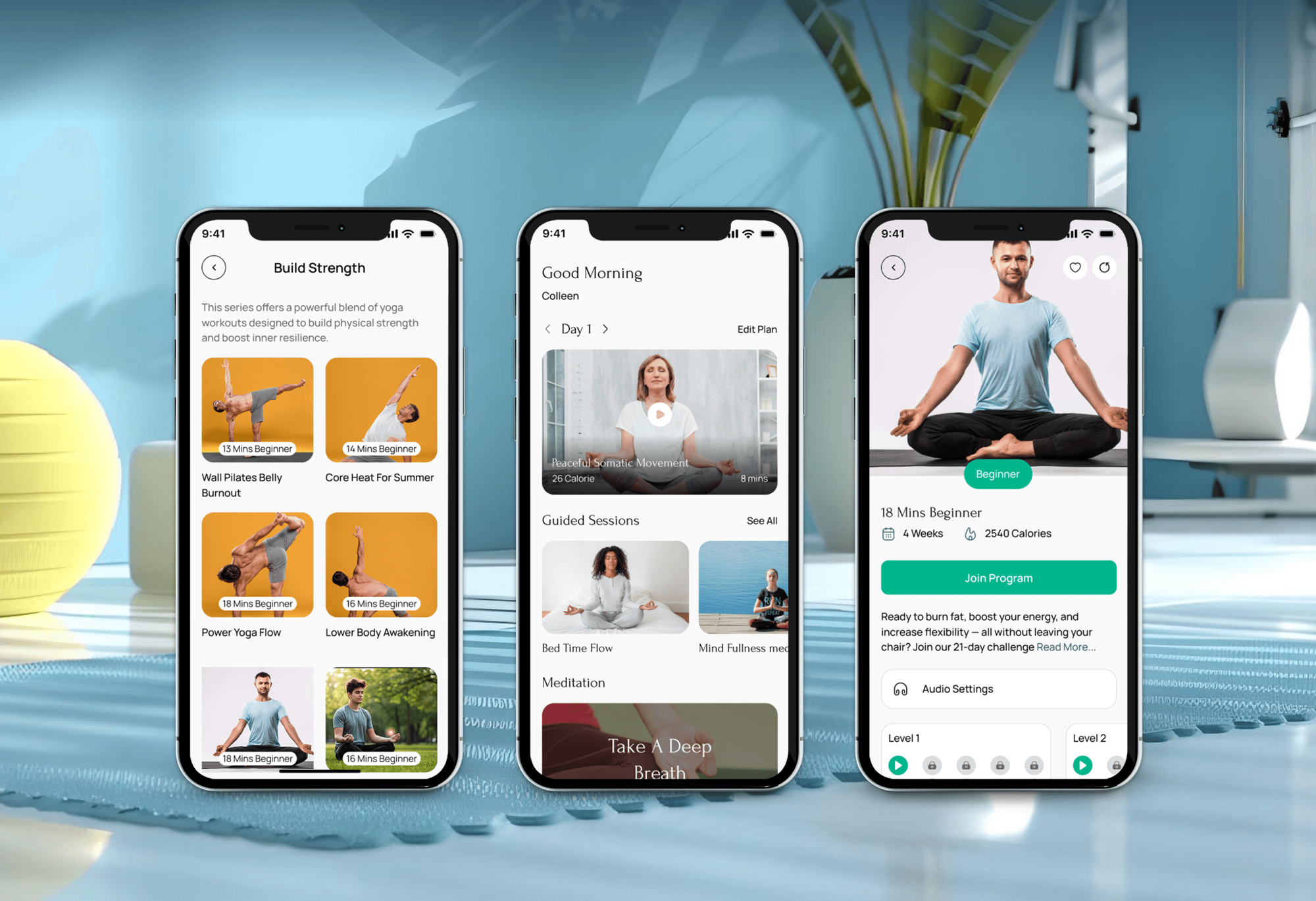
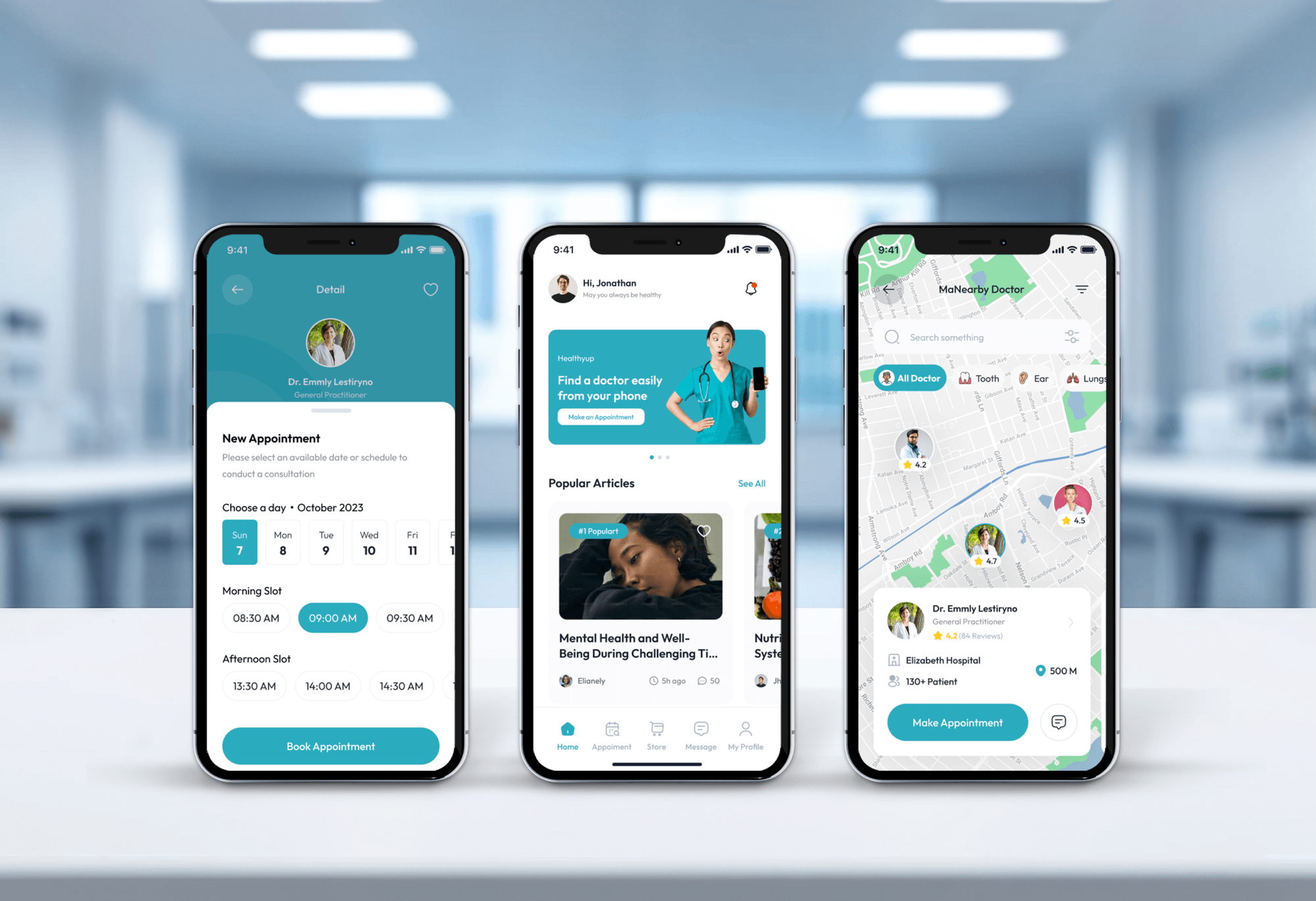
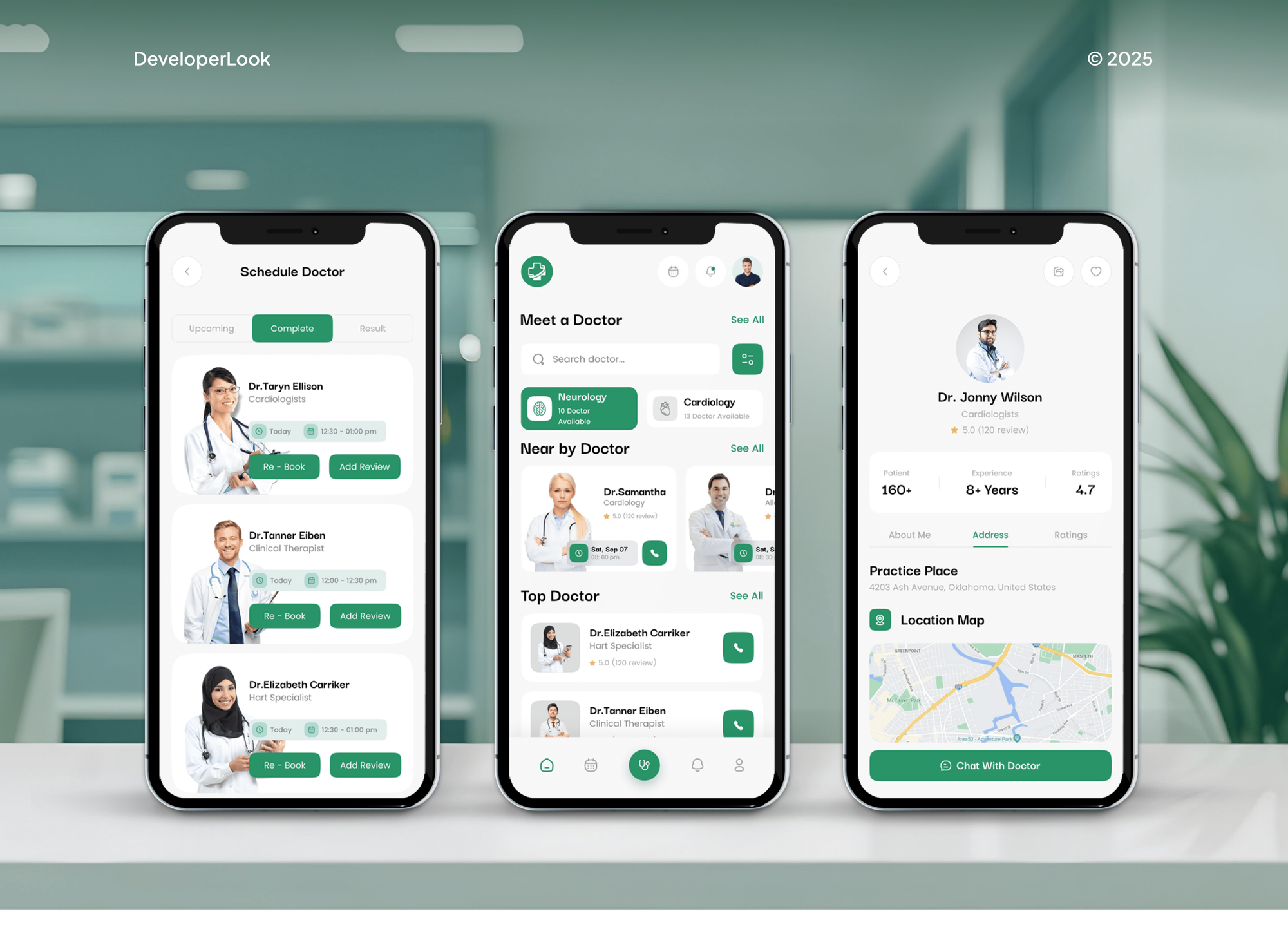
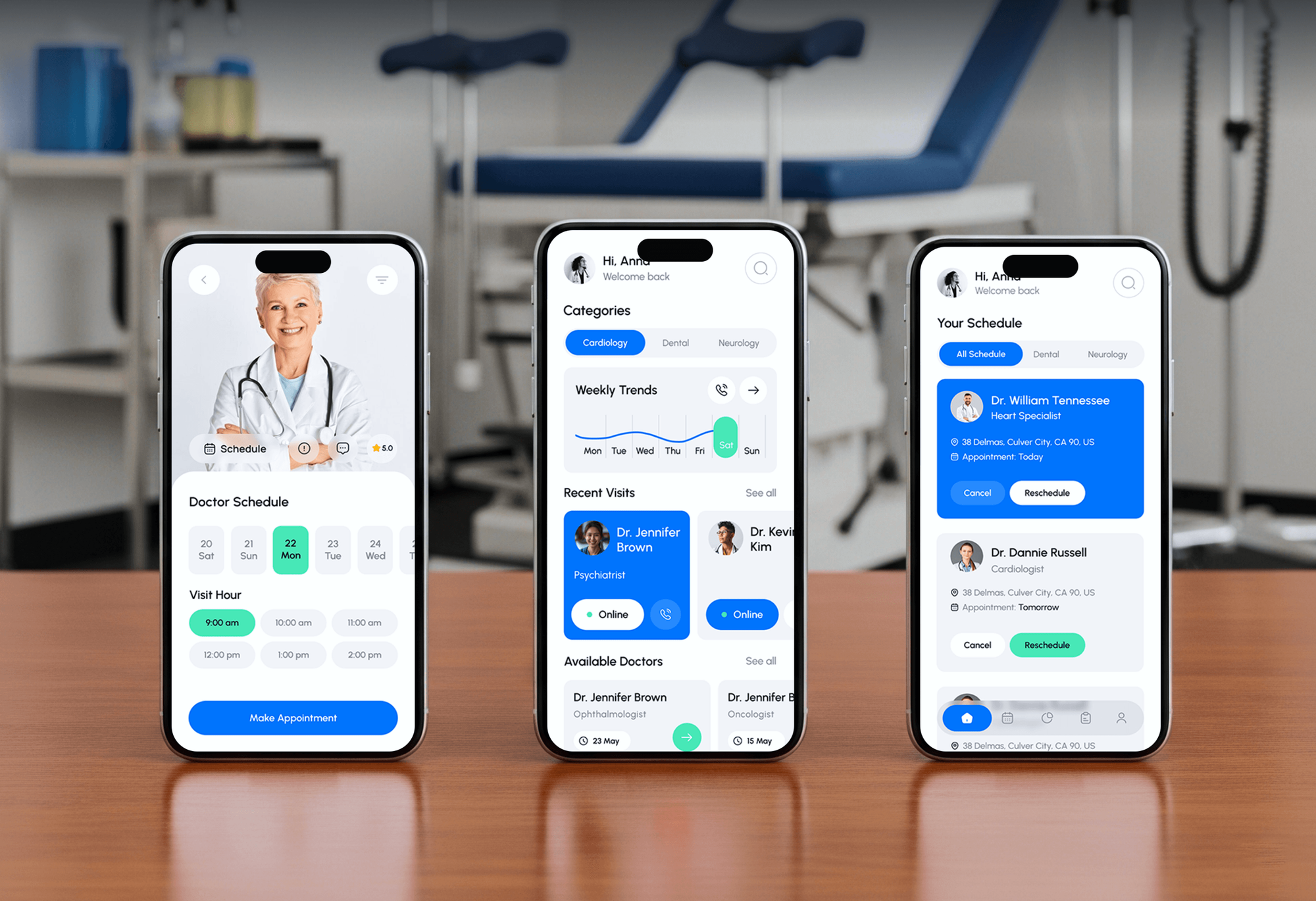
None of these is a mental health app. YogaNest shows guided daily programs, and the medical apps show booking, online consults, and patient records we would reuse.
What Our Clients Say
Feedback from teams we have built apps and platforms for.
We had a pretty specific idea of what we wanted our website to become, but I wasn’t sure how easily we could explain all of it to a development team. There were quite a few moving parts, and we were working toward a deadline, so I expected a few things to get lost along the way. That never really happened. They understood what we were trying to achieve, kept us updated throughout the process, and got everything ready within the agreed timeline. The final site feels much easier to navigate, works beautifully on mobile, and is noticeably smoother for our customers. It was a huge relief seeing the original idea actually turn into the website we had in mind.
The mobile experience is probably my favourite part of the new site. We had spent a lot of time making sure the desktop version looked right, and the team kept pushing us to think about how everything would actually feel on a phone too. They were right. The navigation is clean, the interactions feel natural, and everything we’ve tested so far works exactly as it should. They also went through the links, forms, integrations, and other details more than once before launch, which I really appreciated. And even after going live, we could still reach out when something came up. The whole process felt friendly, organised, and surprisingly straightforward.
What I appreciate most is that the website is actually easy for us to manage now. We can update content ourselves instead of sending a developer a message every time we need to change something small. They also paid attention to the technical SEO side, which mattered to us because we didn’t want a new website to create problems for the traffic we already had. I’ve probably asked more questions than I should have since launch, but every question has been handled patiently and without any fuss. The team is easy to work with, they explain things clearly, and when we need something changed, they focus on getting it done rather than making the process complicated.
1,250+
Projects shipped
10+
Years of experience
Top 3%
Upwork Top Rated Plus
5 stars
Average review score
1,250+
Projects shipped
10+
Years of experience
Top 3%
Upwork Top Rated Plus
5 stars
Average review score

Want results like these?
Tell us what you are building. You get a reply within 24 hours on business days, then a written estimate.
Work Culture
As a mental health app development company, we treat a distressed user at 2 a.m. as the main test case. Your clinical lead's sign-off comes before our feature ideas.
Your clinical lead writes or approves every exercise, check-in, and crisis message. Screens are built around that wording, so your app says what your care model says.
Before each release we list the libraries in your build and what they send. Anything that would see journals or check-ins comes out, keeping your clients' data from ad networks.
When your app handles real client data for a covered practice, we sign a business associate agreement before access. Until then, we build and test with made-up data.
Your app is tested on mid-range Android phones and older iPhones with large text on. People in distress don't troubleshoot, so screens must read clearly the first time.
If a therapy platform's client portal already covers your case, we'll tell you before we quote. A custom app makes sense only when your care model needs one.
Code, store listings, cloud accounts, and content stay in your name from day 1. If you switch developers later, nothing has to be rebuilt or bought back.
Overview
DeveloperLook handles mental health app development for therapy practices and digital health startups. We build check-ins and PHQ-9 tracking, clinician-written exercises, secure messaging, therapist dashboards, and crisis paths, with no ad trackers on health screens. Pilots start at $1,200 and take 2 to 3 weeks, and you own the code.
DEVELOPERLOOK
Project facts · Mental Health App Development
Reviewed 28 Oct 2026 by Saimul Islam
Good fit
Group therapy practices
Your clinicians assign worksheets on paper and want clients to complete them on their phones, with scores ready before the next session.
Direct-to-consumer wellbeing startups
You're creating a mental health app for consumers and need the FTC's health breach rule and app store health rules handled from day 1.
Employer wellbeing program teams
Your program offers coaching and self-guided tools to employees, and HR may see only anonymous group totals, not anyone's answers.
Substance use treatment programs
Your recovery program wants daily check-ins and peer support, and its records fall under 42 CFR Part 2, so consent rules shape every screen.
Agencies building for a health brand
You won a wellbeing brand's app project and need developers who know crisis paths, BAAs, and store health rules, working under your name.
Not a fit
Budget under $1,200
You want a full app for under $1,200. A no-code journaling template or a therapy platform's built-in client portal is a better fit until the budget grows.
Teletherapy video only
You mainly need video sessions, intake, and payment for therapy visits. Our telehealth platform development page covers that build, with the whole visit in one record.
Claims to treat a condition
Your app will claim to diagnose or treat depression or anxiety. That likely makes it a regulated device, so start with our medical device software development page.
Staffing a crisis line
You need people to answer crisis calls or texts around the clock. We build the path to help, but staffing a crisis service is outside our work.
Not sure we're the right fit?
Book a free call or message us. We'll tell you honestly whether we're the right team.
Pricing
These are starting points in USD. Your final price depends on the client features, the therapist dashboard, and whether you add video sessions, and you get a fixed proposal after a free discovery call.
For Agencies
You own the client relationship and the brand. We supply the engineering behind it: crisis paths, BAA paperwork, and store health disclosures. We stay out of your client calls unless you invite us.
White label: your client only ever sees your brand
Send the client's goals, care model, and any clinical content they already have.
You get a fixed estimate, a privacy plan outline, and named developers within a week.
We deliver under your brand, then hand over code, accounts, and the privacy map.
Send the client's goals, care model, and any clinical content they already have.
You get a fixed estimate, a privacy plan outline, and named developers within a week.
We deliver under your brand, then hand over code, accounts, and the privacy map.
The Right Technology for Your Project
One cross-platform codebase covers iOS and Android, and we pick hosting and video services that can be covered by a BAA in your own accounts.
 Flutter
 React NativeReact
 Next.js
 TypeScript
 Node.js
 PostgreSQL
 AWS
 NestJS
 Docker
 Twilio
Related Services
These apps often grow into teletherapy, need a HIPAA review, or sit beside a practice website. These pages cover each next step.
This page
Mental Health App Development
Pairs with the 5 services around it
FAQ
Straight answers on cost, timelines, crisis safety, and the privacy rules that apply to your app.
Saimul IslamFounder & CEO, DeveloperLookStill have questions?
Send a message or book a call with the team.
Mental health app development with DeveloperLook starts at $1,200 for a pilot of one core flow, such as check-ins or journaling. A full client app with a therapist dashboard starts at $4,300, and a care platform with video sessions and group programs starts at $8,800. You get a fixed proposal after a free discovery call.
A pilot takes 2 to 3 weeks, and a full app usually takes 10 to 18 weeks. The crisis and privacy plan takes 1 to 2 weeks up front, because your clinical lead approves the wording before design. Your pilot group tries a new build every 2 weeks, so problems surface early.
Developing a therapy app takes 5 steps: care model, crisis and privacy plan, design, build and pilot, then launch. The order matters. Deciding who sees which data, and what happens when a user writes something alarming, changes both the screens and the database. Teams that start with features often rebuild both later.
You can create one without a technical cofounder by hiring a build team. Keep a clinical lead on your side. Your job is the care model: who the app serves, what content it offers, and how crises are handled. We handle the architecture, code, and store releases, and you own the code, accounts, and content from day 1.
You make the app safer by designing its crisis path before any other feature. That means a help button on every screen, 988 and local emergency numbers, and wording your clinical lead approves. Optional alerts can notify your on-call team when a check-in score or journal phrase crosses a line you set. No app replaces emergency services, and the app says so plainly.
The ideas worth building first support care you already give: between-session homework, mood and symptom check-ins, and secure messaging with a therapist. They fill a real gap and are easy to pilot with your own clients. AI chat therapists and diagnosis tools carry far more clinical and regulatory risk, so save them until your first version proves people use it.
The core mental health software requirements are role-based access, encryption, audit logs, consent screens, and a crisis path. Health screens also carry no ad or analytics tools. Apps used with minors need age and guardian rules. Programs that treat substance use add 42 CFR Part 2 consent rules, which your counsel interprets. We turn each requirement into a test, so a later release can't quietly break it.
Your app needs HIPAA safeguards when a covered provider or health plan offers it, or when it handles their patients' data. Consumer apps outside HIPAA usually fall under the FTC's Health Breach Notification Rule, which the FTC updated in 2024 to cover health apps. We sign a business associate agreement before handling real patient data, and your counsel confirms which rules apply.
The FDA treats your app as a device when it diagnoses or treats a condition, as prescription digital therapeutics do. Apps that help users practice coping skills or log moods usually fall under the FDA's enforcement discretion for low-risk software. The line depends on what the app claims, so we write the store listing and onboarding copy with your regulatory advisor before launch.
Mental health app developers at DeveloperLook hand over the code, cloud and store accounts, the privacy map, and documentation, all in your name. Full app builds include 60 days of fixes and privacy map updates after launch. After that, keep us on a monthly plan or move the work in-house.
Saimul IslamFounder & CEO, DeveloperLookStill have questions?
Send a message or book a call with the team.
Free 30-min callGoogle Meet
Book a call
In 30 minutes on Google Meet we walk you through how we would build it, how long it takes and what it costs. Then you get a written estimate.
Calendar not showing? Book on cal.com or send a brief.