





Deus News and Magazine Website Design and Development
- News & Media
- Website

For news sites, magazines, and newsletters: a paywall on your current CMS with metered rules, one reader login, and articles Google can still index. From $1,050.
2X
More subscription sign-ups
100%
Paywalled articles kept indexable
How your project runs
01 · FreeTeams we have built for:














The Problem
It shows up when a paywall plugin goes on top of your existing site. The wall goes up, but your checkout, logins, newsletters, and search keep working as if it isn't there.
Pop-up walls
The wall appears with no clear offer, and readers leave.
Pop-up walls
A clear offer at the wall, with checkout on your own domain.
Leaky gates
Locked text loads in the page, hidden only by script.
Leaky gates
Locked sections are gated on the server, so only subscribers receive them.
Split logins
Print, newsletter, and web readers need separate accounts.
Split logins
One reader account links print, newsletter, and digital access.
Search drops
Google's crawler can't tell a paywall from cloaking.
Search drops
Paywalled sections carry structured data, and verified Google crawlers get the full text.
A reader lands on your best investigation from Google and sees a pop-up wall after one paragraph. They leave, because your subscribe button opens a slow checkout on another domain. Your print subscribers can't log in at all. Readers who turn off JavaScript see the whole article, since the wall only hides text the page already loaded. Newsletter readers get asked to subscribe again. After launch, search traffic to locked stories slides, because nobody told Google which part is paywalled.
We start with your rules: which stories stay free, how many articles a reader gets each month, and when a free account is enough. We set those rules in the platform that fits your CMS, gate locked text on the server, and mark paywalled sections with Google's structured data. One reader account works across your site and newsletters, and checkout stays on your domain. Readers meet an offer, not a dead end.
Rules editors can change
Meter limits, free stories, and registration walls set in the platform, not hard-coded in templates.
Gated on the server
Readers without access receive only your preview, so turning off scripts doesn't reveal the article.
Indexable paywalled articles
Google's paywalled content markup on every locked article, plus verified crawler access to the full text.
Our Paywall and Subscription Integration Process
You approve the platform, every plan and price, and each access rule. Then you test a real subscription on your own site before it goes live for readers.
We review your CMS, traffic sources, newsletter list, and any print subscribers. You get a written recommendation of the platforms that fit, the access model to start with, and a fixed proposal.
Projects We've Built
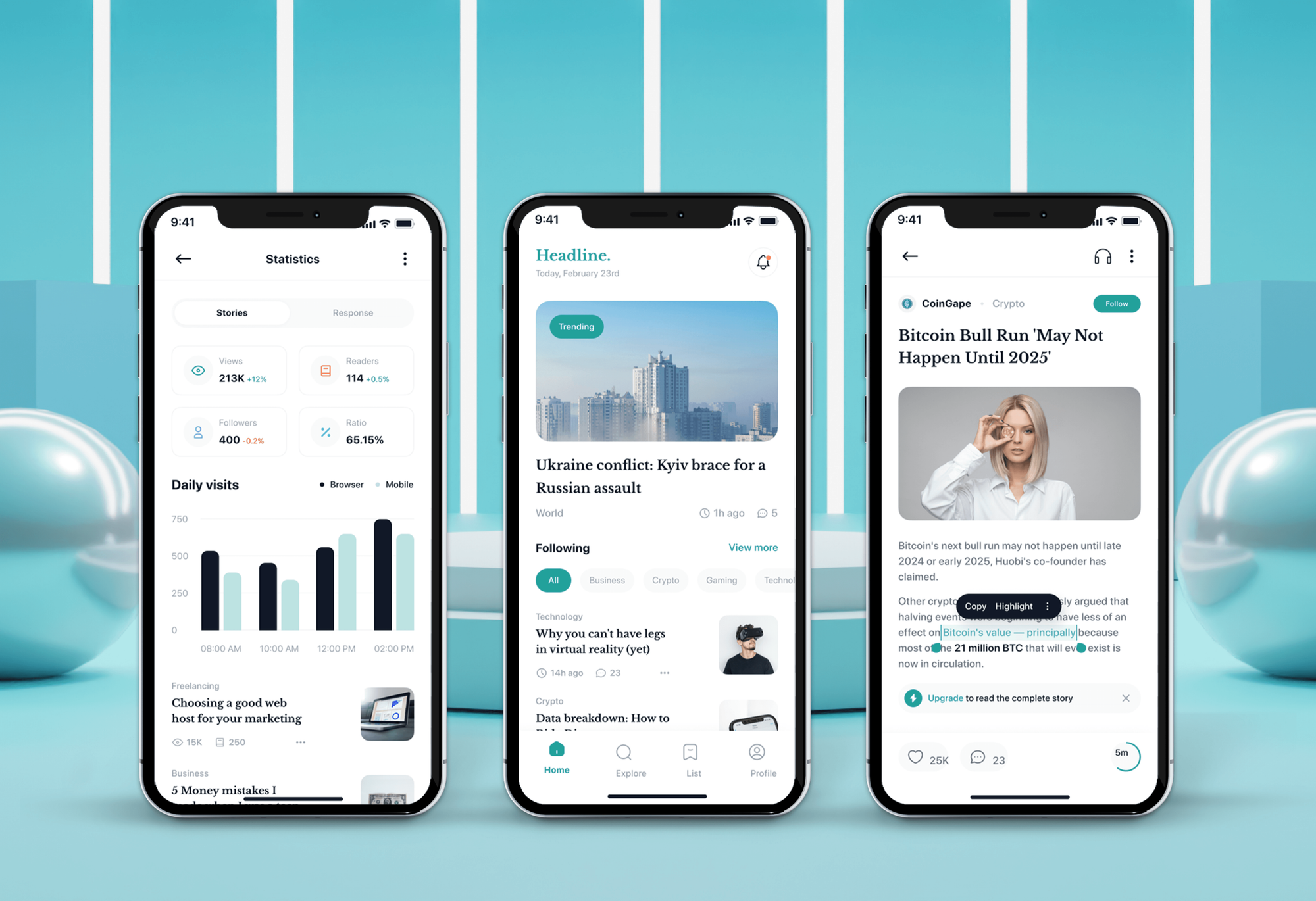
News websites and news apps we have designed and built, the kind of publishing products a paywall sits on. They are shown as publishing builds, not paywall projects.


What's Included
A provider shortlist, meter and access rules, plans and checkout on your domain, one reader account, paywalled content markup for search, and a tested launch with funnel tracking.
Compare Options
A plugin goes live in an afternoon, and an enterprise vendor's services team knows its own product best. Here is where each stops once your print, newsletters, and search are involved.
| Feature | DeveloperLookBest fit | DIY plugin | Vendor services |
|---|---|---|---|
| Platform choice | Compared against your CMS and goals | The plugin you installed | Their own platform |
| Access rules | Meter, freemium, and regwall per section | Plugin defaults | Configured on their platform |
| Content gating | Server-side, preview only | Often hidden by script | Depends on your templates |
| Search markup | Structured data on every lock | Rarely added | Documented, you implement it |
| Reader accounts | Site, newsletter, and print linked | Site login only | Their identity product |
| Speed to start | 3 to 7 weeks | Live in an afternoon | Scheduled by the vendor |
| Cost | One-time fee plus your plan | Low plugin fee | Included with enterprise plans |
| Ownership | Data and accounts in your name | Data in your WordPress | Data in their platform |
What Our Clients Say
Feedback from teams we have built websites, platforms, and apps for.
We had a pretty specific idea of what we wanted our website to become, but I wasn’t sure how easily we could explain all of it to a development team. There were quite a few moving parts, and we were working toward a deadline, so I expected a few things to get lost along the way. That never really happened. They understood what we were trying to achieve, kept us updated throughout the process, and got everything ready within the agreed timeline. The final site feels much easier to navigate, works beautifully on mobile, and is noticeably smoother for our customers. It was a huge relief seeing the original idea actually turn into the website we had in mind.
The mobile experience is probably my favourite part of the new site. We had spent a lot of time making sure the desktop version looked right, and the team kept pushing us to think about how everything would actually feel on a phone too. They were right. The navigation is clean, the interactions feel natural, and everything we’ve tested so far works exactly as it should. They also went through the links, forms, integrations, and other details more than once before launch, which I really appreciated. And even after going live, we could still reach out when something came up. The whole process felt friendly, organised, and surprisingly straightforward.
What I appreciate most is that the website is actually easy for us to manage now. We can update content ourselves instead of sending a developer a message every time we need to change something small. They also paid attention to the technical SEO side, which mattered to us because we didn’t want a new website to create problems for the traffic we already had. I’ve probably asked more questions than I should have since launch, but every question has been handled patiently and without any fuss. The team is easy to work with, they explain things clearly, and when we need something changed, they focus on getting it done rather than making the process complicated.
1,250+
Projects shipped
10+
Years of experience
Top 3%
Upwork Top Rated Plus
5 stars
Average review score
1,250+
Projects shipped
10+
Years of experience
Top 3%
Upwork Top Rated Plus
5 stars
Average review score

Want results like these?
Tell us what you are building. You get a reply within 24 hours on business days, then a written estimate.
Work Culture
Your reader revenue only works when readers, editors, and search engines all get what they need. These habits keep all three working after the wall goes up.
Your editors set each article's access in the CMS they already use, not in a separate dashboard. A breaking story can go free in one click while the archive stays locked.
We fetch locked articles as Googlebot and confirm the structured data before launch. Losing search traffic is the costliest paywall mistake, and it's easy to prevent.
If a WordPress plugin or Ghost's built-in memberships cover your newsroom, we'll say so before we quote. An enterprise platform only makes sense when your volume and team need it.
Payments run through PCI-compliant processors such as Stripe, so card numbers don't touch your servers or ours. That keeps your own PCI work small.
You get a fixed proposal that names the platform, every rule, and each sync. If the scope changes, you see the new price before work starts.
Subscriber records, payment accounts, and analytics sit in your company's name. If you switch platforms later, your reader list moves with you.
Overview
DeveloperLook provides paywall services for news sites, magazines, and newsletter publishers. We set up the paywall software, meter and registration rules, plans and checkout, one reader account, and Google's paywalled content markup. Setups start at $1,050, take 3 to 12 weeks, and subscriber data stays in your accounts.
DEVELOPERLOOK
Project facts · Paywall and Subscription Integration for Publishers
Reviewed 29 Oct 2026 by Saimul Islam
Good fit
Local and regional news sites
Your newsroom relies on ads and donations, and you want a meter that asks loyal readers to pay without scaring off search visitors.
Magazines with print subscribers
Your print subscribers expect digital access, and you need their account numbers matched to web logins without a support queue.
Publishers that start in email
Your audience starts in email, and you want a subscription platform publisher teams can run themselves, with paid tiers that open the same articles online.
Publishers replacing a paywall plugin
Your current plugin hides articles with JavaScript and breaks logins after updates, and you want a setup that holds up as your traffic grows.
Trade and B2B publishers
You sell group subscriptions to companies, and their staff need access by work email domain instead of sharing one password.
Not a fit
Budget under $1,050
You publish occasionally and want one paid tier. A hosted newsletter service with paid subscriptions costs less until you need your own site rules.
New website first
Your site itself is slow or dated, so a new wall would sit on a weak base. News Website Design for Publishers rebuilds the site with subscriptions planned in.
Creator memberships
You sell courses, coaching, or community access rather than articles. Membership Website Development covers gated lessons and member areas.
Search visibility is the gap
Your stories don't get indexed fast enough, and reader revenue isn't the issue yet. News SEO Services fixes sitemaps, article markup, and Google News visibility.
Not sure we're the right fit?
Book a free call or message us. We'll tell you honestly whether we're the right team.
Pricing
These are starting points in USD. Your final price depends on your CMS, the platform you choose, and print or newsletter syncs, and you get a fixed proposal after a free revenue review.
For Agencies
You own the publisher relationship. We supply the subscription engineering behind it: platform setup, access rules, reader accounts, and search markup. Work is delivered under your agency's brand, with documentation your client's editors can follow.
White label: your client only ever sees your brand
Send the client's CMS, traffic sources, and current subscribers, and we scope it in writing.
We set up the platform, rules, and syncs, then test every path under your brand.
Your client launches with you, and we watch sign-ups and search traffic for 30 days.
Send the client's CMS, traffic sources, and current subscribers, and we scope it in writing.
We set up the platform, rules, and syncs, then test every path under your brand.
Your client launches with you, and we watch sign-ups and search traffic for 30 days.
The Right Technology for Your Project
The paywall platforms, publishing systems, payment processors, and analytics tools we connect so access rules, checkout, and reader data work together.
 WordPress
 Next.js
 Stripe
 PayPal
 Apple Pay
 Google Pay
 HubSpot
 Google Analytics (GA4)
 Google Tag Manager
 Google Search Console
Related Services
Media, publishing, and billing services that pair with reader subscriptions, from news sites and news SEO to recurring billing and app subscriptions.
This page
Paywall and Subscription Integration for Publishers
Pairs with the 6 services around it
FAQ
Straight answers on cost, timelines, paywall types, search indexing, and choosing a subscription platform.
Saimul IslamFounder & CEO, DeveloperLookStill have questions?
Send a message or book a call with the team.
Our paywall services start at $1,050 for one platform on a WordPress or Ghost site. That covers meter rules, plans, Stripe checkout, server-side gating, and search markup. Connecting newsletters, print subscribers, and analytics is $2,900. A custom access platform for several titles or apps starts at $6,400. The platform's own subscription and transaction fees are billed by its vendor.
A paywall integration on one platform takes 3 to 5 weeks, including testing. Adding newsletter, print, and analytics syncs brings that to 5 to 7 weeks. A custom access platform across several titles or apps takes 6 to 12 weeks. Your site runs as usual meanwhile, because rules go live only after every subscribe and cancel path passes testing.
A paywall is a gate that limits some or all of your content to paying or registered readers. You can choose from four common types. Hard paywalls lock everything, and metered paywalls allow a set number of free articles. Freemium paywalls lock selected stories, and registration walls ask for a free account. Most news sites mix two of them.
It checks each reader's access before showing your article. Your paywall software reads the reader's login or a cookie and counts articles against the meter. Then it shows the full story, a preview with your offer, or a registration prompt. Well-built paywalls decide on the server, so locked text isn't sent to readers without access.
A newspaper paywall is a paywall built for daily news, usually metered so search and social visitors can read a few stories free. Breaking news and public-safety stories often stay open while investigations and archives lock. If you also sell print, your subscribers usually expect digital access included, so each print account needs a web login.
Paywalled content is any article or section that only paying or registered readers can open. For search, Google asks you to mark it with structured data: isAccessibleForFree set to false, plus hasPart with a CSS class around the locked section. That markup helps Google tell a paywall apart from cloaking, which its spam policies prohibit.
A subscription platform is the software that sells and manages reader subscriptions: plans, trials, checkout, renewals, and access rules. A digital subscription platform for news adds meters, registration walls, and print account linking. Piano, Zephr, and Poool target larger publishers. If your team is small, Memberful, Leaky Paywall, or Ghost's built-in memberships usually fit better.
You implement it in five stages. First you choose the platform and set up plans and checkout. Then access rules go into your CMS templates, accounts sync with email and print, and everything gets tested. The template stage matters most, because that is where locked sections get gated and marked up for Google. We test with Stripe test cards before any real reader pays.
Leaky Paywall and Memberful both run on WordPress, and Ghost has paid memberships built in through Stripe. Piano, Zephr, and Poool connect to WordPress, Ghost, Drupal, or a headless site through scripts and APIs. The right subscription platform for publisher sites depends on your volume, your team, and how much control editors need.
You do. Subscriber records, the payment processor account, and analytics stay in your company's name, and card data stays with a PCI-compliant processor such as Stripe. If you later move to different paywall solutions, we export your subscribers with their plans and renewal dates. The 30 days of launch support cover any fixes after go-live.
Saimul IslamFounder & CEO, DeveloperLookStill have questions?
Send a message or book a call with the team.
Free 30-min callGoogle Meet
Book a call
In 30 minutes on Google Meet we walk you through how we would build it, how long it takes and what it costs. Then you get a written estimate.
Calendar not showing? Book on cal.com or send a brief.