Reason list mapped to Shopify
Your reasons sit on top of Shopify's return reasons, so new and old returns compare cleanly.

Returns management software for Shopify stores: return rate, cost, and reason by SKU, restock rules, and ERP sync. From $1,150.
100%
Returns tracked by SKU and reason
Top 10
Return drivers ranked by cost
Teams we have built for:














The Problem
It shows up once returns cost real money. Refunds go out daily, but the reasons sit in emails and notes, so the same products keep coming back.
01 · Buried reasons
Return reasons live in emails and note fields.
Every return maps to a clear reason your team agrees on.
02 · Month-end exports
A monthly export still can't say which SKU drives returns.
Return rate, cost, and reason show per SKU, ranked by cost.
03 · Supplier defects
Nobody knows which supplier ships the most defects.
Supplier defect claims come from graded returns, not guesses.
04 · Guesswork grading
Items get restocked or written off without clear rules.
Each returned item gets a grade that decides stock or write-off.
Your team refunds a jacket, restocks a mug, and writes off a lamp that arrived broken. Each return had a reason, but it lives in a customer email or a note field. At month end, someone exports orders into a spreadsheet and still can't say which SKU drives most returns. Nobody knows which supplier ships the most defects either. So the size chart stays wrong, the supplier stays unbilled, and next month looks the same.
We start by loading your past returns and mapping every reason to a short list your team agrees on. Then we build the reporting and grading queue on Shopify's own return data. You get return rate, cost, and reason by SKU, plus rules for restock or write-off. You fix the product page, not just the refund.
Reasons you can act on
Every return maps to a clear reason, from too small to arrived damaged.
Cost per SKU, not totals
See refunds, labels, and write-offs per product, ranked by what they cost you.
Grades that decide the shelf
Each returned item gets a grade that sends it to stock, refurbishing, or write-off.
Our Returns Software Process
You see your own return data, the reason list, and the grading rules before anything is built. Each step ends with something you can check.
We pull a sample of your returns and check how reasons and costs are recorded today. You get a findings note and a fixed quote. If a spreadsheet already answers your questions, we'll tell you before we quote.
What's Included
Every plan covers your reason list, past returns loaded, and a dashboard by SKU. Larger plans add a grading queue, restock rules, supplier claims, and ERP sync.
Compare Options
Spreadsheets suit low volume, and off-the-shelf software suits stores whose reasons and systems fit its model. Custom work fits when your grading, suppliers, or ERP don't.
| Feature | DeveloperLookBest fit | Off-the-shelf software | Spreadsheets |
|---|---|---|---|
| Upfront cost | From $1,150, fixed scope | Monthly subscription | Free to start |
| Time to start | 3 to 9 weeks | Days to weeks | Same day |
| Reason codes | Your list, mapped to Shopify | The vendor's list | Whatever staff type |
| Cost per SKU | Refunds, labels, and write-offs | Depends on the plan | Manual formulas |
| Grading rules | Built to your warehouse | Preset workflows | No rules |
| ERP and WMS sync | Two-way, built to fit | Common connectors | Manual imports |
| Ongoing cost | Hosting only | Monthly fee | Staff time |
| Data ownership | Your database, your name | The vendor's platform | Your files |
Projects We've Built
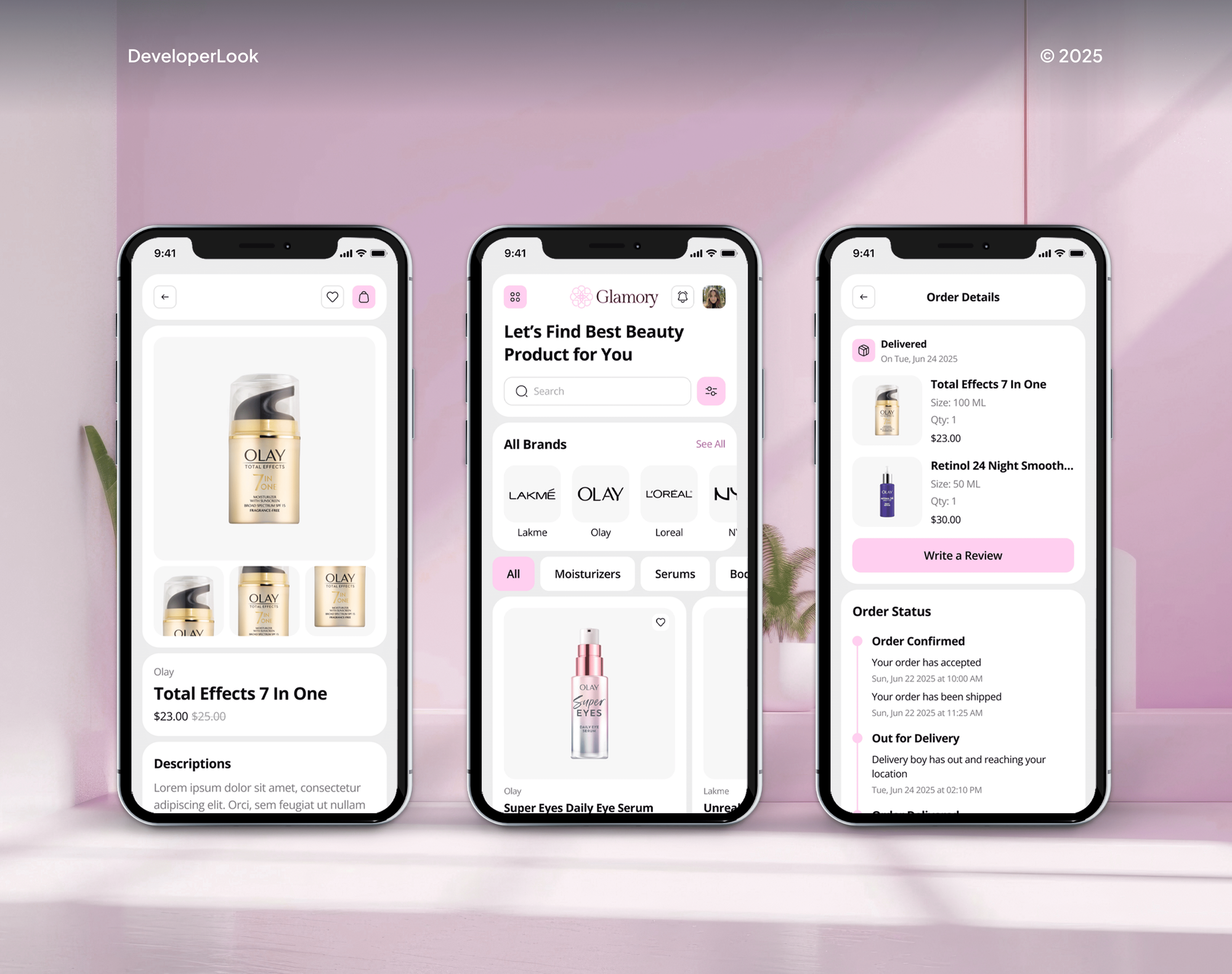
A selection of ecommerce stores and apps we've built. Returns software builds on the same base: clean order data, a well-kept database, and numbers that match your books.



What Our Clients Say
Feedback from ecommerce teams we have built stores, dashboards, and integrations for.
We had a different kind of problem. People were visiting the store, adding products to their carts, and then disappearing before they finished the order. We had tried a few apps and made changes here and there, but nothing really seemed to solve the bigger issue. The team went through the shopping experience with us and pointed out things we hadn't really noticed ourselves. They cleaned up the cart and checkout flow, made the mobile experience much smoother, and helped us make the store feel easier to shop. I’m not going to pretend we fixed everything overnight, but it finally feels like the store is helping the sale instead of getting in the way of it.
The mobile experience is probably my favourite part of the new site. We had spent a lot of time making sure the desktop version looked right, and the team kept pushing us to think about how everything would actually feel on a phone too. They were right. The navigation is clean, the interactions feel natural, and everything we’ve tested so far works exactly as it should. They also went through the links, forms, integrations, and other details more than once before launch, which I really appreciated. And even after going live, we could still reach out when something came up. The whole process felt friendly, organised, and surprisingly straightforward.
We had a pretty specific idea of what we wanted our website to become, but I wasn’t sure how easily we could explain all of it to a development team. There were quite a few moving parts, and we were working toward a deadline, so I expected a few things to get lost along the way. That never really happened. They understood what we were trying to achieve, kept us updated throughout the process, and got everything ready within the agreed timeline. The final site feels much easier to navigate, works beautifully on mobile, and is noticeably smoother for our customers. It was a huge relief seeing the original idea actually turn into the website we had in mind.
1,000+
Projects shipped
10+
Years of experience
Top 3%
Upwork Top Rated Plus
5 stars
Average review score
Work Culture
Returns data only helps when your team trusts it, so we check every total against your books. These habits keep the numbers honest.
We agree the reason list with support and the warehouse before we build. A reason nobody uses consistently turns every report into guesswork.
Dashboard totals are checked against your refund reports at each month end. If a number disagrees, we trace it before you act on it.
We load your past returns before designing a single chart. A year of data shows patterns that one busy week hides.
Defect returns are tagged by supplier from day one. You get a claim file instead of absorbing the cost of someone else's mistake.
If existing returns software or a spreadsheet covers your volume, we'll say so. You only pay for custom work that earns its place.
Every grading rule runs against a sample of your past returns before launch. Your team sees where each item would have gone.
Overview
DeveloperLook builds returns management software for Shopify and WooCommerce stores that shows return rate, cost, and reason by SKU. We add a staff queue for grading, restock rules, supplier claims, and ERP or 3PL sync. Projects start at $1,150, the first dashboard goes live in 3 to 4 weeks, and the data stays yours.
DEVELOPERLOOK
Project facts · Shopify Returns Management Software
Reviewed 28 Sep 2026 by Saimul Islam
Good fit
Stores refunding without return data
You refund returns every day but can't say which SKUs, sizes, or suppliers cause most of them.
Brands paying for supplier defects
Your defect returns get written off, and you want each one logged against the supplier so you can claim credit.
Warehouses grading returns by hand
Your team inspects every return and decides restock or write-off from memory, so similar items end up in different places.
Sellers on Shopify and Amazon
You sell on Shopify and Amazon, and each channel's returns sit in a different report with different reason codes.
Ops leads comparing software options
You're weighing ready-made product returns management software against a custom build and want an honest view of both.
Not a fit
Self-serve return starts
You need customers to start returns and pick exchanges themselves. Our Shopify Returns Portal Development service builds that front end.
Approval or warranty first
Every return needs your approval, a warranty check, or a repair decision first. Our RMA Software Development service is built for that workflow.
Hands-off refunds and labels
You mostly want labels, refunds, and 3PL updates to run without anyone clicking. Our Reverse Logistics & Returns Automation service covers that.
A few returns a week
You handle a few returns a week. A spreadsheet export of your Shopify orders answers your questions for less than our $1,150 starting price.
Not sure we're the right fit?
Send a two-line brief. We'll tell you honestly whether we're the right team.
Pricing
These are starting points in USD. Your final price depends on your channels, return volume, and connected systems, and you get a fixed proposal after a free data review.
For stores that need to see which products come back and why.
$1,150one-time, USD
For teams that need one queue to receive, grade, restock, and refund returns.
$3,200one-time, USD
For multichannel brands that need returns data in their ERP, WMS, or 3PL.
$6,400one-time, USD
For Agencies
You own the client relationship. We supply the returns data work behind it: reason mapping, dashboards, grading rules, and ERP sync. Everything ships under your agency's name, with documentation for your team.
White label: your client only ever sees your brand
Send the client's channels, return exports, and the questions they need answered.
You get the reason list, dashboard plan, delivery dates, and one fixed quote.
We build, check totals against the client's books, and document it under your brand.
We work under your brand, so the client relationship stays yours.
A fixed price and a reason list the client signs off first.
Totals are checked against the client's refund reports before handover.
Bring us in for one dashboard or a multi-store rollout.
The Right Technology for Your Project
We build on Shopify's Admin API and a database in your name, with dashboards your team can open without a developer.
 Shopify
 WooCommerce
 Amazon
 Stripe
 PayPal
 SAP
SAP Microsoft Dynamics 365
 Odoo
Odoo QuickBooks
 Xero
Xero PostgreSQL
 Python
 Power BI
 Google Sheets
 Node.js
 React
React GraphQL
 AWS
AWSFAQ
Straight answers on cost, timelines, what to track, SKU reports, restock rules, and ERP sync.
 Saimul IslamFounder & CEO, DeveloperLook
Still have questions?
Send a message or book a call with the team.
A returns dashboard with your reason list and up to 12 months of history starts at $1,150. A grading queue, restock rules, and supplier claims bring it to $3,200. ERP, WMS, or 3PL sync plus marketplace returns start at $6,400. You get a fixed quote after a free data review.
A dashboard-only build takes 3 to 4 weeks, including the reason list and history load. Adding the grading queue and restock rules brings it to 5 to 6 weeks. ERP or 3PL sync takes 6 to 9 weeks, because we test against the other system's sandbox before touching live stock.
A returns system should track the reason, condition, cost, and outcome of every returned item, by SKU, variant, and supplier. Cost means the refund, both shipping legs, and any write-off. Shopify now records a standard return reason on each return, suggested by product category, which gives your list a clean base.
You see it by ranking SKUs on return cost, not return count. A cheap item returned often can cost less than a bulky one returned rarely. The dashboard ranks your return drivers by cost and shows the top reason for each, so you know whether to fix sizing, photos, or packaging.
Yes, the dashboard shows return rate, cost, and reason for each product and variant. Return rate compares units returned with units sold in the same period, so new products aren't judged on a few early returns. Filter by channel, supplier, or date, and export any view to Google Sheets.
A returns system automates them by tying each action to a condition grade. Grade A goes back to sellable stock, grade B to refurbishing, and damaged items to write-off. Refunds or credit post to Shopify when the grade is saved, or at receipt for low-risk items, per your policy.
Yes, we connect it to all three in both directions. Your ERP gets credit memos and stock adjustments, your WMS gets expected returns and grades, and your 3PL sends receiving results back. We write to each system's own return records where they exist, so finance doesn't reconcile two versions.
Buy packaged software when your reasons, grading, and systems fit what it already supports. Build custom when you need your own grading rules, supplier claims, a WMS the vendors don't connect to, or data you fully own. Some stores keep a packaged portal and add custom reporting behind it.
You own both: the database, the code, and every dashboard run in accounts under your name. We hand over admin access and documentation at launch. If you switch developers later, nothing needs rebuilding or exporting from a vendor. Your finance team can query the database directly.
Every plan includes support after launch: 30 days for the dashboard, 60 days with the grading queue, and 90 days with ERP sync. We fix bugs, adjust rules, and add reasons your team discovers. After that, you can book changes as small fixed-price jobs.
Saimul IslamFounder & CEO, DeveloperLookStill have questions?
Send a message or book a call with the team.
30-min strategy callGoogle Meet
Book a call
Pick a 30-minute slot that works for you. We meet on Google Meet to align on goals, scope, and the right next step.
