Request form linked to orders
Your customers pick the order, items, and reason, and each request arrives with its full order history.

RMA software for Shopify, WooCommerce, and BigCommerce: RMA numbers tied to orders, approval rules, labels, and accounting sync. From $950.
1-click
RMA approvals from one queue
100%
RMAs linked to the original order
Teams we have built for:














The Problem
It shows up once returns need a yes or no from your team. Requests arrive by email, answers depend on who reads them, and nothing links back to the order.
01 · Email chains
Each warranty claim starts a long email thread.
Requests come through a form linked to the original order.
02 · Slow approvals
A manager approves a replacement two days later.
Routine requests inside your window approve themselves by rule.
03 · Mystery boxes
Returned boxes arrive with no authorization number to match.
Labels carry the RMA number, so every box matches its order.
04 · Late credits
Finance hears about credits at month end.
Refunds and replacements post to your books once items are inspected.
A customer emails that the blender stopped working after 3 weeks. Someone looks up the order, reads the warranty terms, and asks for photos. A manager approves a replacement 2 days later. Nobody records an authorization number, so the box that comes back sits in the warehouse with no match. Finance hears about the credit at month end. Repeat that for every request in the inbox, and approvals become the slowest part of your week.
We start with your return policy and the decisions your team makes by hand. Then we build a workflow that issues a number tied to each order, approves routine requests by rule, and routes the rest to a review queue. Labels carry the RMA number, and each outcome posts to your books. Your managers only see the edge cases.
Numbers tied to orders
Every RMA number links to the original order, its items, and the customer's history.
Rules approve the routine
Routine requests inside your window approve themselves. Edge cases wait for a person.
Outcomes posted to your books
Refunds, replacements, and repairs update stock and accounting once the item is inspected.
Our RMA Build Process
You approve the rules, the RMA number format, and the test returns before anything goes live. Each step ends with something your team can check.
We review your return policy, warranty terms, and how approvals happen today. You leave with a workflow map and one fixed quote. If your platform's built-in returns already cover your case, we'll tell you before we quote.
What's Included
Every plan covers the request form, RMA numbers tied to orders, and a review queue. Larger plans add approval rules, labels, inspections, warranty checks, and accounting sync.
Compare Options
Email works at low volume, and a returns plugin suits policies that fit its settings. Custom RMA work fits when approvals, warranties, or accounting need your rules.
| Feature | DeveloperLookBest fit | Returns plugin | Email and spreadsheets |
|---|---|---|---|
| Upfront cost | From $950, fixed scope | License or subscription | Free to start |
| Time to start | 2 to 7 weeks | Same day | Already running |
| RMA numbers | Your format, per order | The plugin's format | Typed by hand |
| Who approves | Rules plus a review queue | Basic settings | Whoever reads email |
| Return labels | Label shows the authorization | Upload or add-on | Bought one by one |
| Accounting updates | Memos and stock updates | Add-ons or manual | Manual entry |
| Ongoing cost | Hosting only | Recurring fee | Staff time |
| Code ownership | Yours, with documentation | Stays with the vendor | Nothing to own |
Projects We've Built
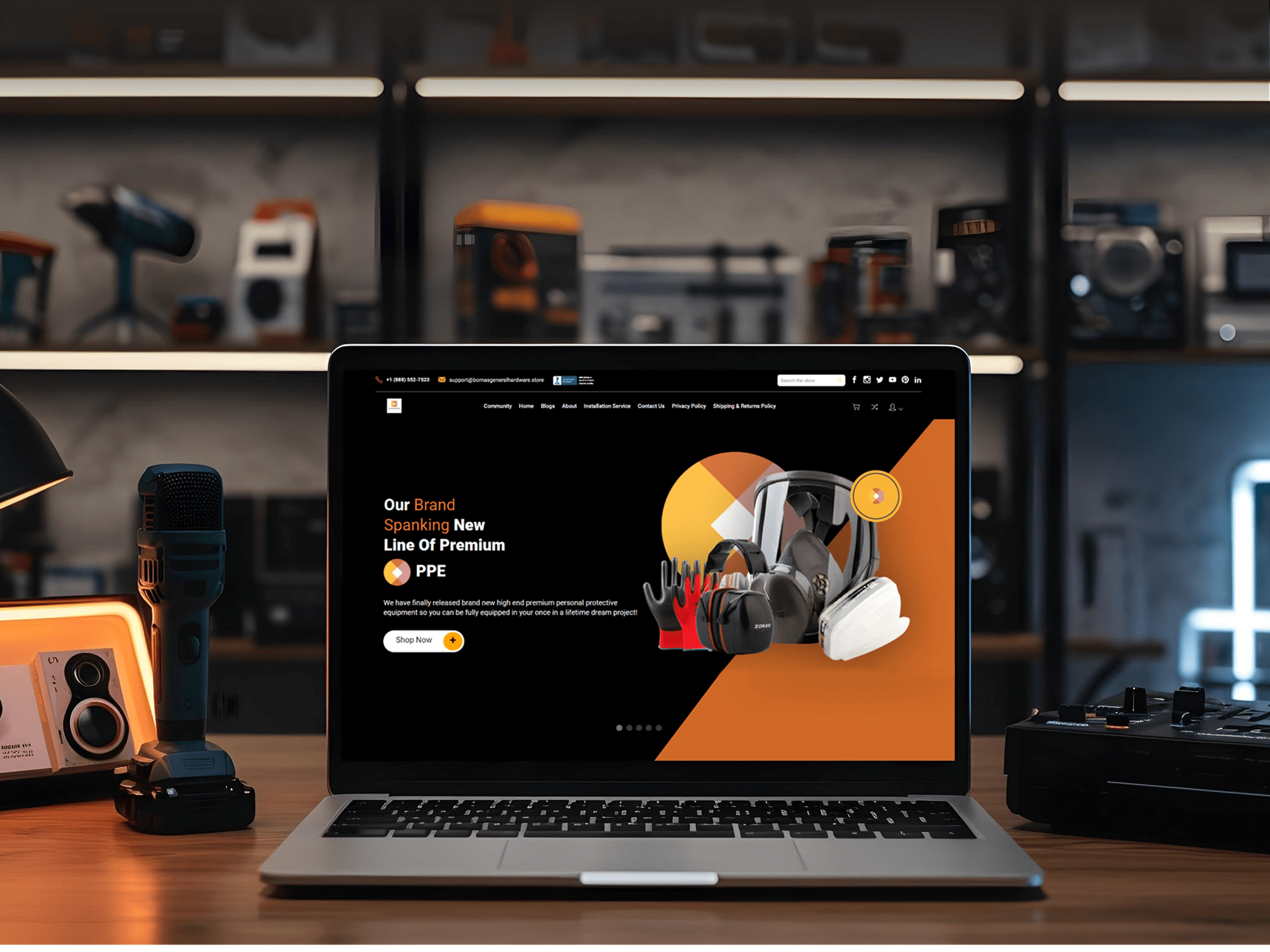
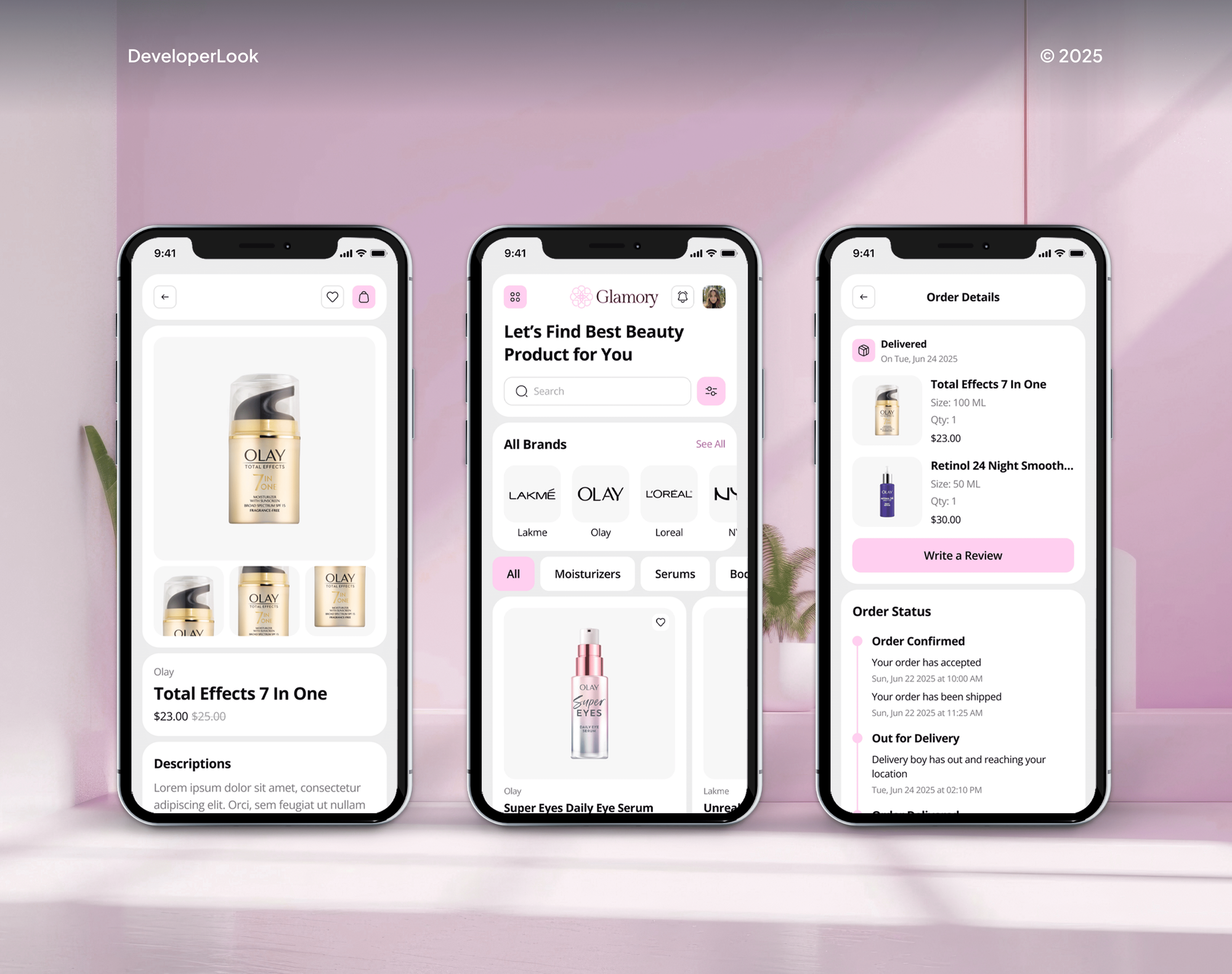
A selection of ecommerce stores and apps we've built. RMA work builds on the same base: clean order data, tested API calls, and records finance can trust.


What Our Clients Say
Feedback from ecommerce teams we have built stores, workflows, and integrations for.
We had a different kind of problem. People were visiting the store, adding products to their carts, and then disappearing before they finished the order. We had tried a few apps and made changes here and there, but nothing really seemed to solve the bigger issue. The team went through the shopping experience with us and pointed out things we hadn't really noticed ourselves. They cleaned up the cart and checkout flow, made the mobile experience much smoother, and helped us make the store feel easier to shop. I’m not going to pretend we fixed everything overnight, but it finally feels like the store is helping the sale instead of getting in the way of it.
The mobile experience is probably my favourite part of the new site. We had spent a lot of time making sure the desktop version looked right, and the team kept pushing us to think about how everything would actually feel on a phone too. They were right. The navigation is clean, the interactions feel natural, and everything we’ve tested so far works exactly as it should. They also went through the links, forms, integrations, and other details more than once before launch, which I really appreciated. And even after going live, we could still reach out when something came up. The whole process felt friendly, organised, and surprisingly straightforward.
We had a pretty specific idea of what we wanted our website to become, but I wasn’t sure how easily we could explain all of it to a development team. There were quite a few moving parts, and we were working toward a deadline, so I expected a few things to get lost along the way. That never really happened. They understood what we were trying to achieve, kept us updated throughout the process, and got everything ready within the agreed timeline. The final site feels much easier to navigate, works beautifully on mobile, and is noticeably smoother for our customers. It was a huge relief seeing the original idea actually turn into the website we had in mind.
1,000+
Projects shipped
10+
Years of experience
Top 3%
Upwork Top Rated Plus
5 stars
Average review score
Work Culture
An RMA touches support, the warehouse, and finance, so we design with all three in the room. These habits keep approvals fast and records clean.
Each number carries your order, items, and customer history from the first request. Nobody searches the inbox to learn where a returned box belongs.
Rules are written in plain words before we code them. Anyone on your team can see why a request was approved or sent to review.
Serial numbers and purchase dates are checked before a label goes out. Expired or unknown items go to review, not straight into a free shipment.
Refunds, credits, and replacements post to your accounting system as they happen. Month end stops being a hunt for returns nobody recorded.
If your platform's built-in returns or a plugin covers your volume, we'll say so. Custom RMA work only makes sense when it saves real hours.
The code, the data, and the hosting account belong to you. You're free to move agencies or bring the work in-house whenever you like.
Overview
DeveloperLook builds custom RMA software for Shopify, WooCommerce, and BigCommerce stores that approves returns by your rules and ties each RMA number to its order. We add labels carrying the RMA number, inspection outcomes, and accounting sync. Projects start at $950, and a basic request workflow launches in 2 to 3 weeks with the code in your name.
DEVELOPERLOOK
Project facts · RMA Software Development
Reviewed 28 Sep 2026 by Saimul Islam
Good fit
Stores approving returns by email
Your support team reads each return email, checks the order by hand, and replies with instructions a day later.
Brands selling warranty-backed products
You sell electronics or equipment with warranties, and every claim needs a serial number check before you repair or replace it.
WooCommerce stores outgrowing a plugin
Your WooCommerce returns plugin issues RMA numbers, and you now need approval rules and a link to your books on top.
BigCommerce stores buying labels by hand
You use BigCommerce's built-in returns, but its control panel doesn't create return labels, so staff buy each one separately.
B2B teams with approval steps
Your wholesale buyers return high-value parts, and each return needs a manager's sign-off before anything ships back.
Not a fit
Self-serve exchanges
Your customers should start returns and pick exchanges without anyone approving them. Our Shopify Returns Portal Development service fits that self-serve flow.
Return reports by SKU
You mainly need return rate, cost, and reason reports by SKU. Our Shopify Returns Management Software service is the better fit.
A handful of returns
You approve a handful of returns a month. Your store's built-in returns or plain email will do that for less than our $950 starting price.
No approval step
You want refunds, restocking, and 3PL updates to run with no approval step at all. Our Reverse Logistics & Returns Automation service is built for that.
Not sure we're the right fit?
Send a two-line brief. We'll tell you honestly whether we're the right team.
Pricing
These are starting points in USD. Your final price depends on your approval logic, carriers, and accounting system, and you get a fixed proposal after a free RMA review.
For stores that approve each return by hand and want it out of email.
$950one-time, USD
For teams with steady return volume that want routine approvals handled by rules.
$2,600one-time, USD
For brands handling warranty claims, serial numbers, and supplier returns with accounting sync.
$5,200one-time, USD
For Agencies
You own the client relationship. We supply the RMA work behind it: request forms, approval logic, carrier labels, and accounting sync. Everything ships under your agency's name, with documentation for your team.
White label: your client only ever sees your brand
Send the client's platform, return policy, warranty terms, and accounting system.
You get the rules, number format, delivery dates, and one fixed quote.
We build, test every RMA path, and document it under your agency's brand.
We work under your brand, so the client relationship stays yours.
A fixed price and rules the client signs off first.
Every RMA keeps its order link, decisions, and dates for the client.
Bring us in for one store or a rollout across client brands.
The Right Technology for Your Project
We build on your store's order API, your carriers' label APIs, and the accounting system your finance team already uses.
 Shopify
 WooCommerce
 BigCommerce
 WordPress
 UPS
UPS FedEx
FedEx USPS
USPS DHL
DHL QuickBooks
 Xero
Xero Microsoft Dynamics 365
 Sage
Sage Odoo
Odoo PHP
PHP Node.js
 MySQL
MySQL PostgreSQL
 AWS
AWSFAQ
Straight answers on RMA cost, timelines, setup, approval rules, labels, and accounting sync.
 Saimul IslamFounder & CEO, DeveloperLook
Still have questions?
Send a message or book a call with the team.
An RMA request workflow with numbers tied to orders and a review queue starts at $950. Auto-approval rules, labels with the RMA number, and inspection outcomes bring it to $2,600. Warranty checks, accounting sync, and supplier RMAs start at $5,200. You get a fixed quote after a free RMA review.
Plan on 2 to 3 weeks for a request workflow with numbers and a review queue. Auto-approval, labels, and inspections add about 2 weeks. Warranty checks and accounting sync take 5 to 7 weeks in total, since each outcome is tested in your accounting system first.
An RMA workflow is the path a return follows from request to resolution, with an authorization number at its center. The customer asks, you approve or decline, and the item ships back carrying its number. Staff inspect it, then a refund, replacement, repair, or credit closes the RMA.
You set one up by deciding 4 things: accepted reasons, the return window, who approves what, and which outcomes you offer. Shopify and BigCommerce include return requests, and WooCommerce has an official Returns and Warranty Requests extension. Past that, you need custom software: RMA numbers, approvals, and labels built around your policy.
An RMA system has 5 parts: a request form, a number generator, approval rules, labels, and inspection outcomes. We connect each part to your store's order API and your accounting system. In NetSuite, for example, each RMA can become a Return Authorization that moves from Pending Approval to Refunded.
Yes, routine approvals can run on rules while edge cases go to a person. A typical rule approves a defect claim inside the warranty period and under an order value you set. Requests outside the rules, repeat claims, and high-value items land in your review queue with the order history attached.
Yes, we connect RMA workflows to all three through their order APIs, so every RMA links to the original order and items. On Shopify, approved requests become native returns in your admin. On BigCommerce, we build on its built-in return requests and add the labels its control panel doesn't create.
Labels are generated through your carrier's API when an RMA is approved, not before. The RMA number goes in the label's reference field, so receiving can match each box to its authorization. FedEx, for example, prints the RMA number on the label and on your invoice.
Automation cuts support time by answering the questions your customers usually email about. Each customer sees their RMA status and next step on a status page and in automatic emails. Routine approvals happen by rule, and helpdesk tickets carry the authorization, so agents stop searching for orders.
Yes, each closed RMA can post to both. A refund or credit creates a credit memo in QuickBooks, Xero, or NetSuite, and a replacement books the outgoing unit. Inventory updates by condition: resellable items return to stock, and damaged ones are written off, so counts stay right.
Saimul IslamFounder & CEO, DeveloperLookStill have questions?
Send a message or book a call with the team.
30-min strategy callGoogle Meet
Book a call
Pick a 30-minute slot that works for you. We meet on Google Meet to align on goals, scope, and the right next step.
