
Vendor shortlist with BAAs
CRMs compared only when the vendor signs a business associate agreement on the plan you'd buy.

For clinics, care agencies, and healthcare companies: every referral and patient follow-up tracked to the next appointment, in tools whose vendors sign a BAA.
2X
Faster referral follow-up
100%
Patient data in BAA-covered tools
How your project runs
Teams we have built for:














The Problem
It starts when referrals and patient inquiries arrive faster than intake can work them. Each one waits in a fax queue, a voicemail, or someone's inbox.
01 · Stalled referrals
Faxed referrals get scanned, then nobody calls the patient.
Each referral gets an owner and a first-call deadline.
02 · Missed visits
Therapy patients skip sessions and drift away quietly.
Missed visits create a task for the care team to call.
03 · Unknown sources
Nobody knows which practices send the most patients.
Every referral carries its referring provider, so reports rank sources.
04 · Vendor risk
A free CRM gets proposed without checking its BAA.
Only vendors that sign a BAA on your plan make the shortlist.
A cardiologist faxes a referral on Monday. Intake scans it into the EHR, but nobody calls the patient, and by Friday they've booked somewhere else. Your physical therapy patients skip their fourth visit and drift away without a call. Marketing asks which referring practices send the most patients, and the answer lives in three spreadsheets. Meanwhile someone suggests a free CRM, and nobody can say whether its vendor would sign a business associate agreement (BAA).
We start with the paths patients take to you: physician referrals, web inquiries, and calls. Then we set up a CRM whose vendor signs a BAA, store only the details each step needs, and give every referral an owner and a deadline. Your EHR stays the clinical record, linked where its API allows. When an off-the-shelf CRM can't fit your workflow, we build the missing module instead of forcing a workaround.
Every referral gets an owner
Faxed, portal, and phone referrals land in one queue with a due date for the first call.
Patient data kept minimal
Fields hold only what each step needs, with role-based access and audit logs on every view.
EHR linked, not duplicated
Appointment status flows from the EHR where its API allows, so nobody retypes charts.
Our Healthcare CRM Development Process
You approve the vendor and its BAA, the fields, the access roles, and every patient message. Test records run through each workflow before staff rely on it.
We map how referrals, inquiries, and follow-ups move today, and what your EHR and phone system already handle. You get a short written plan. If your EHR's own patient outreach covers it with better setup, we'll say so before we quote.
What's Included
Every plan covers a BAA-backed CRM choice, referral and inquiry pipelines, access roles, and consent fields. Higher plans add EHR links, care coordination, covered calls and texts, custom modules, and audit logging.
Compare Options
Your EHR already holds charts and schedules, and a generic CRM setup is quick to buy. Here is where each falls short once referrals, outreach, and patient data rules all apply.
| Feature | DeveloperLookBest fit | EHR alone | Generic CRM setup |
|---|---|---|---|
| Referral tracking | Owner and deadline each | Scanned into the chart | Basic lead stages |
| Patient data rules | BAA vendors, minimum fields | Covered by your EHR | Often unchecked |
| Care coordination | Tasks across the team | Inside clinical workflows | Sales-style tasks |
| EHR connection | FHIR, HL7, or vendor API | Native | Rarely connected |
| Calls and texts | BAA-covered services only | Portal messages | Whatever is cheapest |
| Custom workflows | Built when setup can't fit | Vendor roadmap | Workarounds |
| Cost to start | From $1,350, fixed scope | Included in your EHR | Lower setup fees |
| Speed to start | 3 to 5 weeks | Already running | 1 to 2 weeks |
Projects We've Built
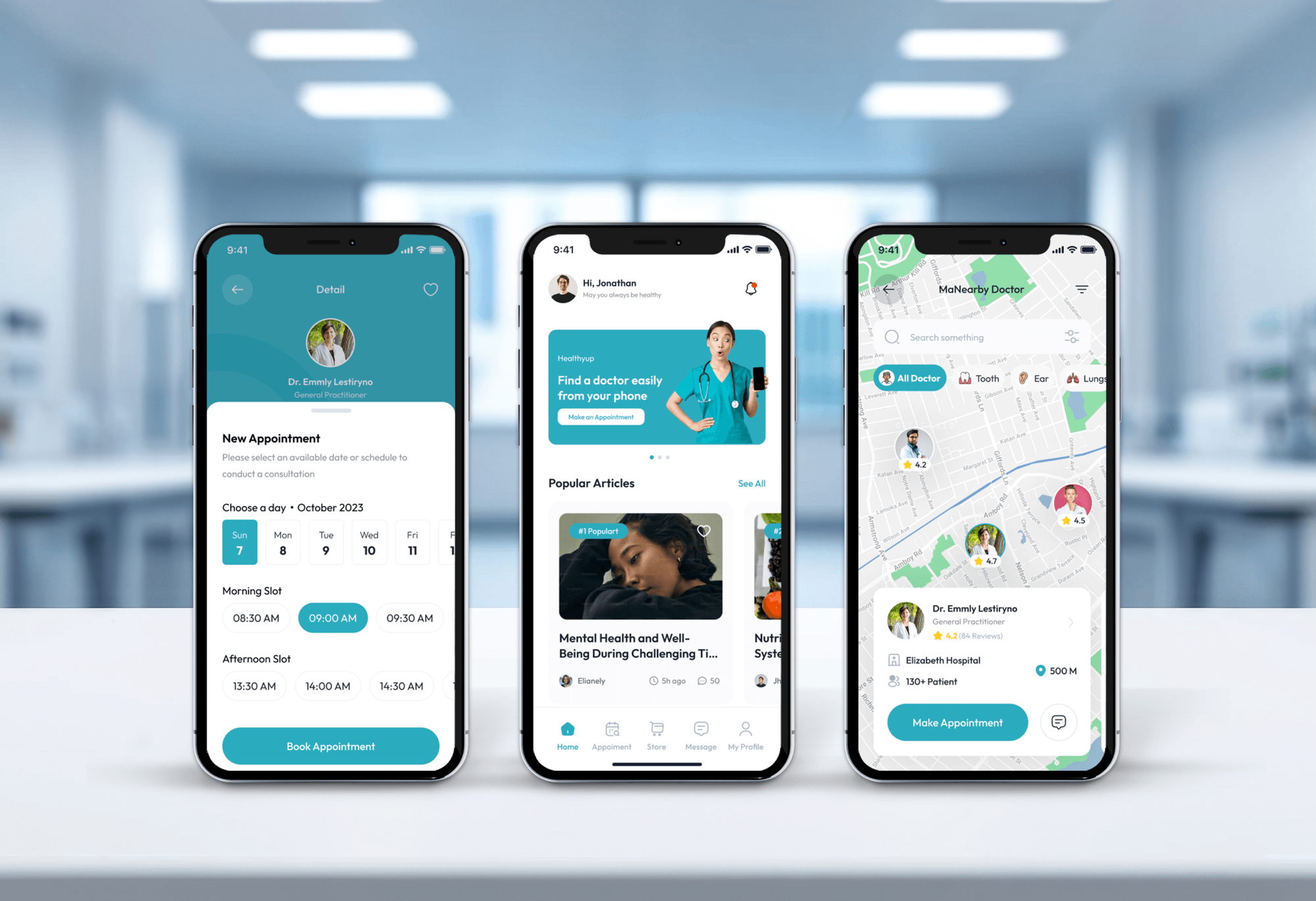
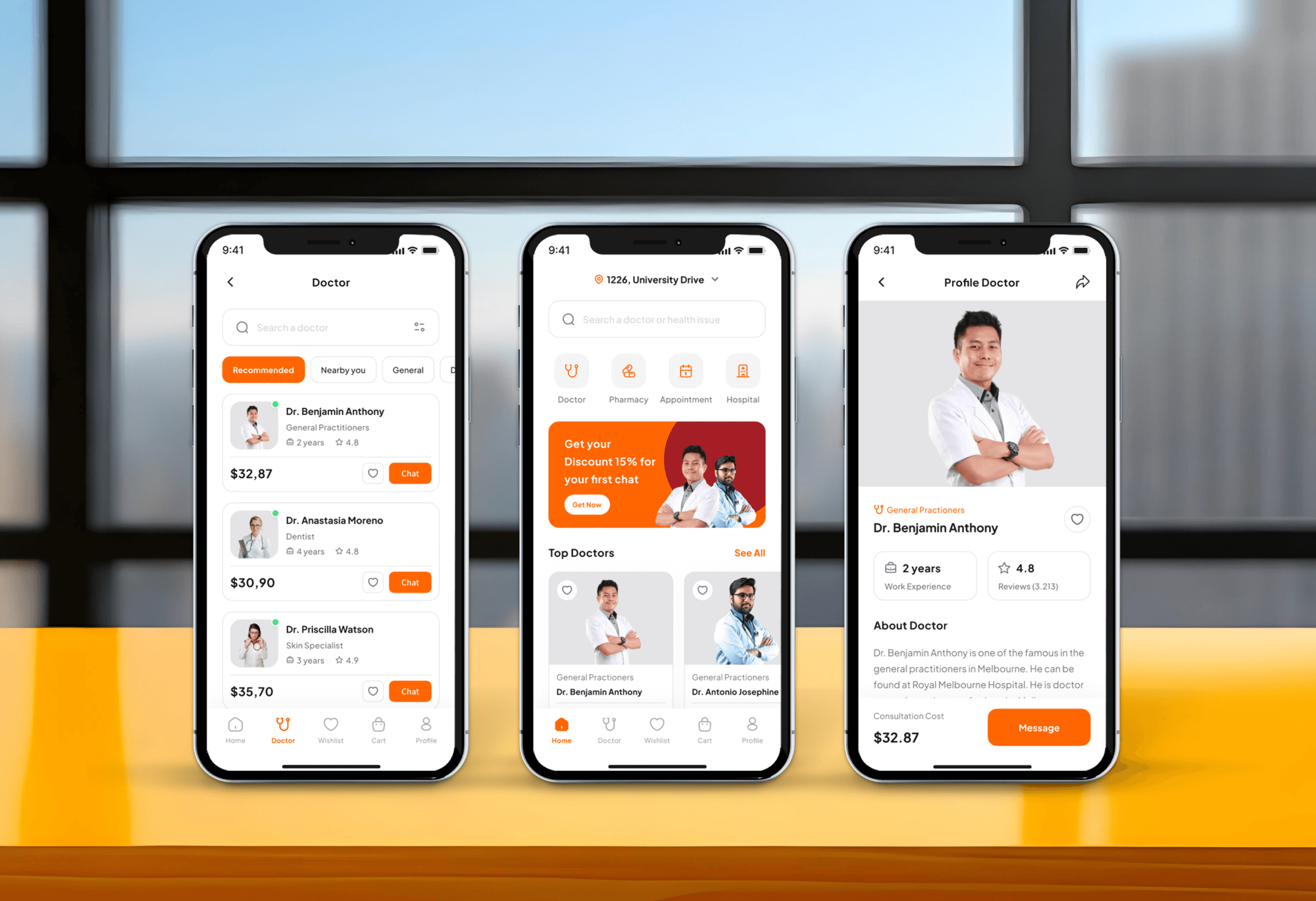
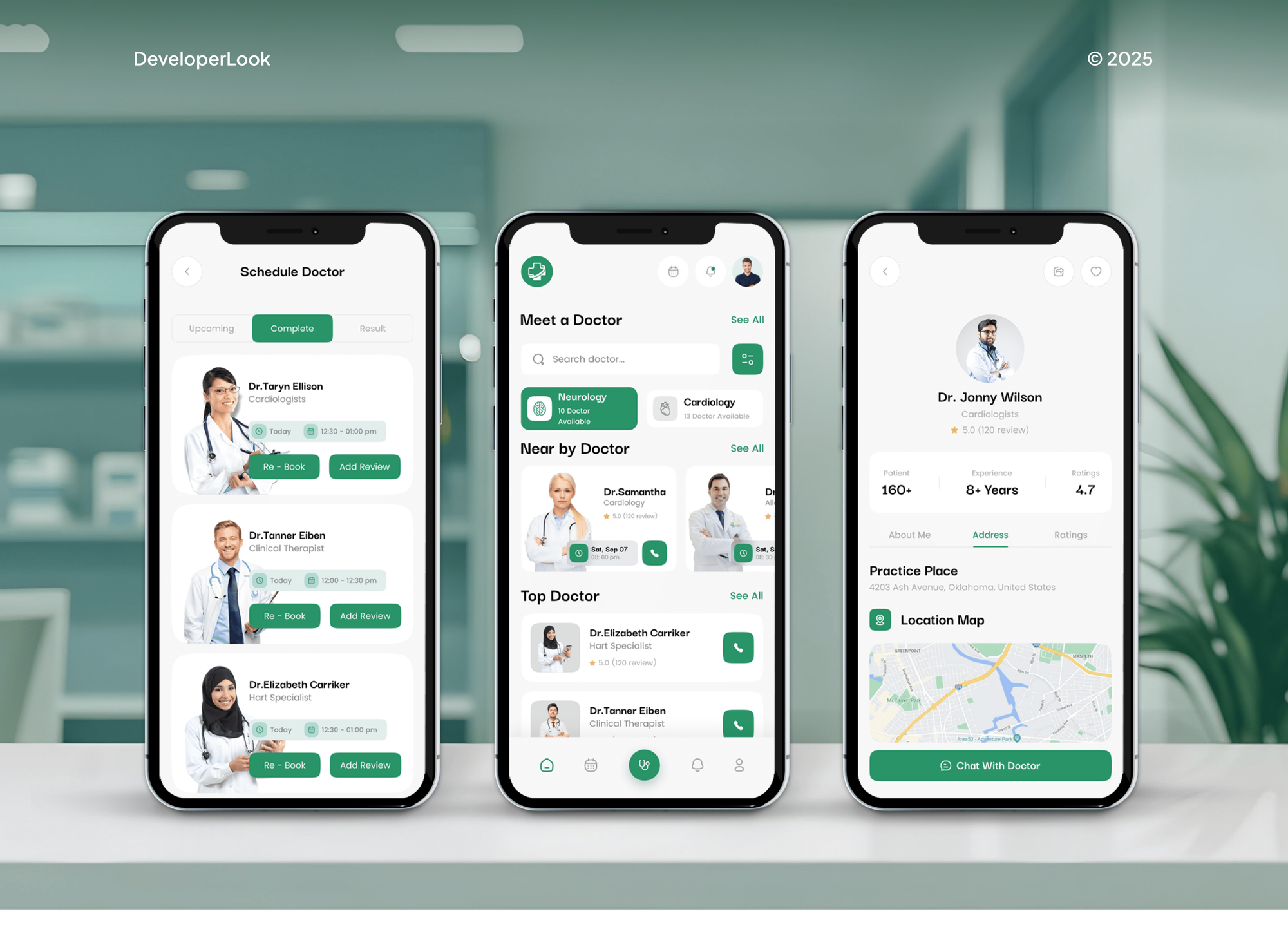
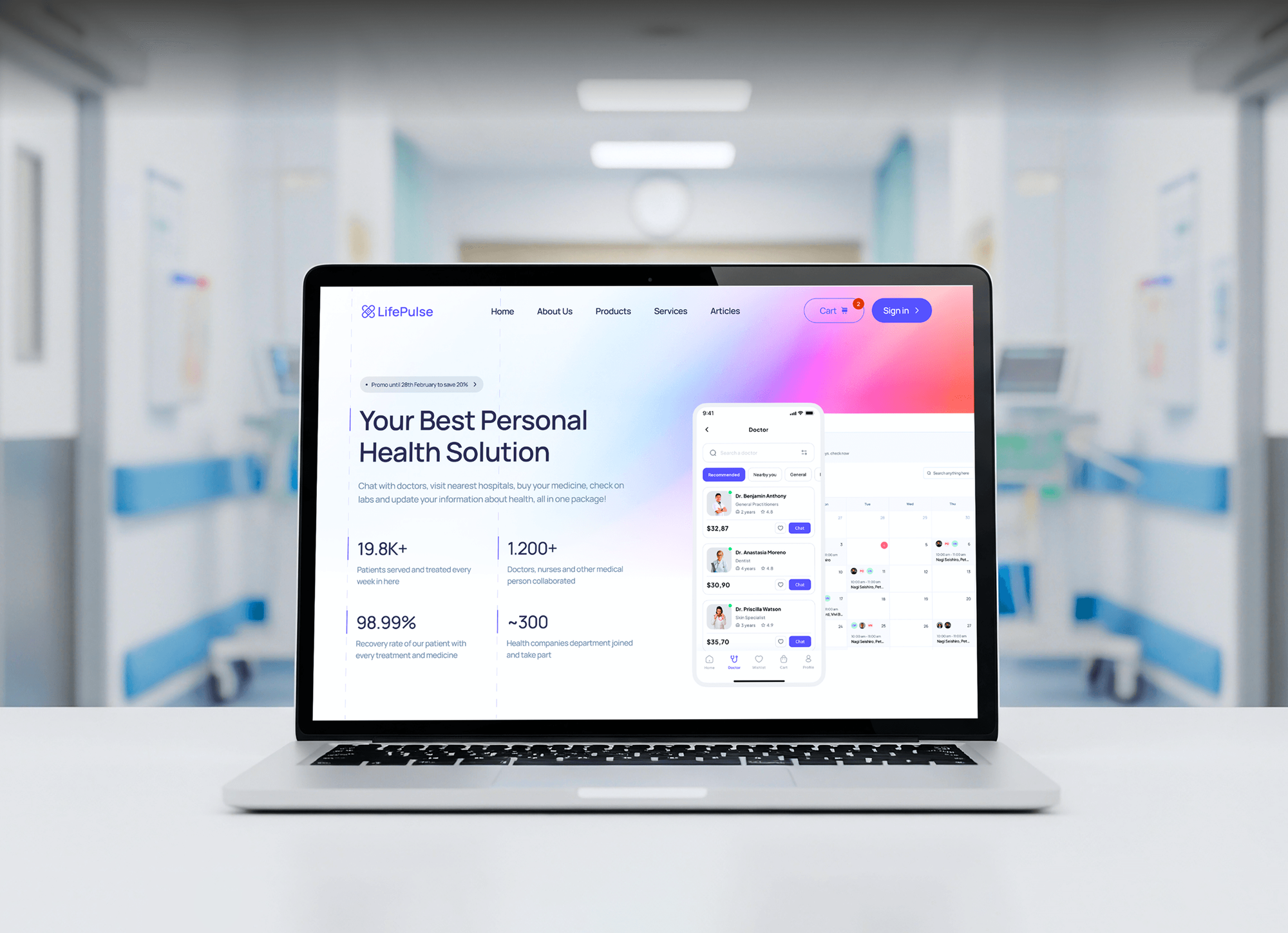
Medical apps, doctor booking apps, and healthcare sites our team designed and built, where patient details and appointments had to stay accurate and private. None were CRM builds.
What Our Clients Say
Feedback from teams we have built websites, dashboards, and integrations for.
We had a pretty specific idea of what we wanted our website to become, but I wasn’t sure how easily we could explain all of it to a development team. There were quite a few moving parts, and we were working toward a deadline, so I expected a few things to get lost along the way. That never really happened. They understood what we were trying to achieve, kept us updated throughout the process, and got everything ready within the agreed timeline. The final site feels much easier to navigate, works beautifully on mobile, and is noticeably smoother for our customers. It was a huge relief seeing the original idea actually turn into the website we had in mind.
The mobile experience is probably my favourite part of the new site. We had spent a lot of time making sure the desktop version looked right, and the team kept pushing us to think about how everything would actually feel on a phone too. They were right. The navigation is clean, the interactions feel natural, and everything we’ve tested so far works exactly as it should. They also went through the links, forms, integrations, and other details more than once before launch, which I really appreciated. And even after going live, we could still reach out when something came up. The whole process felt friendly, organised, and surprisingly straightforward.
What I appreciate most is that the website is actually easy for us to manage now. We can update content ourselves instead of sending a developer a message every time we need to change something small. They also paid attention to the technical SEO side, which mattered to us because we didn’t want a new website to create problems for the traffic we already had. I’ve probably asked more questions than I should have since launch, but every question has been handled patiently and without any fuss. The team is easy to work with, they explain things clearly, and when we need something changed, they focus on getting it done rather than making the process complicated.
1,250+
Projects shipped
10+
Years of experience
Top 3%
Upwork Top Rated Plus
5 stars
Average review score

Want results like these?
Tell us what you are building. You get a reply within 24 hours on business days, then a written estimate.
Work Culture
Healthcare CRM consulting starts with the rules, not the software. These habits keep patient data protected and the CRM useful to the staff who work it daily.
We confirm each vendor's BAA in writing before any record moves, including texting and call tools. A sales page about HIPAA is not a signed agreement.
Each field has to earn its place, because HIPAA's minimum necessary standard applies to everyday use. Clinical notes stay in the EHR, where they belong.
Many EHRs include patient outreach, reminders, and referral queues. If yours covers the work with better setup, we configure it and skip the extra CRM fee.
Care reminders and treatment follow-up are part of care. Marketing that uses patient data needs written authorization, so consent fields come before any campaign.
We configure the CRM first and write code only where configuration stops. Custom modules cost more to maintain, so each one has to earn it.
Records sit in accounts your organization owns, under your own BAAs. Custom code and its documentation are handed over, so another team can maintain them.
Overview
DeveloperLook handles healthcare CRM software development for clinics, care agencies, and healthcare companies. We set up a CRM whose vendor signs a BAA, build referral and care workflows, link your EHR through FHIR or vendor APIs, and code custom modules. Setups start at $1,350 and take 3 to 14 weeks.
DEVELOPERLOOK
Project facts · Healthcare CRM Software Development
Reviewed 8 Oct 2026 by Saimul Islam
Good fit
Multi-specialty clinics and medical groups
Referrals arrive by fax, portal, and phone, and some don't become appointments. You need a CRM that tracks each one from intake to first visit.
Physical therapy and behavioral health practices
Your patients need a series of visits, and drop-offs hurt outcomes and revenue. You want CRM for healthcare providers that flags missed sessions for a call.
Home health and senior care agencies
Family inquiries, discharge planners, and intake assessments all feed your census. You want each inquiry and referral source tracked to a start of care.
Healthcare companies selling to providers
You sell devices, lab services, or software to clinics. You need healthcare CRM software that tracks accounts, decision makers, and demo follow-up on Salesforce or HubSpot.
Teams outgrowing an off-the-shelf CRM
Your workflows don't fit a standard CRM, and you're comparing healthcare CRM companies against a custom build. You want honest advice and a fixed price.
Not a fit
Dental practice follow-up
You run a dental practice and need recall and treatment plan follow-up beside Dentrix or Open Dental. Our Dental CRM Setup page covers that work.
Intake forms only
You only need secure intake and registration forms on your website. Our HIPAA Compliant Online Patient Intake Forms page fits better.
Online booking only
You only need patients booking into your EHR schedule online. Our Patient Self-Scheduling Software Integration page covers that.
Budget under $1,350
You run a small practice and your budget is under $1,350. Your EHR's patient reminders and portal are enough for now.
Not sure we're the right fit?
Book a free call or message us. We'll tell you honestly whether we're the right team.
Pricing
These are starting points in USD. Your final price depends on your EHR, the number of sites and roles, and whether custom modules are needed, and you get a fixed proposal after a free review.
For practices and agencies moving referrals and follow-up into a BAA-covered CRM.
$1,350one-time, USD
For organizations that want the EHR linked and care teams working shared follow-up tasks.
$3,400one-time, USD
For teams whose workflows need a custom module, a referral portal, or a CRM to replace.
$7,200one-time, USD
For Agencies
You own the client relationship. We build the CRM behind your healthcare clients' growth: referral tracking, patient outreach with consent, and reports that tie new patients to campaigns. Every vendor signs a BAA, and everything runs under your brand.
White label: your client only ever sees your brand
Their EHR, sites, referral sources, and the numbers leadership tracks each month.
You receive a workflow, vendor, and BAA map with one fixed price.
We build, test with dummy records, train staff under your brand, and hand over access.
We present as your team on calls, guides, and clinic training.
Reports tie new patients and referrals to each campaign, without exposing patient details.
We prepare each vendor's BAA for your client to review and sign.
One setup pattern for practices, care agencies, and healthcare companies.
The Right Technology for Your Project
Your EHR keeps the clinical record. We add a CRM whose vendor signs a BAA, link the EHR where its API allows, and build custom pieces on covered cloud hosting.
 Salesforce Health Cloud
 HubSpot
 Microsoft Dynamics 365
 Twilio
 React
 Node.js
 PostgreSQL
 AWS
 Microsoft Azure
FAQ
Straight answers on what CRM means in healthcare, cost, setup time, implementation, patient engagement, care coordination, growth, and HIPAA telephony.
Saimul IslamFounder & CEO, DeveloperLookStill have questions?
Send a message or book a call with the team.
CRM in healthcare is the system that manages relationships with patients, referring providers, and prospects outside the clinical chart. It tracks inquiries, referrals, follow-ups, and outreach consent, while the EHR keeps diagnoses and treatment. The two work side by side, linked where the EHR's API allows.
CRM stands for customer relationship management, and in healthcare it's often called patient relationship management. The idea is the same: one record of every interaction, from first inquiry or referral to follow-up after a visit. Healthcare adds rules about who can see that record and how it can be used.
It's CRM software configured for patients, referrals, and care teams, from a vendor that signs a BAA. Some are built for healthcare, such as Salesforce Health Cloud. Others are general platforms like HubSpot or Zoho CRM set up for healthcare use. The right choice depends on your EHR, size, and budget.
It starts at $1,350 for a BAA-backed CRM setup with referral pipelines, access roles, and consent fields. EHR links, care coordination tasks, and covered calls and texts start at $3,400, and custom modules start at $7,200. CRM licenses, EHR interface fees, and messaging charges are billed by those vendors.
A standard setup takes 3 to 5 weeks, including the vendor and BAA check. EHR links and covered telephony add 2 to 4 weeks, depending on the EHR vendor's approval steps. Custom modules or a custom CRM take 8 to 14 weeks in total, with test records reviewed at each stage.
You implement it in five steps, starting with your referral and follow-up workflows. Next come a vendor that signs a BAA, minimum necessary fields and roles, EHR and phone links, and staff training. The order matters, because no patient data should move before the BAA is signed. Training covers the queues each role owns.
CRM improves patient engagement by making sure every patient hears from the right person at the right time. Missed visits trigger a call, new patients get preparation messages, and outreach goes only to patients who consented. Engagement improves once follow-up stops depending on someone's memory and a sticky note.
A CRM helps care coordination by turning handoffs into tasks with owners and due dates. A referral becomes intake, scheduling, and follow-up tasks, and a missed appointment alerts the coordinator. Clinical details stay in the EHR, so the CRM shows who needs to act without copying notes.
Healthcare companies grow with CRM by tracking which referral sources, campaigns, and accounts bring patients or contracts. Practices rank referring providers and chase stalled referrals, while device, lab, and software companies manage provider accounts and demos. Growth reports use counts and sources, not clinical details.
Start with a telephony vendor that signs a BAA, since calls, voicemails, and texts can all hold patient information. Then keep recordings in covered systems, limit texts to the minimum necessary, restrict who can replay calls, and log access. No phone system makes you compliant on its own, so policies and training matter just as much.
Saimul IslamFounder & CEO, DeveloperLookStill have questions?
Send a message or book a call with the team.
Free 30-min callGoogle Meet
Book a call
In 30 minutes on Google Meet we walk you through how we would build it, how long it takes and what it costs. Then you get a written estimate.
Calendar not showing? Book on cal.com or send a brief.