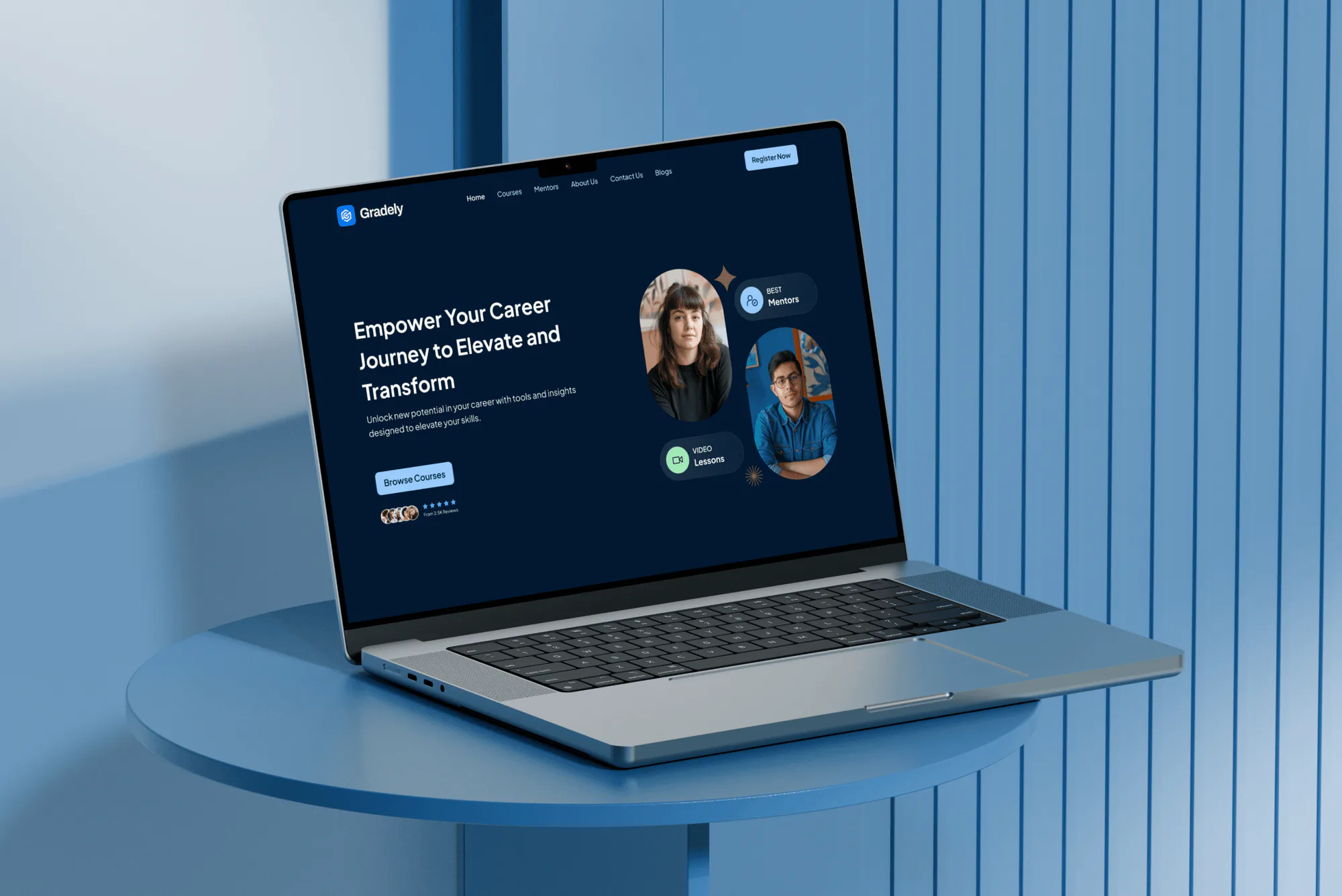
Gradely E-Learning Website Design & Development
- Education
- Dashboard
- Membership Platform

For colleges and universities: degree program pages that answer what students compare, with inquiries and applications tracked by program. From $950 per month.
2X
More program inquiries from search
100%
Degree programs mapped and tracked
How your project runs
01 · FreeIndustry leaders we work with
 Google Search Console
 Semrush
 PageSpeed Insights
 WordPress
 Salesforce Education Cloud
 HubSpot
 Google Analytics (GA4)
 Google Tag Manager
The Problem
It shows up when a student searches a specific degree and format. Ranking lists and lead directories explain the program better than the college that teaches it.
Rankings
Ranking lists and directories outrank your own program pages.
Rankings
Program pages answer the same comparison questions, using facts your catalog publishes.
Program facts
Pages list courses but hide cost and start dates.
Program facts
Each degree page shows format, length, cost, start dates, and requirements.
Relaunches
Old program URLs broke after the last site relaunch.
Relaunches
Every retired program URL redirects to its current page.
Attribution
Nobody knows which page produced an inquiry.
Attribution
Inquiry and application starts are tagged by program in your CRM.
A working adult searches for an online MBA with evening classes. The first results are ranking lists and lead directories, and your program sits on page three. Your own program page lists courses but not total cost, start dates, or length. Your last relaunch moved program URLs, so old links now end in errors. Three colleges run their own subdomains with different names for the same degree. Inquiries arrive, but nobody can say which page produced them.
We start with the program list, not the homepage. Each degree gets one page that answers what students compare: format, length, total cost, start dates, admission requirements, and the outcomes your institution publishes. We agree URL and naming rules with the departments that run their own sites, and we redirect URLs left behind by past relaunches. Inquiry and application starts are tagged by program in your CRM, so you see which pages fill which programs.
One page per degree program
Format, length, cost, start dates, and requirements on the page students land on.
Department sites in one plan
Naming and URL rules agreed with the departments that run their own subdomains.
Inquiries counted by program
Inquiry and application starts tagged by program in Slate or Salesforce Education Cloud.
Our Higher Education SEO Company Process
Marketing, admissions, and the departments approve the program map before pages change. Program directors check facts, and you see inquiries by program every month.
We check how 10 priority programs show in search next to ranking sites and other colleges, and test each inquiry form on a phone. You get a short written review of the gaps.
Projects We've Built
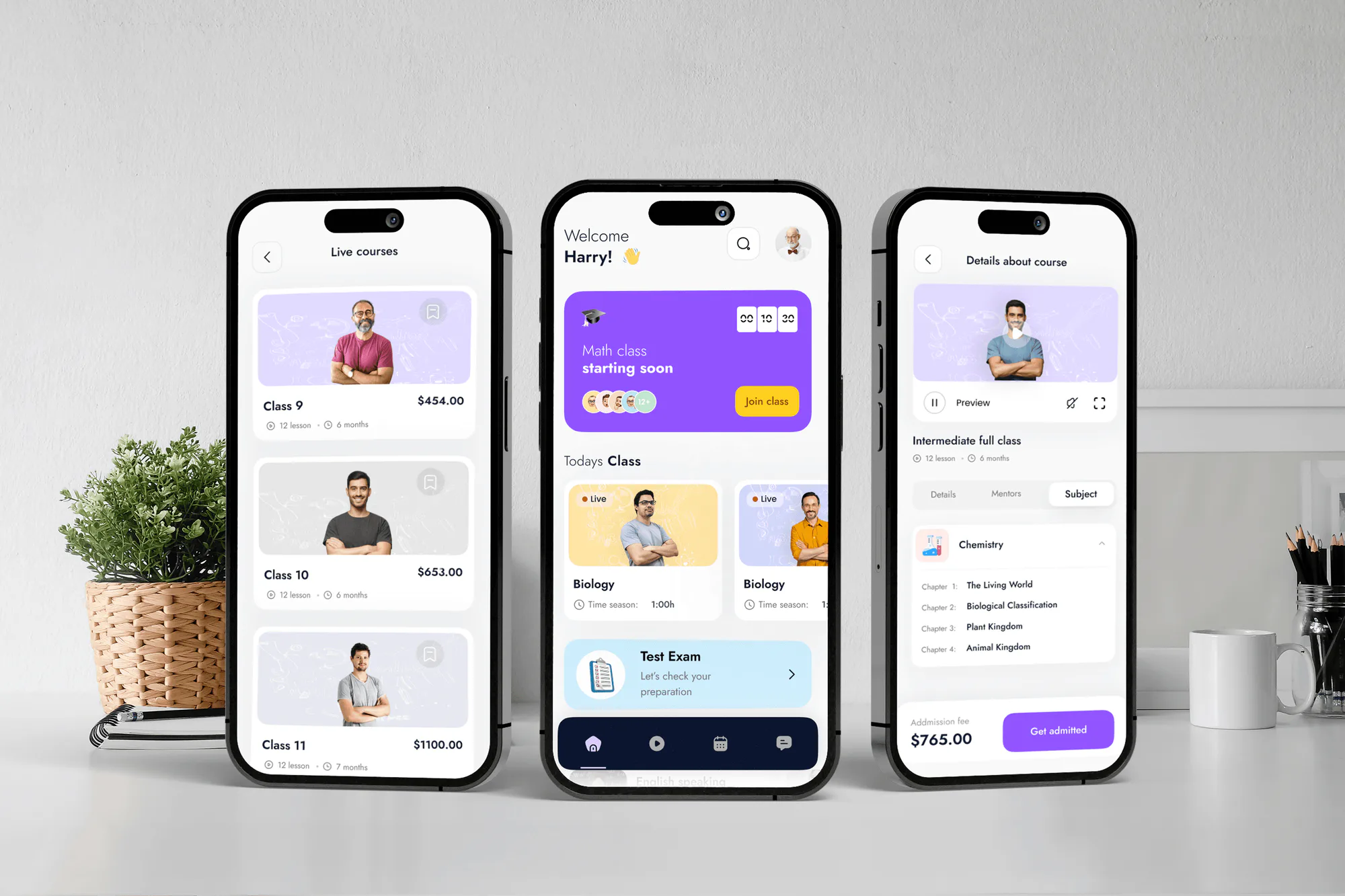
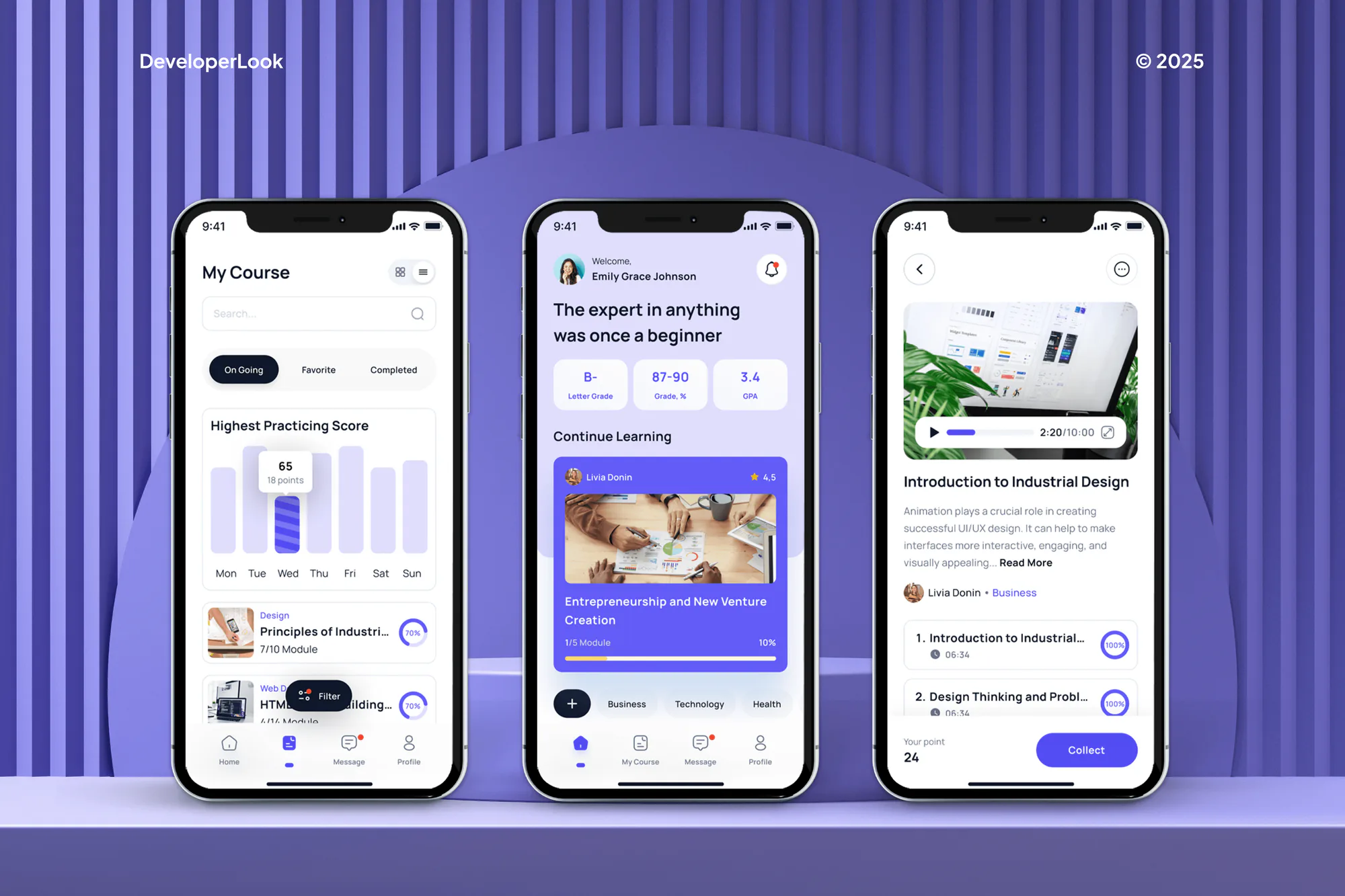
E-learning platforms and student dashboards from our build team. They show how we build education websites, not search results for those clients.

What's Included
A monthly program built around degrees, not sitewide traffic. You get program pages, a shared URL plan, relaunch redirects, accessibility checks, and inquiries counted by program.
Compare Options
Your own web team knows the institution, and lead vendors send names quickly. Here is where each one helps program pages win students over several intakes.
| Feature | DeveloperLookBest fit | In-house web team | Lead vendor |
|---|---|---|---|
| Program page work | Writes and rebuilds program pages | Edits when the queue allows | No pages on your site |
| Speed to inquiries | Builds over 6 to 12 months | Depends on team capacity | Names within weeks |
| Cost model | Fixed monthly fee | Staff time you already pay | Pay per lead or inquiry |
| Department coordination | URL and naming rules agreed | Strong internal relationships | |
| Search planning | Searches mapped by program | Often a generalist skill set | |
| Inquiry quality | Students who chose your program | Students who chose your program | Leads may reach several schools |
| Inquiry tracking | Tagged by program | Depends on CRM setup | Vendor reports per lead |
| After the contract ends | Program pages remain yours | Pages remain yours | Leads stop with the budget |
What Our Clients Say
Feedback from teams we have built and launched websites for.
We had a pretty specific idea of what we wanted our website to become, but I wasn’t sure how easily we could explain all of it to a development team. There were quite a few moving parts, and we were working toward a deadline, so I expected a few things to get lost along the way. That never really happened. They understood what we were trying to achieve, kept us updated throughout the process, and got everything ready within the agreed timeline. The final site feels much easier to navigate, works beautifully on mobile, and is noticeably smoother for our customers. It was a huge relief seeing the original idea actually turn into the website we had in mind.
The mobile experience is probably my favourite part of the new site. We had spent a lot of time making sure the desktop version looked right, and the team kept pushing us to think about how everything would actually feel on a phone too. They were right. The navigation is clean, the interactions feel natural, and everything we’ve tested so far works exactly as it should. They also went through the links, forms, integrations, and other details more than once before launch, which I really appreciated. And even after going live, we could still reach out when something came up. The whole process felt friendly, organised, and surprisingly straightforward.
What I appreciate most is that the website is actually easy for us to manage now. We can update content ourselves instead of sending a developer a message every time we need to change something small. They also paid attention to the technical SEO side, which mattered to us because we didn’t want a new website to create problems for the traffic we already had. I’ve probably asked more questions than I should have since launch, but every question has been handled patiently and without any fuss. The team is easy to work with, they explain things clearly, and when we need something changed, they focus on getting it done rather than making the process complicated.
1,250+
Projects shipped
10+
Years of experience
5 stars
Clutch rating
5 stars
GoodFirms rating
Excellent
Trustpilot rating
Top 3%
Upwork Top Rated Plus
1,250+
Projects shipped
10+
Years of experience
5 stars
Clutch rating
5 stars
GoodFirms rating
Excellent
Trustpilot rating
Top 3%
Upwork Top Rated Plus

Want results like these?
Tell us what you are building. You get a reply within 24 hours on business days, then a written estimate.
Work Culture
Program pages carry tuition, credits, and admission rules that students act on. These habits keep the facts right, departments on board, and reports tied to enrollment.
Tuition, credits, and start dates come from your catalog and registrar, and the program office signs off. A wrong number on a program page turns into an admissions complaint later.
Departments that run their own sites agree to the naming and URL rules before we change anything. Plans that skip them get undone at the next department redesign.
Program SEO runs on public pages and aggregate CRM reports, so we don't ask for student records covered by FERPA. Your registrar's data stays where it already lives.
Public colleges fall under the Justice Department's ADA Title II web rule, which sets WCAG 2.1 AA. We test every page we touch against it before launch.
We write program facts so AI assistants can quote them accurately, but no agency controls whether they do. Our reports say that plainly instead of selling citations.
Pages, redirect maps, and tracking live in your CMS, analytics, and CRM under your logins. If the program ends, your web team carries on from the map.
Overview
DeveloperLook is a higher education SEO company that helps colleges and universities win students for specific degree programs. We build program pages from catalog facts, set URL rules across department sites, fix relaunch redirects, and track inquiries by program in your CRM. Plans start at $950 per month, and setup takes 5 to 7 weeks.
DEVELOPERLOOK
Project facts · Higher Education SEO Company
Reviewed 29 Oct 2026 by Saimul Islam
Good fit
Universities with many programs
Your university runs dozens of degrees across several colleges on Drupal or WordPress, and you need higher education search engine optimization that covers every program.
Colleges launching online programs
Your college is launching online and hybrid degrees, and national ranking sites already own the searches students use to compare them.
Community and technical colleges
Your college offers certificates and associate degrees, and local students searching for a nursing or welding program can't find your pages.
Enrollment and marketing teams
Your team reports to leadership on intake, and you want a higher education SEO agency whose report counts inquiries by program in Slate.
Agencies serving campuses
Your agency handles campus branding and websites, and you need a higher ed SEO partner to run program search work under your name.
Not a fit
Schools and training centers
You run a private school, a tutoring center, or a training provider rather than a college. Our Education SEO Company page covers schools and training programs.
Campus site needs a rebuild
Your campus site sits on an outdated CMS that can't produce clean program pages. Our Higher Education Website Design service rebuilds it first, so search work can pay off.
Need names this intake
You need inquiries for this term's intake within weeks. Paid search or a lead vendor is faster, and we'll tell you so before we quote.
Budget under $950 a month
This year's budget can't carry a monthly program. A one-time review from our SEO Audit Services page can set priorities for your own web team.
Not sure we're the right fit?
Book a free call or message us. We'll tell you honestly whether we're the right team.
Pricing
These are monthly starting points in USD. Your plan depends on the number of programs, colleges, and department sites you cover, and you get a fixed proposal after a free program review.
For Agencies
You keep the college as your client. We map degree programs to student searches, write program pages from catalog facts, and count inquiries by program. Your agency presents the plan and the monthly results under its own name.
White label: your client only ever sees your brand
Send the program list, CMS access, and the intake goals for each program.
We map searches to programs and draft pages for department review.
Monthly inquiries by program go out in your own report format.
Send the program list, CMS access, and the intake goals for each program.
We map searches to programs and draft pages for department review.
Monthly inquiries by program go out in your own report format.
The Right Technology for Your Project
Search tools to measure program visibility, the campus CMSs where pages live, and the admissions CRMs where inquiries and applications are counted.
Google Search ConsoleSemrushPageSpeed InsightsWordPressSalesforce Education CloudHubSpotGoogle Analytics (GA4)Google Tag ManagerFAQ
Straight answers on higher education SEO pricing, program rankings, AI search, departments, and accessibility.
Saimul IslamFounder & CEO, DeveloperLookStill have questions?
Send a message or book a call with the team.
Our higher education plans start at $950 per month for a program review, 2 rebuilt program pages a month, redirect fixes, and inquiry tracking. Adding 4 program pages a month, online formats, and department URL rules moves you to $1,650. Universities with up to 3 colleges start at $2,350. You get a fixed proposal after a free program review.
Setup takes 5 to 7 weeks, and inquiries from search usually build over 6 to 12 months. Programs already ranking on page two often move first. Competitive national searches, such as online MBA or nursing degrees, take longer, so we pair them with niche and regional programs that can win sooner.
Top schools pair a well-known name with years of earned links, then give each degree a page that answers comparison questions. That's why SEO for colleges and universities outside the top tier starts where they can win: niche majors, regional searches, and evening or online formats.
They give every degree program one stable page, linked from its department and updated each term. That page carries the program's exact name, format, cost, and requirements. Old URLs redirect after relaunches instead of breaking. We copy that structure for your programs, starting with the ones that have the most room to grow.
Publish clear, consistent program facts that AI assistants can find and quote, then check what they say about you. AI Overviews and chat assistants draw on pages that state cost, length, and requirements plainly. We make those facts match across your catalog, program pages, and Business Profiles, and review monthly how assistants describe your programs. Nobody can promise a citation.
Look for a higher education SEO firm that plans by degree program, works with departments, and reports inquiries from your CRM. DeveloperLook works this way, and our first step is a free review of 10 priority programs, so you can judge the approach before choosing a plan.
Yes, and most universities need exactly that. Colleges and departments often run separate subdomains or CMS instances, which split program pages and create duplicates. We agree naming and URL rules with each department, point duplicates to one main program page, and give department editors a short guide.
Public colleges do. The Justice Department's ADA Title II web rule sets WCAG 2.1 AA for state and local government web content, including public universities. After an April 2026 extension, larger public entities have until April 26, 2027. We test every page we touch against WCAG 2.1 AA and flag wider site problems to your web team.
No. Program SEO works from public pages, search data, and aggregate CRM reports, so we don't need student records covered by FERPA. Inquiry tracking counts form fills and application starts by program without pulling student names into our reports. If CRM access needs a vendor agreement, your compliance office sets the terms.
Your institution does. Program pages, redirect maps, and URL rules live in your CMS, and tracking sits in your analytics and CRM under your logins. The program and URL map is a document your web team keeps, so departments can follow it for new programs without us.
Saimul IslamFounder & CEO, DeveloperLookStill have questions?
Send a message or book a call with the team.
Free 30-min callGoogle Meet
Book a call
In 30 minutes on Google Meet we walk you through how we would build it, how long it takes and what it costs. Then you get a written estimate.
Calendar not showing? Book on cal.com or send a brief.