Baseline evaluation
Your current prompt or RAG setup scored on held-out cases, so every later result has a fair reference.

For product and support teams whose prompts keep growing: a model trained on your own examples that follows your format and tone with shorter, cheaper requests.
2X
Shorter prompts per request
100%
Scored against the base model
How your project runs
01 · FreeTeams we have built for:














The Problem
It shows up once a prompt has grown into pages of rules and examples. Each request costs more, outputs still drift from your format, and a quick tune on raw data hasn't fixed it.
Bloated prompts
Every request carries pages of instructions and examples.
Bloated prompts
A tuned model learns the format, so requests drop most of those examples.
Drifting format
Outputs slip out of your JSON format or house tone.
Drifting format
Training examples in your exact format teach the model to stay inside it.
Wrong tool
Teams fine-tune to add facts that change every week.
Wrong tool
Changing facts stay in retrieval, and training targets behavior and format only.
No proof
Nobody measured whether the tuned model beats the original.
No proof
Held-out test cases score both models before anything reaches production.
Your prompt started as a few lines. Now it's pages of rules and example replies, sent with every request. Costs climb with each call, answers slow down, and the model still slips out of your JSON format or house tone when inputs get unusual. Someone suggested fine-tuning, so a developer uploaded last year's tickets to a tuning tool. Nobody checked whether customer details were in that data. Nobody compared the new model with the old prompt either, so you're paying for a model nobody can prove is better.
We start by measuring what you have: your current prompt or RAG setup, scored on held-out examples from your own work. If a fine-tune can beat it, we build a clean dataset and train an open-weight model with LoRA, or tune a supported Gemini model on Vertex AI. Then both models face the same test cases. You ship the tuned model when the numbers say it's better, not just because training finished.
Baseline before any training
We score your current prompt or RAG setup first, so the fine-tune has a number to beat.
Datasets from your own work
Approved replies, labeled cases, and reviewed outputs become clean training examples that you own.
Scored against the base model
Held-out cases compare the tuned model with the base model on quality, prompt length, and cost.
Our LLM Fine-Tuning Services Process
You approve the data sources, the objectives the model is scored on, and the go or no-go call after training. Nothing reaches production until it beats your baseline.
We look at your current prompts, outputs, and data, and say whether better prompting, retrieval, or a fine-tune fits. You get an honest recommendation and a fixed price for the next step.
What's Included
Our fine-tuning LLM services cover what a reliable fine-tune needs: a baseline to beat, data you have rights to, a clean dataset, measured training runs, and a deployment you can roll back.
Compare Options
LLM fine tuning vs RAG is the first call we make, and a DIY tuning tool suits teams with clean data and ML staff. Here is how each holds up in practice.
| Feature | DeveloperLookBest fit | RAG only | DIY tuning tool |
|---|---|---|---|
| Best for | Format, tone, and task behavior | Facts that change often | Quick experiments by ML staff |
| Fresh facts | Paired with retrieval when needed | Strong: updates without retraining | Up to your own setup |
| Prompt length | Shorter prompts after tuning | Long prompts with retrieved text | Depends on your training data |
| Data preparation | Rights, privacy, and cleanup included | Documents indexed, little labeling | You clean and label it |
| Proof it works | Scored against base model and RAG | Scored on retrieval accuracy | Training loss, rarely business tests |
| Setup speed | Feasibility run in 3 to 4 weeks | Often faster to start | Fastest for a first run |
| Cost | From $1,150, fixed scope | No training compute needed | Lowest: tool fees plus compute |
| Ownership | Adapters, data, and evals are yours | Index and pipeline are yours | Tied to the tool's platform |
Projects We've Built
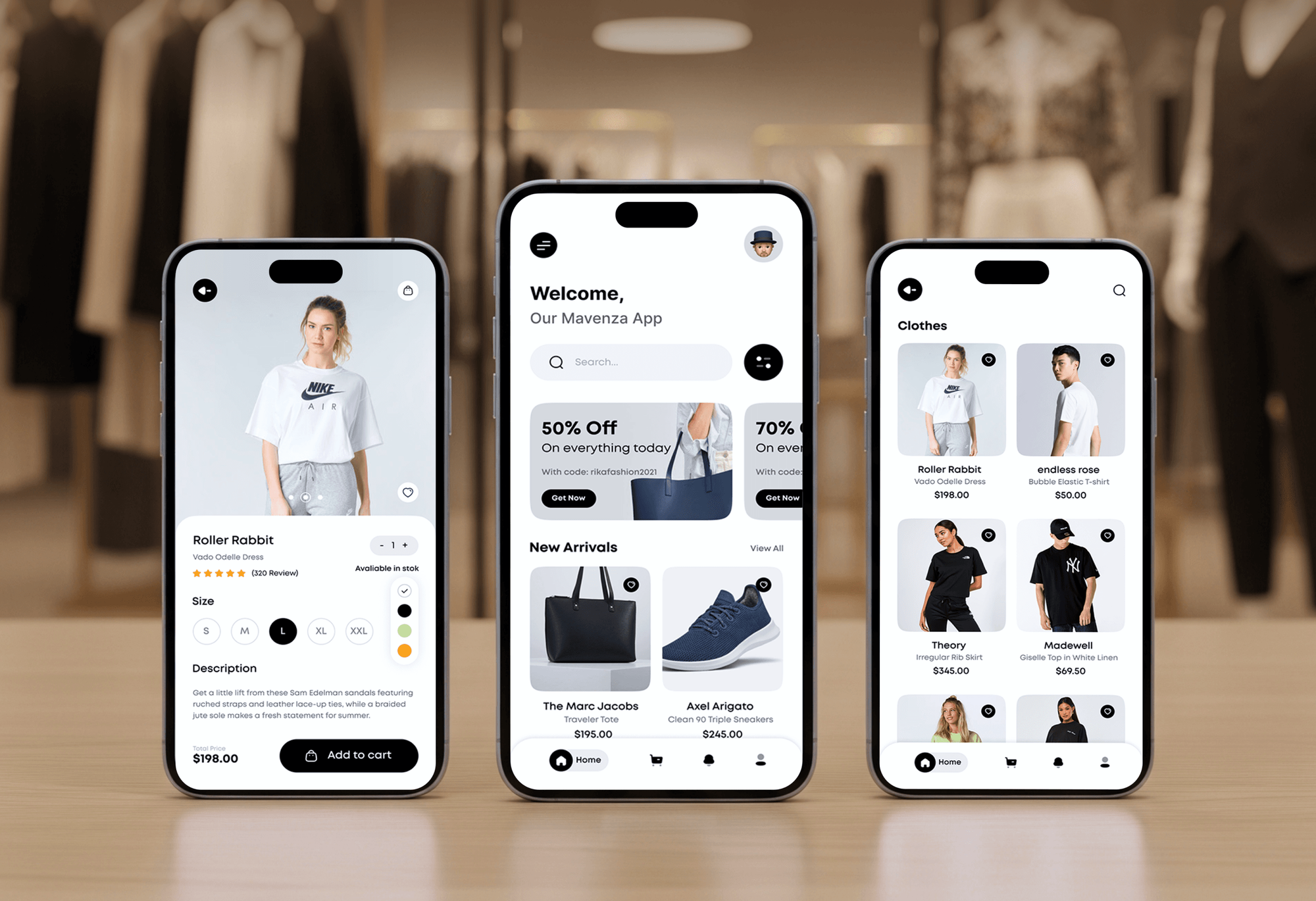
Stores and review sites we designed and built, where product copy and reviews pile up into the kind of examples a fine-tune learns from. Product examples, not fine-tuning projects.



What Our Clients Say
Feedback from teams we have built apps, platforms, and websites for.
We had a pretty specific idea of what we wanted our website to become, but I wasn’t sure how easily we could explain all of it to a development team. There were quite a few moving parts, and we were working toward a deadline, so I expected a few things to get lost along the way. That never really happened. They understood what we were trying to achieve, kept us updated throughout the process, and got everything ready within the agreed timeline. The final site feels much easier to navigate, works beautifully on mobile, and is noticeably smoother for our customers. It was a huge relief seeing the original idea actually turn into the website we had in mind.
The mobile experience is probably my favourite part of the new site. We had spent a lot of time making sure the desktop version looked right, and the team kept pushing us to think about how everything would actually feel on a phone too. They were right. The navigation is clean, the interactions feel natural, and everything we’ve tested so far works exactly as it should. They also went through the links, forms, integrations, and other details more than once before launch, which I really appreciated. And even after going live, we could still reach out when something came up. The whole process felt friendly, organised, and surprisingly straightforward.
What I appreciate most is that the website is actually easy for us to manage now. We can update content ourselves instead of sending a developer a message every time we need to change something small. They also paid attention to the technical SEO side, which mattered to us because we didn’t want a new website to create problems for the traffic we already had. I’ve probably asked more questions than I should have since launch, but every question has been handled patiently and without any fuss. The team is easy to work with, they explain things clearly, and when we need something changed, they focus on getting it done rather than making the process complicated.
1,250+
Projects shipped
10+
Years of experience
Top 3%
Upwork Top Rated Plus
5 stars
Average review score
1,250+
Projects shipped
10+
Years of experience
Top 3%
Upwork Top Rated Plus
5 stars
Average review score

Want results like these?
Tell us what you are building. You get a reply within 24 hours on business days, then a written estimate.
Work Culture
Teams usually come to us after a fine-tune that didn't help, or a prompt that grew too long. They stay because every decision is measured against a baseline they approved.
We score your current prompt or RAG setup before we train anything. If a fine-tune can't beat it, you hear that before paying for compute.
We tune for format, tone, and task behavior, and keep changing facts in retrieval. It's one of the LLM fine tuning best practices teams skip and regret.
Every training source gets a rights and personal-data check first. Customer details are masked or removed, because a model can repeat what it was trained on.
We start with LoRA adapters on a model sized for the job, not the biggest one available. Smaller tuned models often cost less to run and answer faster.
OpenAI is winding down its fine-tuning platform, and not every Gemini model can be tuned. We check each provider's current rules before we recommend a path.
The dataset, adapters, test cases, and training scripts live in your accounts. You can retrain with another team or move to a newer base model later.
Overview
DeveloperLook provides fine-tuning LLM services that start with a measured baseline and end with a tuned model you own. We audit your data, build a clean dataset, train LoRA adapters on open-weight models or tune supported Gemini models, and score results against the base model. Projects start at $1,150, and a feasibility run takes 3 to 4 weeks.
DEVELOPERLOOK
Project facts · LLM Fine-Tuning Services
Reviewed 29 Oct 2026 by Saimul Islam
Good fit
SaaS teams with long, costly prompts
Your product sends a long prompt full of examples on every request, and you want the same output from a shorter, cheaper call.
Support teams with years of tickets
Your helpdesk holds years of approved replies, and you want a model that writes in that voice without pasting examples every time.
Companies with strict data rules
Your data can't leave your cloud, so you need an open-weight model fine-tuned and served inside your own AWS, Azure, or Google Cloud account.
Teams moving off OpenAI fine-tuning
Your product runs on a fine-tuned OpenAI model, and OpenAI is winding down its fine-tuning platform, so you want a path you control.
Agencies with AI product clients
Your clients want models trained on their own data, and you need a partner who builds the datasets and evaluations under your brand.
Not a fit
Facts that change weekly
You need the model to know prices, policies, or documents that change often. RAG Development Services keeps answers current without retraining.
Still choosing a model host
You haven't decided where models should run or how requests route between them. LLM Development Services covers that platform work first.
Fewer than 100 good examples
You have fewer than 100 good examples of the output you want. Better prompts usually win until more examples exist, and we'll say so.
Budget under $1,150
Your budget is under $1,150 including training compute. A few examples in the prompt or a smaller hosted model may get you most of the way.
Not sure we're the right fit?
Book a free call or message us. We'll tell you honestly whether we're the right team.
Pricing
These are starting points in USD. Your final price depends on dataset size, the number of tuned tasks, and your hosting choice, and you get a fixed proposal after a free discovery call.
For Agencies
You own the client relationship. We do the training work behind it: the baseline, the data checks, the dataset, the training runs, and the scorecard. Results go out under your brand, and your team presents them.
White label: your client only ever sees your brand
Send the client's task, sample outputs, and the data they can share.
You get baseline scores, a dataset plan, and a fixed price.
We train, score, and deploy under your brand, then hand everything over.
Send the client's task, sample outputs, and the data they can share.
You get baseline scores, a dataset plan, and a fixed price.
We train, score, and deploy under your brand, then hand everything over.
The Right Technology for Your Project
We train with open-source tools on models sized for the task and serve them where your data rules allow.
 Llama
 PyTorch
 Vertex AI
 Amazon Bedrock
 Microsoft Azure
 Docker
 Python
 PostgreSQL
Related Services
Pair a fine-tune with the model platform it runs on, retrieval for changing facts, NLP tasks, classic ML, and the MCP hub.
This page
LLM Fine-Tuning Services
Pairs with the 6 services around it
FAQ
Straight answers on cost, what fine-tuning is, how it works, LoRA, data preparation, and objectives.
Saimul IslamFounder & CEO, DeveloperLookStill have questions?
Send a message or book a call with the team.
Fine-tuning LLM services with us start at $1,150 for a feasibility run with up to 500 examples and one LoRA adapter. A Production Fine-Tune starts at $3,450, and a program with up to 3 tuned tasks starts at $7,700. Training compute is billed to your own cloud account, and LoRA runs keep that bill modest.
LLM fine tuning is training an existing language model further on your own examples so it handles one job the way you want. The model keeps its general skills and learns your format, tone, or task rules. Most fine-tunes today train small LoRA adapters instead of changing every weight.
It means showing a ready-made model hundreds or thousands of input and ideal-output pairs from your work until it reproduces that pattern. Think of a new hire studying your best past replies rather than reading a longer instruction sheet. You end up with a model version that needs fewer instructions for that task.
Training compares the model's answer with your ideal answer for each example and nudges the weights to close the gap. Repeated over the whole dataset for a few passes, the model shifts toward your outputs. A validation set checks it isn't just memorizing, and a held-out test set gives the final score.
For business applications, the tuned model sits behind your existing API, so your app sends shorter requests and gets outputs in your format. Typical jobs include support replies in your voice, structured data extraction, and classification with your own labels. Changing facts still come from retrieval, and new approved examples feed the next retraining.
The main benefits are steadier formatting, a consistent tone, and shorter prompts. OpenAI's own fine-tuning docs note that shorter prompts with fewer examples cut token cost and response time. A tuned smaller model can also replace a larger one for a narrow task, which lowers running costs.
Mostly response patterns: format, tone, and how to handle a type of task. A model can absorb some facts from training data, but it recalls them unreliably and they go stale. That's why the LLM fine tuning vs RAG question matters: keep facts in retrieval and tune behavior.
LoRA, short for low-rank adaptation, trains a small set of added weights while the base model stays frozen. It needs far less memory than full training, and the adapter file is small enough to swap per task. QLoRA goes further by loading the base model in 4-bit precision during training. Both are common LLM fine tuning techniques.
You collect real input and ideal-output pairs, remove personal data, deduplicate, and format them as chat examples, usually in JSONL. Then you split them into training, validation, and test sets and have experts label hard cases. Fewer clean examples beat many messy ones, because the model copies mistakes too.
Set objectives you can score on held-out cases: format errors, accuracy on your labels, tone ratings, prompt length, and cost per 1,000 requests. Agree on the baseline the tuned model must beat and the margin that justifies switching. Those targets also decide which LLM fine tuning methods are worth trying first.
Saimul IslamFounder & CEO, DeveloperLookStill have questions?
Send a message or book a call with the team.
Free 30-min callGoogle Meet
Book a call
In 30 minutes on Google Meet we walk you through how we would build it, how long it takes and what it costs. Then you get a written estimate.
Calendar not showing? Book on cal.com or send a brief.