
Data audit and preparation
Sources profiled, cleaned, and joined, with leakage checks so test scores match real-world performance.

For product and data teams with models stuck in notebooks or ideas stuck in planning: custom models trained on your data, served in your product, and watched after launch.
6weeks
To a model in production
100%
Models tested on held-out data
How your project runs
01 · FreeTeams we have built for:














The Problem
It shows up after the first promising result. A data scientist gets good numbers on a laptop, then the model has no API, no monitoring, and no plan for the day your data changes.
Notebook only
The model stays on a data scientist's laptop.
Notebook only
Models ship behind a versioned API your product can call.
Data leakage
Test scores come from rows the model already saw.
Data leakage
A held-out test set and leakage checks keep every score honest.
Silent drift
Accuracy slips as customer behavior changes, and nobody notices.
Silent drift
Drift monitoring and alerts flag decay before predictions mislead anyone.
Lost versions
Nobody knows which data trained the live model.
Lost versions
MLflow tracks the data, code, and parameters behind every trained version.
Your data scientist trained a churn model that scored well in a Jupyter notebook. Months later it still lives there. Nobody knows which version of the data trained it, the accuracy number came from rows the model had already seen, and engineering has no API to call. When marketing finally gets predictions, they arrive as a CSV on Fridays. Meanwhile customer behavior shifted, and nobody can tell whether the model still works.
We start by agreeing the decision the model supports and the metric that proves it works. Then we audit the data, check for leakage, and beat a simple baseline before trying anything heavier. The winning model is versioned, served behind an API in your cloud, and watched for drift, with a retraining plan written down. Your team gets predictions inside the product, not in a Friday spreadsheet.
Metric agreed up front
The model is judged on a business metric your team signs off before any training starts.
Baseline before deep learning
A simple model sets the bar, so complex ones must earn their extra cost and upkeep.
Served and monitored
Models run behind an API in your cloud, with drift alerts and a written retraining plan.
Our Machine Learning Development Process
You approve the success metric after the data audit and see held-out results before deployment, so every phase ends with a decision you make.
We talk through the decision you want the model to support, the data you have, and how predictions will be used. You get a candid read on feasibility and a fixed price for the data audit.
What's Included
The full path from scattered data to a model your product calls every day, with the evaluation and monitoring that keep it trustworthy after launch.
Compare Options
Freelancers suit small, clean datasets, and AutoML platforms suit quick experiments. Here is how AI and machine learning development services from one full team compare on each point.
| Feature | DeveloperLookBest fit | Freelance Data Scientist | AutoML Platform |
|---|---|---|---|
| Problem framing | Metric agreed with your team | Depends on the brief | You define it yourself |
| Data preparation | Audit, cleaning, and leakage checks | Often notebook-only cleaning | Expects clean, tidy tables |
| Model choice | Baseline first, then the right model | Their favorite algorithm | Many models tried automatically |
| Deep learning | PyTorch or TensorFlow on GPUs | Varies by person | Limited to supported tasks |
| Deployment | API in your cloud with monitoring | Often a notebook or script | Hosted inside the platform |
| First results | Baseline within the first weeks | Fast for small, clean datasets | Hours on tidy data |
| Ownership | Code, data, and models are yours | Yours if handed over cleanly | Tied to the platform |
| Cost | Fixed price per phase | Hourly, cheapest for small jobs | Subscription plus compute |
Projects We've Built
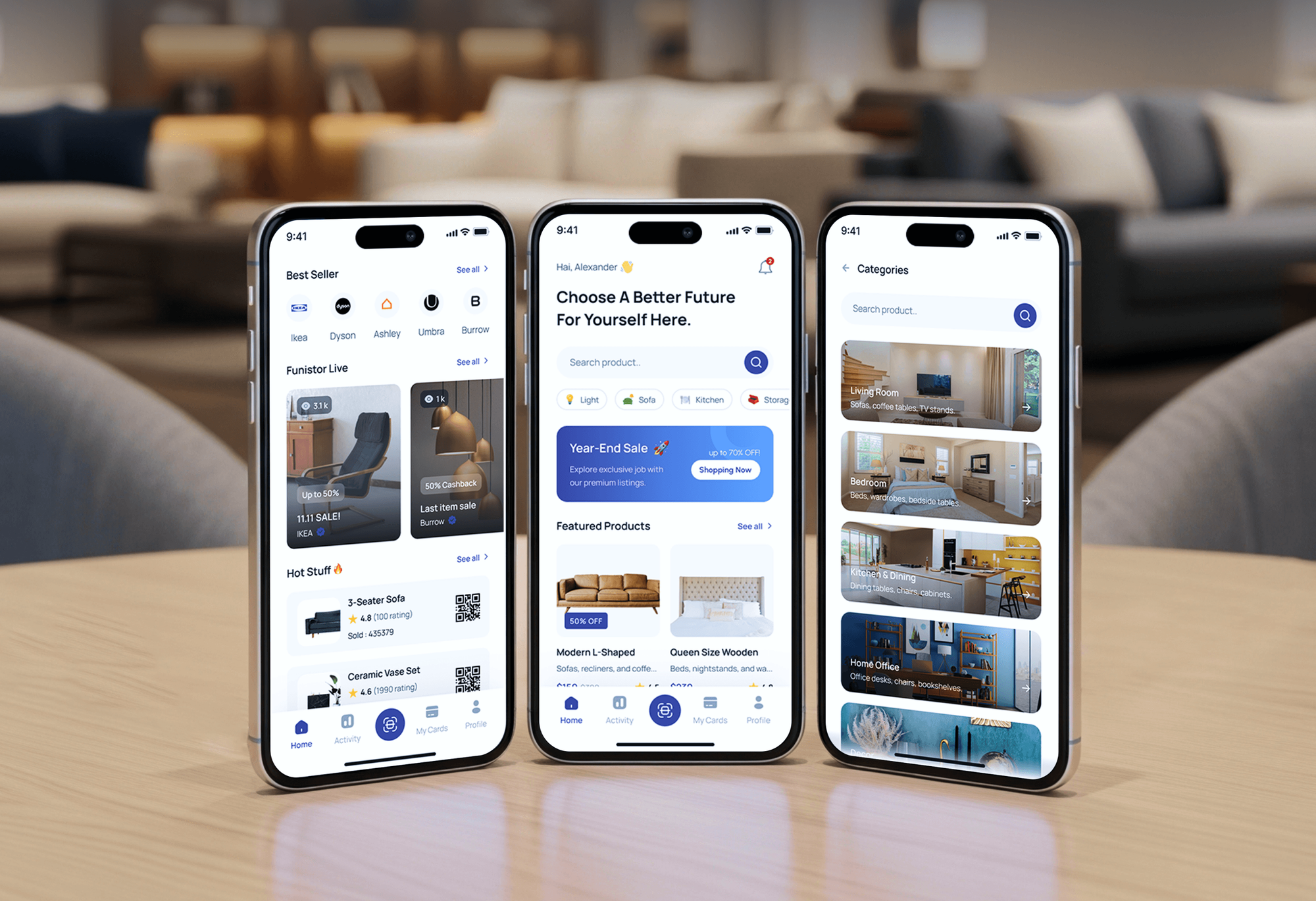
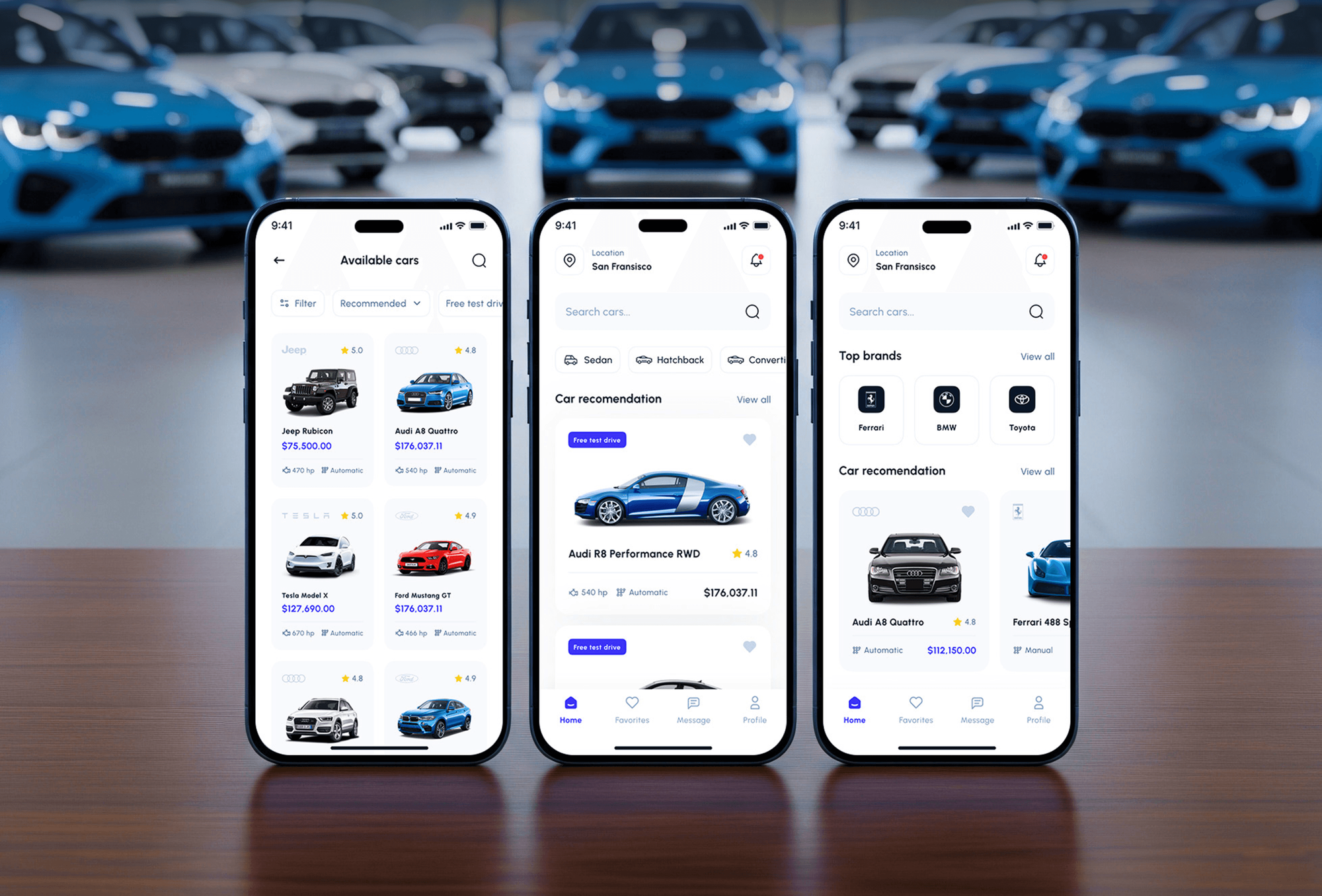
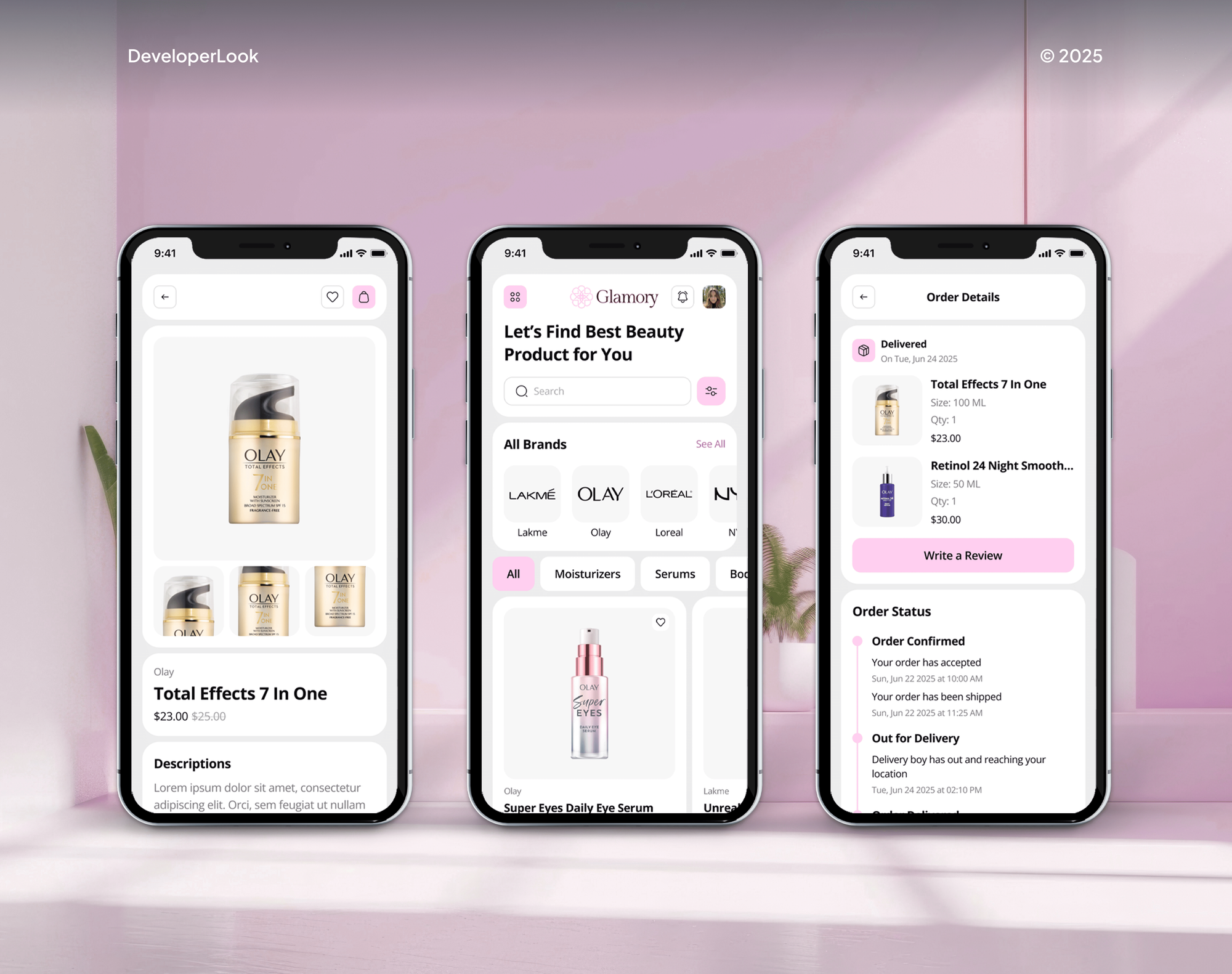
Shopping, car, and workforce apps where personal picks and analytics dashboards shape the experience. They show the product side a model plugs into, not ML builds themselves.
What Our Clients Say
Feedback from teams we have built apps, platforms, and websites for.
We had a pretty specific idea of what we wanted our website to become, but I wasn’t sure how easily we could explain all of it to a development team. There were quite a few moving parts, and we were working toward a deadline, so I expected a few things to get lost along the way. That never really happened. They understood what we were trying to achieve, kept us updated throughout the process, and got everything ready within the agreed timeline. The final site feels much easier to navigate, works beautifully on mobile, and is noticeably smoother for our customers. It was a huge relief seeing the original idea actually turn into the website we had in mind.
The mobile experience is probably my favourite part of the new site. We had spent a lot of time making sure the desktop version looked right, and the team kept pushing us to think about how everything would actually feel on a phone too. They were right. The navigation is clean, the interactions feel natural, and everything we’ve tested so far works exactly as it should. They also went through the links, forms, integrations, and other details more than once before launch, which I really appreciated. And even after going live, we could still reach out when something came up. The whole process felt friendly, organised, and surprisingly straightforward.
What I appreciate most is that the website is actually easy for us to manage now. We can update content ourselves instead of sending a developer a message every time we need to change something small. They also paid attention to the technical SEO side, which mattered to us because we didn’t want a new website to create problems for the traffic we already had. I’ve probably asked more questions than I should have since launch, but every question has been handled patiently and without any fuss. The team is easy to work with, they explain things clearly, and when we need something changed, they focus on getting it done rather than making the process complicated.
1,250+
Projects shipped
10+
Years of experience
Top 3%
Upwork Top Rated Plus
5 stars
Average review score
1,250+
Projects shipped
10+
Years of experience
Top 3%
Upwork Top Rated Plus
5 stars
Average review score

Want results like these?
Tell us what you are building. You get a reply within 24 hours on business days, then a written estimate.
Work Culture
Teams want a machine learning development company that ships. Ours works through honest feasibility calls, reproducible training runs, and models running in your product, not in slides.
We optimize for the metric behind your decision, not a leaderboard score. A fraud model with fewer false alarms can beat a more accurate one.
We ship the simplest model that beats your baseline. Deep learning comes in only when the data and the gain justify its cost.
If your data can't support a reliable model, the feasibility report says so. You hear it after 2 weeks, not after a full build.
Data versions, code, and parameters are tracked for every model. Anyone on your team can retrain and get the same result.
Training runs in your own AWS, Azure, or Google Cloud account under your access rules. Personal data is removed or minimized before modeling starts.
Trained models, code, and pipelines transfer to you at handover. Nothing runs on a platform you have to keep paying us for.
Overview
DeveloperLook provides machine learning development services that take a model from raw data to a monitored API in your product. Each project covers a data audit, baseline and custom model training, held-out evaluation, deployment in your cloud, and drift monitoring. Projects start at $1,300, take 2 to 14 weeks, and you own the models.
DEVELOPERLOOK
Project facts · Machine Learning Development Services
Reviewed 28 Oct 2026 by Saimul Islam
Good fit
SaaS products adding predictions
Your product needs recommendations, risk scores, or smart ranking, and you want machine learning app development services that ship inside the app.
Ecommerce and marketplace teams
You want product recommendations, search ranking, or fraud flags trained on your own order and browsing data instead of a generic plugin.
Operations teams spotting anomalies
Your team scans sensor readings, transactions, or logs by hand, and you need a model that flags the unusual ones for review.
Data teams stuck at the notebook
Your data scientists build promising models, but nothing reaches production because nobody owns serving, monitoring, or retraining.
Teams building deep learning features
You need deep learning development services for audio, sensor, or sequence data, trained on GPUs and served fast enough for production.
Not a fit
Sales or demand forecasts
You need sales, demand, or churn forecasts for planning. Our Predictive Analytics Services page is built for that work and starts lower.
Images and video
Your model must read images, video, or camera feeds. Our Computer Vision Development work covers that in depth, with its own tools and testing.
Text and language tasks
Your task is reading, summarizing, or writing text. Generative AI Development Services is usually faster and cheaper than training a custom model.
Budget under $1,300
Your budget is under $1,300, or you have only a few hundred records. Rules in a spreadsheet or your BI tool's built-in features will serve you better for now.
Not sure we're the right fit?
Book a free call or message us. We'll tell you honestly whether we're the right team.
Pricing
These are starting points in USD. Your final price depends on data quality, the number of models, and where predictions must appear, and you get a fixed proposal after a free discovery call.
For Agencies
You own the client relationship. We supply the data science and ML engineering behind your proposals: feasibility studies, trained models, deployment, and monitoring. Reports and code arrive under your brand, so your client sees one team from kickoff to launch.
White label: your client only ever sees your brand
Send the client's goal, data sources, and how predictions will be used.
You get fixed prices for the study and the build, with a timeline.
We deliver the model, the API, and the runbook under your brand.
Send the client's goal, data sources, and how predictions will be used.
You get fixed prices for the study and the build, with a timeline.
We deliver the model, the API, and the runbook under your brand.
The Right Technology for Your Project
We use proven open-source frameworks, track every experiment, and deploy on the cloud you already run, so your team can maintain models after handover.
 PyTorch
 TensorFlow
 Python
 PostgreSQL
 Docker
 Kubernetes
 AWS SageMaker
 Google Vertex AI
 Azure Machine Learning
Related Services
Pair custom models with the MCP layer your AI tools use, forecasting, generative features, document processing, and the data pipelines that feed training.
This page
Machine Learning Development Services
Pairs with the 6 services around it
FAQ
Straight answers on cost, methodology, hiring, and support for machine learning projects.
Saimul IslamFounder & CEO, DeveloperLookStill have questions?
Send a message or book a call with the team.
Model development is the stage of a machine learning project where you choose, train, and test the model. You train it on prepared data and test it on data it hasn't seen. It sits between data preparation and deployment. Good model development starts with a simple baseline, tracks every experiment, and stops when the model meets the agreed metric, not when the team runs out of ideas.
In normal software development, people write the rules; in machine learning, the rules are learned from data. That changes the work: results are probabilities, quality depends on data more than code, and a model can decay after launch as real-world data shifts. So ML projects add data audits, experiment tracking, and monitoring that ordinary apps don't need.
Our machine learning development services start at $1,300 for a Feasibility Study: data audit, baseline, first model, and a go or no-go report. A Production Model served through an API with monitoring is $4,400, and an ML System Build with up to 3 models or deep learning starts at $9,200. Cloud compute and GPU time are billed to your own account.
A Feasibility Study takes 2 to 3 weeks, and a production model usually goes live in 6 to 14 weeks. Data preparation is often the longest stretch, so messy or unlabeled data pushes the date out. You get a dated plan after the data audit, once we know what your data can support.
Choose a provider that asks about your decision and your data before your algorithm. Good custom machine learning development services explain how they prevent data leakage, what baseline the model must beat, and how it will be served and monitored. Ask who owns the trained models and code, and whether they will tell you when your data can't support a model.
An iterative method works best: short experiment cycles inside a fixed phase plan, rather than one long build. We run Agile sprints for the engineering and CRISP-DM phases for the data work, with a go or no-go decision after the baseline. Waterfall struggles here because nobody can promise model quality before the data has been tested.
Most teams follow CRISP-DM, a six-phase method: business understanding, data understanding, data preparation, modeling, evaluation, and deployment. The phases loop back, so a weak evaluation sends you back to data preparation instead of forward to launch. We add MLOps steps on top: versioned data, tracked experiments, automated tests, and monitoring after deployment.
Three things matter most: a clear decision the model supports, enough labeled data that matches real conditions, and an owner who acts on the predictions. Technical choices matter less than these. We check all three in the feasibility study, and we'd rather stop a project there than build a model nobody uses.
You find machine learning developers through specialist job boards, referrals, open-source work, or a development partner that already has them. If you plan to hire machine learning developers in-house, test candidates on a real dataset and ask how they would deploy and monitor the model. A partner suits projects where you need production results before you build a team.
Every launch includes 30 days of fixes and retraining help, plus drift and accuracy monitoring that keeps running in your cloud. The runbook covers when and how to retrain, so your engineers can do it without us. You own the trained models, code, and data pipelines from handover, with nothing locked to our accounts.
Saimul IslamFounder & CEO, DeveloperLookStill have questions?
Send a message or book a call with the team.
Free 30-min callGoogle Meet
Book a call
In 30 minutes on Google Meet we walk you through how we would build it, how long it takes and what it costs. Then you get a written estimate.
Calendar not showing? Book on cal.com or send a brief.