
Architecture review
A written review of your code, data, and traffic, with a clear call on whether to split at all.

For product teams whose monolith makes every release wait: a written split plan, then services moved out one at a time with tracing. From $1,200.
100%
Traffic traced with OpenTelemetry
1
Service moved at a time
How your project runs
Teams we have built for:














The Problem
Monoliths serve most products well for years. Trouble starts when several teams share one deploy, one database, and one test suite, and every change waits for all of them.
01 · Release waits
A billing fix waits for every other team's tests to pass.
Billing moves into its own service with its own pipeline and release schedule.
02 · Shared database
One slow report query locks tables checkout also needs.
Each extracted service owns its data, and changes reach others as events.
03 · Scaling
The whole app gets bigger servers for one busy area.
Only the busy service scales, on its own containers, while the rest stays put.
04 · Rewrite risk
A full rewrite plan would freeze feature work for a year.
One area moves at a time, with the old path live as a fallback.
Your billing team finished a fix on Monday, but it can't ship until search, accounts, and reporting pass their tests too. The full suite fails on something unrelated twice a week. One slow report query locks tables that checkout also needs. Scaling means copying the whole app to bigger servers, even though only search is busy. Now someone has read that microservices fix all of this, and a full rewrite is on the roadmap. Nobody has checked whether splitting would cure the waiting or just spread it across a network.
We start with a review of your code, database, and real traffic, then map your business domains. If a modular monolith fixes the waiting, we'll say so and plan that instead. When splitting pays off, we move one area at a time behind an API gateway, give it its own database, and trace every request with OpenTelemetry. The old code path stays live until the new service proves itself, so you release in weeks, not after a year-long rewrite.
Boundaries from your domains
Services follow business areas like billing or search, so one team can own each service fully.
Strangler fig migration
The gateway shifts traffic to the new service gradually, with the old code path as fallback.
Tracing from day one
OpenTelemetry traces show which service slowed a request, long before your users report it.
Our Microservices Development and Consulting Process
You see the domain map before any code moves, approve each service boundary, and watch traffic shift on staging first. Nothing switches over without a fallback you can trigger.
On a free call, you walk us through the product, the teams, and what slows releases today. We ask for read access to the code and logs. You get an honest first view: split, modularize, or leave it alone.
What's Included
Microservices architecture splits one app into small services that each own their data and deploy on their own. Our microservices development services cover the review, the split, and the monitoring that keeps it workable.
Compare Options
Your own team knows the product best, and a big consultancy can staff a large program. Our microservices consulting services fit teams that want a senior split plan and hands-on extraction at a fixed price.
| Feature | DeveloperLookBest fit | In-house team | Big consultancy |
|---|---|---|---|
| Split decision | Written call, monolith included | Based on team experience | Often a multi-year program |
| Product knowledge | Learned in the review | Deepest, they built it | Learned through workshops |
| Service boundaries | Mapped from domains and traffic | Often follow current folders | Mapped in workshops |
| Migration style | One service at a time | Depends on spare capacity | Often a large program |
| Tests between services | Pact contract tests in CI | Varies by team | Varies by engagement |
| Observability | OpenTelemetry tracing from day one | Often added after incidents | Included in larger programs |
| Team size | Small senior team | Limited by hiring | Large teams on request |
| Cost predictability | Fixed price per phase | Salaries and lost feature time | Day rates, often open-ended |
Projects We've Built
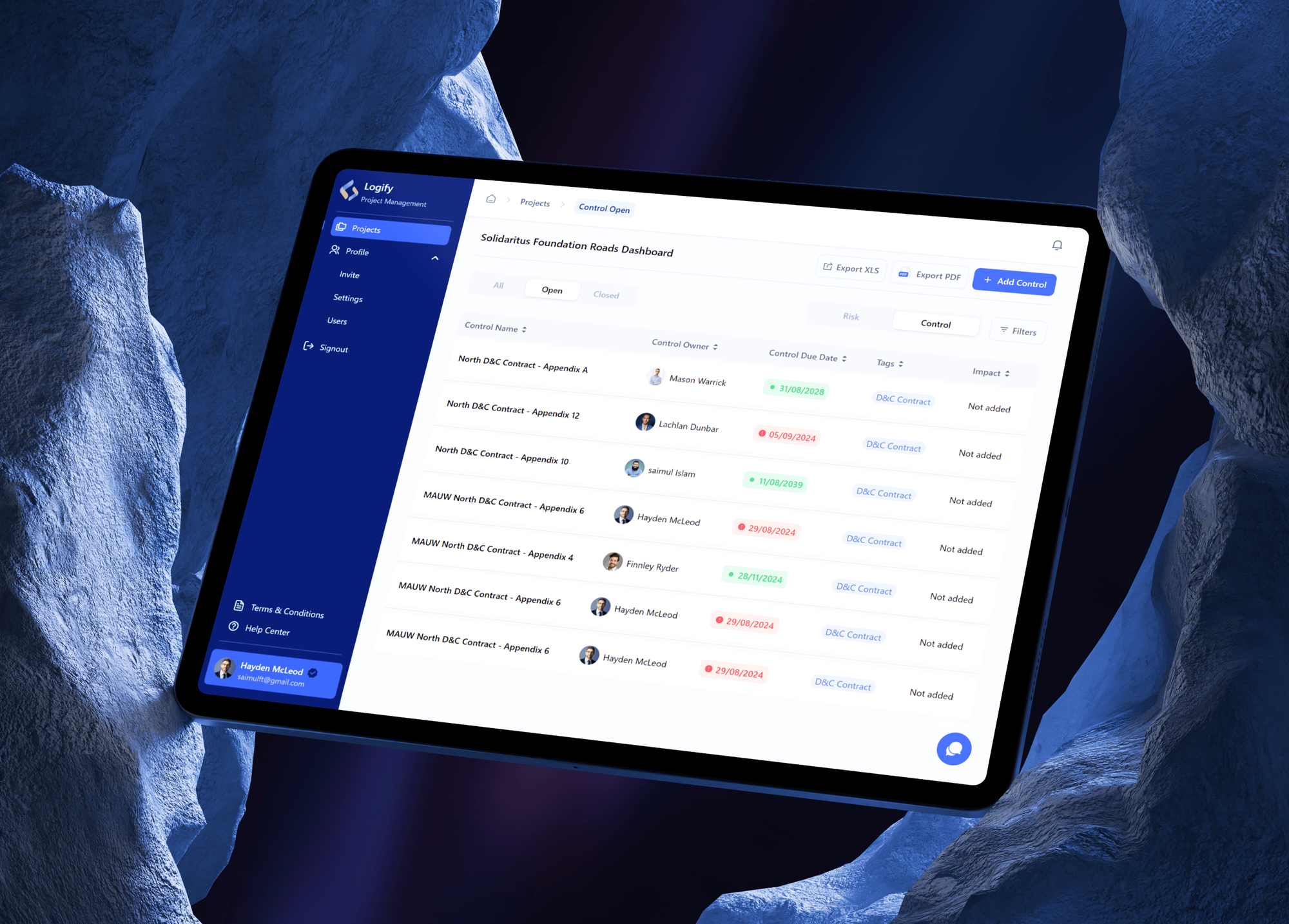
A risk management web app, an HR dashboard, a store admin, and a booking dashboard from our portfolio. We picked them for their many modules, not as examples of a microservices split.



What Our Clients Say
Feedback from teams we have built apps and backends for.
We had a pretty specific idea of what we wanted our website to become, but I wasn’t sure how easily we could explain all of it to a development team. There were quite a few moving parts, and we were working toward a deadline, so I expected a few things to get lost along the way. That never really happened. They understood what we were trying to achieve, kept us updated throughout the process, and got everything ready within the agreed timeline. The final site feels much easier to navigate, works beautifully on mobile, and is noticeably smoother for our customers. It was a huge relief seeing the original idea actually turn into the website we had in mind.
The mobile experience is probably my favourite part of the new site. We had spent a lot of time making sure the desktop version looked right, and the team kept pushing us to think about how everything would actually feel on a phone too. They were right. The navigation is clean, the interactions feel natural, and everything we’ve tested so far works exactly as it should. They also went through the links, forms, integrations, and other details more than once before launch, which I really appreciated. And even after going live, we could still reach out when something came up. The whole process felt friendly, organised, and surprisingly straightforward.
What I appreciate most is that the website is actually easy for us to manage now. We can update content ourselves instead of sending a developer a message every time we need to change something small. They also paid attention to the technical SEO side, which mattered to us because we didn’t want a new website to create problems for the traffic we already had. I’ve probably asked more questions than I should have since launch, but every question has been handled patiently and without any fuss. The team is easy to work with, they explain things clearly, and when we need something changed, they focus on getting it done rather than making the process complicated.
1,250+
Projects shipped
10+
Years of experience
Top 3%
Upwork Top Rated Plus
5 stars
Average review score

Want results like these?
Tell us what you are building. You get a reply within 24 hours on business days, then a written estimate.
Work Culture
Splitting an app is easy to start and hard to undo. These habits keep our microservices experts honest about cost, boundaries, and the day your team takes over.
We recommend a modular monolith when one team owns the product or the domains are still moving. Splitting too early adds network calls and ops work without fixing the real bottleneck.
We draw services around business capabilities like billing or search, never around database tables. That keeps most changes inside one service, so one team can ship them alone.
We extract one domain, prove it in production, then pick the next one. Your roadmap keeps moving while the architecture changes underneath it.
Every plan includes an estimate of the extra hosting, broker, and monitoring costs. More services mean more moving parts, and you should see the monthly bill before agreeing to it.
Each service ships with a runbook: how to deploy it, roll it back, read its traces, and replay a failed message. Your on-call engineer shouldn't need us at 2 a.m.
Repositories, pipelines, and cloud accounts stay under your organization from the first commit. Changing teams later won't mean starting over.
Overview
DeveloperLook provides microservices consulting for product teams whose monolith slows every release. We review your code and traffic, map service boundaries, extract one service at a time behind an API gateway, and add tracing and contract tests. Prices start at $1,200, assessments take 2 to 3 weeks, extractions 6 to 20 weeks, and we'll say so when a modular monolith is the better fix.
DEVELOPERLOOK
Project facts · Microservices Development and Consulting
Reviewed 11 Oct 2026 by Saimul Islam
Good fit
Several teams sharing one codebase
Your four product teams share one codebase, and every release waits for the slowest team's tests to go green.
Startups told to go microservices
You're a startup with one product team, and a new hire insists you need microservices before the next funding round.
CTOs checking a split plan
You have a split plan on the table and want microservices consultants to check the boundaries and running costs before you commit a year to it.
Teams stuck mid-migration
Your team split the app into services two years ago, but every change still touches four of them and they deploy together.
Agencies with a platform rebuild
Your agency won a platform rebuild that calls for microservices architecture and development services, and your team hasn't run a service split before.
Not a fit
One team, early product
You're one small team still finding product fit. A well-structured monolith will ship faster, and our Backend Development Services page covers that build.
Cluster work only
You already run services and only need Kubernetes clusters set up or tuned. Our Kubernetes Consulting Services page covers that work directly.
Java or .NET services
Your services will be written in Java with Spring Boot or in .NET. Our Java Development Services and .NET Development Services pages cover those stacks.
Budget under $1,200
Your budget is under $1,200, or you want everything rewritten at once. We move one service at a time and won't quote a big-bang rewrite.
Not sure we're the right fit?
Book a free call or message us. We'll tell you honestly whether we're the right team.
Pricing
These are starting points in USD. Your final price depends on how many domains move and how tangled the shared database is, and you get a fixed proposal after a free architecture call.
For teams deciding whether to split a monolith, with a written answer either way. About 2 to 3 weeks.
$1,200one-time, USD
For teams moving one busy area, such as billing or search, out of a monolith. About 6 to 10 weeks.
$4,600one-time, USD
For products splitting several domains across teams, moved in order of value. About 12 to 20 weeks.
$9,400one-time, USD
For Agencies
You stay the face of the project. We supply the architecture work behind it: the split review, service boundaries, extraction, and tracing, delivered under your brand with code in your client's repositories.
White label: your client only ever sees your brand
Send the client's architecture notes, pain points, and any deadline they're working to.
You get a domain map outline and a fixed price you can resell.
We extract services and deploy them under your client's cloud accounts.
Your client talks to you while we work quietly behind your brand.
Architecture reviews and domain maps you can present as your own.
Engineers who work across Node.js, Python, Go, and PHP services every day.
Hand us an assessment only, one extraction, or a full platform split.
The Right Technology for Your Project
Service languages your team can hire for, a message broker that fits your volume, and the containers and tracing tools that keep many services manageable.
 Node.js
 NestJS
 Python
 GraphQL
 Docker
 Kubernetes
 AWS
 Google Cloud
FAQ
Straight answers on microservices costs, when to split, when not to, and how a monolith gets converted.
Saimul IslamFounder & CEO, DeveloperLookStill have questions?
Send a message or book a call with the team.
Microservices consulting at DeveloperLook starts at $1,200 for an architecture assessment with a written split recommendation and tracing on your current app. Extracting a first service with its own database, gateway routing, and contract tests starts at $4,600. A platform split of up to 4 services starts at $9,400. Each phase gets a fixed price after a free call.
Use microservices architecture when several teams keep blocking each other in one codebase, or one area must scale or release on its own schedule. Team friction, more than traffic alone, is the usual trigger. If one team owns everything, a modular monolith with strict internal boundaries usually serves you better and costs less to run.
Skip microservices when you have one small team, an early product whose domains still change, or nobody to run the extra infrastructure. Each split adds network calls, deploy pipelines, and monitoring to look after. If a modular monolith already covers your case, we'll tell you before we quote.
The main benefits are independent releases, independent scaling, and clear ownership: each team ships its service without waiting for the others. A fault in one service can be contained instead of taking the whole product down. A team can also use a different language for one service when that service truly needs it.
The disadvantages are more moving parts: network failures between services, data spread across databases, harder debugging, and higher hosting and monitoring bills. Work that used one database transaction now needs sagas or events. That's why we write down the running cost and add tracing before the first service moves.
A monolith ships as one deployable app with one database, while microservices split the app into separately deployed services that each own their data. Monoliths are simpler to build, test, and debug. Microservices trade that simplicity for independent releases and scaling. A modular monolith sits in between: one deploy with strict internal boundaries.
You convert a monolith gradually, using the strangler fig pattern. A gateway goes in front, one domain moves into a new service, and its traffic shifts once that service proves itself. The new service gets its own database, kept in sync through events during the move. You repeat that domain by domain while the old app keeps running.
For most early startups, microservices architecture slows delivery, because a small team ends up running pipelines, brokers, and dashboards instead of shipping features. Startups usually do better with a well-structured monolith and clean module boundaries. Splitting makes sense later, once separate teams own separate parts of the product.
Netflix, Amazon, and Uber are well-known microservices users, and each has written about its architecture on its engineering blog. They have large engineering organizations, which is where microservices pay off most. Shopify is a useful counterexample: its engineers have written about keeping a modular monolith for the core of their platform.
Microservice architecture is good for large products with several teams and parts that must scale or release separately. It's a poor fit for small teams and early products, where it mostly adds cost and complexity. The honest answer depends on your team count, your domains, and who will run the infrastructure, and our assessment gives you that answer in writing.
Saimul IslamFounder & CEO, DeveloperLookStill have questions?
Send a message or book a call with the team.
Free 30-min callGoogle Meet
Book a call
In 30 minutes on Google Meet we walk you through how we would build it, how long it takes and what it costs. Then you get a written estimate.
Calendar not showing? Book on cal.com or send a brief.