










Shipments from your orders
ERP, WMS, or CSV orders become shipments with weights, freight classes, and BOLs ready to print.

For shippers and 3PLs quoting freight by email: one system that rates, tenders, tracks, and audits every shipment against your carrier contracts. From $1,400.
2X
Faster carrier tendering
24/7
Shipment status for customers
How your project runs
01 · FreeTeams we have built for:














The Problem
It shows up once you ship with more than a few carriers. Quotes live in email, tracking means phone calls, and invoices arrive with surcharges nobody approved.
Quote chasing
Coordinators email carriers one by one for every shipment.
Quote chasing
Shipments rate against your contract tables, so the best option shows right away.
Status calls
Customers phone your team to ask where freight is.
Status calls
Carrier tracking flows in, and each customer gets a live status link.
Bill surprises
Invoices arrive with accessorials nobody approved.
Bill surprises
Each freight bill is matched to its rated cost before anyone pays it.
Stale rates
The rate spreadsheet was last updated months ago.
Stale rates
Contract rates, fuel surcharge tables, and accessorials live in one place you update.
An order ships Tuesday. Your logistics coordinator emails three LTL carriers for quotes, waits, then books one from a rate spreadsheet last updated in spring. On Thursday, your customer asks where the freight is, so someone phones the carrier. Two weeks later, the invoice arrives with a liftgate fee and a reweigh charge. Accounts payable pays it, because nobody can find the original quote. Repeat that for every shipment, and your freight spend runs on trust.
We start by mapping your lanes, carriers, and the rates you've already negotiated. Orders from your ERP become shipments, the system rates them against your contracts, and your coordinator tenders in one click. Tracking arrives from carrier APIs or EDI, and customers get a status link. Every freight bill is checked against its rated cost before payment, so surprise charges get questioned, not absorbed.
Tender in one click
Your coordinator sends the load to the chosen carrier with accept and decline links attached.
Status without phone calls
Tracking events from carrier APIs or EDI update each shipment, and your customers see them too.
Freight bills checked first
Each invoice is compared with its rated cost, so extra charges get flagged before payment.
Our TMS Software Development Process
You see your lanes, carriers, and rates mapped first, approve the screens and EDI scope, then run the new TMS beside your current process before it takes over.
We review a recent sample of your shipments, carrier invoices, and rate agreements with your logistics lead. You get a short report showing where quoting, tracking, and billing take the most manual time.
What's Included
Your build covers shipment creation, carrier rating, tendering, tracking, freight audit, and cost reports, set up with your own carriers, contracts, and order systems.
Compare Options
Subscription transportation management system software suits many shippers, and spreadsheets work at low volume. The rows below show where a TMS of your own pulls ahead, and where it doesn't.
| Feature | DeveloperLookBest fit | Subscription TMS | Spreadsheets |
|---|---|---|---|
| Rating logic | Your contracts and accessorial rules | Standard rating engine | Lookups by hand |
| Carrier connections | APIs or EDI your carriers support | Vendor's carrier network | Email and phone |
| ERP and WMS link | Built for your systems | Prebuilt connectors for popular ERPs | Copy and paste |
| Freight audit | Every bill checked against its rate | Add-on module on many plans | Spot checks, if any |
| 3PL client billing | Markups per client and lane | Higher tiers only | Spreadsheet invoices |
| Fees | Hosting only, no per-shipment fees | Per user or per shipment | Free to keep using |
| Time to start | 4 to 18 weeks | A few weeks to onboard | Already running today |
| Ownership | You own code and data | Vendor keeps the platform | Files in shared drives |
Projects We've Built
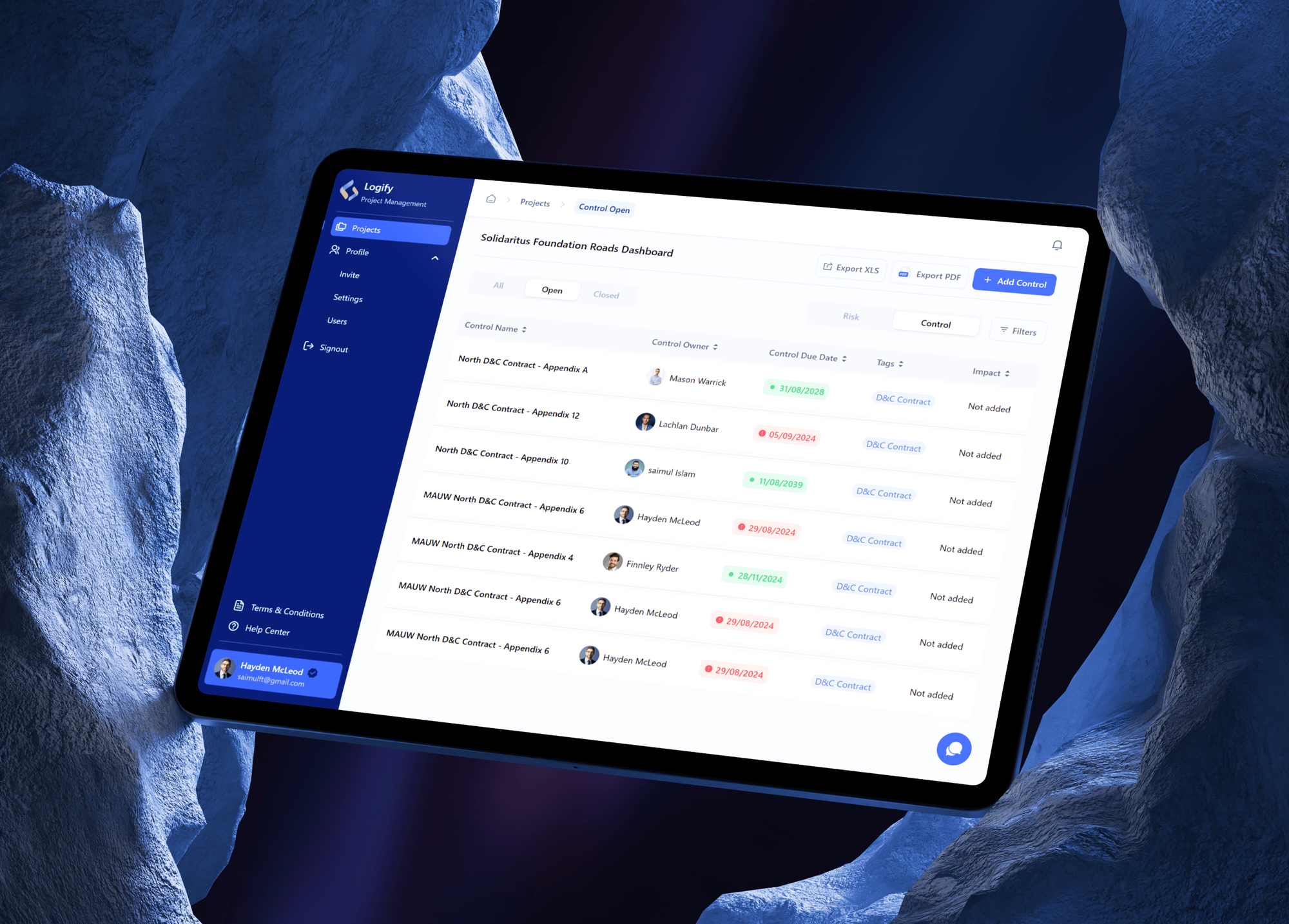
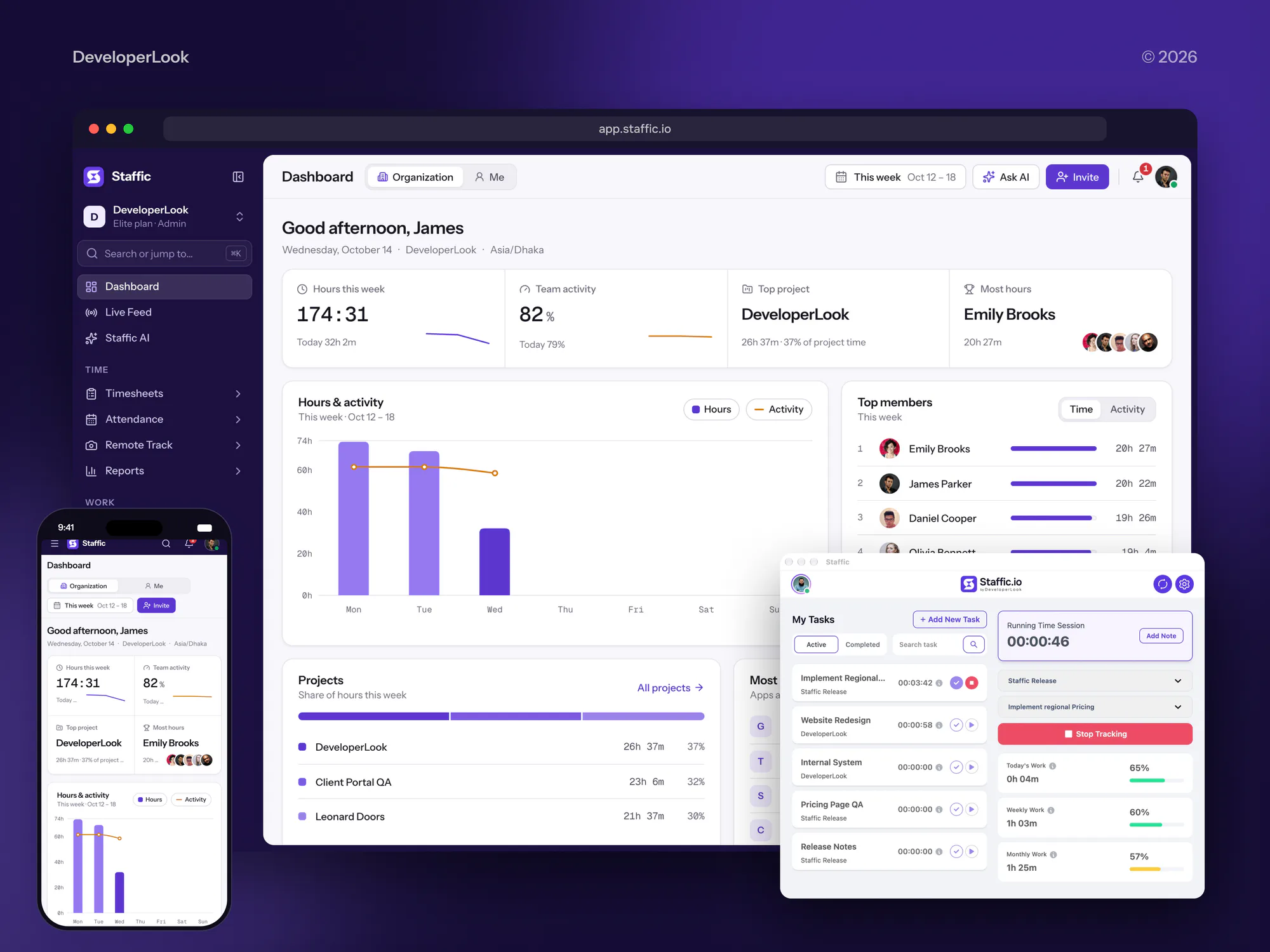
None of these is a transportation management system. They show the logistics dashboards, invoicing screens, and SaaS web apps we would build your TMS from.


What Our Clients Say
Feedback from teams we have built dashboards, SaaS platforms, and booking systems for.
We had a pretty specific idea of what we wanted our website to become, but I wasn’t sure how easily we could explain all of it to a development team. There were quite a few moving parts, and we were working toward a deadline, so I expected a few things to get lost along the way. That never really happened. They understood what we were trying to achieve, kept us updated throughout the process, and got everything ready within the agreed timeline. The final site feels much easier to navigate, works beautifully on mobile, and is noticeably smoother for our customers. It was a huge relief seeing the original idea actually turn into the website we had in mind.
The mobile experience is probably my favourite part of the new site. We had spent a lot of time making sure the desktop version looked right, and the team kept pushing us to think about how everything would actually feel on a phone too. They were right. The navigation is clean, the interactions feel natural, and everything we’ve tested so far works exactly as it should. They also went through the links, forms, integrations, and other details more than once before launch, which I really appreciated. And even after going live, we could still reach out when something came up. The whole process felt friendly, organised, and surprisingly straightforward.
What I appreciate most is that the website is actually easy for us to manage now. We can update content ourselves instead of sending a developer a message every time we need to change something small. They also paid attention to the technical SEO side, which mattered to us because we didn’t want a new website to create problems for the traffic we already had. I’ve probably asked more questions than I should have since launch, but every question has been handled patiently and without any fuss. The team is easy to work with, they explain things clearly, and when we need something changed, they focus on getting it done rather than making the process complicated.
1,250+
Projects shipped
10+
Years of experience
Top 3%
Upwork Top Rated Plus
5 stars
Average review score
1,250+
Projects shipped
10+
Years of experience
Top 3%
Upwork Top Rated Plus
5 stars
Average review score

Want results like these?
Tell us what you are building. You get a reply within 24 hours on business days, then a written estimate.
Work Culture
Your TMS sits between orders, carriers, and accounts payable, so mistakes cost real money. These habits keep the build tied to your lanes, partners, and rates.
Before designing, we group a recent sample of your shipments by lane, mode, and carrier. Your TMS is built around the freight you actually move.
Each carrier or customer EDI link gets test files and a sign-off before it goes live. Your partners' implementation guides decide the details, not our assumptions.
We load the contracts you negotiated and keep fuel and accessorial tables editable by your team. Nobody waits on a developer when a carrier sends new rates.
We test every screen with the people who book freight daily. If tendering takes more clicks than email did, we redesign it before launch.
Each phase has a written scope and a set price before work begins. You can launch shipment control first and add rating or EDI when it pays off.
Shipment history, rates, and carrier scores live in a database in your own cloud account. You can export it, report on it, or move hosting whenever you like.
Overview
DeveloperLook handles TMS software development for shippers, distributors, and 3PLs. We build shipments fed by your ERP orders, carrier rate tables and rate shopping, email or EDI tendering, tracking, and freight bill audit. Projects start at $1,400 and take 4 to 18 weeks, and you own the code with no per-shipment fees.
DEVELOPERLOOK
Project facts · TMS Software Development
Reviewed 28 Oct 2026 by Saimul Islam
Good fit
Manufacturers shipping LTL and truckload
Your shipping team quotes every order by emailing carriers, and freight bills get paid without anyone checking them against the quote.
Distributors with an ERP but no TMS
Your orders live in NetSuite or Dynamics, yet shipping happens in carrier portals and a rate spreadsheet that nobody owns.
3PLs moving freight for many clients
You bill several clients for freight with different markups, and your current tools can't separate rates, portals, or invoices per client.
Shippers outgrowing a subscription TMS
Your subscription TMS charges per shipment and can't model your accessorial rules, so coordinators keep a side spreadsheet for real costs.
Agencies building logistics platforms
Your agency has a logistics client asking for a cloud based transportation management system, and you need engineers who know EDI and carrier APIs.
Not a fit
You broker freight for shippers
You arrange loads for shippers and pay outside carriers on margin. Our Freight Broker Software Development page covers brokerage systems from tender to carrier pay.
You run your own trucks
Your freight moves on your own fleet, so drivers and trucks matter more than carrier rates. Our Trucking Dispatch Software page fits that operation.
Low volume, budget under $1,400
You ship a few pallets a week with a budget under $1,400. Carrier portals or a subscription TMS cost less, and we'll tell you before we quote.
Parcel labels only
You only need parcel rates and labels in your store or warehouse. Our Shipping API Integration page connects carrier APIs without a full TMS.
Not sure we're the right fit?
Book a free call or message us. We'll tell you honestly whether we're the right team.
Pricing
These are starting points in USD. Your final price depends on carrier connections, EDI partners, and the clients or sites you ship for, and you get a fixed proposal after a free freight review.
For Agencies
You own the client relationship. We supply the engineering behind the shipper portals, rating engines, and EDI connections your logistics clients need. Everything ships under your brand, with partner test records and documentation your team can hand over.
White label: your client only ever sees your brand
Send the client's modes, carriers, ERP, and EDI partners, and we scope the build.
You get a fixed proposal in your name and a team assigned to it.
We build, run partner tests, and hand over code, docs, and EDI maps.
Send the client's modes, carriers, ERP, and EDI partners, and we scope the build.
You get a fixed proposal in your name and a team assigned to it.
We build, run partner tests, and hand over code, docs, and EDI maps.
The Right Technology for Your Project
We pick tools that handle high shipment volume, talk to carrier APIs and EDI partners, and connect to the ERP and accounting systems your team already runs.
 React
 Next.js
 TypeScript
 GraphQL
 Node.js
 Python
 PostgreSQL
 Twilio
 SAP
 Microsoft Dynamics 365
 QuickBooks
Related Services
Brokerage, routing, and fleet software that shares your freight data, plus carrier API and ERP work that feeds your TMS orders and invoices.
This page
TMS Software Development
Pairs with the 6 services around it
FAQ
Straight answers on what a TMS is, how it works, who uses one, cost, timelines, and how to choose the right system.
Saimul IslamFounder & CEO, DeveloperLookStill have questions?
Send a message or book a call with the team.
A transportation management system, or TMS, is software that plans, executes, and settles freight shipments. It turns orders into shipments, compares carrier rates, sends tenders, tracks each load, and checks the freight bill. Shippers, distributors, and 3PLs use one to replace carrier portals, emailed quotes, and rate spreadsheets.
A transport management system works in four stages: planning, execution, tracking, and settlement. Orders arrive from your ERP or WMS, the system rates them against your carrier contracts, and you tender to the chosen carrier. Status updates come back through carrier APIs or EDI 214 messages, and each invoice is audited against its rated cost.
Day to day, it removes the manual steps between an order and a paid freight bill. Your coordinator sees open orders, picks a carrier from ranked rates, prints the BOL, and tenders in one place. Customers check status themselves, and accounts payable approves invoices that already match their quotes.
Shippers that move freight every week use them: manufacturers, distributors, retailers, and ecommerce brands with pallet or truckload volume. Third-party logistics providers (3PLs) run one system for many clients. Freight brokers use broker-specific software and carriers use dispatch tools, so their needs differ from a shipper's TMS.
The main benefits are lower freight spend, fewer manual hours, and better customer service. Rate shopping picks the right carrier for each shipment, freight audit stops overbilling on accessorials, and tracking ends status calls. You also build lane and carrier history, which gives your next rate negotiation real evidence.
Use one once spreadsheets stop keeping up with your shipment count. A spreadsheet can't rate a shipment across carriers, receive tracking events, or match invoices to quotes by itself. Errors then hide in manual steps, and the know-how sits with one coordinator who might leave.
TMS software development at DeveloperLook starts at $1,400 for shipments, contract rate tables, email tendering, tracking links, and freight bill checks. Shipper systems with rate shopping and ERP orders start at $4,600, and multi-client 3PL platforms start at $9,200. Transport management system cost then grows with carrier connections, EDI partners, and clients, with no per-shipment fees.
A shipment control system takes 4 to 6 weeks, and a TMS with rate shopping and EDI takes 10 to 18 weeks. Each EDI partner needs test files and a sign-off, which adds days per partner. We run the new system beside your current process on a few lanes before full launch.
Choose by your freight mix, carrier connections, and existing systems, not by feature count. List your modes, lanes, the carriers that support EDI or APIs, and the ERP the TMS must talk to. If a subscription TMS covers that list, buy it, and build custom when your rules or client billing don't fit.
You own the code, the rate data, and every shipment record. The system runs in your own AWS or Azure account, so nothing is locked to us. Launch includes documentation, admin access, and 45 days of post-launch support while EDI partners go live. After that, a care plan or your own team takes over.
Saimul IslamFounder & CEO, DeveloperLookStill have questions?
Send a message or book a call with the team.
Free 30-min callGoogle Meet
Book a call
In 30 minutes on Google Meet we walk you through how we would build it, how long it takes and what it costs. Then you get a written estimate.
Calendar not showing? Book on cal.com or send a brief.