











Core and processor integration
Connectors for your core's APIs, ACH and card processor files, and wire messages, with alerts when a file arrives late.

For community banks, credit unions, and fintechs: staff tools, integrations, and reports built around the core you already run. From $1,450.
10+ hrs
Manual work saved every week
100%
Staff actions logged for examiners
How your project runs
01 · FreeTeams we have built for:














The Problem
The gap shows between systems. The core holds the accounts, but exceptions, account maintenance, reconciliation, and exam prep happen in email, shared drives, and spreadsheets nobody can audit.
Manual re-keying
Staff copy processor files into spreadsheets by hand.
Manual re-keying
An integration layer reads each file and posts the results to your staff queues.
Missing approvals
Account changes go through on one person's click.
Missing approvals
Maker-checker approvals send every sensitive change to a second staff member.
Exam requests
Proving who changed a record takes a day of searching.
Exam requests
An append-only audit log answers who, what, and when from one screen.
Vendor wait
The core vendor's module is still a year away.
Vendor wait
We build on your core's existing APIs now, and the core itself stays untouched.
It's month end and your operations team has four screens open. The core shows yesterday's balances, the card processor's file landed late, and an analyst is copying ACH returns into a spreadsheet by hand. A business account change sits in someone's inbox with no second approver. Then the examiners ask who changed a customer's address in March, and nobody can show it without a day of searching. The core vendor's module covers half of it, next year.
We start by mapping where work leaves the core: every spreadsheet, inbox, and file drop. Then we close those gaps with code: an integration layer on your core's APIs or exports, staff queues with maker-checker approvals, and reconciliation jobs. Reports come from one source your team can trust. Every staff action lands in a log your examiners can read. Your core stays the system of record instead of becoming a risky conversion project.
Integration layer on your core
One service reads your core's APIs and exports, so other tools stop connecting to it directly.
Maker-checker approvals built in
Sensitive changes need a second approver, with both names and times stored on the record.
An audit log examiners can read
Every staff action is logged with who, what, and when, and nobody can edit the log afterward.
Our Banking Software Development Process
You see the systems map before any scope and approve access roles before code. A parallel run against your current process comes before anything replaces it.
We map your core, card processor, ACH and wire flows, and the spreadsheets that sit between them. You get a gap list ranked by staff hours and risk, plus a written scope you can take to your board or vendor management team.
What's Included
Your build covers the integration layer, staff workflows, reconciliation, reporting, access control, and the documents your vendor management team needs, all running beside the core you already license.
Compare Options
A core vendor add-on is the safest fit when it covers your process, and an in-house team suits banks with a long roadmap. Here is how the three options compare.
| Feature | DeveloperLookBest fit | Core vendor add-on | In-house team |
|---|---|---|---|
| Fit to your process | Built around your workflow | Your process bends to the module | Built around your workflow |
| Time to first release | 7 to 19 weeks | Vendor's release calendar | Months to hire first |
| Core integration | Your core's APIs and exports | Native to that core | Depends on your hires |
| Approvals and audit log | Maker-checker and full log | Varies by module | Built if prioritized |
| Testing before launch | Parallel run on real days | Vendor's own test cycle | Depends on your process |
| Upfront cost | Fixed price per phase | Often lower to start | Salaries before first release |
| Ongoing fees | No license fees | Annual license per module | Payroll and tools |
| Code ownership | You own the code | Vendor owns the code | You own the code |
Projects We've Built
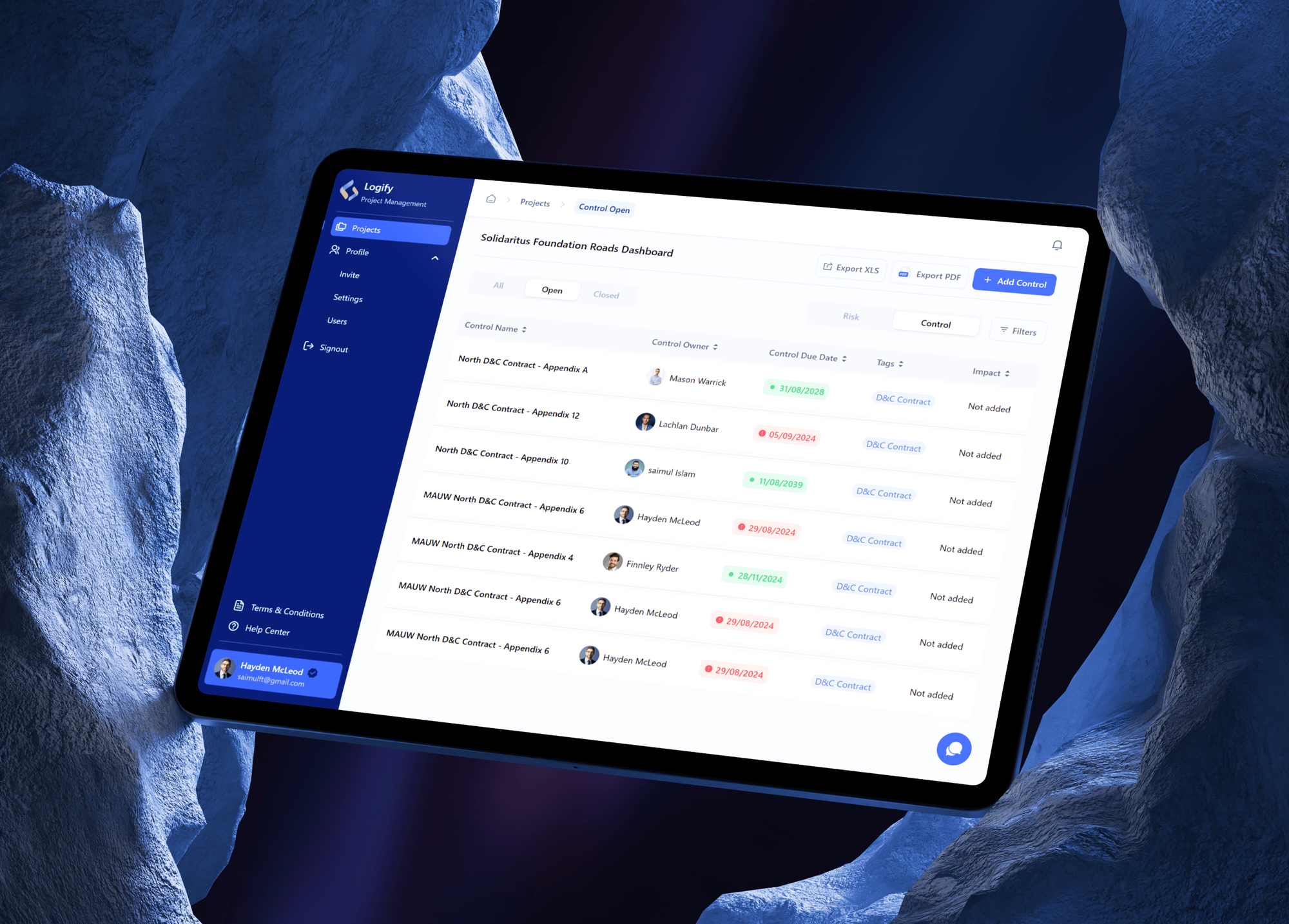
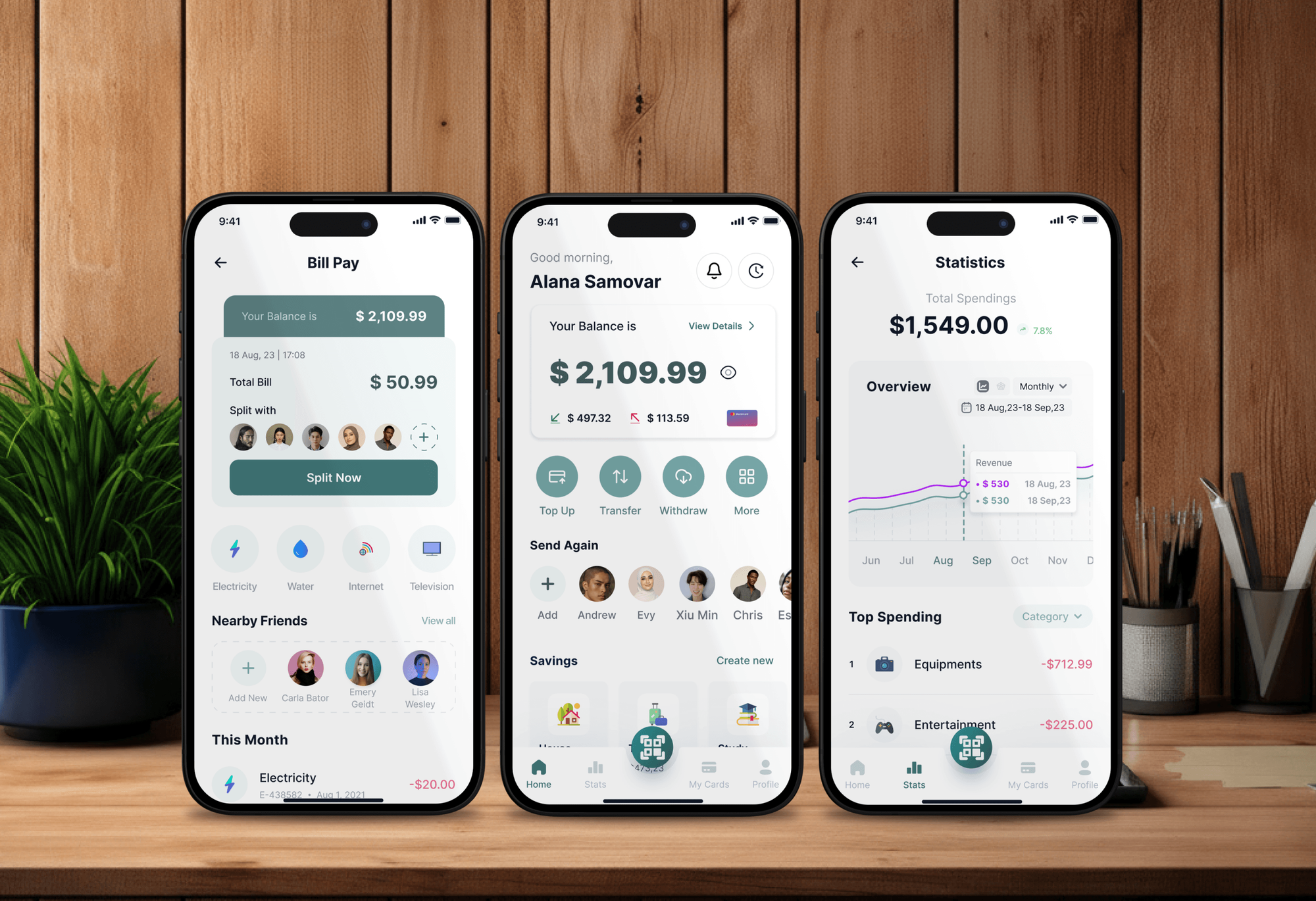
Oasic, Logify, Finto, and Moneywish are dashboards and finance products we designed and built. They show our data and workflow work, not a bank's own back office.


What Our Clients Say
Feedback from teams we have built finance products, dashboards, and internal tools for.
We had a pretty specific idea of what we wanted our website to become, but I wasn’t sure how easily we could explain all of it to a development team. There were quite a few moving parts, and we were working toward a deadline, so I expected a few things to get lost along the way. That never really happened. They understood what we were trying to achieve, kept us updated throughout the process, and got everything ready within the agreed timeline. The final site feels much easier to navigate, works beautifully on mobile, and is noticeably smoother for our customers. It was a huge relief seeing the original idea actually turn into the website we had in mind.
The mobile experience is probably my favourite part of the new site. We had spent a lot of time making sure the desktop version looked right, and the team kept pushing us to think about how everything would actually feel on a phone too. They were right. The navigation is clean, the interactions feel natural, and everything we’ve tested so far works exactly as it should. They also went through the links, forms, integrations, and other details more than once before launch, which I really appreciated. And even after going live, we could still reach out when something came up. The whole process felt friendly, organised, and surprisingly straightforward.
What I appreciate most is that the website is actually easy for us to manage now. We can update content ourselves instead of sending a developer a message every time we need to change something small. They also paid attention to the technical SEO side, which mattered to us because we didn’t want a new website to create problems for the traffic we already had. I’ve probably asked more questions than I should have since launch, but every question has been handled patiently and without any fuss. The team is easy to work with, they explain things clearly, and when we need something changed, they focus on getting it done rather than making the process complicated.
1,250+
Projects shipped
10+
Years of experience
Top 3%
Upwork Top Rated Plus
5 stars
Average review score
1,250+
Projects shipped
10+
Years of experience
Top 3%
Upwork Top Rated Plus
5 stars
Average review score

Want results like these?
Tell us what you are building. You get a reply within 24 hours on business days, then a written estimate.
Work Culture
Your tools touch customer records and money movement, and examiners read the trail. These habits keep the build easy to review, safe to run, and simple to hand over.
We read from and write to your core only through its supported APIs and files. Balances and customer records keep one home, so reconciliations stay simple.
You get architecture notes, data flows, and test results written for a third-party risk review. Your vendor management team gets answers without rounds of follow-up questions.
New software runs beside the old process before it replaces anything. Your team compares outputs on real business days and approves the switch itself.
Each role sees only the fields its job needs, and production access is granted per task and logged. Customer data stays inside your own environment.
If your core vendor's module already covers the process, we'll tell you before we quote. Custom work only makes sense where the module stops.
Source code, cloud accounts, and encryption keys sit in your accounts from day one. If you change developers later, nothing has to be pried loose.
Overview
DeveloperLook provides banking software development services for community banks, credit unions, and fintechs. We build core integrations, staff work queues with maker-checker approvals, reconciliation jobs, and exam-ready reporting around the core you keep. Projects start at $1,450, take 7 to 19 weeks, and include a parallel run before cutover.
DEVELOPERLOOK
Project facts · Banking Software Development Services
Reviewed 28 Oct 2026 by Saimul Islam
Good fit
Community banks running on spreadsheets
Your operations team rebuilds the same exception report every morning from core exports, and you want software that has it ready before staff arrive.
Credit unions after an exam finding
Your last exam flagged weak dual control on account maintenance, and you need approvals and an audit trail without waiting for the core vendor.
Fintechs with a sponsor bank
You run a program with a sponsor bank and need reconciliation and reporting that answer the bank's oversight questions from your own data.
CIOs comparing banking software companies
You're comparing banking software companies and vendor modules for one gap, and you want an honest build-or-buy answer before a long RFP.
Agencies with a financial client
Your agency serves a regional bank, and the client now needs a custom internal tool that your design team can't build alone.
Not a fit
Customer mobile app
You need the app your customers use to log in, move money, and manage cards. Our Banking App Development Company page covers mobile banking software development.
Loan decisioning platform
You need loan applications, credit rules, and adverse action notices in one system. Our Lending Software Development page covers that build.
Core replacement project
You want to replace the core banking system itself. That is a conversion led by a core vendor, and we would only build the integrations around it.
Budget under $1,450
Your budget is under $1,450, or your core vendor's module already covers the process. If it does, we'll tell you before we quote.
Not sure we're the right fit?
Book a free call or message us. We'll tell you honestly whether we're the right team.
Pricing
These are starting points in USD. Your final price depends on your core's APIs, the number of systems involved, and your approval rules, and you get a fixed proposal after a free systems review.
For Agencies
You own the client relationship. We supply the integration and back-office engineering your bank and credit union clients ask for, under your brand. Every build ships with the documents their vendor management team expects, so your agency clears the review.
White label: your client only ever sees your brand
Send the client's core, the manual process, and the deadline, and we shape the scope.
You get a fixed proposal in your agency's name and a named team.
We build, run beside the old process, and hand over code and runbooks.
Send the client's core, the manual process, and the deadline, and we shape the scope.
You get a fixed proposal in your agency's name and a named team.
We build, run beside the old process, and hand over code and runbooks.
The Right Technology for Your Project
We use mainstream languages your IT team can support, connect through the core's own APIs and files, and log every action for review.
 Java
 .NET
 Node.js
 Python
 PostgreSQL
 AWS
 Microsoft Azure
 Docker
 Power BI
Related Services
The customer app and lending builds that sit beside your back office, plus fintech security reviews, reporting dashboards, API work, and legacy modernization.
This page
Banking Software Development Services
Pairs with the 6 services around it
FAQ
Straight answers on cost, timelines, core systems, vendor reviews, and compliance modules.
Saimul IslamFounder & CEO, DeveloperLookStill have questions?
Send a message or book a call with the team.
Banking software development services from DeveloperLook start at $1,450 for one staff tool on your core data, with single sign-on and an audit log. An operations platform with up to 3 integrations, work queues, and maker-checker approvals starts at $4,400. A back-office hub connecting up to 8 systems starts at $9,300. You get a fixed quote after a free systems review.
Most projects take 7 to 19 weeks from systems review to cutover. A single staff tool takes about 7 to 9 weeks. An operations platform with 3 integrations runs about 12 to 15 weeks, and a back-office hub up to 19. The parallel run adds 2 to 4 weeks, and it's the step that protects your month end.
Core banking software is the system of record that holds a bank's deposit and loan accounts, posts transactions, and calculates interest and fees. Most US banks and credit unions license their core from a vendor and run other systems around it. We build the integrations, staff tools, and reporting around it.
No, we don't replace cores. A core conversion is a vendor-led project with its own contract, data mapping, and testing. We build around the core you keep: the integrations, staff workflows, and reports it doesn't cover well. Planning a conversion? We can build the integration layer first, so your tools survive it.
They evaluate them as third parties, with due diligence before signing and ongoing monitoring after. The Fed, FDIC, and OCC set this out in their 2023 interagency guidance on third-party relationships. Expect questions on security controls, data location, business continuity, subcontractors, and exit terms. Our due diligence pack answers each one for custom builds.
Start from your exam findings and the rules you actually work under, then check whether each module enforces them or only reports on them. Ask to see dual control, audit logs, and record retention working in a demo with your own data. Where a packaged module covers most of your process, buy it, and let us build only the missing piece.
Choose a supplier whose figures you can trace back to the core, line by line. Ask how they handle late processor files, restated balances, and definitions such as an active member that differ by department. Packaged banking software solutions suit standard dashboards. Custom reporting fits when your board pack pulls from several systems.
It connects through the APIs and file exports your core vendor supports, not by writing to the core's database directly. Many cores offer a digital banking API or batch exports over SFTP. We put one integration layer in front of them, so your other tools call it instead of the core. Vendor credentials then live in one place.
Compare banking software development companies on how they treat your core, your examiners, and your exit plan. Ask for a sample due diligence pack, how they test before cutover, and who owns the code and cloud accounts. A firm that pitches a core replacement for a reporting gap is selling the wrong project.
A banking software development company should hand over everything you need to run the system without them. From us, you get the source code, infrastructure in your own cloud accounts, runbooks, an access review, and test evidence from the parallel run. Then 90 days of post-launch support covers fixes and small changes.
Saimul IslamFounder & CEO, DeveloperLookStill have questions?
Send a message or book a call with the team.
Free 30-min callGoogle Meet
Book a call
In 30 minutes on Google Meet we walk you through how we would build it, how long it takes and what it costs. Then you get a written estimate.
Calendar not showing? Book on cal.com or send a brief.