
Customer ordering app
Your customers browse, order, pay, and reorder from a branded app on iOS, Android, or the web.

For shops, pickup services, and on-demand startups: branded customer and courier apps with live tracking and proof at the door, so deliveries stop running on phone calls. From $1,200.
24/7
Online ordering and tracking
100%
Deliveries with photo proof
Teams we have built for:














The Problem
The cracks show once deliveries become a real share of your sales. Orders come in by phone, text, and marketplace tablets, drivers work from memory, and customers can't see where anything is.
Phone orders
Orders arrive by phone and text, and details get misheard.
Phone orders
Your customers order in the app, so addresses and items arrive typed and confirmed.
Order status
Customers call to ask where their order is.
Order status
A live tracking link shows the courier on a map with an updated ETA.
Disputed drops
Deliveries get disputed with no proof either way.
Disputed drops
Couriers capture a photo, signature, or PIN at the door, stored on the order.
Marketplace fees
Marketplaces take a cut and keep your customer data.
Marketplace fees
Orders run through your own app, so the customer list stays yours.
It's Saturday at noon and your phone hasn't stopped. One customer spells her address twice while another asks where his order went an hour ago. Your two drivers share a paper list, so one doubles back across town. A delivery marked done gets disputed, and there's no photo to settle it. The marketplace app you rely on takes a cut of every order and keeps your customer's email. You're paying to rent your own customers back.
We start by mapping your delivery day: who orders, what they order, which zones you serve, and how couriers get paid. Then we build three connected pieces. A customer app handles ordering and live tracking, a courier app handles stops and proof of delivery, and an admin panel assigns and watches every order. Customers order from your brand, not a marketplace. Disputes end with a timestamped photo instead of an argument.
Live tracking for customers
Your customers follow their courier on a map, with ETAs that update as the courier moves.
Proof at every door
Photo, signature, or PIN capture settles delivery disputes before they turn into refunds.
One panel for dispatch
You see every order, courier, and zone at once, and reassign a job with one tap.
Our Delivery App Development Process
You approve how orders, couriers, and zones work before design starts and click through every screen before code. Then your couriers test it before customers ever see it.
We map your delivery day: order sources, zones, delivery windows, courier pay, and the questions customers call about. You get a written scope for the three apps and the features worth launching first.
What's Included
Your build covers the customer app, courier app, admin panel, live tracking, payments, and proof of delivery, plus the zones, fees, and windows that match how you deliver.
Compare Options
Delivery management SaaS and marketplace apps both get you delivering fast. Here is where each fits, and when delivery application development for your own brand is the better long-term choice.
| Feature | DeveloperLookBest fit | Delivery SaaS | Marketplace app |
|---|---|---|---|
| Brand customers see | Your app, your name | Your name on tracking pages | The marketplace's brand |
| Customer data | You keep every customer | You keep it | Marketplace keeps most of it |
| Fees per order | No per-order fees | Monthly or per-task fees | Commission on every order |
| Custom delivery flows | Two-leg pickups, windows, your rules | Standard flows and settings | Marketplace defaults only |
| Courier pool | Your own couriers | Your own couriers | Their courier network |
| Time to launch | 6 to 16 weeks | A few days | Days after approval |
| Proof of delivery | Photo, signature, or PIN | Varies by platform | |
| Code ownership | You own code and apps | Vendor owns the platform | Not applicable |
Projects We've Built
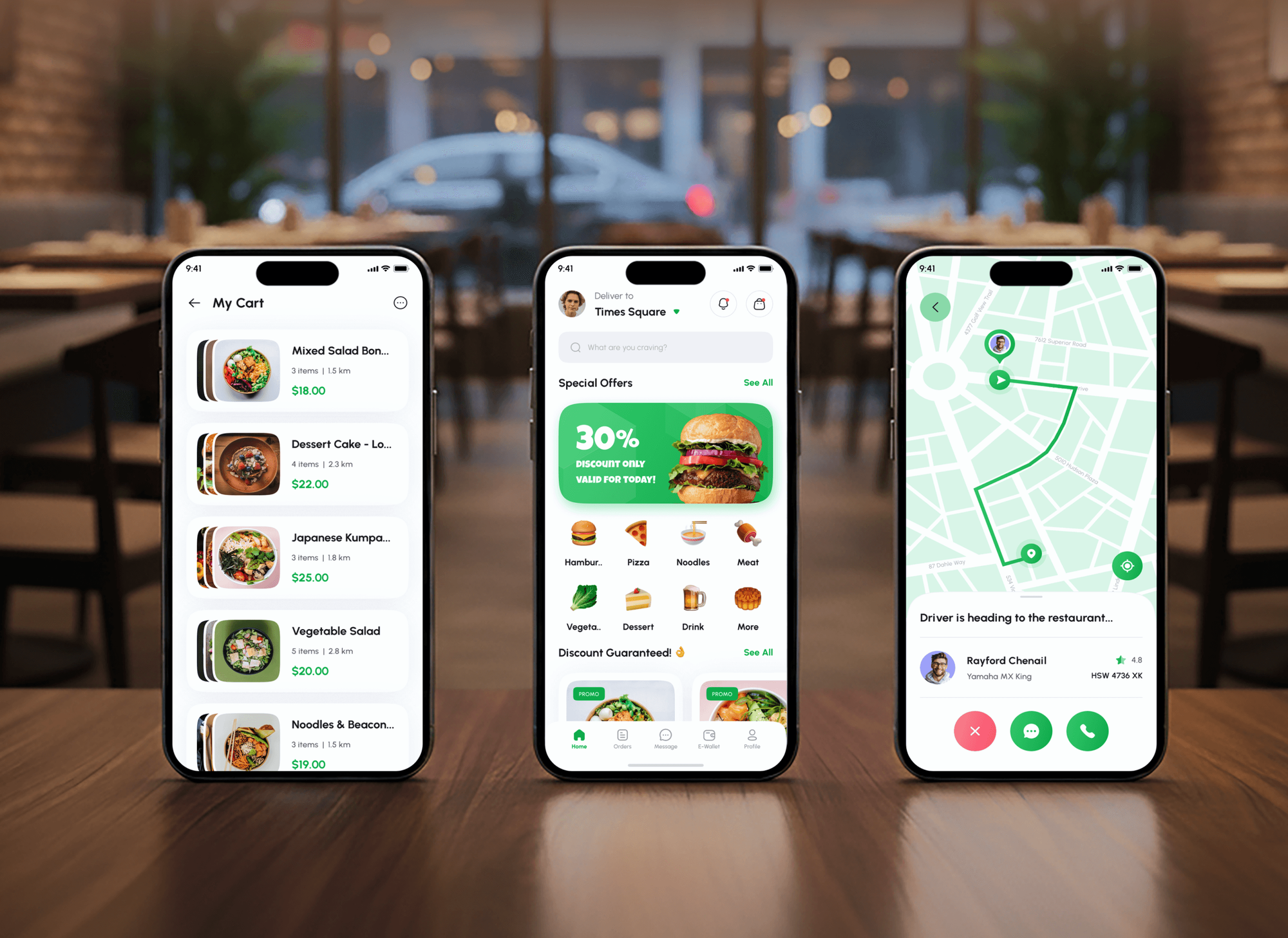
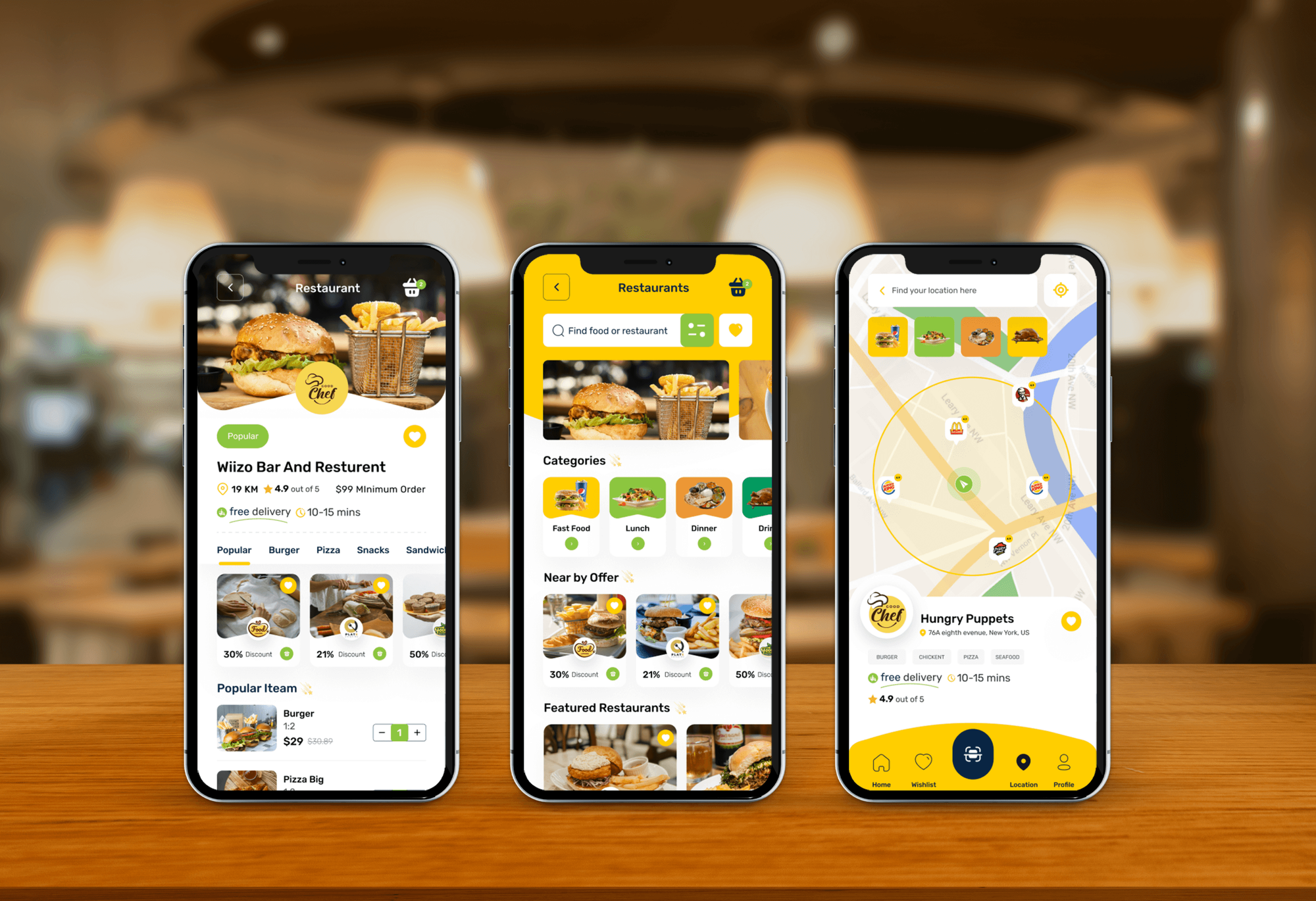
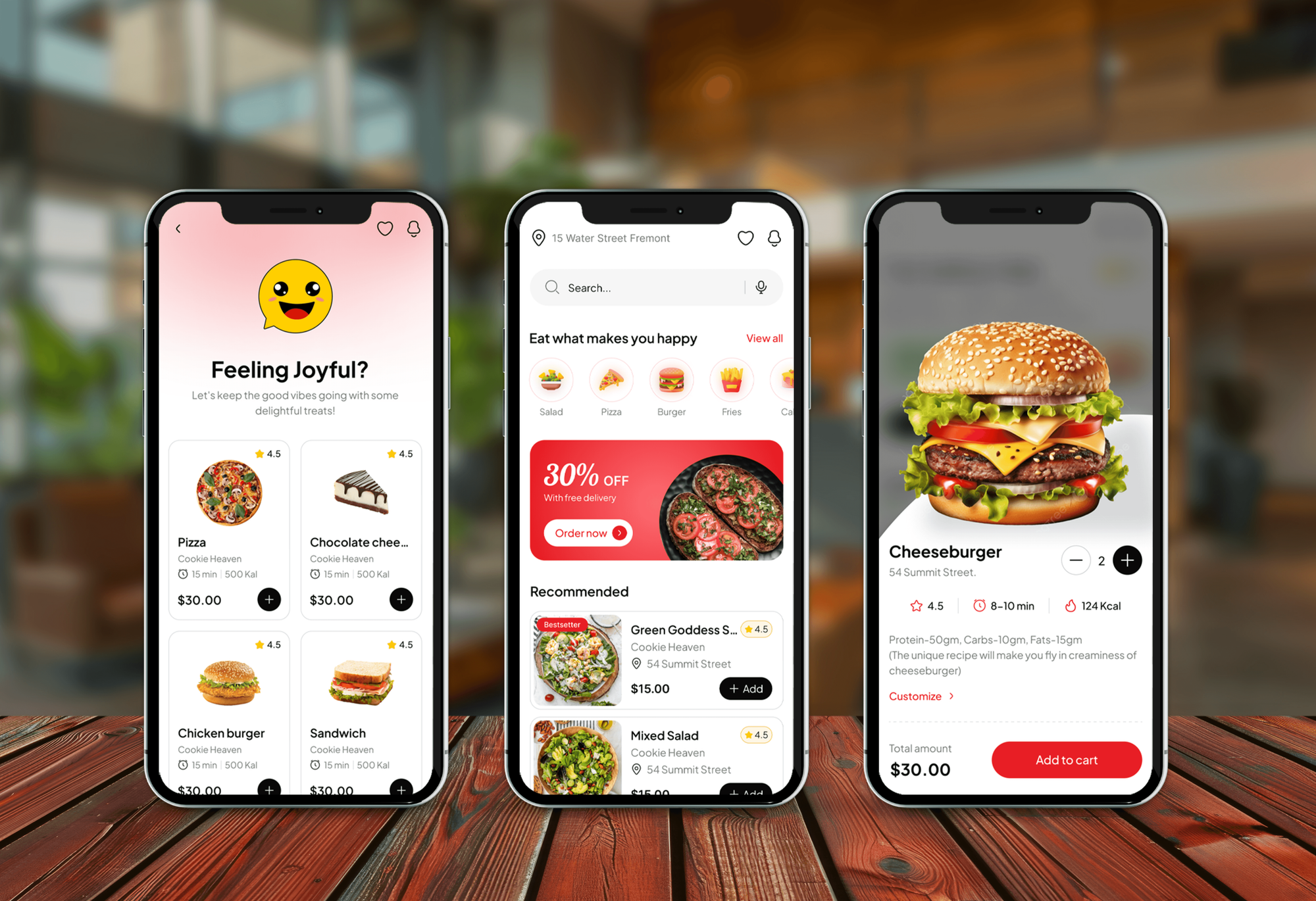
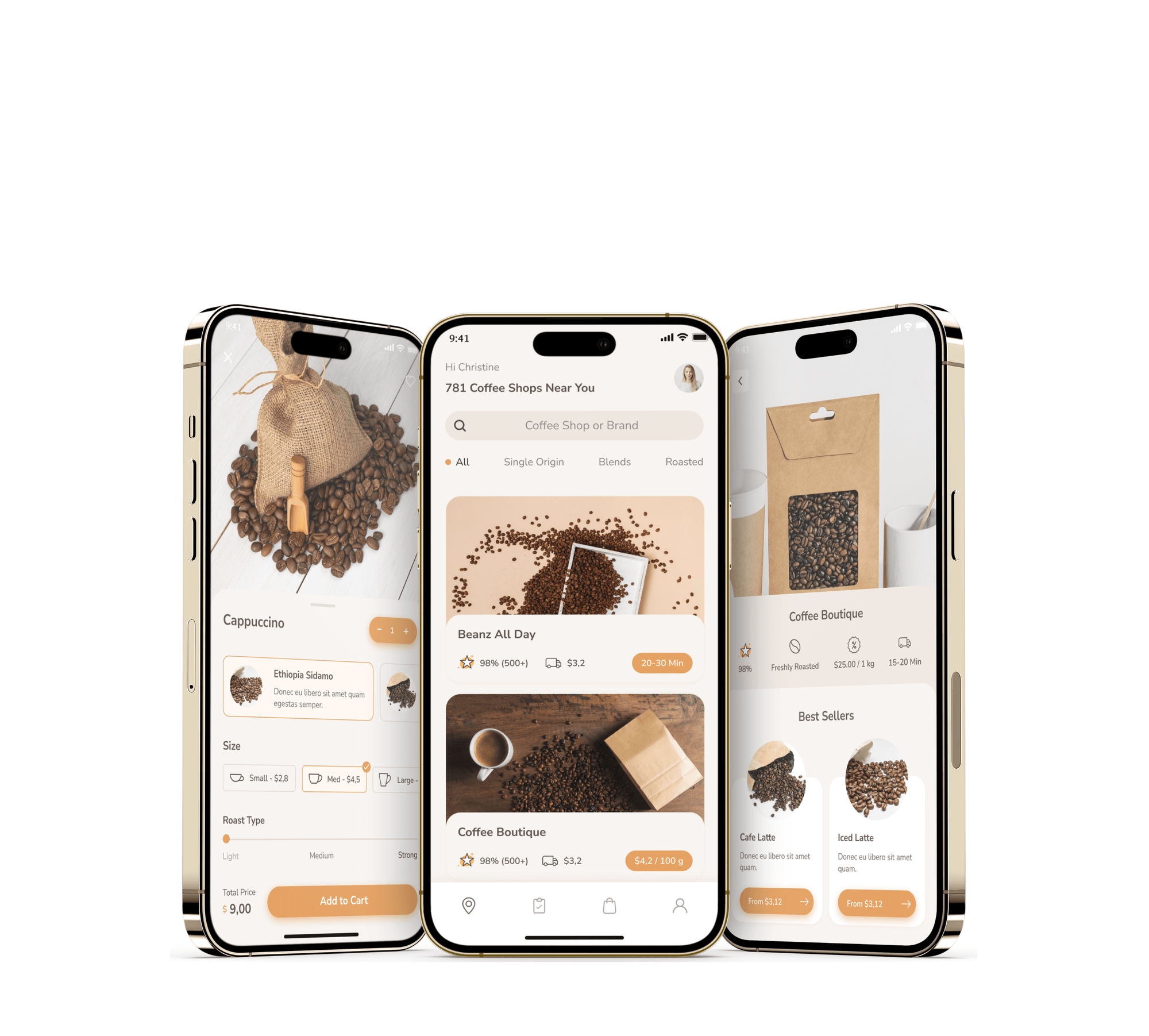
ZapEats, Foodies, Sevanor, and Coffee Break are delivery apps we designed and built, with live order tracking and checkout. Rentcar and Destinata show pickup scheduling on maps.
What Our Clients Say
Feedback from teams we have built delivery apps, booking apps, and mobile products for.
We had a pretty specific idea of what we wanted our website to become, but I wasn’t sure how easily we could explain all of it to a development team. There were quite a few moving parts, and we were working toward a deadline, so I expected a few things to get lost along the way. That never really happened. They understood what we were trying to achieve, kept us updated throughout the process, and got everything ready within the agreed timeline. The final site feels much easier to navigate, works beautifully on mobile, and is noticeably smoother for our customers. It was a huge relief seeing the original idea actually turn into the website we had in mind.
The mobile experience is probably my favourite part of the new site. We had spent a lot of time making sure the desktop version looked right, and the team kept pushing us to think about how everything would actually feel on a phone too. They were right. The navigation is clean, the interactions feel natural, and everything we’ve tested so far works exactly as it should. They also went through the links, forms, integrations, and other details more than once before launch, which I really appreciated. And even after going live, we could still reach out when something came up. The whole process felt friendly, organised, and surprisingly straightforward.
What I appreciate most is that the website is actually easy for us to manage now. We can update content ourselves instead of sending a developer a message every time we need to change something small. They also paid attention to the technical SEO side, which mattered to us because we didn’t want a new website to create problems for the traffic we already had. I’ve probably asked more questions than I should have since launch, but every question has been handled patiently and without any fuss. The team is easy to work with, they explain things clearly, and when we need something changed, they focus on getting it done rather than making the process complicated.
1,250+
Projects shipped
10+
Years of experience
Top 3%
Upwork Top Rated Plus
5 stars
Average review score
1,250+
Projects shipped
10+
Years of experience
Top 3%
Upwork Top Rated Plus
5 stars
Average review score

Want results like these?
Tell us what you are building. You get a reply within 24 hours on business days, then a written estimate.
Work Culture
Your apps run in couriers' pockets and customers' hands at the busiest hours. These habits keep your project reliable on the street, not only in a demo.
We test your courier app on actual delivery runs with weak signal and low batteries. GPS drift and slow uploads get fixed before your customers notice them.
Courier location is tracked only during active shifts, and customers see it only for their own order. Your privacy policy and app store answers match what the app does.
We prepare screenshots, privacy details, and test accounts for Apple and Google review. Your launch date includes review time instead of being surprised by it.
Sometimes a delivery subscription does the job for less money. You hear that from us on the first call, before any proposal.
Each release has a written scope and price before work starts. Adding a second city or a new courier rule gets its own quote, not a surprise invoice.
Both apps publish under your Apple and Google developer accounts. Your code, data, and customer list stay yours if you ever change developers.
Overview
DeveloperLook is an on-demand delivery app development company for local businesses and pickup services. We build the customer ordering app, the courier app with proof of delivery, live tracking, payments, and the admin panel that runs dispatch. Projects start at $1,200, take 6 to 16 weeks, and you own the code and app store accounts.
DEVELOPERLOOK
Project facts · Delivery App Development Services
Reviewed 28 Oct 2026 by Saimul Islam
Good fit
Local shops running their own drivers
Your store takes delivery orders by phone and text, then a driver works out the route while customers call asking where their order is.
Laundry, repair, and pickup services
You collect garments or items and return them days later, and tracking two-leg jobs in a spreadsheet keeps losing bags.
Startups launching an on-demand service
You're launching an on-demand service in one city and need customer, courier, and admin apps for iOS, Android, and the web.
Distributors delivering supplies to businesses
Your customers order supplies by email for next-day drop-off, and you want them ordering and tracking in your own branded app.
Agencies with a delivery app client
Your agency signed a client who wants a branded delivery app on iOS and Android, and you need a team that has shipped them.
Not a fit
Couriers only, no app
You only need drivers to carry orders you already take. DoorDash Drive or a local courier service costs less than building apps.
Shopify store delivery
You sell on Shopify and only need local delivery rates and zones at checkout. Our Shopify Shipping Rates and Local Delivery Setup page covers that.
Freight and truckloads
You move pallets and full truckloads between businesses, not parcels to doors. Our Trucking Dispatch Software page fits fleets running freight.
Budget under $1,200
Your budget is under $1,200. A delivery subscription such as Shipday or Onfleet is the cheaper start, and we'll tell you before we quote.
Not sure we're the right fit?
Book a free call or message us. We'll tell you honestly whether we're the right team.
Pricing
These are starting points in USD. Your final price depends on how many apps you need, your delivery rules, and payouts, and you get a fixed proposal after a free mapping session.
For Agencies
You own the client relationship. We supply the mobile and backend engineering for delivery apps your clients put in front of their customers, published under your brand and documented for your support team.
White label: your client only ever sees your brand
Send the client's delivery model, zones, and goals, and we shape the scope with you.
You receive a fixed proposal in your agency's name and a named app team.
We build, field-test with couriers, and hand over code and store access.
Send the client's delivery model, zones, and goals, and we shape the scope with you.
You receive a fixed proposal in your agency's name and a named app team.
We build, field-test with couriers, and hand over code and store access.
The Right Technology for Your Project
We use cross-platform mobile tools and proven map, messaging, and payment services, so your apps ship to both stores from one codebase.
 React Native
 Flutter
 Node.js
 PostgreSQL
 Firebase
 AWS
 Twilio
 Stripe
 Apple Pay
 Google Pay
 Next.js
Related Services
Mobile app, backend, and Flutter services for your delivery build, plus the dispatch and brokerage software from our logistics team.
This page
Delivery App Development Services
Pairs with the 6 services around it
FAQ
Straight answers on how delivery apps get built, cost, timelines, tracking, proof of delivery, payouts, and ownership.
Saimul IslamFounder & CEO, DeveloperLookStill have questions?
Send a message or book a call with the team.
You develop a delivery app in five steps, starting with how your deliveries actually run. First map your zones, delivery windows, and courier pay. Then design the customer, courier, and admin screens, build in sprints, field-test with real couriers, and launch in the app stores. Skipping the mapping step is how apps end up rebuilt.
A delivery web app from DeveloperLook starts at $1,200 for one store or service, with ordering, a courier view, photo proof, and tracking links. Native customer and courier apps for iOS and Android start at $4,400. An on-demand platform with many stores, auto-assign, and Stripe Connect payouts starts at $8,900. You get a fixed quote after a free mapping session.
A mobile web version takes about 6 weeks from mapping to launch. Native iOS and Android apps with an admin panel take 10 to 16 weeks, including a field test with your couriers and app store review. Adding partner stores or new zones later is a separate release, so your first launch doesn't wait for them.
An on-demand delivery business needs three connected apps: one for customers, one for couriers, and an admin panel for dispatch. The customer app handles ordering, payment, and tracking. The courier app shows jobs, stops, and proof-of-delivery capture. The admin panel sets zones and fees, assigns orders, and shows every courier live, all on one backend.
Make a delivery app when your brand, customer data, or delivery rules are worth owning. If you only need couriers, DoorDash Drive can carry orders you already take. Tools like Shipday or Onfleet give your own drivers dispatch and tracking for a monthly fee. A custom build pays off when per-order fees add up or no tool fits your flow.
Live tracking works by sending the courier's phone location to your server every few seconds during an active delivery. Your customer opens a map that shows the courier moving, with an ETA from Google Maps Platform or Mapbox. Push notifications through Firebase Cloud Messaging announce pickup and arrival, and an SMS link covers customers without the app.
Couriers prove a delivery with a photo, a signature, or a PIN the customer reads out at the door. Each proof is saved on the order with the time and the phone's location. For age-checked or high-value items, you can require a signature or PIN, while regular drops accept a doorstep photo.
Payments run through Stripe, so customers pay by card, Apple Pay, or Google Pay and add tips at checkout. If couriers work as independent contractors or partner stores sell through your app, Stripe Connect splits each payment and pays them out. Refunds and failed deliveries are handled in the admin panel, so your books stay matched.
Yes, on-demand delivery app developers can build two-leg jobs where a courier collects items and returns them later. Laundry, dry cleaning, repairs, and rentals work this way. Ours tags each item at pickup, tracks it while it's with you, and books the return window, so your customer sees both legs on one order.
You own the delivery app code, the backend, your customer data, and the app store listings. Both apps publish under your own Apple and Google developer accounts. We hand over admin access and documentation at launch. Then you get 60 days of post-launch support for bugs and store review feedback.
Saimul IslamFounder & CEO, DeveloperLookStill have questions?
Send a message or book a call with the team.
Free 30-min callGoogle Meet
Book a call
In 30 minutes on Google Meet we walk you through how we would build it, how long it takes and what it costs. Then you get a written estimate.
Calendar not showing? Book on cal.com or send a brief.