











Guided capture flow
Document and selfie capture through the provider's hosted flow or SDK, with clear prompts when a retry is needed.

For fintechs, marketplaces, and platforms: ID and selfie checks from the provider you choose, wired into your onboarding with results you can audit. From $750.
2X
Faster verified onboarding
100%
ID images off your servers
How your project runs
01 · FreeTeams we have built for:














The Problem
The gaps show when volume grows or a bank partner asks for evidence. Users stall on photo capture, results arrive by email, and nobody can say who approved whom.
Bad captures
Users fail photo capture and get no reason why.
Bad captures
Provider SDKs guide capture and return a clear retry reason the user can act on.
Hidden approvals
Borderline cases get approved in a vendor dashboard.
Hidden approvals
A review queue in your admin records who approved each case and why.
Fragile scripts
Results arrive through a hurried script that breaks quietly.
Fragile scripts
Signed webhooks update each user's status, with retries and alerts on failures.
Stored passports
Copies of IDs pile up on your servers.
Stored passports
Your app keeps the provider's reference and decision, while the provider holds the images.
A new user snaps her license under a kitchen light and gets rejected with no reason. She might try again tomorrow. Meanwhile your ops lead approves borderline cases in a vendor dashboard nobody else can see. Results reach your app through a script someone wrote in a hurry, so a declined user still gets a card. When your bank partner asks how last month's signups were verified, the answer is a spreadsheet export and a hope.
We start with your rules: which users need which checks, and what happens on pass, fail, or review. Then we connect your chosen provider through its hosted flow or SDK, drive every status change from signed webhooks, and give your team a review queue with notes. Your app stores the provider's reference and decision, not passport images. Approvals happen in your system, not in someone's inbox.
Document and selfie checks
ID capture and liveness checks run in the provider's flow, guided so fewer users need a retry.
Signed webhook results
Every pass, fail, or review result arrives as a verified webhook that updates the user.
Room to switch providers
Our adapter layer keeps your code provider-neutral, so adding a provider later isn't a rewrite.
Our KYC and Identity Verification Integration Process
You approve the verification rules, the provider, and the review screens before we connect anything, then watch sandbox users pass, fail, and retry.
We map which users need which checks, what your bank partner or counsel requires, and where verification sits in signup. You leave with a written scope, candidate providers to compare, and the open questions to settle first.
What's Included
Your integration covers the user flow, the provider connection, signed webhooks, a review queue, status rules, and records your compliance team can export when a partner asks.
Compare Options
A provider's no-code flow gets checks running fast, and an in-house build suits teams with spare engineers. Here is where each fits, and where an integrated KYC flow pays off.
| Feature | DeveloperLookBest fit | No-code flow | In-house build |
|---|---|---|---|
| Time to first check | 2 to 6 weeks | A few days | Depends on your backlog |
| Fit with signup | Inside your own flow | Link out to the provider | Inside your own flow |
| Status in your app | Webhooks update each user | Manual dashboard checks | If someone builds it |
| Review queue | In your admin | In the vendor dashboard | Often skipped |
| Provider switching | Adapter layer option | Start over | Rewrite the integration |
| Upfront cost | Fixed price per project | Lowest upfront cost | Engineer time |
| ID image storage | Kept with the provider | Kept with the provider | Often on your servers |
| Code ownership | You own the code | No code to own | You own the code |
Projects We've Built
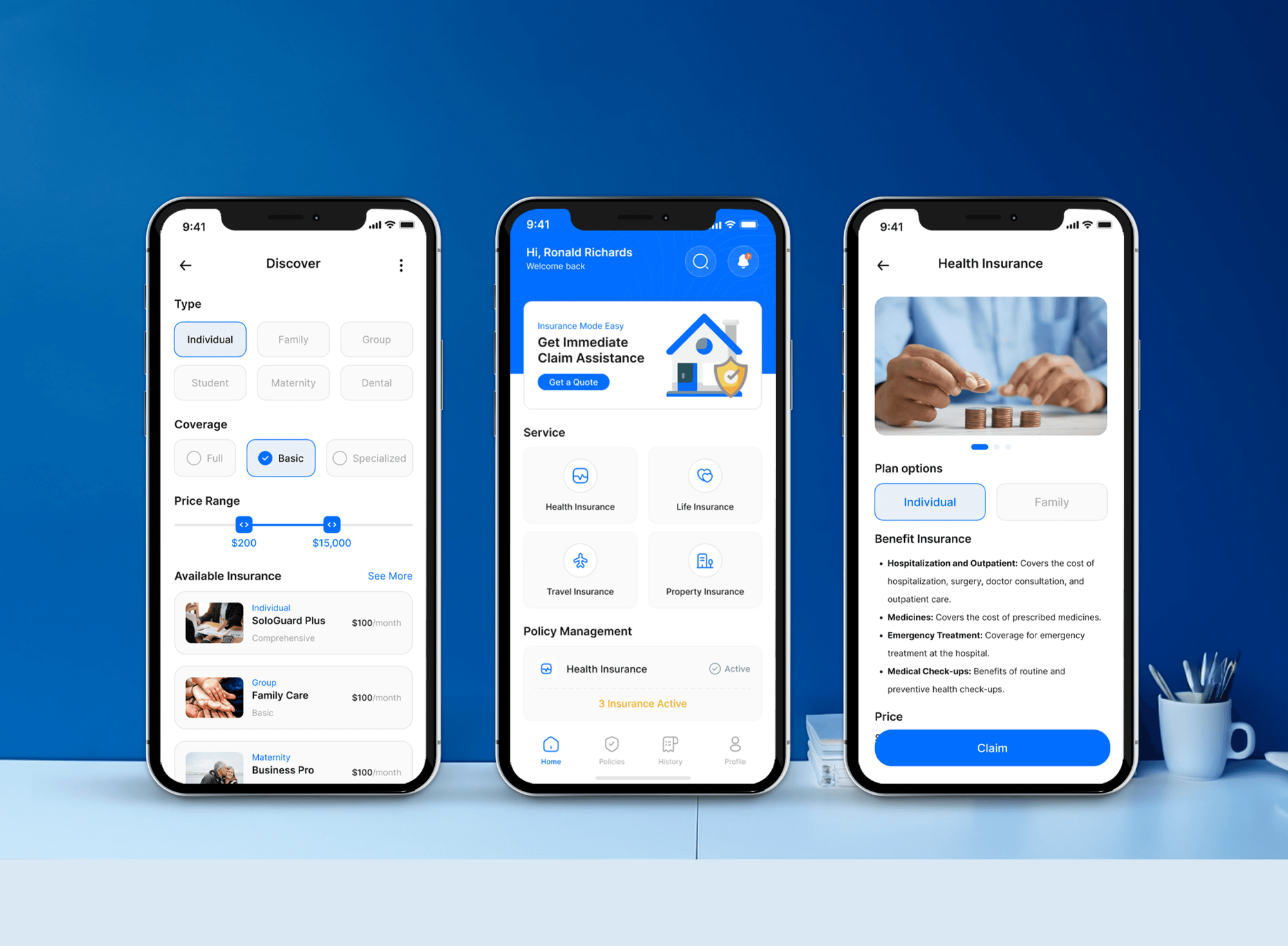
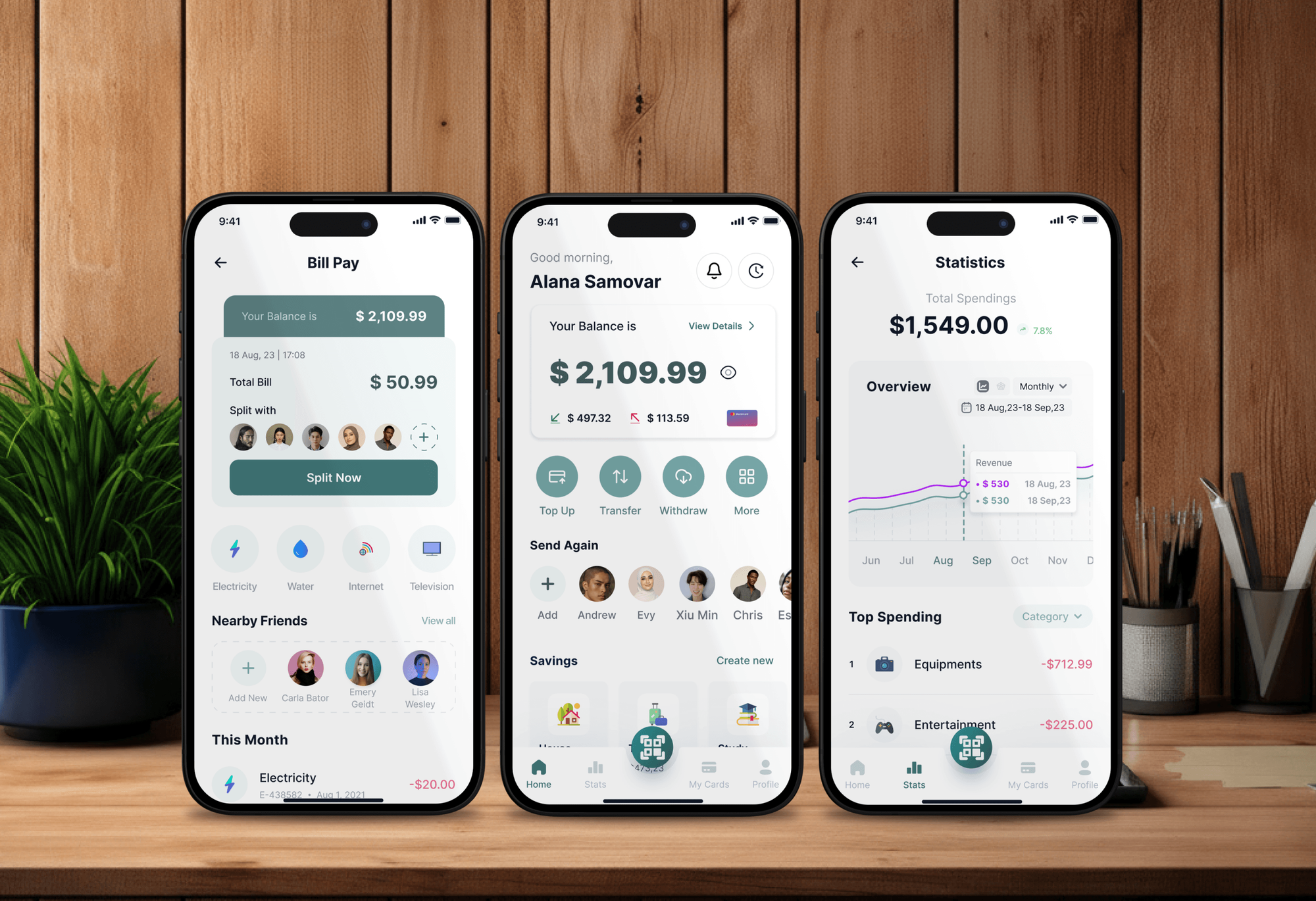
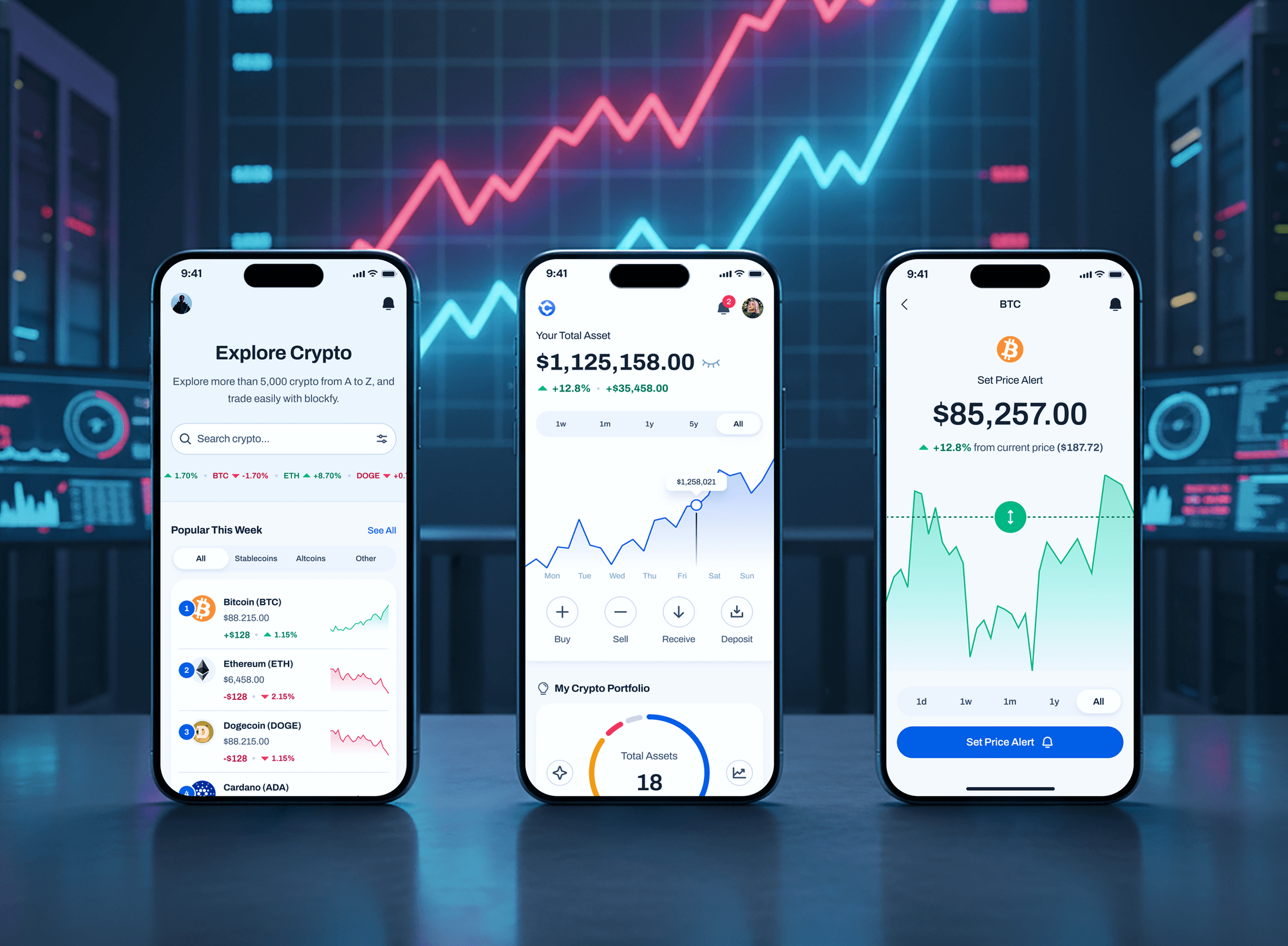
Dualcare uses Face ID and identity checks in its insurance app, while Finto, Moneywish, and CoinSphere open accounts and move money. None was a standalone KYC integration.

What Our Clients Say
Feedback from teams we have built finance apps, onboarding flows, and integrations for.
We had a pretty specific idea of what we wanted our website to become, but I wasn’t sure how easily we could explain all of it to a development team. There were quite a few moving parts, and we were working toward a deadline, so I expected a few things to get lost along the way. That never really happened. They understood what we were trying to achieve, kept us updated throughout the process, and got everything ready within the agreed timeline. The final site feels much easier to navigate, works beautifully on mobile, and is noticeably smoother for our customers. It was a huge relief seeing the original idea actually turn into the website we had in mind.
The mobile experience is probably my favourite part of the new site. We had spent a lot of time making sure the desktop version looked right, and the team kept pushing us to think about how everything would actually feel on a phone too. They were right. The navigation is clean, the interactions feel natural, and everything we’ve tested so far works exactly as it should. They also went through the links, forms, integrations, and other details more than once before launch, which I really appreciated. And even after going live, we could still reach out when something came up. The whole process felt friendly, organised, and surprisingly straightforward.
What I appreciate most is that the website is actually easy for us to manage now. We can update content ourselves instead of sending a developer a message every time we need to change something small. They also paid attention to the technical SEO side, which mattered to us because we didn’t want a new website to create problems for the traffic we already had. I’ve probably asked more questions than I should have since launch, but every question has been handled patiently and without any fuss. The team is easy to work with, they explain things clearly, and when we need something changed, they focus on getting it done rather than making the process complicated.
1,250+
Projects shipped
10+
Years of experience
Top 3%
Upwork Top Rated Plus
5 stars
Average review score
1,250+
Projects shipped
10+
Years of experience
Top 3%
Upwork Top Rated Plus
5 stars
Average review score

Want results like these?
Tell us what you are building. You get a reply within 24 hours on business days, then a written estimate.
Work Culture
Identity data is sensitive, and your bank partner or regulator may ask how every user was checked. These habits keep your integration private, provable, and easy to change.
Your app stores the provider's reference and decision, not copies of passports. Less sensitive data on your servers means less to protect and less to lose.
Which users need which checks is a compliance decision, so your team or counsel sets it. We build those rules exactly and show the tests behind them.
We keep provider calls behind one internal interface. If prices, coverage, or pass rates change, adding or swapping a provider stays a contained project.
We test glare, expired IDs, damaged cards, and repeat signups in the sandbox. Your users meet a flow that handles real life, not only the happy path.
If your provider's no-code link already covers your case, we'll tell you before we quote. Integration pays off when checks must live inside your product.
Provider accounts, API keys, and webhook secrets belong to your company. You keep the code and the vendor relationship if you change developers.
Overview
DeveloperLook handles KYC API integration for fintechs, marketplaces, and platforms. We connect providers such as Persona, Onfido, Veriff, or Stripe Identity to your signup, handle signed webhooks, and build a review queue and status rules. Projects start at $750, take 2 to 6 weeks, and your app keeps decisions, not ID images.
DEVELOPERLOOK
Project facts · KYC and Identity Verification Integration
Reviewed 28 Oct 2026 by Saimul Islam
Good fit
Fintechs onboarding users for a bank partner
Your sponsor bank requires identity checks before accounts open, and you need KYC integration that records every decision in your own system.
Marketplaces verifying sellers or hosts
Your marketplace pays sellers or hosts, and fake accounts keep slipping through, so you want api identity verification before the first payout.
Platforms comparing KYC API providers
You're comparing kyc api providers on coverage, price per check, and SDK quality, and want a team to build whichever one you pick.
Teams replacing manual ID checks
Your staff reviews emailed ID photos by hand, and you want kyc software doing the routine checks so people handle only the hard cases.
Agencies building fintech onboarding
Your agency's fintech client needs verification inside its onboarding, and you want a partner who has integrated verification providers before.
Not a fit
Employee login and SSO
You need staff sign-in through Okta or Microsoft Entra ID, not customer identity checks. Our SSO Integration Services page covers that.
Bank account linking only
You only need users to connect bank accounts for payments or account data. Our Plaid Integration Services page covers that.
Full banking app build
You need a whole app with accounts, transfers, and cards, with KYC as one step. Our Banking App Development Company page covers that.
Budget under $750
Your budget is under $750, or your provider's no-code link already fits your signup. If it does, we'll tell you before we quote.
Not sure we're the right fit?
Book a free call or message us. We'll tell you honestly whether we're the right team.
Pricing
These are starting points in USD. Your final price depends on your providers, countries, and review rules. You get a fixed proposal after a free rules review.
For Agencies
You own the client relationship. We supply the integration work behind your fintech and marketplace clients' verification flows: provider setup, signed webhooks, and review queues. Clients see your agency's name, and their compliance team gets clean records.
White label: your client only ever sees your brand
Send the client's signup flow, provider choice, and partner requirements to begin.
You get a fixed quote you can resell, with the engineer named.
We integrate, test edge cases, and hand over code and provider settings.
Send the client's signup flow, provider choice, and partner requirements to begin.
You get a fixed quote you can resell, with the engineer named.
We integrate, test edge cases, and hand over code and provider settings.
The Right Technology for Your Project
We work with established identity verification providers through their official SDKs and APIs, and keep the integration small, observable, and easy to change.
 Stripe Identity
 ReactReact Native
 Node.js
 Python
 PostgreSQL
 AWS
Related Services
The banking, payment, and lending apps that run KYC at signup, plus Plaid bank checks, wider API integration work, and fintech security reviews.
This page
KYC and Identity Verification Integration
Pairs with the 6 services around it
FAQ
Straight answers on KYC basics, fraud prevention, providers, cost, timelines, payments, open banking, and existing systems.
Saimul IslamFounder & CEO, DeveloperLookStill have questions?
Send a message or book a call with the team.
KYC integration is connecting a know your customer provider to your app so new users are verified during signup. The provider checks the ID document, matches a selfie, and screens watchlists. Your app receives the result by webhook and turns features on based on it. For US banks, FinCEN's identification rule starts with name, date of birth, address, and an ID number.
Identity verification APIs prevent fraud by checking that a real person holds a genuine document before the account opens. They inspect the document's security features, compare a live selfie with its photo, and can flag repeat faces across signups. Many also screen names against sanctions lists such as OFAC's SDN list. Your rules then decide what a risky result blocks.
KYC API integration with DeveloperLook starts at $750 for one provider's hosted flow with document and selfie checks, signed webhooks, and status on each user. Native SDKs, a review queue, and tiered checks start at $2,050. A multi-provider layer with routing and business checks starts at $4,400. Fees per check are billed by the provider.
KYC API integration takes 2 to 6 weeks with DeveloperLook. One provider's hosted flow with webhooks takes about 2 weeks. Native SDK capture, a review queue, and tiered rules take 3 to 4 weeks, and a multi-provider layer up to 6. Your provider's approval of your production account can add a few days, so that request starts early.
The easiest KYC vendor to integrate is usually one with a hosted flow you can link to, such as Stripe Identity or Persona's hosted flow. Hosted flows take days, while embedded and native SDKs take longer but keep users inside your app. The easiest option may not fit, so check document coverage for your countries and the price per check first.
The best verification API is the one that covers your users' countries and documents at a price per check you can carry. Compare liveness checks, sandbox quality, webhook reliability, and data retention settings. For fintech, also check sanctions screening and business checks. We test two shortlisted identity verification api providers for fintech against sample documents from your user mix.
You integrate third-party KYC providers efficiently by putting them behind one internal interface instead of calling each one from your app. Each provider then plugs in as an adapter, and routing rules pick one by country or document type. Shared webhook handling and one review queue keep your team's work the same, whichever provider ran the check.
You integrate KYC in payments by checking users before they can send money or receive payouts, not after. Low-risk actions can wait for a lighter check, while payouts and higher limits need a full one. If you use Stripe Connect, Stripe verifies connected accounts' details itself, but your platform keeps its own checks where your rules require them.
You integrate KYC with open banking by matching what the user told you against what their bank holds. Plaid Identity returns the account owner's name, email, phone, and address, and Identity Match scores how closely they match your signup data. A strong match adds confidence that the bank account belongs to the person who passed the ID check.
You integrate it by adding a thin internal service between your systems and the provider. Your apps call that identity verification service API, which starts sessions, receives signed webhooks, and writes decisions to user records and your CRM. Existing users can be checked in batches when they reach a new limit. Your signup gains one step and little else changes.
Saimul IslamFounder & CEO, DeveloperLookStill have questions?
Send a message or book a call with the team.
Free 30-min callGoogle Meet
Book a call
In 30 minutes on Google Meet we walk you through how we would build it, how long it takes and what it costs. Then you get a written estimate.
Calendar not showing? Book on cal.com or send a brief.