
Domain module map
Every route grouped by business domain and mapped to a module, so your team agrees on structure first.

For teams whose Node.js API outgrew its folders: NestJS developers who add modules, validation, guards, and tests without pausing feature work. From $950.
100%
Requests validated before your code runs
2X
Faster onboarding for new developers
How your project runs
Teams we have built for:














The Problem
Express gives you freedom on day one. A few years and several developers later, that freedom means every router handles auth, validation, and errors its own way.
01 · Scattered rules
Discount logic lives in two route handlers, slightly different.
Each business rule lives in one provider that every controller injects.
02 · Unchecked input
Some routes skip validation, so bad data reached the database.
A global validation pipe checks every request body against its DTO first.
03 · Copied auth
Auth middleware is pasted into every router file.
Guards apply login and role checks per controller, defined once.
04 · Fragile tests
Tests mock half the app and still miss production bugs.
Each module gets tests through the Nest testing module, with real wiring.
Your newest developer asked where order discounts are calculated, and nobody was sure: two route handlers do it, slightly differently. Some routes check their input and some don't, so a bad payload reached the database last month. Auth middleware is copied into every router file. Tests mock half the app, so they pass while production breaks. Every feature now starts with an hour of reading old code. A rewrite sounds tempting, but the API can't stop serving your apps while it happens.
We start by mapping your routes to business domains, then stand up a NestJS app on the Express adapter, so your existing routes keep working inside it. Each domain moves into a module with its own controllers, providers, DTO validation, and guards, one pull request at a time. Tests and OpenAPI docs come with every module. New developers find each rule in one place instead of hunting through routers.
Modules per business domain
Orders, billing, and accounts each get their own module, so a change stays inside one folder.
Validation and guards everywhere
DTOs and guards check every request before your code runs, written once instead of per route.
Moved one module at a time
Your Express routes keep serving traffic while each domain moves into NestJS in its own pull request.
Our NestJS Development Process
You approve the module map before code moves, review every pull request on staging, and keep shipping features while the structure changes underneath.
On a free call, you walk us through the API, the apps that call it, and what slows your team down. With read access, we skim the routes and tests. You get an honest view: move to NestJS, tidy the Express code, or leave it.
What's Included
NestJS is used to build structured server-side apps on Node.js: REST and GraphQL APIs, WebSocket servers, and microservices. Our NestJS development services cover the modules, validation, tests, and docs your team inherits.
Compare Options
Staying on Express costs nothing this month, and an in-house hire learns your product deepest. A NestJS development company fits when you need structure now without pausing features.
| Feature | DeveloperLookBest fit | Stay on Express | In-house hire |
|---|---|---|---|
| Structure | Domain modules agreed up front | Whatever grew so far | Depends on who you hire |
| Upfront cost | Fixed price per phase | Nothing extra today | Salary plus hiring time |
| Start date | After a 1-week module map | Today | After the hiring search |
| Input validation | DTO pipe on every route | Route by route, if at all | Varies by person |
| Auth and roles | Guards defined once | Middleware copied per router | Varies by person |
| Tests | Vitest per module in CI | Often thin or mocked | Varies by person |
| Product knowledge | Learned in the review | Already yours | Deepest over time |
| Code ownership | Your repository from day one | Already yours | Yours while they stay |
Projects We've Built
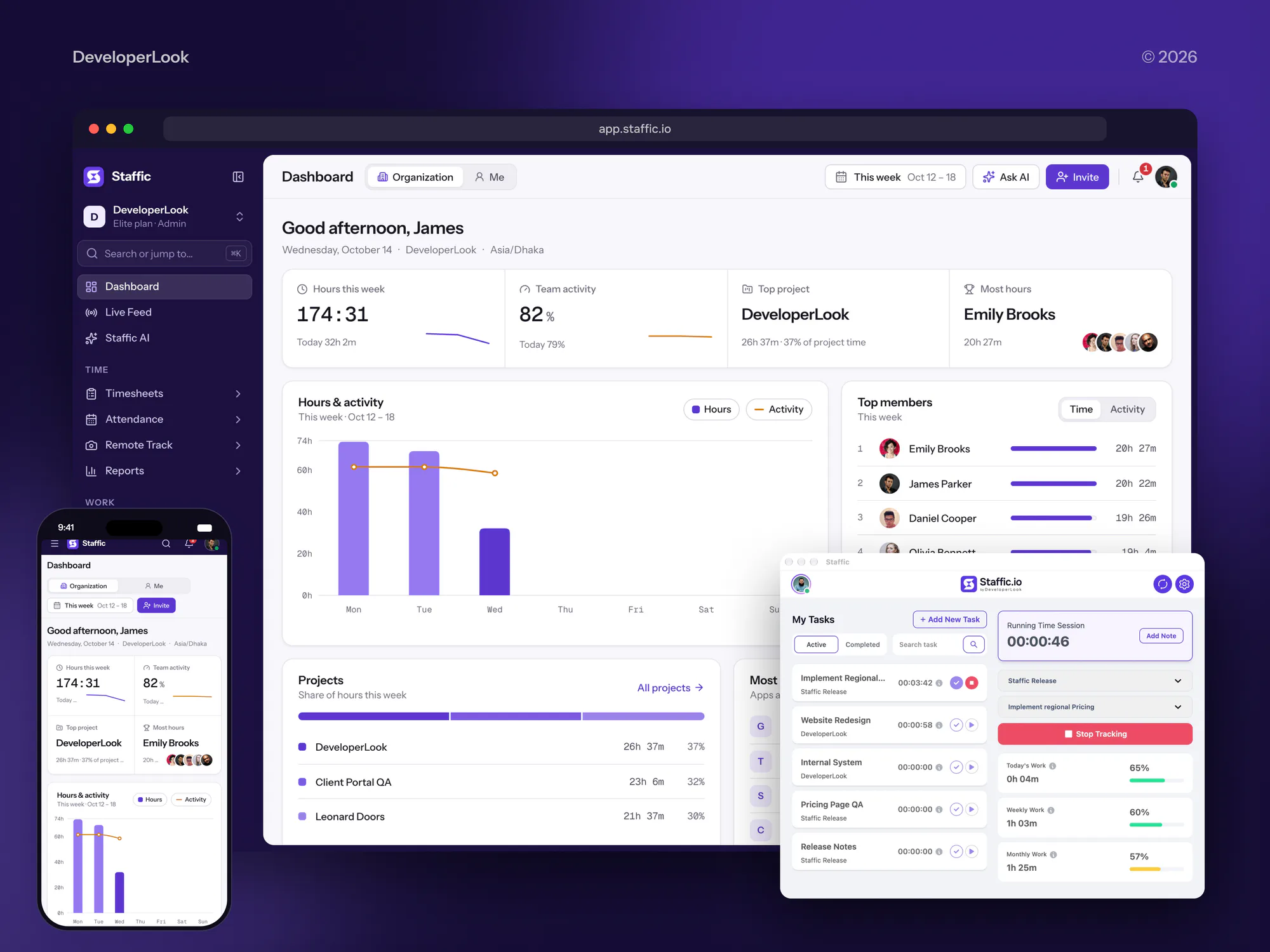
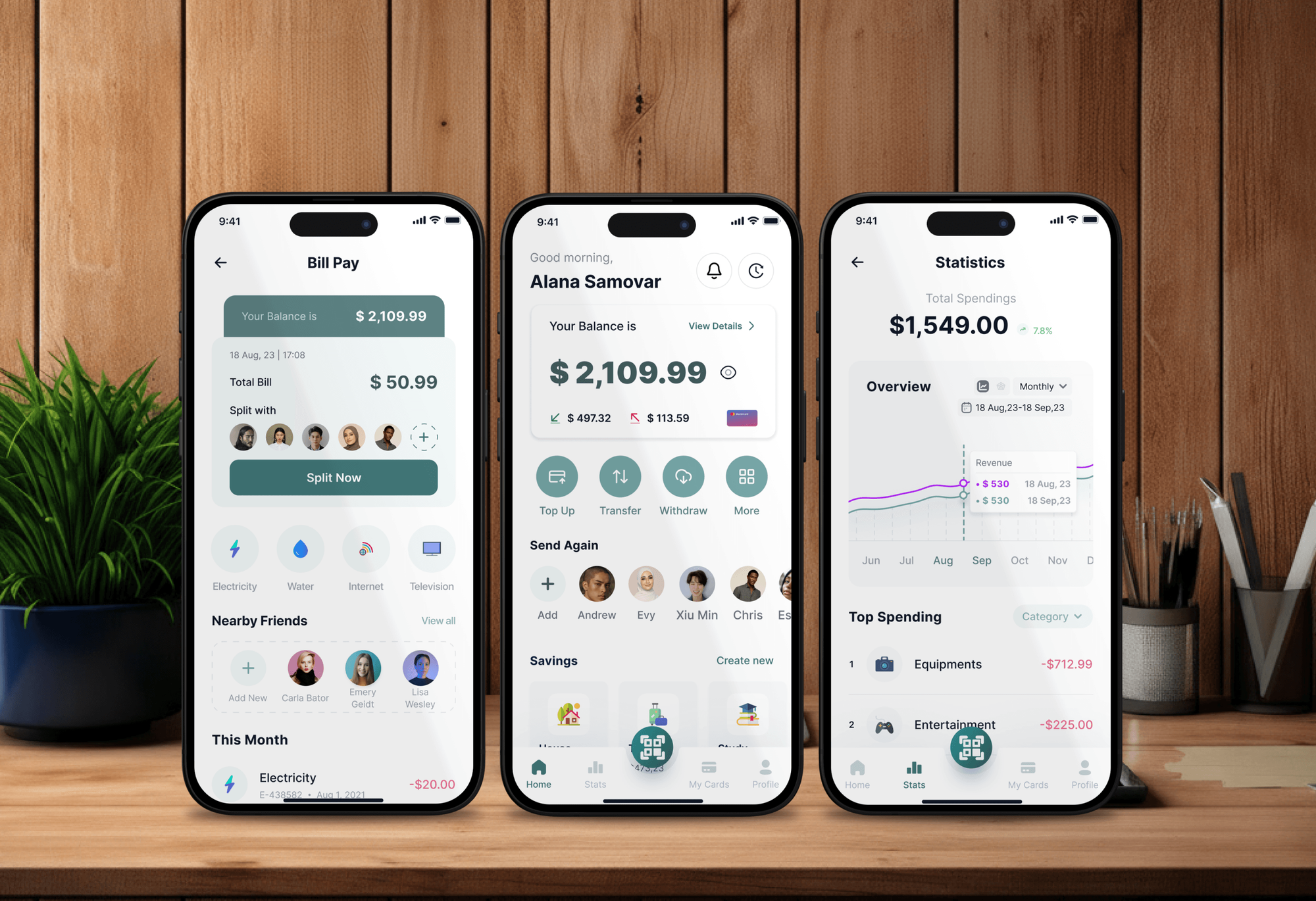
Recruiting, time tracking, pet care, and finance products from our portfolio. Each has user roles and an admin side; none is shown here as a NestJS build.


What Our Clients Say
Feedback from teams we have built APIs and product backends for.
We had a pretty specific idea of what we wanted our website to become, but I wasn’t sure how easily we could explain all of it to a development team. There were quite a few moving parts, and we were working toward a deadline, so I expected a few things to get lost along the way. That never really happened. They understood what we were trying to achieve, kept us updated throughout the process, and got everything ready within the agreed timeline. The final site feels much easier to navigate, works beautifully on mobile, and is noticeably smoother for our customers. It was a huge relief seeing the original idea actually turn into the website we had in mind.
The mobile experience is probably my favourite part of the new site. We had spent a lot of time making sure the desktop version looked right, and the team kept pushing us to think about how everything would actually feel on a phone too. They were right. The navigation is clean, the interactions feel natural, and everything we’ve tested so far works exactly as it should. They also went through the links, forms, integrations, and other details more than once before launch, which I really appreciated. And even after going live, we could still reach out when something came up. The whole process felt friendly, organised, and surprisingly straightforward.
What I appreciate most is that the website is actually easy for us to manage now. We can update content ourselves instead of sending a developer a message every time we need to change something small. They also paid attention to the technical SEO side, which mattered to us because we didn’t want a new website to create problems for the traffic we already had. I’ve probably asked more questions than I should have since launch, but every question has been handled patiently and without any fuss. The team is easy to work with, they explain things clearly, and when we need something changed, they focus on getting it done rather than making the process complicated.
1,250+
Projects shipped
10+
Years of experience
Top 3%
Upwork Top Rated Plus
5 stars
Average review score

Want results like these?
Tell us what you are building. You get a reply within 24 hours on business days, then a written estimate.
Work Culture
NestJS gives you structure only if the team keeps it. These habits keep modules clean after you hire NestJS developers from us, and long after we hand over.
We name modules after business areas like orders or billing, not after technical layers. A developer looking for refund rules opens one folder instead of searching five.
We move routes into NestJS one module at a time while the rest stay on Express. Your apps keep working, and feature work doesn't stop for a rewrite.
Every request body passes a DTO and the validation pipe before it reaches a provider. Bad data gets a clear 400 error instead of becoming a corrupted record.
We test providers through the Nest testing module with real dependency wiring and mock only outside services. Those tests catch the mistakes that actually reach production.
NestJS adds decorators, modules, and a learning curve. If your API is small and one developer owns it, we'll recommend staying on Express or Fastify instead.
Every commit lands in your GitHub or GitLab organization, under your CI. If you change teams later, the module map and README go with the code.
Overview
DeveloperLook helps teams hire NestJS developers for APIs that need structure: domain modules, DTO validation, role guards, OpenAPI docs, and Vitest tests. We also move Express APIs into NestJS route by route while the old routes keep serving. Prices start at $950, module work takes 1 to 2 weeks, a full API 5 to 14 weeks, and the code stays in your repository.
DEVELOPERLOOK
Project facts · NestJS Development Services
Reviewed 22 Oct 2026 by Saimul Islam
Good fit
Teams with a sprawling Express API
Your Express API has grown to dozens of routers, and each new developer spends weeks learning where the business rules actually live.
Founders hiring a backend team
You'd rather hire NestJS development team members for a quarter than spend months on a full-time search for a new product backend.
Teams working across time zones
You plan to hire remote Nest JS developers and need them on calls during your US, UK, or Australian working day.
Apps a few versions behind
Your NestJS app is two major versions behind, the test setup is fragile, and every dependency update breaks something unexpected.
Agencies selling TypeScript backends
Your agency sold a TypeScript backend to a client, and you need to hire dedicated NestJS developers who deliver under your brand.
Not a fit
Small API, one owner
Your API has a handful of routes and one developer who knows them well. Our Node.js Development Services page covers a lean Express or Fastify build instead.
Split decision first
You first need to decide whether to break a monolith into services. Our Microservices Development and Consulting page covers that decision before any NestJS code.
Python team, Python API
Your backend team writes Python and wants to stay there. Our Python Development Services page covers Python APIs and the data work around them.
Budget under $950
Your budget is under $950, or you want the whole API rewritten in one go. We move APIs module by module and price each phase separately.
Not sure we're the right fit?
Book a free call or message us. We'll tell you honestly whether we're the right team.
Pricing
These are starting points in USD. Your final price depends on how many domains move, your database layer, and your integrations, and you get a fixed proposal after a free codebase call.
For one feature module built, or an existing NestJS API moved to version 12.
$950one-time, USD
For a new NestJS API, or an Express API moved into NestJS module by module.
$3,450one-time, USD
For products that need queues, live updates, and services talking over a broker.
$7,300one-time, USD
For Agencies
You keep the client relationship. We supply the NestJS engineering behind it: module design, Express migrations, validation, guards, and tests, delivered under your brand with code in your client's repositories.
White label: your client only ever sees your brand
Send the client's API, the apps that call it, and any deadline you're working to.
You get a module map outline and a fixed price you can resell to your client.
We build in the client's repositories and hand over the docs under your brand.
Your client talks to you, and our engineers stay behind your brand.
Domain module maps your team can walk the client through as its own.
Backend developers who write NestJS, Prisma, and TypeORM code in daily work.
Add one NestJS developer for a sprint, or a small team for a quarter.
The Right Technology for Your Project
NestJS on Node.js and TypeScript, the databases and brokers it talks to, and the tools that test and ship every module.
 NestJS
 Node.js
 Express
 PostgreSQL
 MongoDB
 OpenAPI
 GraphQL
 Docker
 AWS
FAQ
Straight answers on NestJS developer costs, when NestJS beats Express, microservices, and hosting.
Saimul IslamFounder & CEO, DeveloperLookStill have questions?
Send a message or book a call with the team.
Hiring NestJS developers from DeveloperLook starts at $950 for one feature module or an upgrade to NestJS 12, with validation, guards, and tests. A full NestJS API, or an Express API moved into NestJS, starts at $3,450. A platform with queues, a WebSocket gateway, and a message broker starts at $7,300. Each is a fixed price after a free codebase call.
NestJS is an MIT-licensed framework for building server-side applications on Node.js with TypeScript. It organizes code into modules, controllers, and providers, joined by dependency injection, and its structure is inspired by Angular. It runs on Express by default and can switch to Fastify. It has been developed in the open since 2017.
Use NestJS if several developers work on one Node.js API that will live for years. Its modules, validation pipes, and guards give everyone the same patterns, which pays off as the team grows. For a small API with one owner, plain Express or Fastify is less to learn. Our Nest.js development services start with that question on a free call.
Use NestJS when an API covers many business domains, has several contributors, or needs REST, GraphQL, WebSockets, and queues in one codebase. It also suits developers coming from Angular, Spring, or .NET, because decorators and dependency injection feel familiar. Quick prototypes and small webhook handlers usually don't need it.
NestJS is better for larger, long-lived APIs, while Express is better for small services where you want the least code. NestJS runs on top of Express by default, adding modules, dependency injection, validation, and testing tools. You trade a learning curve and some boilerplate for consistency across the whole team.
The main reasons are consistency and testability. In plain Express, each developer decides where validation, auth, and error handling go. NestJS gives those jobs fixed homes: pipes, guards, and exception filters. Dependency injection lets tests swap real services for fakes cleanly. Teams that hire Nest.js developers mostly want that shared structure.
Yes, NestJS suits microservices well. Its microservices package has built-in transporters for TCP, Redis, MQTT, NATS, RabbitMQ, Kafka, and gRPC, using the same modules and providers as your HTTP code. You can start as one app and split later. Whether to split at all is a separate decision, covered on our Microservices Development and Consulting page.
The NestJS website shows logos of companies such as Adidas, Roche, Decathlon, GitLab, Capgemini, and BMW. Beyond those names, it suits product teams writing TypeScript on both the front end and the back end. One language and one set of types then cover the whole product.
You can host NestJS anywhere Node.js runs, including Docker on AWS, Azure, or Google Cloud, a VPS, or Mau, the official NestJS platform for AWS. We usually ship a Docker image with health checks to the cloud account you already use. NestJS 12 needs Node.js 20.19 or newer, so older servers may need an upgrade first.
NestJS is worth it when several developers will maintain your API for years. The structure costs setup time and a learning curve at the start, then saves time on every feature, code review, and new hire after that. If you're one developer shipping a prototype, it probably isn't worth it yet, and we'll tell you before we quote.
Saimul IslamFounder & CEO, DeveloperLookStill have questions?
Send a message or book a call with the team.
Free 30-min callGoogle Meet
Book a call
In 30 minutes on Google Meet we walk you through how we would build it, how long it takes and what it costs. Then you get a written estimate.
Calendar not showing? Book on cal.com or send a brief.