
Health check report
Version, configuration, roles, extensions, and logs reviewed, with every risk ranked by impact.

For teams running a PostgreSQL server nobody has upgraded or tested in years: a supported version, backups proven by restore, and a standby ready to take over.
PITR
Restore to the exact minute
2
Servers: primary and standby
How your project runs
Teams we have built for:














The Problem
PostgreSQL rarely fails loudly. It runs for years on the version someone installed, until support ends, a disk dies, or a new feature needs an upgrade nobody has rehearsed.
01 · Old version
The server runs a version that no longer gets fixes.
Rehearsed major upgrades with pg_upgrade or logical replication.
02 · Untested backups
Nightly backups exist, but nobody has restored one.
Point-in-time recovery plus a timed test restore on a separate server.
03 · Single server
One disk failure means hours offline.
A streaming standby with a written failover runbook.
04 · Loose access
Every app connects as the superuser.
Separate roles per app, least privilege, and tighter pg_hba rules.
Your app runs on PostgreSQL 13, installed by a developer who left in 2022. Community support ended in November 2025, so security fixes stopped arriving. Backups run every night, but nobody has restored one. There's no standby, so a disk failure means hours offline and a lost day of orders. Someone wants pgvector for a new AI feature, and nobody wants to touch the server to add it.
We start with a health check: version, configuration, roles, extensions, and backups. Every backup gets proven by a real restore, and point-in-time recovery lets you restore to the minute before a failure. A standby replica takes over if the primary dies. Then we plan the major upgrade, rehearse it on staging, and cut over with pg_upgrade or logical replication. You leave with a supported, recoverable database.
Backups proven by restore
Every backup plan ends with a real restore to a separate server, timed and written down.
A standby ready to take over
Streaming replication keeps a second server current, with a written failover runbook.
Upgrades before end of life
Major versions planned against PostgreSQL's 5-year support window and rehearsed on staging first.
Our PostgreSQL Consulting Services Process
You see the risk list, the rehearsal results, and the rollback plan before production changes. Nothing touches the live database until staging has run it cleanly.
We look at your version, hosting, backup setup, and replication, and ask what has worried you lately. You get a short risk list and a straight answer if a few settings would fix it.
What's Included
Each engagement leaves you with a database that's supported, recoverable, and documented, whether it runs on your servers or a managed service. Most projects include these six parts.
Compare Options
Your cloud provider's support knows its own service, and a freelance DBA is quick for one fix. Here is how PostgreSQL commercial support from a consulting team compares.
| Feature | DeveloperLookBest fit | Cloud provider support | Freelance DBA |
|---|---|---|---|
| Scope | Database, app access, and upgrades | The managed service itself | The task you ask for |
| Version upgrades | Rehearsed on staging first | Tools provided, you run them | Depends on the person |
| Backups | Proven by a test restore | Automated snapshots | Checked if you ask |
| App-side changes | Roles, pooling, and connections | Not in scope | Sometimes, if asked |
| Availability | Business hours, planned windows | Around the clock for platform issues | When they're free |
| Speed to start | Within a week of review | Open a ticket today | Often within days |
| Ownership | Runbooks in your repository | Provider documentation | Their own notes |
| Cost | Fixed price from $750 | Included or a support plan fee | Hourly, often lower |
Projects We've Built
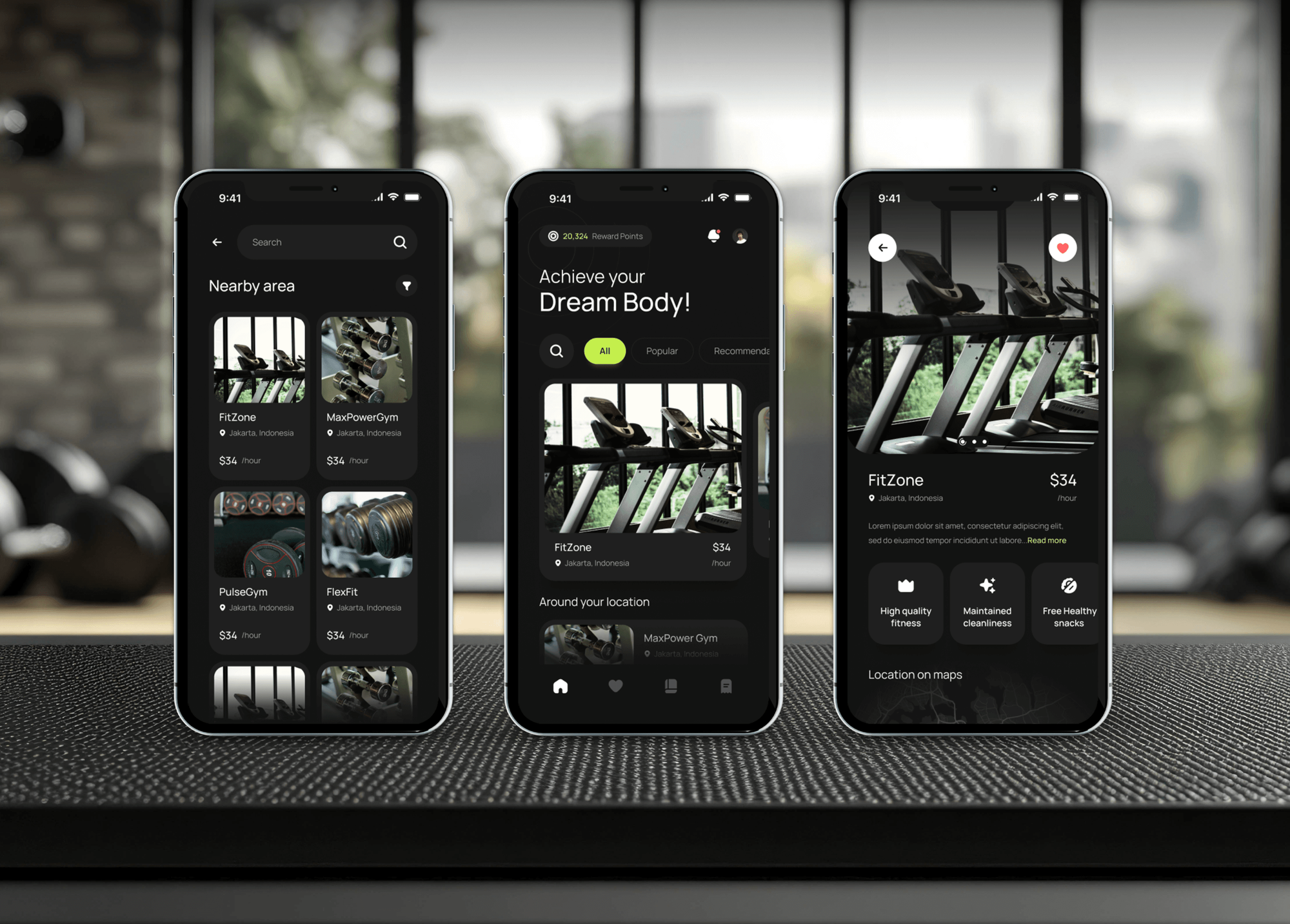
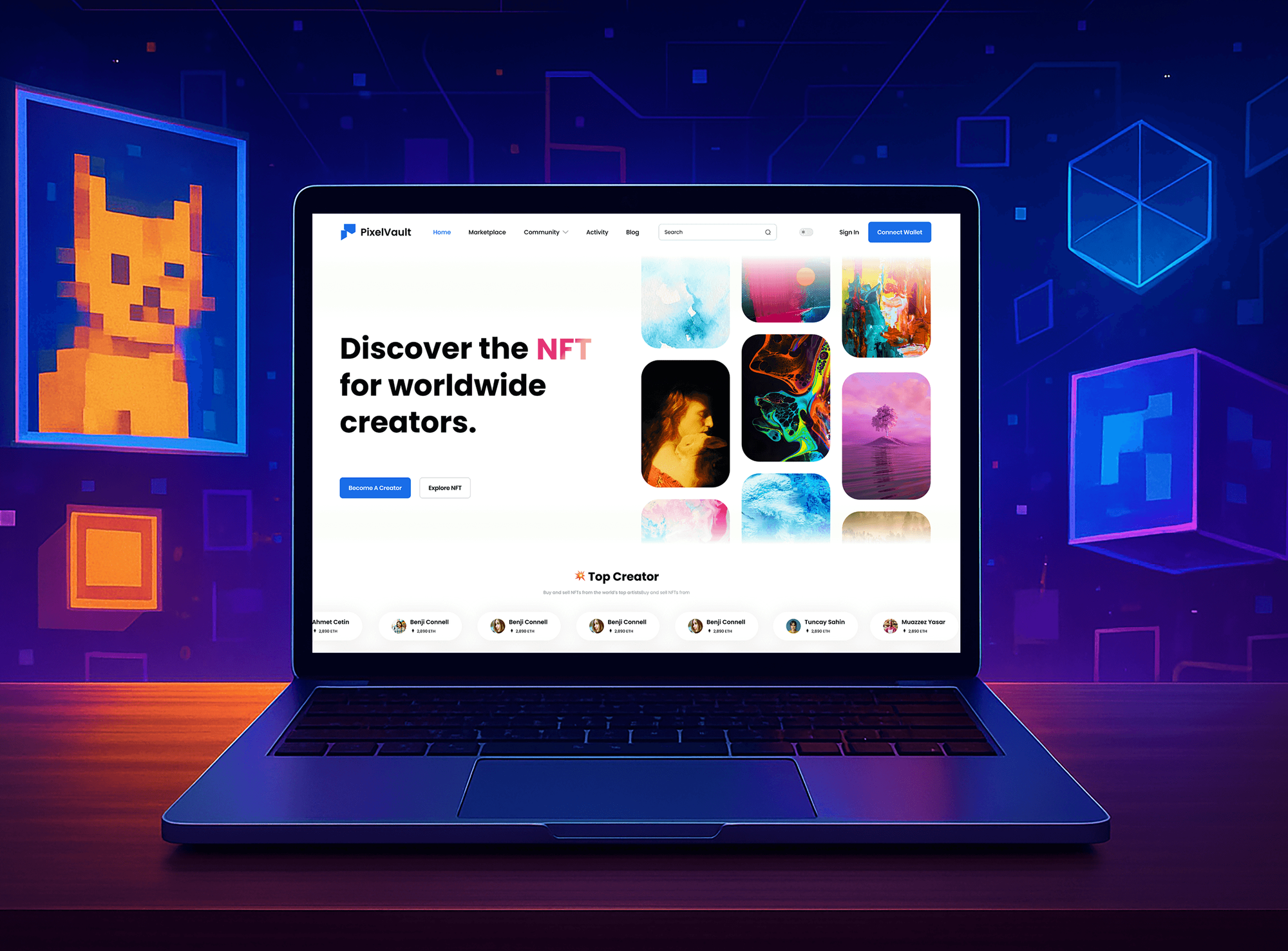
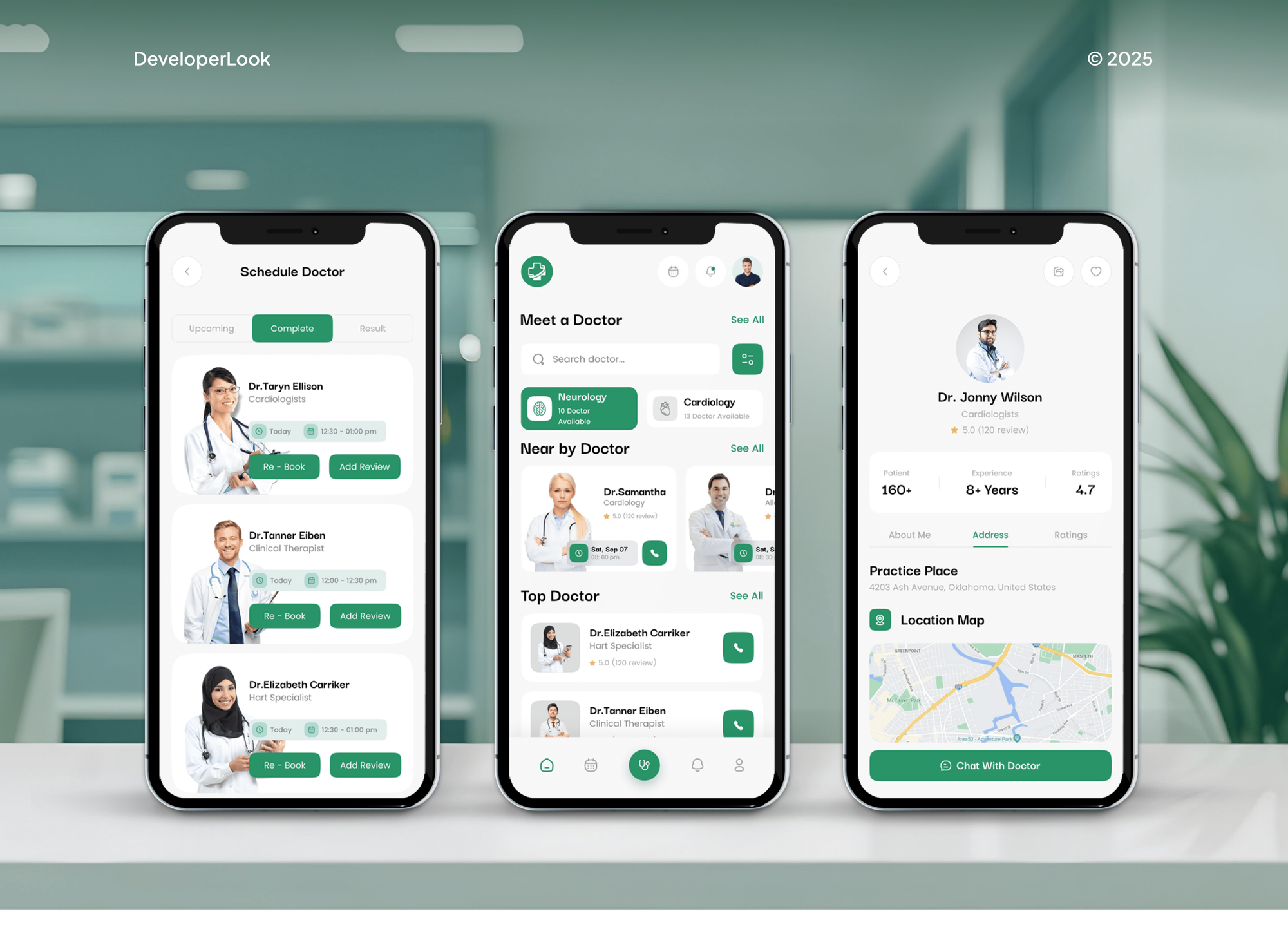
Delivery, gym, marketplace, and medical apps from our portfolio, each with a busy database behind it. They were app builds, not PostgreSQL consulting projects.

What Our Clients Say
Feedback from teams we have built database-backed web apps and platforms for.
We had a pretty specific idea of what we wanted our website to become, but I wasn’t sure how easily we could explain all of it to a development team. There were quite a few moving parts, and we were working toward a deadline, so I expected a few things to get lost along the way. That never really happened. They understood what we were trying to achieve, kept us updated throughout the process, and got everything ready within the agreed timeline. The final site feels much easier to navigate, works beautifully on mobile, and is noticeably smoother for our customers. It was a huge relief seeing the original idea actually turn into the website we had in mind.
The mobile experience is probably my favourite part of the new site. We had spent a lot of time making sure the desktop version looked right, and the team kept pushing us to think about how everything would actually feel on a phone too. They were right. The navigation is clean, the interactions feel natural, and everything we’ve tested so far works exactly as it should. They also went through the links, forms, integrations, and other details more than once before launch, which I really appreciated. And even after going live, we could still reach out when something came up. The whole process felt friendly, organised, and surprisingly straightforward.
What I appreciate most is that the website is actually easy for us to manage now. We can update content ourselves instead of sending a developer a message every time we need to change something small. They also paid attention to the technical SEO side, which mattered to us because we didn’t want a new website to create problems for the traffic we already had. I’ve probably asked more questions than I should have since launch, but every question has been handled patiently and without any fuss. The team is easy to work with, they explain things clearly, and when we need something changed, they focus on getting it done rather than making the process complicated.
1,250+
Projects shipped
10+
Years of experience
Top 3%
Upwork Top Rated Plus
5 stars
Average review score

Want results like these?
Tell us what you are building. You get a reply within 24 hours on business days, then a written estimate.
Work Culture
Database work goes wrong quietly or all at once. These habits keep your data recoverable, your access tight, and your upgrades uneventful.
If a few settings or a minor update fix your problem, we'll tell you before we quote. Bigger projects wait until the health check shows a real need.
We judge backups by a timed restore on a separate server. A backup nobody has restored is only a hope.
Every upgrade and move runs on staging first, timed, with your app's tests. The production window then holds far fewer surprises.
We support you during US, UK, and AU business hours, not 24/7. If you need round-the-clock on-call coverage, we'll say so and point you elsewhere.
Restores, failover, and upgrades each get a step-by-step runbook with the exact commands. Your developers can run them on a quiet afternoon without calling us.
Databases, backups, and monitoring stay in your cloud or data center. We work with the access you grant and hand it back at the end.
Overview
DeveloperLook offers PostgreSQL consulting for teams on self-hosted Postgres, Amazon RDS, Aurora, Cloud SQL, or Azure. We run health checks, prove backups with point-in-time recovery and test restores, set up standbys and failover, and rehearse major upgrades. Projects start at $750, take 1 to 8 weeks, and every runbook stays with you.
DEVELOPERLOOK
Project facts · PostgreSQL Consulting Services
Reviewed 22 Oct 2026 by Saimul Islam
Good fit
Teams on PostgreSQL 13 or 14
Your database runs PostgreSQL 13, which lost community support in November 2025, or 14, whose support ends on November 12, 2026.
Startups without a database administrator
You run production on one Postgres server, nobody has tested a restore, and you want PostgreSQL DBA support without hiring a full-time DBA.
Teams choosing managed Postgres
You're deciding between Amazon RDS, Aurora, Cloud SQL, and Supabase, and want a PostgreSQL consultant to compare cost, failover, and extension support.
Product teams adding extensions
Your roadmap needs maps, vector search, or time-series data, and you want PostgreSQL development consulting before adding PostGIS, pgvector, or TimescaleDB.
Agencies hosting client databases
Your agency runs Postgres for several clients and wants Postgres professional services that work quietly under your brand.
Not a fit
Slow queries are the problem
Your database is current and safe, but pages load slowly. Our Database Performance Tuning page covers query and index tuning for PostgreSQL and MySQL.
You need a new schema
You're designing a new database from spreadsheets or Microsoft Access. Our Database Development Services page starts with the schema and data model.
Round-the-clock on-call needed
You need 24/7 on-call database administrators with contractual response times. We support you in business hours, so a managed database provider fits better.
Budget under $750
You need one setting changed, and your budget is under $750. The PostgreSQL docs or your cloud provider's support often cover it, and we'll say so before we quote.
Not sure we're the right fit?
Book a free call or message us. We'll tell you honestly whether we're the right team.
Pricing
These are starting points in USD. Your final price depends on the number of clusters, database size, and downtime limits, and you get a fixed proposal after a free cluster review.
For teams that want one PostgreSQL cluster reviewed, protected, and ready to recover.
$750one-time, USD
For teams that need a major version upgrade and automatic failover.
$2,250one-time, USD
For teams moving between self-hosted and managed PostgreSQL, or adding major extensions.
$4,950one-time, USD
For Agencies
You own the client relationship. We supply the database work behind it: health checks, upgrades, replication, and backups, delivered in your clients' clouds under your brand. Fixed quotes keep database projects predictable for you and your clients.
White label: your client only ever sees your brand
Send versions, hosting details, and the risks your clients worry about most.
You get a health check, a change plan, and a fixed quote with dates.
Upgrades and runbooks delivered in client accounts under your brand.
Your brand on health reports, runbooks, and upgrade plans.
Upgrades and moves priced upfront, so client budgets hold.
Every client database checked against PostgreSQL's end-of-support dates.
Step-by-step restore and failover guides your team can follow.
The Right Technology for Your Project
We work with community PostgreSQL and the main managed services, using open-source tools for backups, failover, pooling, and monitoring.
 PostgreSQL
 Google Cloud SQL
 Azure Database for PostgreSQL
 Supabase
 Docker
FAQ
Straight answers on costs, timelines, support windows, upgrades, managed hosting, and extensions.
Saimul IslamFounder & CEO, DeveloperLookStill have questions?
Send a message or book a call with the team.
Our PostgreSQL work starts at $750 for a health check of one cluster, including point-in-time backups, a test restore, and a standby. A rehearsed major upgrade with automatic failover starts at $2,250. A move between managed and self-hosted Postgres, with extensions, starts at $4,950. Hosting stays billed to your own account.
A health check takes 1 to 2 weeks. A major version upgrade with failover takes 3 to 5 weeks, mostly rehearsal on staging. A move to or from a managed service takes 4 to 8 weeks. With logical replication, the PostgreSQL docs put the final switchover at several seconds of downtime.
A PostgreSQL consultant keeps your database supported, recoverable, and ready to grow. The work covers health checks, version upgrades, replication and failover, backups with point-in-time recovery, access control, and extensions such as PostGIS or pgvector. Many teams hire one for a defined project instead of employing a full-time database administrator.
Each PostgreSQL major version gets community fixes for 5 years after its first release. PostgreSQL 13 reached end of life on November 13, 2025, and PostgreSQL 14 ends on November 12, 2026. Minor releases with security fixes come at least every 3 months, so we plan major upgrades well before that date.
Yes. Amazon, Google, and Microsoft each sell managed PostgreSQL to enterprise customers through Amazon RDS and Aurora, Cloud SQL and AlloyDB, and Azure Database for PostgreSQL. Stack Overflow's 2025 Developer Survey ranked PostgreSQL the most used database among respondents. Its liberal open-source license means no license fees at any scale.
Use pg_upgrade when a short planned outage is acceptable, because it upgrades in place and is the simpler path. Use logical replication when downtime must be near zero: a new server on the new version catches up, then your app switches over. We rehearse either method on staging and time it first.
Most small teams should use a managed service such as Amazon RDS, Aurora, Cloud SQL, or Supabase, because backups, patching, and failover come built in. Self-hosting makes sense when you need unusual extensions, full control, or lower costs at scale. We compare both on your workload before you move.
Yes. We add extensions such as PostGIS for maps, pgvector for AI similarity search, TimescaleDB for time-series data, or pg_partman for partitioning. First we check that your host supports them, since managed services allow only a listed set. Each one is tested on staging with your own queries before production.
PostgreSQL DBA support covers failed backups, replication lag, connection errors, minor version updates, and your developers' questions. Every plan includes 30 to 90 days of it during US, UK, and AU business hours. After that, ongoing support is available as a monthly arrangement, quoted separately, without round-the-clock on-call promises.
You do. Servers, backups, monitoring, and runbooks stay in your cloud account or data center, and we work only with the access you grant. At handover we remove our credentials and rotate any shared passwords, so your team holds the only keys to the database.
Saimul IslamFounder & CEO, DeveloperLookStill have questions?
Send a message or book a call with the team.
Free 30-min callGoogle Meet
Book a call
In 30 minutes on Google Meet we walk you through how we would build it, how long it takes and what it costs. Then you get a written estimate.
Calendar not showing? Book on cal.com or send a brief.