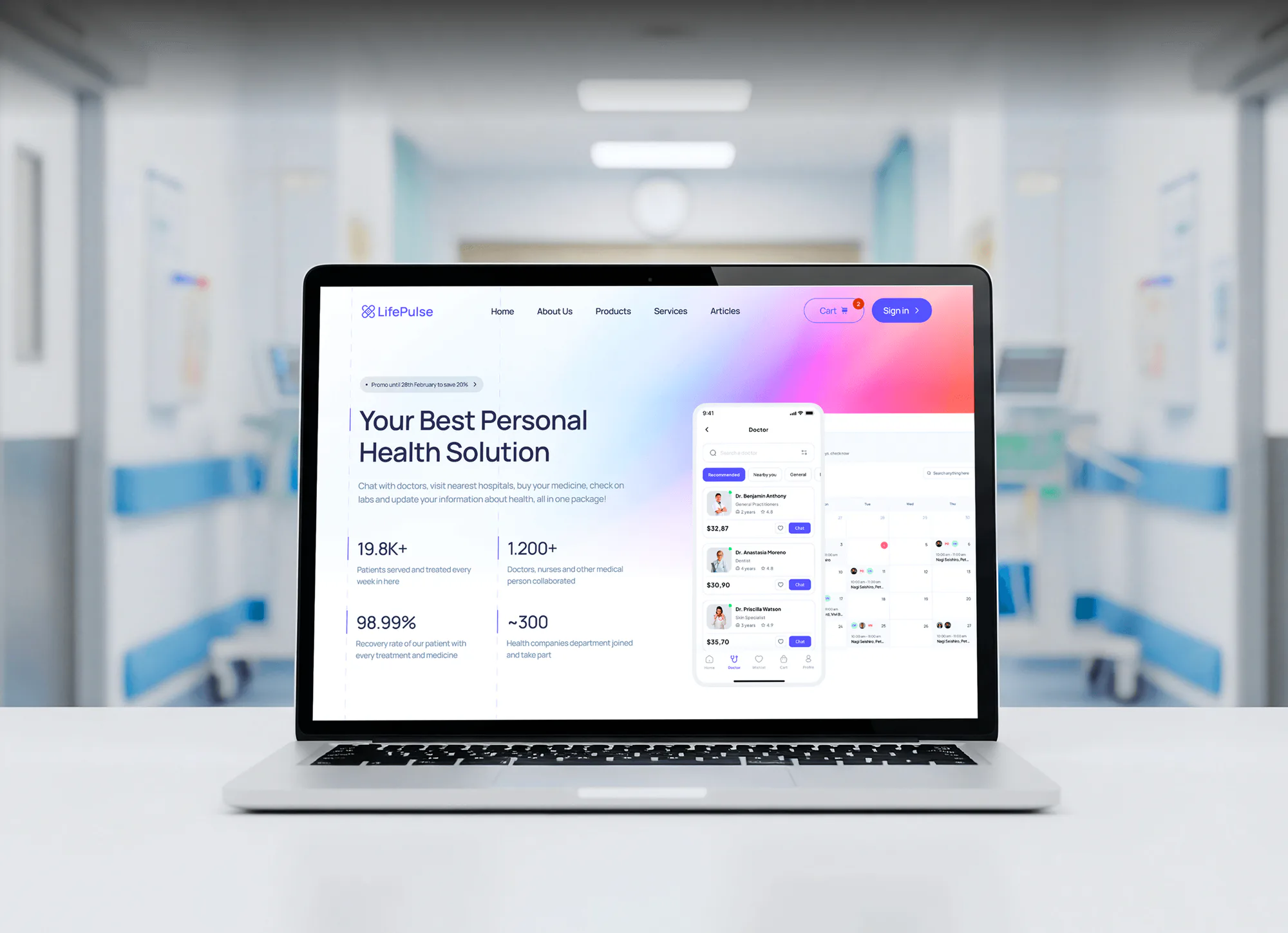
LifePulse Medical Web Design & Development
- Medical
- Booking System
- Dashboard

For pharma and biotech quality, manufacturing, and lab operations teams: paper logs and controlled spreadsheets rebuilt as audit-trailed apps. From $1,350.
100%
GxP records with audit trails
2X
Faster QA record review
How your project runs
01 · FreeIndustry leaders we work with
 .NET
 Node.js
 React
 TypeScript
 PostgreSQL
 AWS
 Microsoft Azure
The Problem
It shows during inspections and batch release. Your ERP, QMS, and LIMS cover the big processes, while logbooks, cleaning records, and review checklists still run on paper and locked spreadsheets.
Paper logbooks
Equipment and cleaning entries go missing dates or signatures.
Paper logbooks
Electronic logbooks require each field and stamp the user and time themselves.
Spreadsheet limits
Anyone with access can still change a controlled spreadsheet formula.
Spreadsheet limits
Calculations move into code, with every change versioned, reviewed, and logged.
Late deviations
Deviations start as emails and reach the QMS days later.
Late deviations
An intake form captures the event on the floor and posts it to your QMS.
Validation scramble
QA reverse-engineers the system after it's already built.
Validation scramble
A traceability matrix links each requirement to its test from the first sprint.
A batch is ready for release, and QA is flipping through a paper equipment logbook to check a cleaning entry. One signature has no date. The cleaning schedule lives in a controlled spreadsheet that anyone with the file can still edit, and its version history shows nothing useful. Deviations start as emails and reach the QMS days later. When an inspector asks who changed a limit and why, your team spends the afternoon rebuilding the story from printouts.
We start with your process map and the records each step must produce. Then we build small, focused apps for those steps: electronic logbooks, review checklists, and intake forms that feed your QMS. Each record carries a computer-generated audit trail, and signatures show name, date, time, and meaning, as 21 CFR Part 11 describes. Your validation team tests from our traceability matrix instead of reverse-engineering the system after launch.
Audit trails on every record
Every entry, change, and signature is time-stamped by the system and kept with the record it touched.
Traceability from day one
Each user requirement maps to a design note and a test, so validation follows the build.
Fits beside ERP, QMS, and LIMS
We fill the gaps between your validated systems instead of replacing any of them.
Our Pharmaceutical Software Development Process
You approve the user requirements and risk assessment before design and review working screens every sprint. Your QA team executes the validation tests before anything goes live.
We walk through the paper or spreadsheet process with your quality and operations leads and mark which records are GxP. You get a short gap list, the risk level of each step, and a written scope.
Projects We've Built
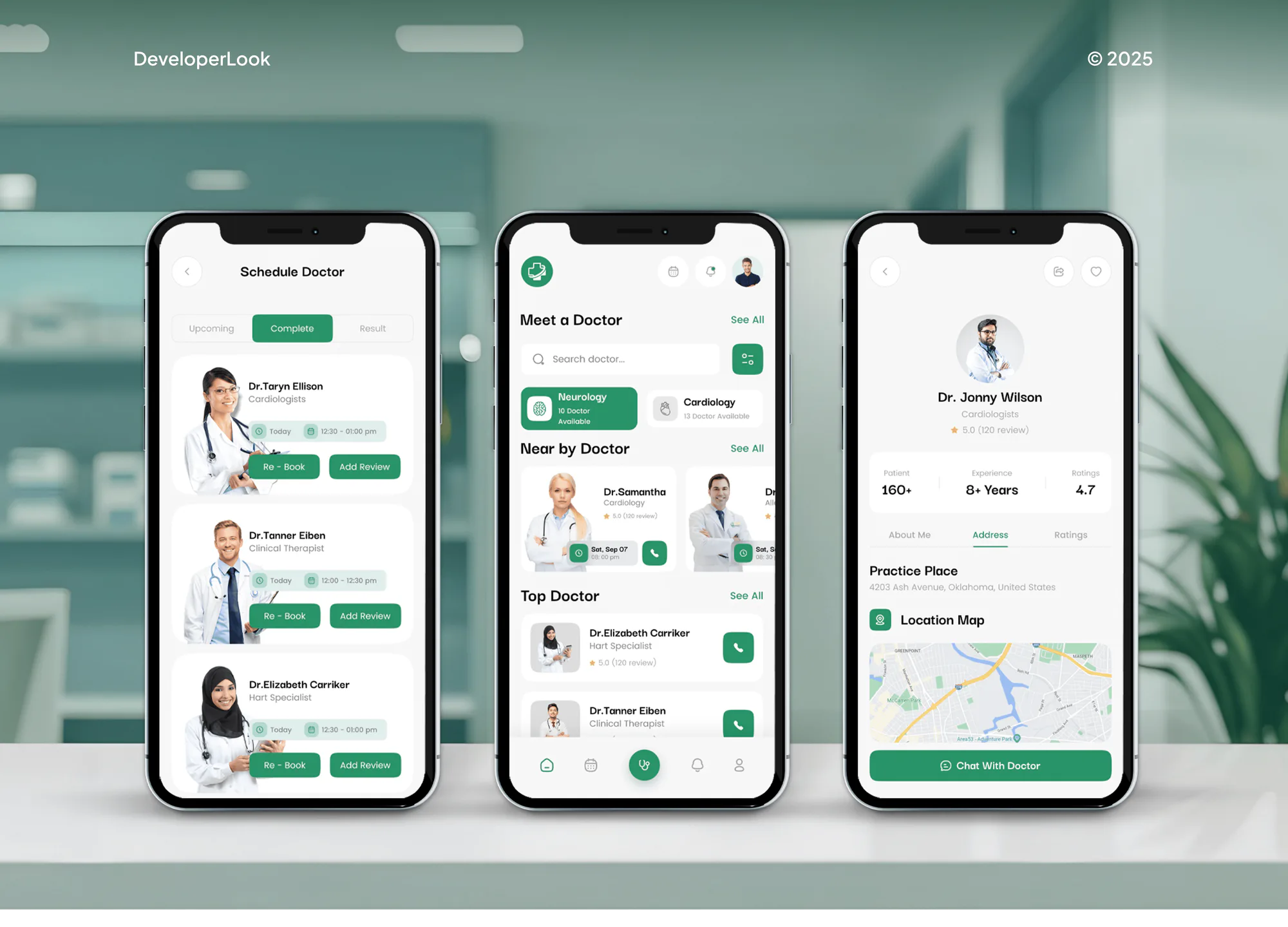
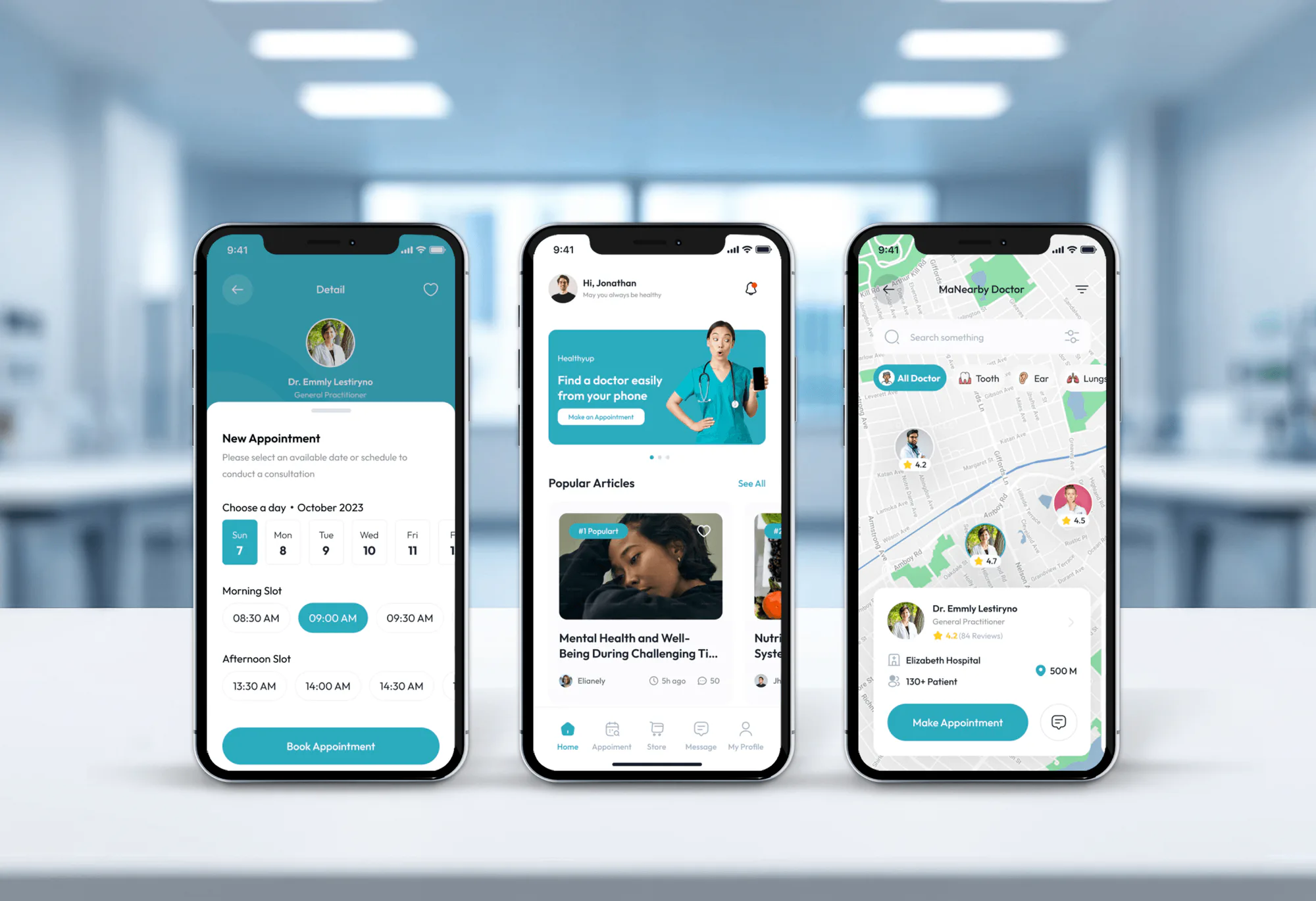
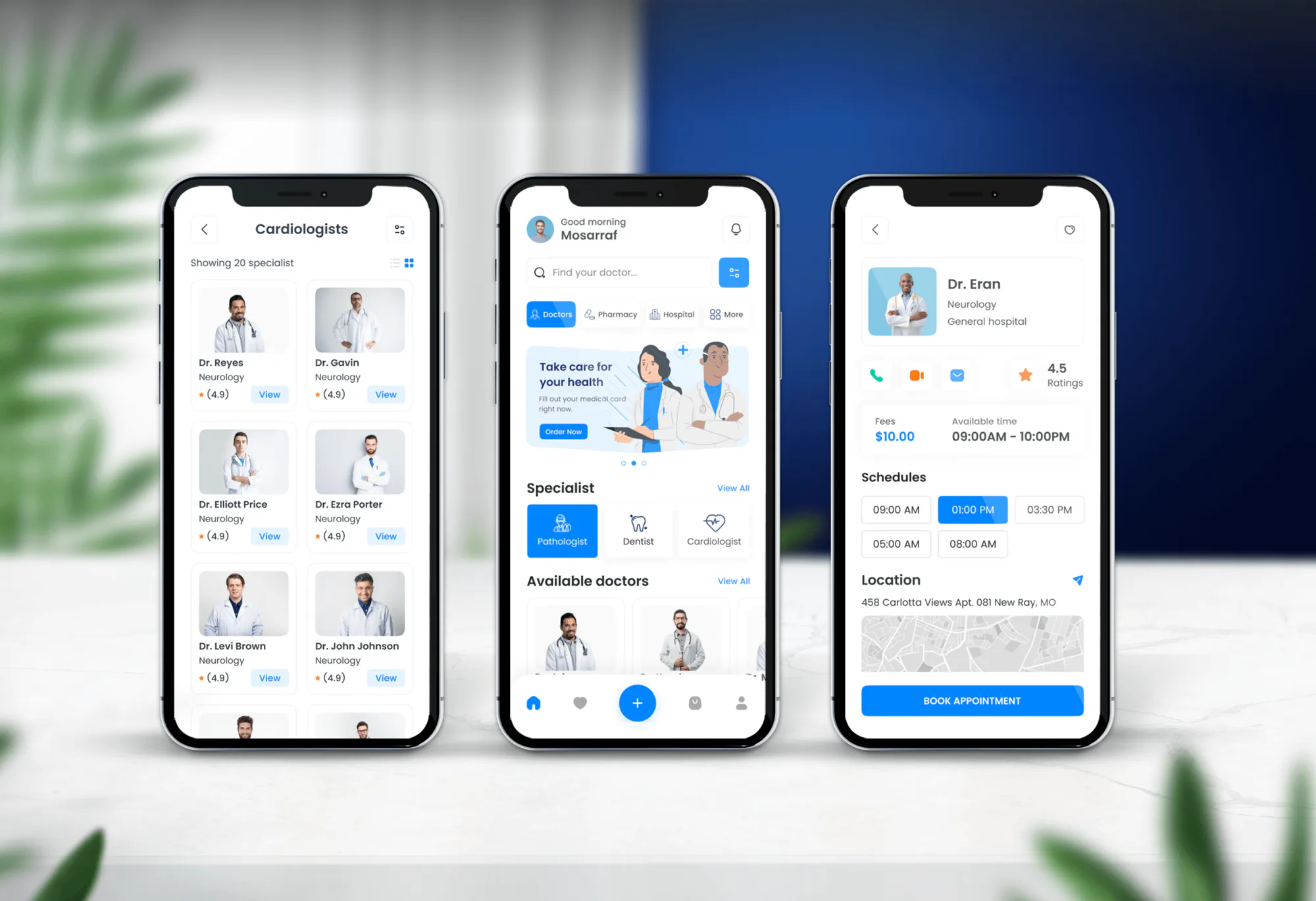
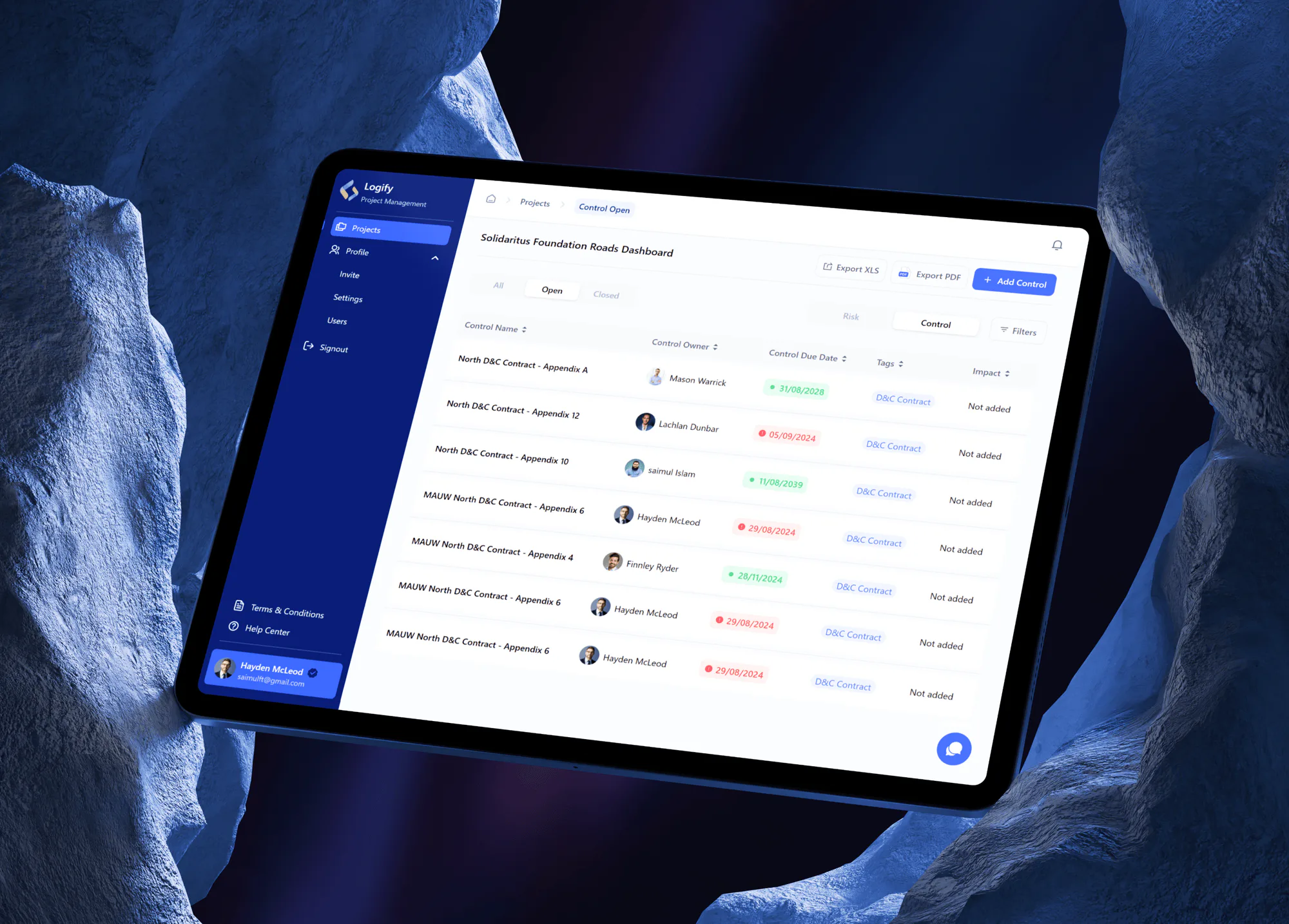
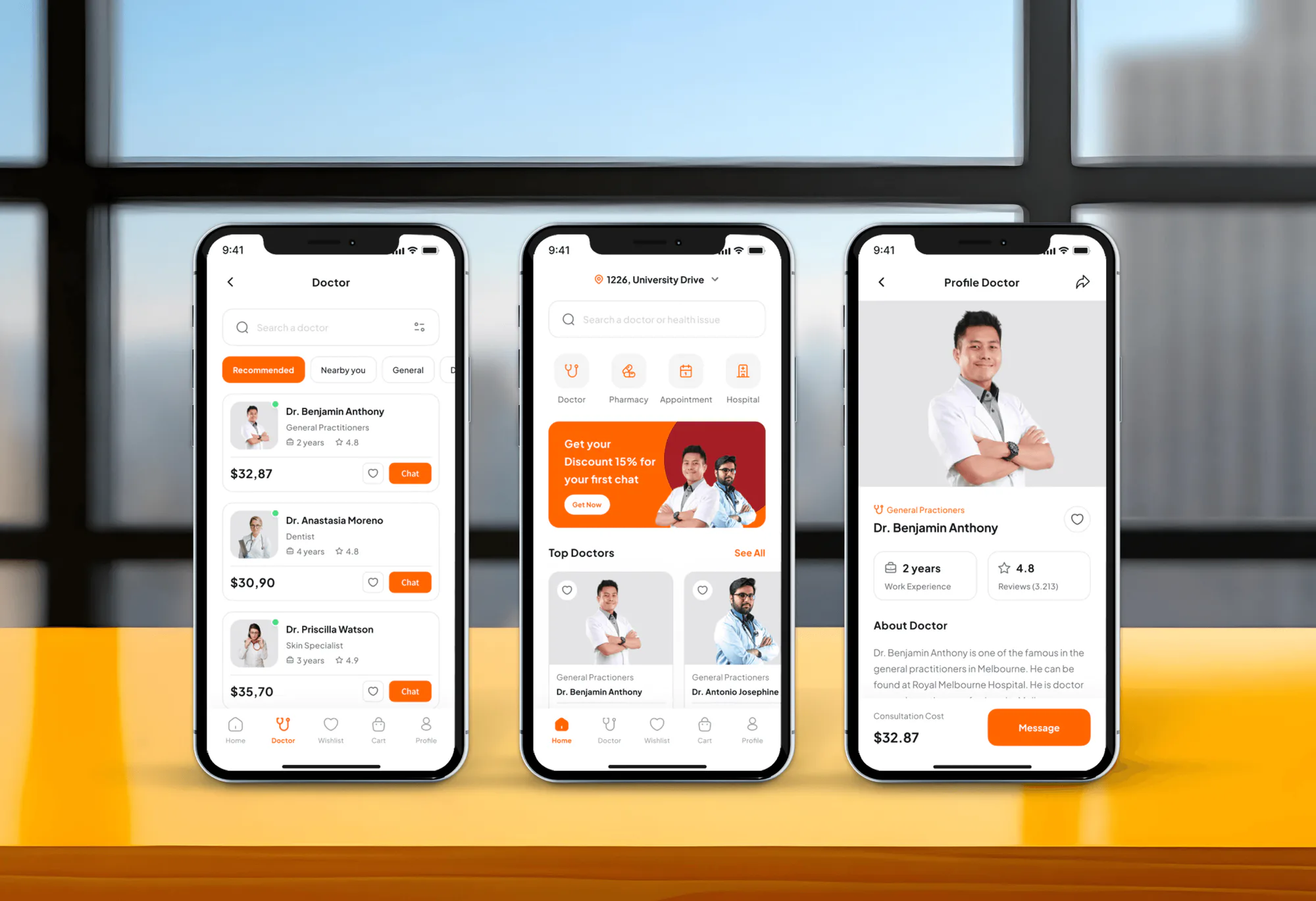
LifePulse, Carepoint, MediPulse, and HealCon are healthcare apps and dashboards we designed and built. They show our records and workflow work, not GxP-validated pharma systems.
What's Included
Your project covers the app, its audit trail and signatures, and links to the systems you already validated. You also get the documents your QA team needs to validate it.
Compare Options
Packaged pharma software companies cover common processes well, and a controlled spreadsheet is fine for low-risk records. Here is where each option fits and where custom work pays off.
| Feature | DeveloperLookBest fit | Packaged suite | Spreadsheets |
|---|---|---|---|
| Fit to your process | Built around your SOPs | SOPs change to fit the suite | Matches the SOP, loosely |
| Audit trail | System-generated on every record | Version history at best | |
| Electronic signatures | Name, date, time, and meaning | ||
| Validation effort | Traceability matrix from the build | Vendor package plus your tests | Validation for each file |
| Time to go live | 7 to 17 weeks | Months of configuration | A few days |
| Upfront cost | Fixed price per phase | License plus implementation | Lowest of the three |
| Ongoing fees | No license fees | Annual subscription per user | Nothing beyond office software |
| Code ownership | You own the code | Vendor owns the code |
What Our Clients Say
Feedback from teams we have built healthcare apps, dashboards, and internal tools for.
We had a pretty specific idea of what we wanted our website to become, but I wasn’t sure how easily we could explain all of it to a development team. There were quite a few moving parts, and we were working toward a deadline, so I expected a few things to get lost along the way. That never really happened. They understood what we were trying to achieve, kept us updated throughout the process, and got everything ready within the agreed timeline. The final site feels much easier to navigate, works beautifully on mobile, and is noticeably smoother for our customers. It was a huge relief seeing the original idea actually turn into the website we had in mind.
The mobile experience is probably my favourite part of the new site. We had spent a lot of time making sure the desktop version looked right, and the team kept pushing us to think about how everything would actually feel on a phone too. They were right. The navigation is clean, the interactions feel natural, and everything we’ve tested so far works exactly as it should. They also went through the links, forms, integrations, and other details more than once before launch, which I really appreciated. And even after going live, we could still reach out when something came up. The whole process felt friendly, organised, and surprisingly straightforward.
What I appreciate most is that the website is actually easy for us to manage now. We can update content ourselves instead of sending a developer a message every time we need to change something small. They also paid attention to the technical SEO side, which mattered to us because we didn’t want a new website to create problems for the traffic we already had. I’ve probably asked more questions than I should have since launch, but every question has been handled patiently and without any fuss. The team is easy to work with, they explain things clearly, and when we need something changed, they focus on getting it done rather than making the process complicated.
1,250+
Projects shipped
10+
Years of experience
5 stars
Clutch rating
5 stars
GoodFirms rating
Excellent
Trustpilot rating
Top 3%
Upwork Top Rated Plus
1,250+
Projects shipped
10+
Years of experience
5 stars
Clutch rating
5 stars
GoodFirms rating
Excellent
Trustpilot rating
Top 3%
Upwork Top Rated Plus

Want results like these?
Tell us what you are building. You get a reply within 24 hours on business days, then a written estimate.
Work Culture
Your records end up in front of inspectors, and your QA team signs the validation. These habits keep our work easy to validate, change, and defend.
We write user requirements with you before design starts. Your QA team validates against a document they approved, not against whatever got built.
Each of your requirements links to its design note and test in a matrix we update every sprint. Your validation starts from a complete map instead of a scramble.
We supply evidence and fix defects, and your quality unit decides what is validated and released. We don't sign off GxP compliance on your behalf.
After release, every change you request ships with a change note, an impact assessment, and regression tests. Your change control board approves it before it reaches production.
If a packaged module or a controlled spreadsheet already covers the process, we'll tell you before we quote. Custom software only earns its validation cost where neither fits.
Source code, validation documents, and cloud accounts belong to you from day one. Your inspectors and future vendors can read everything without asking us.
Overview
DeveloperLook provides pharmaceutical software development for quality, manufacturing, and lab operations teams. We build electronic logbooks, review-by-exception checklists, deviation intake, and links to your ERP, QMS, and LIMS, with audit trails and a traceability matrix. Projects start at $1,350 and take 7 to 17 weeks, including support for your validation tests.
DEVELOPERLOOK
Project facts · Pharmaceutical Software Development
Reviewed 28 Oct 2026 by Saimul Islam
Good fit
QA teams buried in paper logbooks
Your QA reviewers spend batch release checking paper logbook entries, and you want electronic records with required fields and a reliable audit trail.
Sites with controlled spreadsheets
Your site runs cleaning schedules and calculations in controlled spreadsheets, and the last inspection asked how you control formula changes.
Biotechs growing into GMP
You're moving from development into clinical manufacturing and need pharma industry software sized for a small team, not an enterprise suite.
IT leads comparing pharma software solutions
You're comparing pharma software solutions for one process, and you want a straight answer on whether to configure a suite or build.
Agencies with a life sciences client
Your agency handles a drug maker's digital work, and the client now needs custom software development for pharmaceutical quality teams.
Not a fit
Full LIMS for your lab
You need sample tracking, test assignment, and certificates of analysis for a whole lab. Our LIMS Development page covers that system.
Clinical trial systems
You need study operations, site tracking, or trial data capture. Our Clinical Trial Software Development page covers those builds.
Software inside a device
Your code runs inside or alongside a medical device under IEC 62304. Our Medical Device Software Development page fits better.
Budget under $1,350
Your budget is under $1,350, or a controlled spreadsheet already meets the risk. If it does, we'll tell you before we quote.
Not sure we're the right fit?
Book a free call or message us. We'll tell you honestly whether we're the right team.
Pricing
These are starting points in USD. Your final price depends on the number of records, integrations, and risk level, and you get a fixed proposal after a free process review.
For Agencies
You own the client relationship. We supply the GxP-aware engineering behind the apps your life sciences clients ask for, delivered under your brand. Every build comes with requirements, traceability, and test scripts their QA team can use.
White label: your client only ever sees your brand
Send the client's process, systems, and quality procedures, and we shape the scope.
You get a fixed proposal in your agency's name and a named team.
We build, support validation, and hand over the code and documents.
Send the client's process, systems, and quality procedures, and we shape the scope.
You get a fixed proposal in your agency's name and a named team.
We build, support validation, and hand over the code and documents.
The Right Technology for Your Project
We build on mainstream stacks your IT team can support and keep the audit trail and signature logic in the backend, where users can't bypass it.
 .NETNode.jsReactTypeScriptPostgreSQLAWSMicrosoft Azure
 Docker
FAQ
Straight answers on cost, timelines, Part 11, validation, AI rules, and data management in pharma.
Saimul IslamFounder & CEO, DeveloperLookStill have questions?
Send a message or book a call with the team.
Pharmaceutical software development at DeveloperLook starts at $1,350 for one electronic logbook or form with an audit trail, signatures, and a traceability matrix. A quality workflow with up to 4 records, review-by-exception, and deviation intake starts at $4,100. A site operations suite with up to 10 records and ERP, QMS, and LIMS links starts at $8,700. You get a fixed quote after a free process review.
Most projects take 7 to 17 weeks from process review to release. A single logbook takes about 7 to 9 weeks, and a quality workflow about 11 to 13. A site operations suite runs up to 17 weeks. Your team's validation testing sits inside that window, and quick test execution is what keeps it short.
LIMS software in pharma is the laboratory information management system that tracks samples, tests, results, and approvals in QC and R&D labs. It holds your release and stability testing data and produces your certificates of analysis. This page covers the records around the lab, and our LIMS Development page covers the LIMS itself.
There's no single best tool: the right one depends on which records you manage and how much risk they carry. Your ERP, QMS, and LIMS suites cover the core processes. For the records between them, a small custom app with an audit trail often serves you better than one more module. Ask every vendor to show audit trails and access controls working on your own data.
It means your AI feature is a computerized system like any other: you define and validate its intended use, risks, data, and controls. FDA issued draft guidance in January 2025 on AI used to support regulatory decisions for drugs and biologics. We keep AI suggestions behind your human reviewer, log every output, and record the model version.
We build the technical controls Part 11 describes, but compliance depends on how your company validates and uses the system. Those controls include secure, time-stamped audit trails, signatures that show name, date, time, and meaning, and access checks. Your QA team validates the system and owns the procedures around it.
No, your quality unit validates it, and we support every step. We follow the risk-based approach in ISPE's GAMP 5 Second Edition: requirements, risk assessment, and testing scaled to each function's risk. You get the traceability matrix and draft test scripts, your team executes them, and we fix any defect they find.
Pharma software companies sell configurable suites for common processes such as QMS, LIMS, and ERP. A suite gives you a vendor validation package and an annual license. A custom build fits the processes those suites leave on paper, at a fixed price and with code you own. You may well use both side by side.
Processes with clear records and steady SOPs suit custom software best. Think equipment and cleaning logbooks, room status boards, sample pull schedules, and batch record review checklists. Your best candidates already run on paper or controlled spreadsheets. Processes your QMS or ERP already handles well should stay where they are.
You do. Source code, validation documents, and cloud accounts sit in your accounts from day one, so inspectors and future vendors can read them. After release you get 60 days of post-launch support. Later changes run through your change control, each with an impact note and regression tests.
Saimul IslamFounder & CEO, DeveloperLookStill have questions?
Send a message or book a call with the team.
Free 30-min callGoogle Meet
Book a call
In 30 minutes on Google Meet we walk you through how we would build it, how long it takes and what it costs. Then you get a written estimate.
Calendar not showing? Book on cal.com or send a brief.