



Order ticket and order types
Market, limit, and stop orders with clear previews of cost, buying power, and time in force.

For fintech founders and trading desks: a branded trading app with live quotes and traceable orders, built on your licensed broker's API. From $1,400.
<1s
Streaming quote updates
100%
Orders traced to final status
Teams we have built for:














The Problem
It surfaces after launch, when a customer disputes a fill or quotes freeze at a busy open. Without an order history and a live data path, support has nothing to show.
Ghost fills
The app says filled, but the position didn't change.
Ghost fills
Positions rebuild from your broker's fill events, so screens match the account.
Frozen quotes
Prices stall at the open and users tap twice.
Frozen quotes
Streaming quotes reconnect on their own and show a stale-price warning.
Double orders
A second tap sends the same order again.
Double orders
Each order carries a client order ID, so a retry can't create a duplicate.
Missing history
Support can't show a customer what happened to an order.
Missing history
Every order event is stored with a timestamp on one timeline.
A customer emails at 9:42 on a volatile morning. Her limit order shows filled in your app, but her position didn't change, and support can't tell whether the broker rejected it or the app dropped the update. Quotes froze for a minute at the open, so other users tapped buy twice. Your developer is reading broker logs by hand while your broker asks why so many orders failed its risk checks. Nobody can rebuild what happened, order by order.
We start with the order path. Your licensed broker's API places and holds every trade. We wrap it in an order state machine that records each event with a timestamp: sent, accepted, partly filled, filled, cancelled, or rejected. Quotes stream from your data vendor over WebSockets, and app-side checks catch bad orders before your broker sees them. When a customer asks what happened, support opens one timeline instead of a pile of logs.
Quotes that stream live
Prices update over WebSockets from your licensed data vendor, with a warning when a feed goes stale.
Every order traced
Each order's events, from ticket to fill or rejection, sit on one timeline your support team can read.
Checks before the broker
Buying power, price bands, and size limits are checked in your app before the order leaves.
Our Trading Platform Development Process
You see your order flow mapped against the broker's API before design starts, trade with paper money in every build, and approve the go-live checklist with your broker.
We read your broker-dealer's API docs, sandbox rules, and market data terms, then list the order types and account features you can offer on day one. You get a gap list, a written scope, and a fixed-price proposal.
What's Included
Your build covers the order ticket, order tracking, streaming market data, and portfolio views. It adds pre-trade checks, an event log for every order, and a launch cleared with your broker.
Compare Options
A white-label trading app launches fastest, and a freelancer suits a small prototype. Here is how each handles orders, data, and ownership, and when trading platform developers pay off.
| Feature | DeveloperLookBest fit | White-label app | Freelancer |
|---|---|---|---|
| Time to first release | 10 to 22 weeks | A few weeks | Varies with one person |
| Brand and features | Your design and roadmap | Vendor's template and roadmap | Your design, limited capacity |
| Broker connection | Your chosen broker's API | Vendor's partner broker only | Depends on experience |
| Order state handling | Every state and rejection designed | Handled by the vendor | Varies by developer |
| Failure testing | Feed cuts and duplicate orders | Vendor's own testing | Usually outside a small budget |
| Upfront cost | Fixed price per release | Lower setup cost | Lowest hourly rate |
| Ongoing fees | No per-user license fees | Fees per user or trade | Hourly when needed |
| Code ownership | You own the code | Vendor owns the code | You own the code |
Projects We've Built
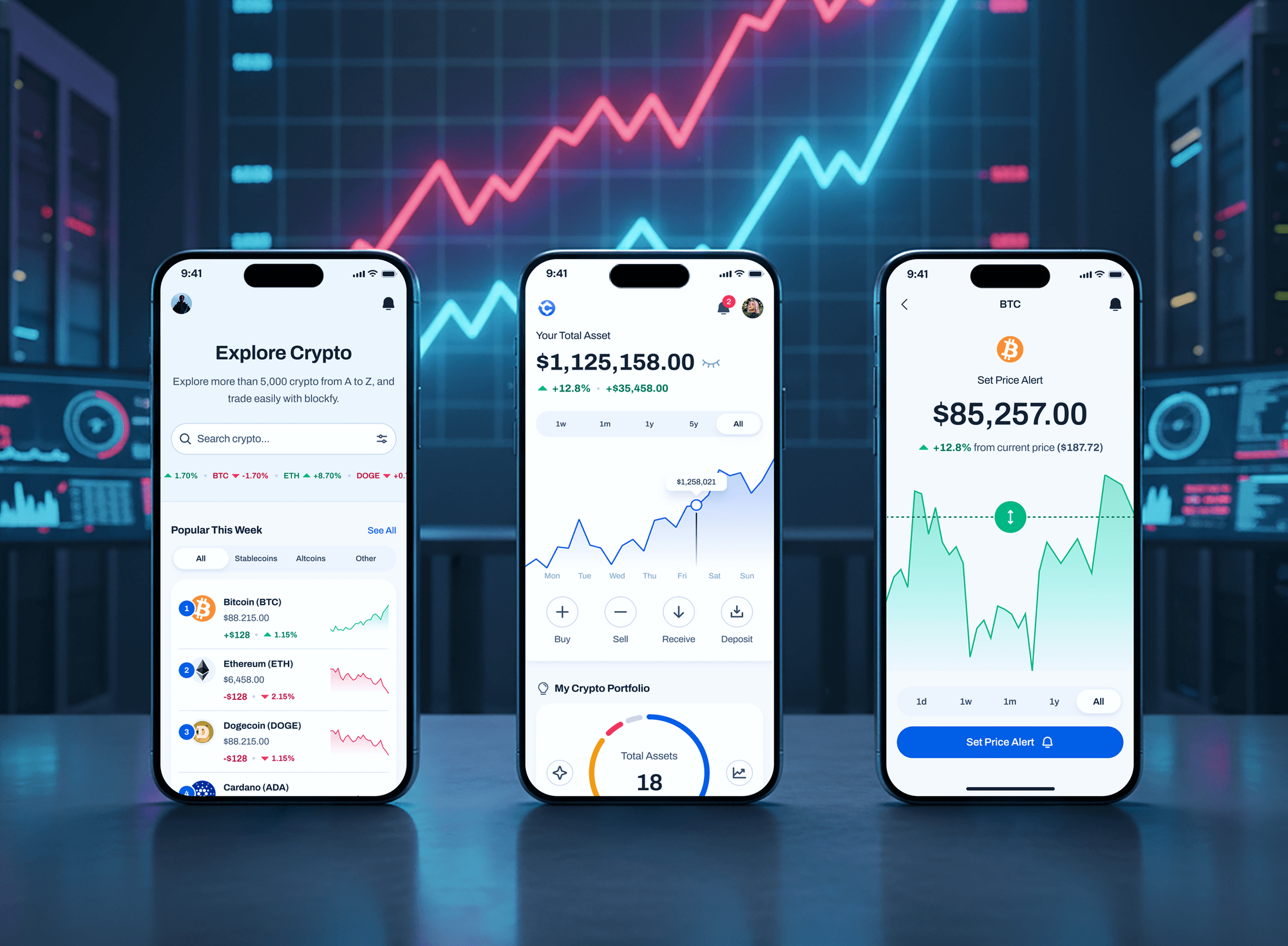
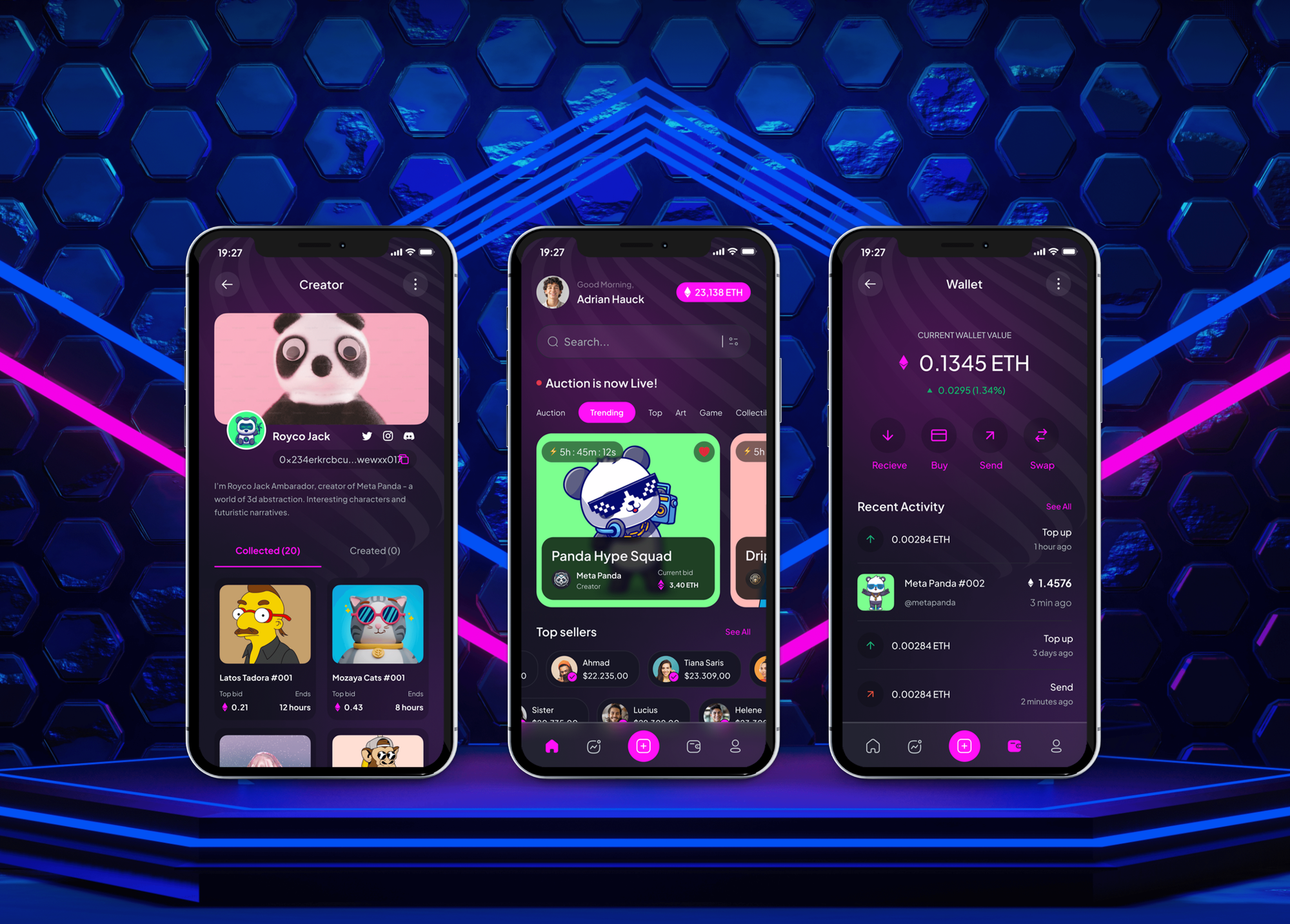
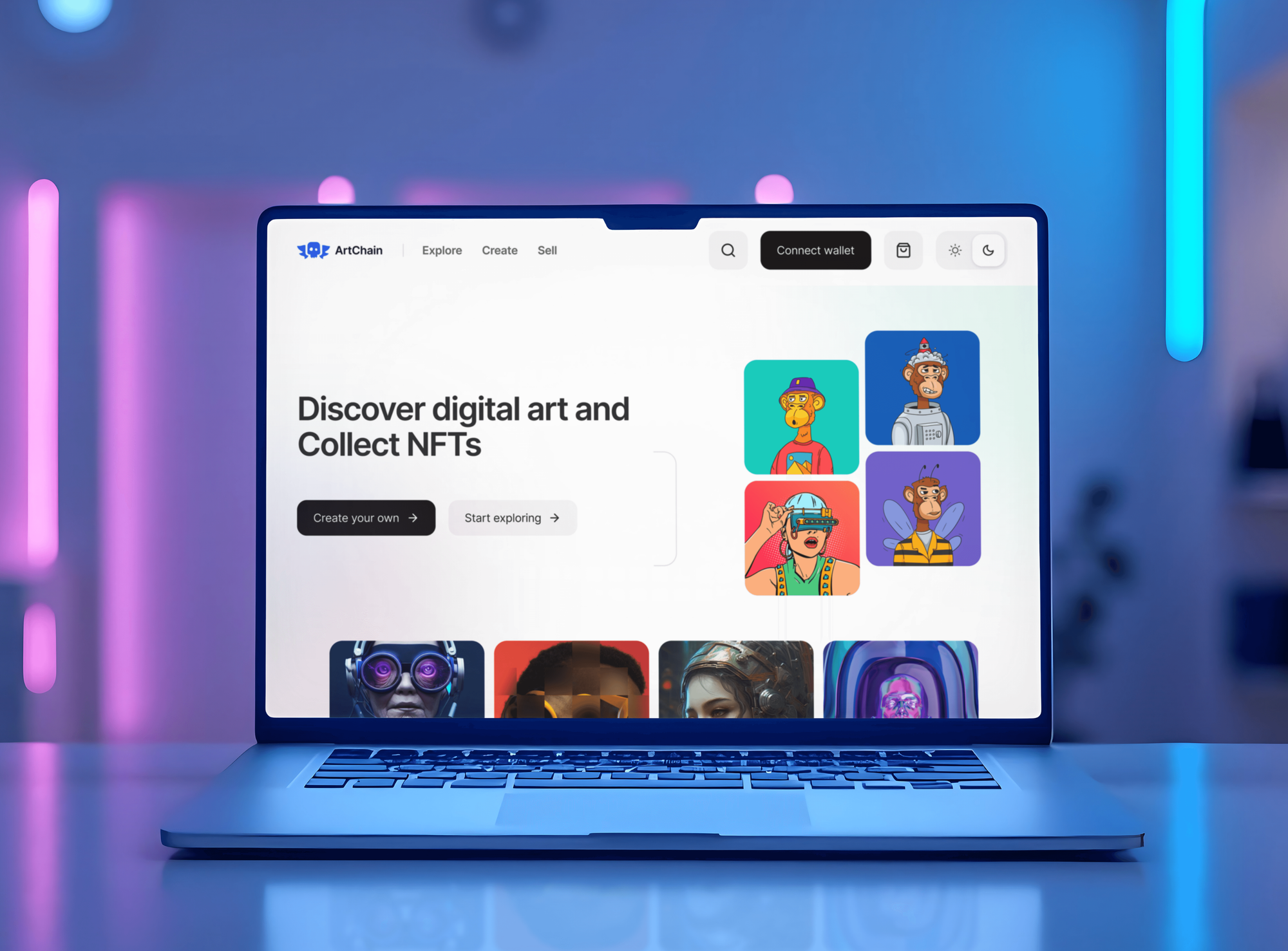
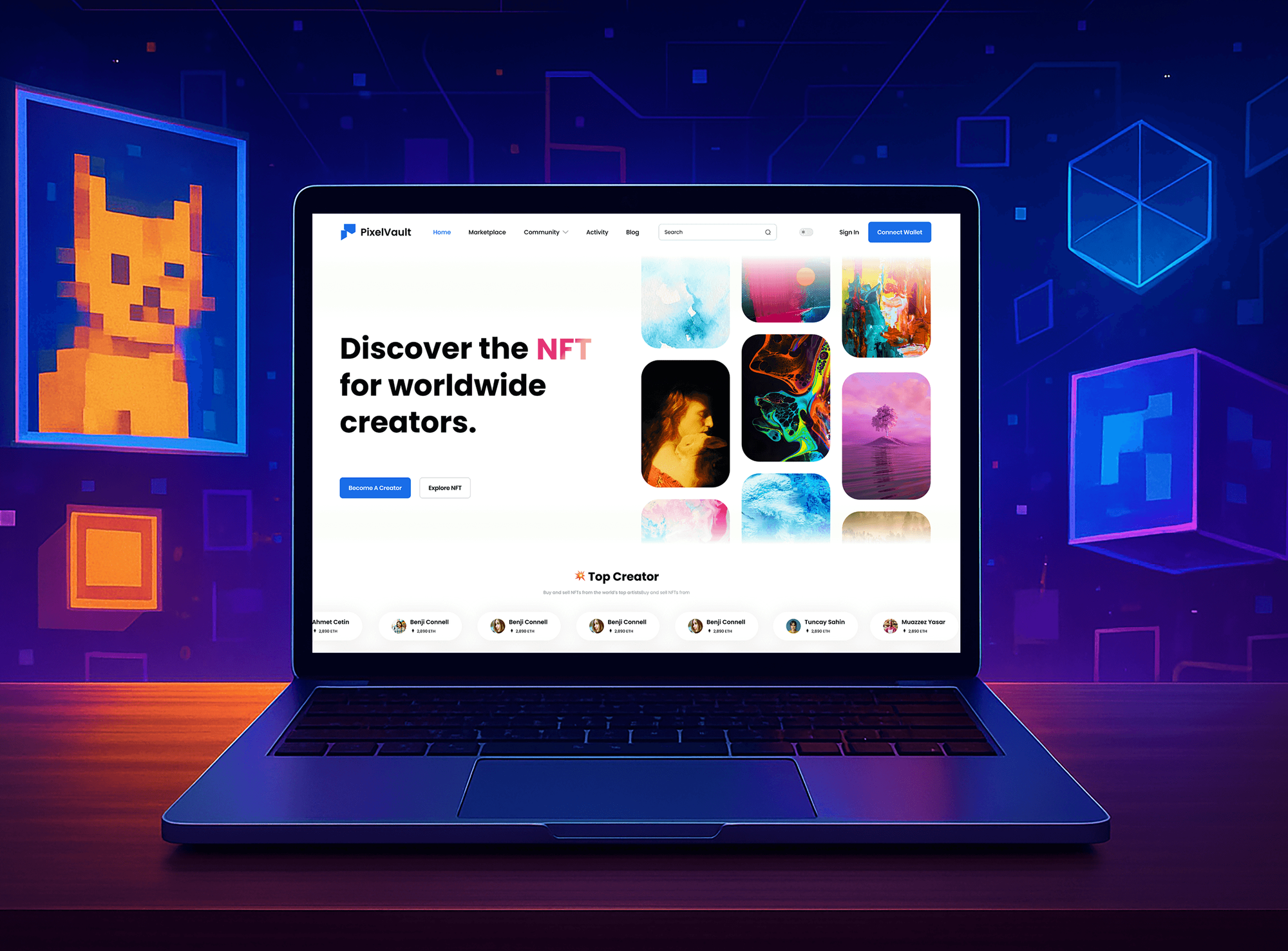
CoinSphere and NFTIN are crypto trading apps with dashboards we designed and built, and ArtChain and PixelVault add live bidding. None of them is a licensed stock brokerage.
What Our Clients Say
Feedback from teams we have built trading dashboards, finance apps, and web products for.
We had a pretty specific idea of what we wanted our website to become, but I wasn’t sure how easily we could explain all of it to a development team. There were quite a few moving parts, and we were working toward a deadline, so I expected a few things to get lost along the way. That never really happened. They understood what we were trying to achieve, kept us updated throughout the process, and got everything ready within the agreed timeline. The final site feels much easier to navigate, works beautifully on mobile, and is noticeably smoother for our customers. It was a huge relief seeing the original idea actually turn into the website we had in mind.
The mobile experience is probably my favourite part of the new site. We had spent a lot of time making sure the desktop version looked right, and the team kept pushing us to think about how everything would actually feel on a phone too. They were right. The navigation is clean, the interactions feel natural, and everything we’ve tested so far works exactly as it should. They also went through the links, forms, integrations, and other details more than once before launch, which I really appreciated. And even after going live, we could still reach out when something came up. The whole process felt friendly, organised, and surprisingly straightforward.
What I appreciate most is that the website is actually easy for us to manage now. We can update content ourselves instead of sending a developer a message every time we need to change something small. They also paid attention to the technical SEO side, which mattered to us because we didn’t want a new website to create problems for the traffic we already had. I’ve probably asked more questions than I should have since launch, but every question has been handled patiently and without any fuss. The team is easy to work with, they explain things clearly, and when we need something changed, they focus on getting it done rather than making the process complicated.
1,250+
Projects shipped
10+
Years of experience
Top 3%
Upwork Top Rated Plus
5 stars
Average review score
1,250+
Projects shipped
10+
Years of experience
Top 3%
Upwork Top Rated Plus
5 stars
Average review score

Want results like these?
Tell us what you are building. You get a reply within 24 hours on business days, then a written estimate.
Work Culture
Your trading app moves customers' money in real time, and your broker reviews how it behaves. These habits keep orders traceable, data feeds licensed, and launch days calm.
We design rejected, partly filled, and expired orders before the happy path. Your customers see a clear status instead of a spinner when the market does something odd.
We build displays to your data vendor's display and redistribution rules, including professional and non-professional users. That keeps your vendor's audits uneventful.
Your broker-dealer holds the licenses, executes the orders, and runs its own market access controls. We build the app around those duties and flag questions for your counsel early.
We replay heavy order bursts and quote spikes before launch, not after the first busy morning. You see how the app handles stress in a written test report.
If your broker's white-label app covers your launch, we say so before quoting. A custom build pays off when your brand, features, or data set you apart.
The code, the cloud account, and the broker API keys stay under your company's control. Apps publish under your developer accounts, so you can change teams without losing access.
Overview
DeveloperLook handles trading platform development for fintech founders, brokerages, and trading desks. We build order tickets, streaming quotes, order tracking, portfolio and P&L views, and audit logs on top of your licensed broker's API. Projects start at $1,400, take 10 to 22 weeks, and you own the code.
DEVELOPERLOOK
Project facts · Trading Platform Development
Reviewed 28 Oct 2026 by Saimul Islam
Good fit
Fintech founders launching a trading app
You have a licensed broker partner lined up and need a custom trading platform development company to build the app your customers see on top of it.
Brokerages replacing a white-label app
Your white-label trading app looks like every competitor's, and you want your own design and roadmap on the same broker connection.
Startups adding stock trading to an app
Your budgeting or banking app wants stock trading, and you're comparing stock trading app development services that plug into a brokerage-as-a-service API.
OTC desks moving off chat and spreadsheets
Your desk quotes bonds or FX forwards over chat and tracks fills in a spreadsheet, and you want request-for-quote screens with a trade record.
Agencies with a fintech client
Your agency designed a fintech's brand and website, and the client now needs trading platform developers to build the app behind it.
Not a fit
No licensed broker yet
You want to execute trades without a licensed broker-dealer behind you. That needs registration and counsel first, and we start building once a licensed partner is in place.
Crypto wallet, not trading
You mainly need users to hold, send, and receive crypto. Our Crypto Wallet Development page covers wallets, keys, and transfers.
Advisor reporting software
You manage client portfolios as an RIA and need performance reports, not order entry. Our Wealth Management Software Development page fits that work.
Budget under $1,400
Your budget is under $1,400, or your broker's white-label app already covers your launch. If it does, we'll tell you before we quote.
Not sure we're the right fit?
Book a free call or message us. We'll tell you honestly whether we're the right team.
Pricing
These are starting points in USD. Your final price depends on your broker's API, the order types you offer, and the platforms you need. You get a fixed proposal after a free broker API review.
For Agencies
You own the client relationship. We supply the trading engineering behind the apps your fintech and brokerage clients launch: order flow, market data, and broker integration. Everything ships under your brand, with test reports your client's broker can review.
White label: your client only ever sees your brand
Send the client's broker, data vendor, features, and launch date, and we scope it together.
A fixed proposal arrives in your agency's name with the trading engineers listed.
We build, run failure tests, clear the broker's checklist, and hand over code and keys.
Send the client's broker, data vendor, features, and launch date, and we scope it together.
A fixed proposal arrives in your agency's name with the trading engineers listed.
We build, run failure tests, clear the broker's checklist, and hand over code and keys.
The Right Technology for Your Project
We use proven web and mobile tools, stream market data over WebSockets, and keep order events in a database built for audits.
 React
 Next.js
 TypeScriptReact Native
 Go
 Node.js
 PostgreSQL
 AWS
 Docker
 Kubernetes
Related Services
Banking and wealth builds for the same customers, KYC checks for account opening, Plaid for funding, real-time app engineering, and fintech security reviews.
This page
Trading Platform Development
Pairs with the 6 services around it
FAQ
Straight answers on cost, timelines, broker APIs, OTC quoting, market data, licensing, and ownership.
Saimul IslamFounder & CEO, DeveloperLookStill have questions?
Send a message or book a call with the team.
Developing a trading platform with DeveloperLook starts at $1,400 for a web MVP on one broker API with live quotes and order tracking. A branded iOS, Android, and web app with more order types starts at $4,700. A desk platform with OTC quoting, tick data, and FIX starts at $9,600. Broker and data fees are separate.
A trading platform build takes 10 to 22 weeks, depending on your order types and how complete your broker's API is. A web MVP takes about 10 weeks. A branded mobile and web app takes 14 to 18, and a desk platform with OTC quoting and FIX about 22. Your broker's go-live review can add time.
You develop a trading platform by choosing a licensed broker-dealer and a market data vendor first, then building around their APIs. Map every order state the broker can return and design a screen for each. Build against the sandbox with paper trading. Then test failure cases, clear the broker's go-live checklist, and launch to a small group first.
Online trading platforms are developed in three layers: the client app, a trading backend, and the licensed broker or venue that executes orders. The app shows quotes and takes orders. The backend checks orders, tracks their states, and stores every event. The broker handles execution, custody, clearing, and settlement, which for US stocks happens one business day after the trade (T+1).
A data-driven trading platform starts with a reliable store of market and order data. Tick and candle data land in a time-series database such as ClickHouse, fed by your vendor's stream. On top, you add screeners, alerts, analytics, and backtesting that replays history against a strategy. Check your data license first, since stored or redistributed data often costs extra.
It centers on request-for-quote rather than an order book. A client asks for a price on a bond, an FX forward, or another instrument, your desk or dealers respond, and each quote expires after a set time. The platform records every request, quote, acceptance, and confirmation, then sends booked trades to your back office.
A custom trading platform can connect to any broker-dealer or venue that offers an API or FIX access and accepts your use case. Brokerage-as-a-service providers offer REST and streaming APIs built for consumer apps. Institutional venues usually connect over FIX. We review the API and contract terms before quoting.
Accuracy comes from treating your broker's events as the source of truth. Each order gets a unique client order ID, so a retry can't create a duplicate. Positions and balances rebuild from fill events instead of guesses inside the app. A timestamped log of every state change lets your support team and your broker trace any order.
Often your broker-dealer partner holds the licenses, but your business model decides what you need. Apps that only pass orders to a licensed broker usually rely on that broker's registration and agreements. Giving advice, holding customer funds, or running a venue can require your own registration. Your securities counsel makes that call, and we build to their answer.
You own the code, the cloud account, and the broker and data vendor keys from the first day. Apps publish under your Apple and Google developer accounts. At launch you receive the repository, deploy pipeline, and runbooks. Your 60 days of post-launch support then cover order issues, store feedback, and small changes.
Saimul IslamFounder & CEO, DeveloperLookStill have questions?
Send a message or book a call with the team.
Free 30-min callGoogle Meet
Book a call
In 30 minutes on Google Meet we walk you through how we would build it, how long it takes and what it costs. Then you get a written estimate.
Calendar not showing? Book on cal.com or send a brief.